Yoga Poses Explained: 7 Categories, 15 Essential Poses

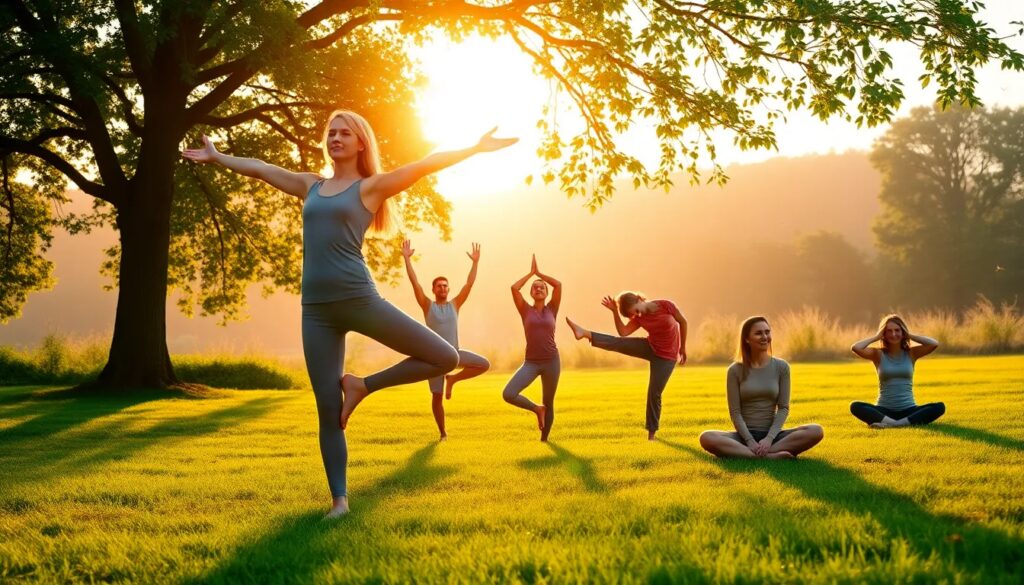
Yoga poses — called asanas in Sanskrit — are the physical postures of yoga, and the hundreds you will encounter in classes all fall into seven practical categories: standing, seated, balancing, core, backbends, inversions, and resting poses. You do not need to memorize hundreds. Roughly fifteen foundational poses cover the vast majority of what happens in a typical class, and once you understand which category a new pose belongs to, you already know most of what it asks of your body. This guide organizes those essentials, explains what each category trains, and shows how to combine them into a balanced practice. It is part of our yoga practice and techniques hub.
The 15 Essential Yoga Poses at a Glance
| Pose | Sanskrit name | Category | Primarily trains |
|---|---|---|---|
| Mountain | Tadasana | Standing | Posture, alignment baseline |
| Downward-Facing Dog | Adho Mukha Svanasana | Standing / inversion | Hamstrings, shoulders, full body |
| Warrior I | Virabhadrasana I | Standing | Legs, hip flexors, focus |
| Warrior II | Virabhadrasana II | Standing | Legs, hip opening, stamina |
| Triangle | Trikonasana | Standing | Hamstrings, side body |
| Chair | Utkatasana | Standing | Quads, glutes, endurance |
| Tree | Vrksasana | Balance | Ankles, hips, concentration |
| Plank | Phalakasana | Core | Trunk, shoulders, wrists |
| Boat | Navasana | Core | Abdominals, hip flexors |
| Cobra | Bhujangasana | Backbend | Spinal extension, chest opening |
| Bridge | Setu Bandha Sarvangasana | Backbend | Glutes, back, chest |
| Seated Forward Fold | Paschimottanasana | Seated | Hamstrings, calm focus |
| Easy Pose | Sukhasana | Seated | Hips, meditation posture |
| Child's Pose | Balasana | Resting | Back release, recovery |
| Corpse Pose | Savasana | Resting | Relaxation, integration |
Fifteen is a working shortlist, not a canon. If what you want is the wider catalogue of English and Sanskrit names side by side — including plenty of poses that did not make this table — go to our yoga poses with names guide instead.
Standing Poses: The Foundation
Standing poses build leg strength, teach weight distribution, and form the backbone of most classes. Mountain pose looks like simply standing, but it is the alignment template every other pose refers back to: weight even across both feet, kneecaps lifted, ribs stacked over pelvis, crown reaching up. Warriors I and II add strength and stamina; triangle and chair add length and endurance. Standing poses are also where flowing sequences live — the classic sun salutation strings several of them together with breath.
Seated and Forward-Folding Poses
Seated poses target the hips and hamstrings and tend to quiet the nervous system, which is why classes place them toward the end. The key technique point: fold from the hip creases with a long spine rather than rounding the back to reach your toes — sitting on a folded blanket makes this dramatically easier for anyone with tight hamstrings. If you work at a desk, seated poses repay attention; our dedicated guide to seated yoga poses includes a 10-pose sequence you can do in office clothes.
Balance Poses
Balancing on one leg trains ankles, hips, and — more than anything — attention, since balance collapses the moment the mind wanders. Tree pose is the entry point: press the lifted foot into the calf or inner thigh (never against the knee joint) and fix your gaze on a point that does not move. Balance work also becomes social and fun with a partner; see our guide to duo yoga poses for two-person versions.
Core and Arm-Strength Poses
Plank, boat, and the low push-up position called chaturanga build the trunk and shoulder strength that every transition in dynamic yoga depends on. These are the poses where form breaks down fastest when you fatigue, and sloppy reps here are the most common source of yoga shoulder complaints — our chaturanga guide breaks down the alignment in detail. Dropping the knees is not a lesser version; it is how the strength gets built.
Backbends
Backbends counteract the forward hunch of sitting by extending the spine and opening the chest. Start small: cobra with the elbows bent and bridge with feet hip-width apart give most people all the extension they need. The cue that protects the low back in every backbend is the same — lengthen first, then bend, and keep the glutes and legs working so the lumbar spine is not doing the job alone.
Blocks are the prop that makes this scalable at home: one under the sacrum turns bridge into a supported pose you can hold for minutes, and a pair under the hands raises the floor in any prone backbend so the chest opens before the low back has to.
As an Amazon Associate, we earn from qualifying purchases.


Inversions and Resting Poses
Anything with the heart above the head counts as an inversion — which means downward dog already qualifies, no headstand required. Advanced inversions like headstand and shoulder stand deliver concentration and confidence benefits but carry genuine neck risk and belong under a teacher's eye first. At the opposite end, child's pose and savasana are not filler: deliberate rest is where the nervous system consolidates the work, and skipping savasana shortchanges the practice.
Rest is easier to take seriously when the body is propped rather than merely lying down. A bolster under the chest in child's pose, or under the knees in savasana, removes the low-grade muscular effort that keeps people fidgeting through the last five minutes of class.

- Yoga Bolster Pillow - The Gaiam yoga bolster is a soft and supportive meditation cushion for added support for the body during yoga, meditation, or general relaxation. Our pillow comes in multiple colors to match your style.
- All-Natural Filling - This pillow is filled with natural cotton batting for superior comfort and cushioning. The soft and flexible filling lets you lay against the pillow with cushioned comfort while the pillow keeps its shape.
- Handle Strap - Our yoga pillow features a built-in sturdy handle on the pillow case for hassle-free transport to easily grab the meditation cushion and go or reposition for poses or support your neck.
- Care Instructions - No need to worry about how to maintain freshness for your pillow as the cover is removable and machine washable. Easily remove to toss in the washing machine.
- Not Just for Yoga - This pillow is an ideal yoga accessory but can also be used for general support to stretch out tense muscles in your neck or prop up your legs and feet after a long day.

How to Combine Poses Into a Balanced Session
- Warm up with cat-cow and a few rounds of sun salutations (5 minutes).
- Standing strength: warrior I and II, triangle, chair — both sides (10 minutes).
- Balance: tree or a variation (3 minutes).
- Core: plank and boat, 2–3 rounds (4 minutes).
- Backbend: cobra or bridge, 2 rounds (4 minutes).
- Wind down: seated forward fold, gentle twist (5 minutes).
- Rest: savasana — never skip it (4+ minutes).
That 35-minute template scales down to 15 minutes by halving each block, and it works at any level because every pose has gentler and deeper versions. If you are brand new, start with the slower walkthrough in our yoga poses for beginners guide, which covers the same foundations with more setup detail.
Frequently Asked Questions
Classical texts describe 84 asanas, while modern encyclopedias catalogue well over 1,000 poses and variations. In practice, a few dozen poses make up the overwhelming majority of what is taught in classes, and about 15 foundational ones are enough to practice independently.
Mountain pose, because it teaches the alignment every other pose builds on, followed by downward-facing dog and child's pose. Those three appear in almost every class, so knowing them removes most first-class anxiety.
In flowing styles, poses last one breath to five breaths. In alignment-focused or yin styles, holds run from 30 seconds to several minutes. A useful default for home practice is 3–5 slow breaths per pose — long enough to settle, short enough to stay attentive.
No — every common pose has an English name teachers use freely. That said, learning a handful of Sanskrit names (tadasana, savasana, chaturanga) helps in mixed-style classes, since some teachers cue in Sanskrit, and it connects the practice to its origins.
Seated poses with a tall, supported spine work best: easy pose on a cushion, half lotus if your hips allow it, or simply sitting on a chair with feet flat. Comfort matters more than the shape — a position you can hold still for ten minutes beats an impressive one you fidget in.
There is no universal list of twelve — different schools and books pick their own dozen. Almost all of those lists are a subset of the 15 essentials in the table above: a few standing poses, one balance, one core pose, a gentle backbend, a seated forward fold and a resting pose. Recognizing the category a pose belongs to is more useful than memorizing any particular twelve.
In Bikram yoga, yes: every class runs the same fixed sequence of 26 postures and 2 breathing exercises, which is what our bikram yoga poses guide walks through. Most other styles have no fixed number — a vinyasa or hatha teacher builds a different sequence each time from a much larger pool.
This article is general information, not medical advice. If you have injuries, joint conditions, or are pregnant, check with a healthcare professional and work with a qualified teacher before attempting unfamiliar poses.
Have a correction? Contact us.
Last update 2026-09-10. Price and product availability may change.
In this section
- 10 Gentle Yoga Poses for Beginners, Seniors, and Sore Days
- 12 Crazy Yoga Poses and How to Work Toward Them
- 12 Funny Yoga Poses That Make Everyone Laugh — and Still Work
- 12 Weird Yoga Poses That Look Strange but Actually Work
- 3 Person Yoga Poses: Easy, Medium and Hard
- 5 Person Yoga Poses: 8 Group Formations for Five
- Acro Yoga Poses: The Complete Beginner-to-Advanced Catalog
- Aerial Yoga Poses: A Beginner-to-Advanced Guide
- Animal Yoga Poses: 12 Classic Poses (With Sanskrit Names)
- Are Yoga Poses Meant to Worship Gods?
- Ashtanga Yoga Poses: The Fixed Sequence, Section by Section
- Beginner Yoga Poses Chart: 15 Essential Poses with Names, Holds & Cues
- Best Yoga Poses for Back Pain: A Safe, Step-by-Step Routine
- BFF 2 Person Yoga Poses: 10 Partner Poses to Try With Your Best Friend
- Bikram Yoga Poses: The Complete 26-Posture Sequence Explained
- Bird Dog Pose: How to Do It, Benefits & Variations
- Boat Pose Yoga: Technique, Modifications & Common Mistakes
- Bound Angle Pose Yoga (Baddha Konasana): Steps, Benefits, and Modifications
- Camel Pose Yoga: How to Do Ustrasana Safely Step by Step
- Chair Yoga Poses: 10 Seated Postures, Step by Step
- Child's Pose in Yoga: How to Do It Safely and When to Use It
- Couples Yoga Poses: A Beginner's Guide to Practice Together
- Crow Pose in Yoga: Step-by-Step, Benefits, and Prep
- Dancer Pose Yoga: Step-by-Step Guide to Natarajasana
- Deer Pose Yoga (Mrigasana): How to Do It, Benefits, and Variations
- Duo Yoga Poses: 12 Partner Poses From Easy to Advanced (With Safety Tips)
- Easy 4 Person Yoga Poses for Kids and Beginners
- Easy Pose Yoga (Sukhasana): How to Sit, Modify, and Actually Get Comfortable
- Extreme Yoga Poses for 2: A Difficulty-Ranked Guide
- Fallen Angel Pose: How to Do It Safely, Step by Step
- Firefly Pose Yoga (Tittibhasana): How to Do It, Prep Poses, and Common Mistakes
- Garland Pose (Malasana): How to Do the Yogi Squat in Yoga, Benefits, and Modifications
- Grasshopper Pose Yoga: How to Work Toward This Arm Balance Safely
- Grounding Yoga Poses: 11 Poses for Calm and Stability
- Group Yoga Poses for 5 or More: Circles, Squares, and Team Sequences
- Hard Partner Yoga Poses: Ranked by Difficulty, With a Safe Training Path
- Hard Yoga Poses: 12 Advanced Asanas Ranked by Difficulty and How to Train for Them
- Hatha Yoga Poses: 12 Essential Asanas and a Beginner Sequence
- Heart Chakra Yoga Poses: 8 Chest Openers and a 20-Minute Sequence
- Heart Opening Yoga Poses: 10 Backbends From Gentle to Deep
- Hip Opening Yoga Poses: 8 Essential Stretches, a Short Routine, and How to Practice Safely
- How Long to Hold a Yoga Pose: Times by Style, Goal, and Experience Level
- How Many Yoga Poses Are There?
- Intermediate Yoga Poses: 14 Asanas to Learn Next (and How to Know You Are Ready)
- Kid Yoga Poses for 3: Easy Trio Challenges Kids Will Love
- Kundalini Yoga Poses: Postures, Kriyas, and How to Practice Them
- Lizard Pose Yoga (Utthan Pristhasana): A Complete Guide
- Low Lunge Yoga Pose: Step-by-Step, Benefits, and Variations
- Meditation Pose: 7 Positions, How to Sit, and How to Fix Knee or Back Pain
- Mermaid Yoga Pose: A Step-by-Step Guide From Pigeon Pose
- Partner Yoga Poses: A Practical Guide to Practice Together
- Pigeon Pose in Yoga: Step-by-Step Guide, Knee-Safe Modifications, and Alternatives
- Plank Pose in Yoga: Alignment, Hold Times, and Variations
- Plow Pose Yoga (Halasana): Safe Setup, Benefits & Modifications
- Prenatal Yoga Poses: Safe Poses by Trimester (and What to Avoid)
- Pyramid Pose (Parsvottanasana): How to Do It, Common Mistakes, and Variations
- Rabbit Pose Yoga (Sasangasana): How to Do It, Benefits, and Safe Modifications
- Restorative Yoga Poses: 7 Supported Postures and How to Set Them Up
- Root Chakra Yoga Poses: 7 Grounding Asanas and a 20-Minute Sequence
- Sacral Chakra Yoga Poses: 8 Hip-Opening Asanas and a 15-Minute Sequence
- Seated Twist Yoga Pose: How to Do Ardha Matsyendrasana Safely
- Seated Yoga Poses: A Complete Guide for Beginners, Desk Workers, and Seniors
- Staff Pose in Yoga: A Step-by-Step Guide to Dandasana
- Standing Yoga Poses: The Essential Postures, What They Build, and a 15-Minute Sequence
- Star Pose Yoga (Utthita Tadasana): How to Do It, Benefits & Variations
- Supine Twist Yoga Pose: How to Do It, Benefits & Mistakes
- Throat Chakra Yoga Poses: 7 Asanas for Vishuddha
- Tree Pose Yoga: How to Do It, Variations & Beginner Tips
- Triangle Pose (Trikonasana): How to Do It, Alignment Cues, and Variations
- Trio Yoga Poses: A Practical Guide to Yoga for Three People
- What Are the 26 Yin Yoga Poses? The Full List, Explained
- What Do Yoga Poses Mean? Names, Symbolism, and Real History
- What Is the Hardest Yoga Pose? Ranked + How to Progress
- Wheel Pose Yoga: Urdhva Dhanurasana Guide, Prep Poses & Variations
- Wild Thing Yoga Pose: A Safe Step-by-Step Guide
- Yin Poses: 10 Essential Postures, Hold Times, and How to Practice Them Safely
- Yin Yoga Poses: A Beginner's Guide to the Practice
- Yoga Balance Poses: A Step-by-Step Guide from Tree to Crow
- Yoga Bridge Pose: How to Do It Safely, Benefits, and Variations
- Yoga Challenge Poses by Level: Beginner to Advanced
- Yoga Pose Crossword: Answers by Letter Count (ASANA and More)
- Yoga Poses Chart: English and Sanskrit Names by Category
- Yoga Poses Chart: Names, Pictures, and How to Use One for Practice
- Yoga Poses for 2: Partner Poses by Level, From Easy to Acro
- Yoga Poses for Beginners: A Foundational Set to Start With
- Yoga Poses for Bloating: A 10-Minute Routine to Ease Gas and Discomfort
- Yoga Poses for Gas: 7 Poses and a 10-Minute Sequence for Relief
- Yoga Poses for Kids Printable: 10 Safe Poses, DIY Cards & Class Tips
- Yoga Poses for Kids: A Safe, Fun Starter Set
- Yoga Poses to Avoid When Pregnant (and Safer Swaps for Each)
- Yoga Poses With Names (English + Sanskrit)
Recommended: