Are Yoga Poses Meant to Worship Gods?

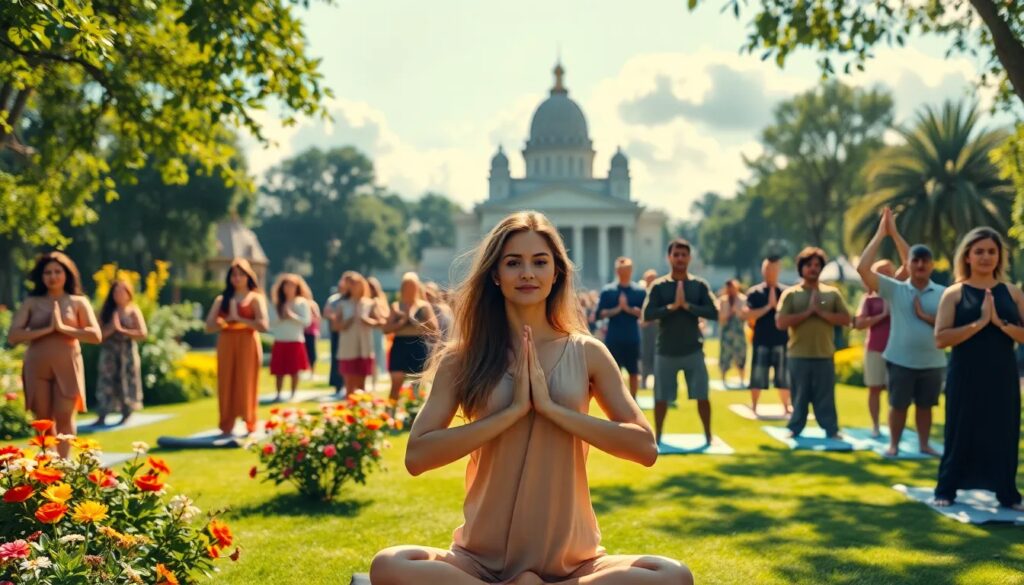
For the most part, no — yoga poses are not acts of worship, and performing them does not constitute worshipping Hindu gods. Historians of yoga have shown that most of the postures taught in modern classes were developed or systematized in the 19th and 20th centuries as physical culture, not devotional ritual. At the same time, the honest answer has a second half: yoga grew out of Indian religious traditions, a handful of pose names do reference Hindu deities and sages, and some practices — like chanting Om or sun salutations — carry devotional meaning for some practitioners. Whether any of that matters to you depends on your own beliefs.
This article separates what the history actually shows from what is often claimed on both sides of the debate, including the specific concerns raised in Christian circles.
Where modern yoga poses actually come from
The classical texts of yoga say surprisingly little about poses. Patanjali's Yoga Sutras (roughly 2nd century CE) mention asana only as a steady, comfortable seat for meditation — no warriors, no downward dogs. Medieval hatha yoga texts like the Hatha Yoga Pradipika (15th century) describe a few dozen postures, mostly seated.
The flowing, standing-pose-heavy yoga of today is largely a modern development. Scholars such as Mark Singleton (in Yoga Body, 2010) have documented how teachers in early 20th-century India — above all Krishnamacharya in Mysore — synthesized older hatha practices with gymnastics, wrestling exercises, and European physical culture into the sequences that his students Pattabhi Jois and B.K.S. Iyengar later spread worldwide. That lineage is the direct ancestor of most studio yoga, including vinyasa flow.
The practical upshot: a pose like Warrior II or Triangle was never a liturgical act in some ancient temple rite. It entered the canon as exercise.
But some pose names do reference gods and sages
Pose names are where the religious echo is real. Sanskrit asana names fall into a few groups:
| Name type | Examples | Religious content |
|---|---|---|
| Animals and objects | Downward Dog, Cobra, Tree, Boat, Bridge | None — simple descriptions of the shape |
| Body positions | Seated Forward Fold, Shoulder Stand, Half Moon | None |
| Mythological figures | Virabhadrasana (Warrior, after the warrior Virabhadra created by Shiva), Hanumanasana (splits, after the monkey god Hanuman), Natarajasana (Dancer, after Shiva as Lord of the Dance) | Named in homage to figures from Hindu mythology |
| Sages and teachers | Marichyasana, Bharadvajasana, Matsyendrasana | Named after revered sages of Indian tradition |
Even for the mythological names, performing the pose is commemorative rather than liturgical — closer to running a marathon (named for a Greek battle and messenger) than to attending a religious service. Doing Hanumanasana does not ritually invoke Hanuman, and few, if any, mainstream Hindu commentators argue that a stretching student is unknowingly performing puja. That said, the names are genuine cultural references, and teachers who tell the stories behind them are sharing mythology, not just anatomy.
What about sun salutations?
Surya Namaskar ("salutation to the sun") is the strongest case for a devotional origin. Sun veneration is ancient in India, and some traditional versions are accompanied by mantras honoring Surya, the Vedic sun deity. However, the gymnastic sequence used in modern classes appears to have been popularized in the early 20th century, partly as physical training, and in nearly all Western classes it functions purely as a warm-up. Practitioners who are uncomfortable with the symbolism can simply treat it as the linked movement sequence it is — or ask the teacher for context.
Religious perspectives: who objects, and why
Concerns come mainly from two directions:
- Some Christian and Muslim voices argue that yoga's roots make it spiritually unsafe regardless of intent, and recommend posture-based alternatives like Pilates. Others in the same traditions disagree and practice yoga as pure exercise, sometimes reframed (as in "holy yoga" programs). We cover this debate in depth below.
- Some Hindu commentators make almost the opposite point: that Western fitness yoga strips out the spiritual content and appropriates a sacred tradition. From this view the problem is not that poses worship gods, but that modern practice has forgotten its roots entirely — a question related to whether yoga is Buddhist or Hindu in origin.
Both positions deserve to be stated fairly — and both confirm the core historical point: the physical postures by themselves are not worship. Whether yoga as a whole counts as religious practice is a broader question, which we examine in is yoga a religious practice and is yoga a form of worship.
Does the Bible say anything about yoga?
No — the Bible does not mention yoga by name, because the word and the modern practice both postdate the biblical texts by centuries. The concern some Christians raise is not a direct condemnation of yoga; it comes from general passages about not worshipping other gods or engaging in idolatry, which they apply to yoga's roots in Hindu tradition rather than to any specific verse about postures. Other Christians read those same passages narrowly, as directed at literal idol worship, and see no conflict with practicing yoga poses as exercise. Both readings are common, and neither rests on a passage that names yoga directly. We lay out the fuller argument on each side in why some Christians are against yoga and whether Christians can do yoga.
Was yoga created to worship other gods?
Not in the sense that matters for the poses taught in a typical class. As the history above shows, most asana were assembled, renamed, or standardized in the 19th and 20th centuries as physical culture, not as acts of devotion to any deity. The one partial exception is Surya Namaskar, whose traditional forms carry sun-veneration associations, covered in the sun salutations section above. Outside that single sequence, there is no ritual act of worship built into performing a pose — the mythological names are commemorative, not devotional.
If you want to practice without religious elements
Plenty of people practice yoga in an entirely secular way. Practical steps if that is your goal:
- Choose fitness-oriented classes (power yoga, gym-based classes, sculpt formats) over studios that emphasize chanting or ceremony.
- Feel free to sit quietly through Om chanting or skip the closing "namaste" — teachers see this regularly and it is not rude.
- Use English pose names if the Sanskrit feels loaded; every pose has one.
- Remember that breathing exercises, balance work, and stretching are physiologically valuable independent of any framework — the goal of practice is yours to define, a topic explored in what is the goal of yoga.
- If after reflection any form of yoga still conflicts with your convictions, alternatives like Pilates, tai chi, and mobility training cover most of the same physical ground.
The bottom line
Yoga poses are physical shapes, most of them modern, some carrying names that honor figures from Hindu mythology. Performing them is not an act of worship — intent and ritual context are what make worship, and a fitness class has neither. But yoga is also not religiously weightless: its vocabulary, history, and some of its ceremonies come from Indian spiritual traditions. An informed practitioner can engage with that heritage, respectfully set it aside, or choose a different discipline — all three are legitimate responses. For more on how yoga intersects with faith and belief, see our full coverage of yoga and religion.
Frequently asked questions
A small number are. Warrior poses honor Virabhadra, a warrior created by Shiva; Hanumanasana references the monkey god Hanuman; Natarajasana refers to Shiva as Lord of the Dance. Most poses, though, are named after animals, objects, or body positions with no religious content.
Opinions are divided. Some Christians avoid yoga because of its roots in Hindu and Buddhist tradition, while others practice it as pure exercise or in explicitly Christian-reframed classes. Neither position is fringe within Christianity, and the disagreement is about spiritual roots, not about what the poses themselves do.
Nothing directly — yoga postdates the biblical texts and is not named in them. The concern some Christians raise comes from general passages about idolatry and worshipping other gods, applied to yoga's origins, rather than from a specific mention of yoga or its poses.
The physical postures taught in most classes were not. Modern asana was largely assembled and standardized in the 19th and 20th centuries as physical culture. Sun salutations are the partial exception, since traditional versions carry sun-veneration associations.
Practitioners span the full range of belief, from atheist to devout. Classical yoga philosophy references a concept called Ishvara, but modern practice, including in most studios, does not require any particular belief to participate.
Have a correction or a question about this article? Reach us via our contact page.
Recommended: