Is Yoga Buddhist or Hindu? Both Traditions, Compared

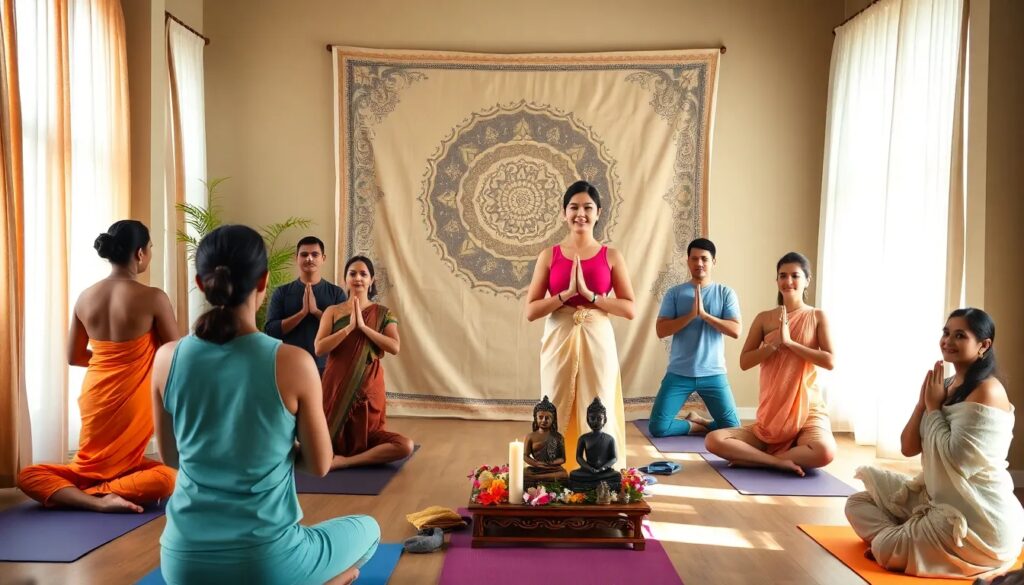
Is yoga Buddhist or Hindu? The most accurate short answer: yoga is historically rooted in the religious landscape of ancient India that produced Hinduism, Buddhism, and Jainism — and all three traditions developed their own yogic systems. Much of that shared ground traces back to the Shramana movement, a broad current of wandering ascetics and meditators in ancient India whose practices fed both Vedic-based Hinduism and the newer, non-Vedic paths of Buddhism and Jainism — which is part of why the same vocabulary and technique show up across traditions that otherwise disagree sharply on doctrine. Yoga is most strongly associated with Hindu texts and philosophy (the Upanishads, the Bhagavad Gita, Patanjali's Yoga Sutras), but Buddhism built equally sophisticated meditative and physical yogas of its own, and the two traditions borrowed from each other for over two thousand years. Framing it as either-or misreads the history.
This article, part of our broader coverage of yoga and religion, looks at the question from the comparative side: what yoga means within Hindu tradition, what it means within Buddhist tradition, where the two genuinely disagree philosophically, and what that means for the posture practice taught in studios today.
Yoga Within Hindu Tradition
The word yoga and its core ideas appear throughout Hindu sacred literature. The Upanishads describe disciplines of restraint and meditation; the Bhagavad Gita presents karma, bhakti, and jnana yoga as three of the paths to liberation, with raja yoga — the meditative, eight-limbed path later systematized by Patanjali — usually named as the fourth; and Patanjali's Yoga Sutras, compiled roughly two thousand years ago, formalize that eight-limbed path of ethics, posture, breath control, and meditation aimed at moksha, liberation of the self. Scholars classify Patanjali's yoga as one of the six classical schools (darshanas) of Hindu philosophy, although its metaphysics (Samkhya-based, with a minimal role for God) differs from devotional Hinduism. Centuries later, the hatha yoga tradition — the ancestor of modern posture practice — emerged largely within Shaiva Hindu lineages. We trace this development in detail in the history of yoga and our guide to the Yoga Sutras.
Yoga Within Buddhist Tradition
Buddhism, founded by Siddhartha Gautama around the 5th century BCE, is not an offshoot of yoga — but it is thoroughly yogic. The Buddha trained with meditation teachers of his era before developing his own method, and early Buddhist practice shares vocabulary and technique with early yoga: seated meditation, breath awareness, ethical restraint, concentration states (dhyana/jhana). Later Buddhist schools developed explicit yogic systems:
- Yogacara — literally the yoga practice school, a major school of Mahayana Buddhist philosophy.
- Tibetan practices such as trul khor (magical movement) and tsa lung, which combine postures, movement, and breath retention — functionally a Buddhist hatha yoga.
- Zen (from Chan, ultimately from Sanskrit dhyana, meditation) — centered on zazen, seated meditation. Zen is unambiguously Buddhist, not Hindu, though the lineage of the word itself shows the shared roots.
Jainism, the third major tradition to grow out of that same ascetic soil, developed its own yogic path as well: its ethical vows and meditative disciplines, such as samayika (periods of equanimity and reflection) and kayotsarga (a still, body-releasing meditation posture), sit alongside Hindu and Buddhist yoga as an older, if less globally visible, branch of the shared Shramana culture — a reminder that this was never a two-way split.
Historians also note the influence ran both ways: medieval hatha yoga drew on tantric currents that circulated across Hindu and Buddhist communities alike.
Where the Two Traditions Genuinely Differ
The practices overlap heavily; the philosophy underneath does not. The honest differences:
| Yoga in Hindu tradition | Yoga in Buddhist tradition | |
|---|---|---|
| View of the self | An eternal self (atman/purusha) exists and is realized through practice | No permanent self (anatta); the sense of self is deconstructed |
| Goal | Moksha — liberation of the self, in some schools union with the divine | Nirvana — cessation of suffering through insight into impermanence |
| Role of God | Varies by school: from devotional theism to Patanjali's minimal ishvara | Non-theistic; liberation depends on the practitioner's own insight |
| Key frameworks | Eight limbs of Patanjali; karma, bhakti, jnana, raja paths | Four Noble Truths; Eightfold Path; mindfulness traditions |
| Physical yoga | Hatha yoga lineages (asana, pranayama, purification) | Tibetan trul khor and tsa lung; otherwise mostly seated practice |
The structural similarity of the two eight-fold frameworks is striking — both begin with ethics and end in meditative absorption — but the metaphysics of self versus no-self is a genuine, unresolved philosophical divide, not a detail.
So Why Is Yoga Usually Linked to Hinduism?
Three practical reasons. First, the foundational yoga texts that modern teachers cite — the Gita, the Sutras, the hatha manuals — sit within Hindu literary tradition. Second, the teachers who brought yoga to the West in the 19th and 20th centuries (Vivekananda, Krishnamacharya and his students) came from Hindu lineages. Third, the Sanskrit vocabulary of class culture — namaste, om, asana names — derives from that same heritage. None of this makes Buddhism's (or Jainism's) yogic traditions less real; it just explains why the popular association points one way. The broader question of yoga and Indian identity is covered in is yoga Indian.
What This Means for Your Studio Practice
The average modern class — postures, breathing, savasana — is a 20th-century physical-culture descendant of hatha yoga, taught almost everywhere as a secular activity. Whether practicing it commits you to any religion is a separate, genuinely debated question: we lay out both sides honestly in is yoga a religious practice. The short version: the movements themselves carry no doctrinal content, mindfulness and meditation appear in both traditions and in entirely secular forms, and what you bring to the mat — fitness goals, spiritual seeking, or both — is up to you. If the question for you is really about worship rather than history — whether bowing, chanting toward a teacher, or holding a pose in front of an altar crosses a line — that's a related but separate discussion we cover in are yoga poses meant to worship gods.
Frequently Asked Questions
No — but Buddhism did not come from yoga either. Both grew out of the shared ascetic and meditative culture of ancient India. The Buddha trained in existing meditation disciplines before founding his own path, and later Buddhist schools developed their own yogic systems, such as Yogacara philosophy and Tibetan trul khor.
Linguistically, yes: Zen comes from the Chinese Chan, which derives from the Sanskrit dhyana, meaning meditation — the same word used for the meditative limb of Patanjali's yoga. As a tradition, though, Zen is a school of Mahayana Buddhism centered on seated meditation, not a form of Hindu yoga.
Some traditions do. Tibetan Buddhism preserves physical yogas such as trul khor and tsa lung that combine movement, posture, and breath work. Most Buddhist schools, however, emphasize seated meditation, and many modern Buddhists simply attend regular yoga classes for exercise like anyone else.
The question of the self. Hindu yoga traditions hold that an eternal self or pure consciousness exists and is realized through practice. Buddhism teaches anatta — no permanent self — and aims at liberation through seeing that absence directly. The practices look similar; the goals are framed very differently.
Buddhism does not reject yoga. Early Buddhist practice shares roots and vocabulary with it, including seated meditation, breath awareness, and concentration states, and later schools such as Yogacara and Tibetan Vajrayana built their own explicit yogic systems. What differs is the goal: Buddhist practice aims at insight into no-self and the cessation of suffering, not union with an eternal self.
Have a correction? Contact us.
Recommended: