Yoga for Women: Benefits, Poses, and How to Start

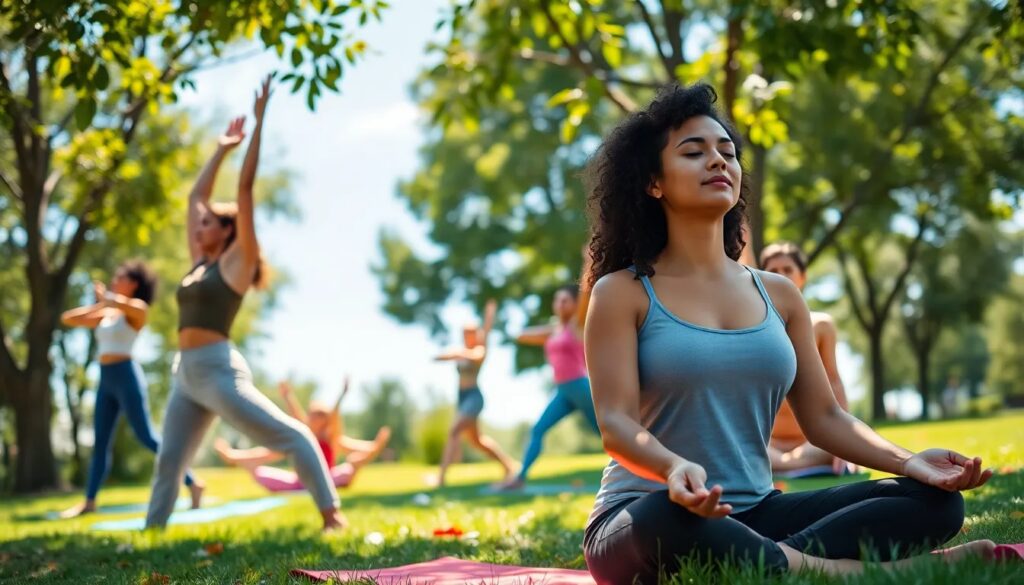
Yoga for women uses the same postures taught to anyone, but how you practice can be tailored to the female body's changing needs at different life stages. The poses themselves don't change; the emphasis, intensity and modifications do. This guide covers what yoga can realistically do for women, the poses that come up most often in classes aimed at women, and a simple way to begin.
What makes yoga valuable for women?
Three things stand out. First, yoga is weight-bearing exercise: standing poses like Warrior II and Downward Dog load the bones of the legs, spine and arms, which matters because women face a higher risk of osteoporosis after menopause. Second, yoga is adaptable: the same practice can be made vigorous in your twenties, gentle during pregnancy, and restorative during recovery — see our overview of the main types of yoga to understand the range. Third, the breathing and relaxation components have reasonable evidence behind them for stress and anxiety reduction, and stress relief is one of the most common reasons women give for starting a practice in the first place.
It is worth being honest about the limits: yoga alone is not a complete fitness program. It builds moderate strength and excellent mobility, but it does not replace cardiovascular training or heavy resistance work if those are your goals.
Yoga through a woman's life stages
The most useful way to think about yoga for women is by life stage rather than by pose list.
| Life stage | Helpful focus | Styles worth trying |
|---|---|---|
| 20s–30s, general fitness | Strength, flexibility, stress management | Vinyasa, Hatha, Power Yoga |
| Menstruation | Gentle movement, pelvic circulation, rest | Yin, Restorative, gentle Hatha |
| Pregnancy | Modified poses, pelvic floor awareness, breathing | Prenatal yoga (with a qualified teacher) |
| Postpartum | Gradual core and pelvic floor rebuilding | Postnatal classes, gentle Hatha |
| Perimenopause and beyond | Bone loading, balance, sleep, cooling practices | Hatha, Iyengar-style alignment work, Restorative |
Menstruation, pregnancy and menopause: what changes
Around menstruation, many practitioners find that intense heat, deep twists and strong inversions feel worse rather than better, and prefer slow Hatha or Restorative. During pregnancy, a prenatal class is the safest option: standard classes need modifications for deep twists, intense backbends and any work on the back after the first trimester. Postpartum, the priority is rebuilding the deep core and pelvic floor gradually under guidance. In perimenopause and after, the focus shifts to weight-bearing poses for bone health, balance work to reduce fall risk, and calming practices to support sleep.
If you are pregnant or recently gave birth, work from a class designed for that stage — our guide to pregnancy yoga explains what changes and why.
Best yoga poses for women
These poses come up again and again in classes aimed at women because they address common needs: hip tension, lower-back discomfort, core weakness and stress.
- Child's Pose (Balasana) — a resting pose that gently releases the lower back and signals the nervous system to downshift.
- Cat-Cow (Marjaryasana-Bitilasana) — mobilizes the spine; often recommended for menstrual lower-back ache and during pregnancy.
- Warrior II (Virabhadrasana II) — builds leg and hip strength, a weight-bearing pose useful for bone health.
- Bridge Pose (Setu Bandha Sarvangasana) — strengthens glutes and hamstrings and opens the chest; many practitioners find it eases menstrual discomfort.
- Goddess Pose (Utkata Konasana) — a wide squat that strengthens the legs and pelvic floor and builds pelvic awareness.
- Butterfly Pose (Baddha Konasana) — a seated hip opener that many women find useful for menstrual tension and for general hip mobility.
- Legs-Up-the-Wall (Viparita Karani) — a gentle inversion frequently used for tired legs, stress and sleep.
If most of these are new to you, start with our walkthrough of yoga poses for beginners before stringing them into sequences.
Women who shaped modern yoga
Although early yoga lineages were dominated by men, several women were decisive in making yoga what it is today. Indra Devi studied with Krishnamacharya and opened a studio in Hollywood in 1947, becoming one of the first Western women to teach yoga widely. Geeta Iyengar, daughter of B.K.S. Iyengar, devoted much of her teaching to women's practice and wrote Yoga: A Gem for Women, still a standard reference. Vanda Scaravelli developed a gentler, spine-centered approach that influenced generations of European teachers. In Western countries today, most yoga teachers and a large share of students are women.
How to start practicing
- Pick a gentle entry point. A beginner Hatha or slow-flow class — in a studio or online — is easier to learn from than a fast Vinyasa class. Our yoga for beginners guide covers what to expect.
- Keep equipment minimal. A non-slip mat and comfortable clothing are enough; blocks and a strap help but can be improvised at first.
- Aim for consistency over intensity. Two or three 20–30 minute sessions per week beat one exhausting class a month.
- Adapt to your cycle and energy. There is no rule forcing you to push through low-energy days — swap in a restorative session instead.
- Tell your teacher about pregnancy, injuries or conditions. Good instructors will offer modifications without making it a big deal.
A mat designed for women's practices — slightly longer, with a non-slip surface that holds up in slower, alignment-focused classes — makes home sessions easier. A few solid options:
As an Amazon Associate, we earn from qualifying purchases.


No — the poses and techniques are the same. What differs is how a practice can be adapted to events like menstruation, pregnancy and menopause, and which benefits matter most, such as bone loading for osteoporosis prevention.
Many practitioners use gentle yoga — Child's Pose, Cat-Cow, supported Bridge and slow forward folds — to help ease period pain, though this is anecdotal rather than clinically proven. Treat it as a complement to, not a replacement for, medical advice if your pain is severe or disruptive.
Prenatal yoga taught by a qualified instructor is generally considered safe and is widely recommended, but standard classes need modifications — deep twists, intense backbends and hot yoga are usually avoided. Always clear exercise plans with your midwife or doctor first.
Alignment-focused Hatha or Iyengar-style classes are a strong choice because they combine weight-bearing poses for bone health with careful technique, and Restorative yoga helps with sleep and stress. The best style is ultimately the one you will practice consistently.
This article is general information, not medical advice. If you are pregnant, postpartum, or managing a health condition, consult a healthcare professional before starting or changing an exercise routine.
Have a correction? Contact us.
Last update 2026-09-10. Price and product availability may change.
Recommended: