Walking Yoga: A 30-Minute Mindful Walking and Yoga Routine

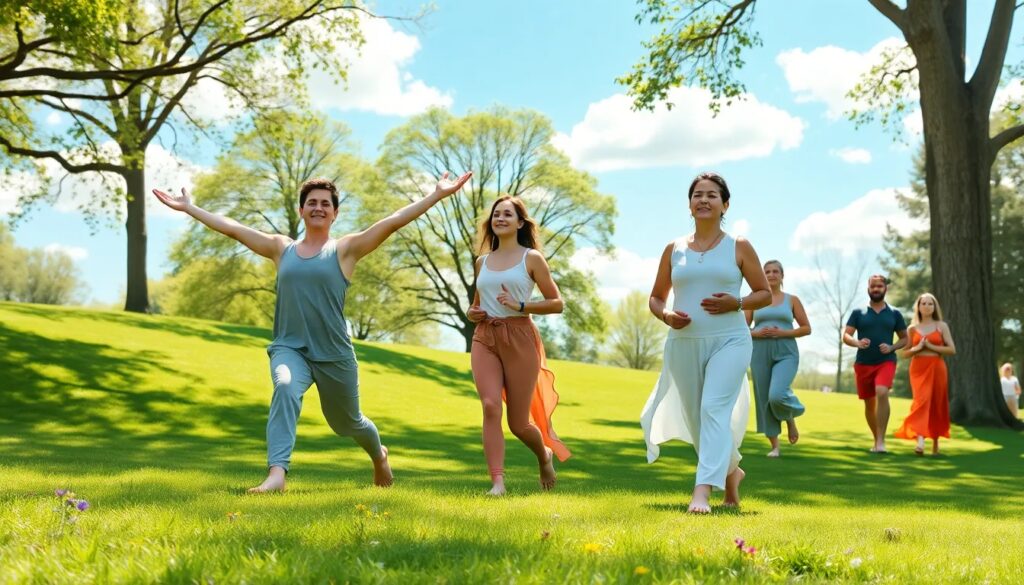
Walking yoga is the practice of combining mindful walking with yoga elements — breath awareness, attention to posture and sensation, and a few simple standing poses woven into the walk. It is not a formal yoga lineage with a fixed syllabus, and that is worth saying up front. It is an accessible hybrid that borrows from yoga, from walking meditation (a long-standing practice in Buddhist traditions), and from plain low-impact exercise. Nobody owns it, you can start today, and the only equipment you need is a pair of supportive shoes.
What walking yoga actually is
Three ingredients, in whatever proportion suits you on a given day:
- Mindful walking. Walking at an unhurried pace while deliberately noticing the feet contacting the ground, the rhythm of the breath, and the surroundings — instead of podcasts or a mental to-do list.
- Breath work. Synchronizing steps with the breath, for example inhaling for four steps and exhaling for four to six. This is the same breath-movement link that defines vinyasa yoga, transferred to a walk outdoors.
- Pose breaks. Pausing every few minutes for simple standing poses that need no mat: Mountain Pose, standing side stretches, gentle lunges, Tree Pose against a railing or wall.
Who walking yoga is for — and who it isn't
Walking yoga is a particularly good fit for:
- Beginners who find a full mat session intimidating. Standing poses only, no floor transitions, room to stop and adjust anytime.
- Seniors who want balance and mobility work but want to skip getting up and down from the floor — a real obstacle, as we cover in our chair yoga exercises guide.
- Busy people who can't fit a 60-minute studio class into their week. A 30-minute walk with three stretch stops still hits two habits in one go.
- Anyone returning to movement after a long break, where high-impact exercise feels like too much.
Walking yoga is not a substitute for strength training, physical therapy, or a high-intensity workout. If your goal is meaningful strength gains, you need resistance work that walking simply does not provide. If you are rehabbing an injury, do it under the guidance of a physiotherapist — a generic online routine is not a treatment plan.
Benefits you can realistically expect
Walking is one of the best-evidenced forms of exercise there is — regular brisk walking is consistently associated with cardiovascular health, better mood, and lower all-cause mortality risk. Adding yoga elements does not multiply those benefits magically, but it changes the experience in useful ways:
- It makes movement meditative. People who find seated meditation frustrating often find moving attention practices much easier to sustain.
- It adds mobility work that walking alone lacks. Walking barely moves the spine, shoulders, or hips through range; the pose breaks fill that gap.
- It lowers the barrier to both habits. If a full mat session feels like too much on a given day, a 20-minute mindful walk with three stretch stops keeps both habits alive.
- It is genuinely beginner- and senior-friendly. No floor transitions, no warm-up sequence to memorize, no special clothing required.
What it is not: a strength program, a substitute for physical therapy, or a guaranteed weight-loss method. Energy expenditure is roughly that of walking at the same pace, with brief stretch pauses.
Walking yoga vs. regular walking vs. mat yoga
| Regular walking | Walking yoga | Mat yoga | |
|---|---|---|---|
| Cardio benefit | Good (pace-dependent) | Moderate — pauses lower the average intensity | Low to moderate, style-dependent |
| Flexibility and mobility | Minimal | Moderate | High |
| Mindfulness component | Optional | Central | Central |
| Equipment and space | None | None | Mat, floor space |
| Joint impact | Low | Low | Low |
| Accessibility for seniors | High | High | Moderate (floor transitions) |
| Strength building | Low | Low to moderate | Moderate to high |
For the question of whether yoga alone meets exercise guidelines, see our analysis of whether yoga counts as exercise — the short answer is that combining it with walking, exactly as walking yoga does, is one of the simplest ways to cover both mobility and cardio bases.
A 30-minute walking yoga routine
- Minutes 0–3 — Arrive. Stand in Mountain Pose. Feel the feet, lengthen the spine, take five slow nasal breaths. Roll the shoulders a few times.
- Minutes 3–10 — Slow mindful walking. Walk noticeably slower than normal. Match breath to steps: inhale 4 steps, exhale 4–6 steps. When the mind wanders, return to the feet.
- Minute 10 — First pose break. Standing side stretch (reach one arm overhead, lean, hold 3 breaths per side) and a gentle standing backbend with hands on the lower back.
- Minutes 11–18 — Brisk interval. Pick the pace up to a proper walk. Keep posture tall, arms swinging naturally. Let the breath deepen on its own.
- Minute 18 — Second pose break. Low lunge with hands on the front thigh (3 breaths per side), then Tree Pose with fingertips on a wall, fence, or bench for balance (3 breaths per side).
- Minutes 19–26 — Brisk interval two. Same as before. If you have hills available, use one.
- Minutes 26–30 — Wind down. Return to slow walking, then finish standing still: forward fold with soft knees (or hands on thighs), roll up slowly, and close with ten slow breaths in Mountain Pose.
Practical tips for outdoors
- Choose ground you trust. Parks, tracks, or quiet streets — balance poses and uneven sidewalks mix badly.
- Wear normal walking shoes. Yoga is barefoot on a mat; walking yoga is not. Supportive shoes win outdoors.
- Keep pose breaks short. Two to four poses, a few breaths each. Long static stretching mid-walk on cold muscles is not the goal.
- Mind traffic and surroundings. Mindful does not mean oblivious — keep eyes open and stay aware, especially with closed-eye balance attempts (skip those near roads).
- Scale it honestly. Two or three sessions a week is a fine start; daily short walks beat occasional long ones.
If you are entirely new to yoga poses, skim our yoga for beginners guide first so the pose breaks feel familiar, and consider a gentle yoga session at home once a week to develop the floor-based side of the practice.
Frequently asked questions
It is a modern hybrid rather than a traditional lineage. It combines mindful walking — which has deep roots in Buddhist walking meditation — with yoga breathing and simple standing poses. There is no governing body or fixed sequence, which also means you can adapt it freely.
It can contribute the way any regular walking does: by adding consistent, sustainable activity. Calorie burn is similar to walking at the same pace. For weight loss, total weekly activity and diet matter far more than the specific format.
Yes — it is one of its best use cases. It avoids floor transitions, builds balance with support nearby, and keeps intensity adjustable. Seniors with balance concerns should do standing poses next to a wall, bench, or railing, and check with a doctor if they have cardiovascular or joint conditions.
Two to three 30-minute sessions a week is a solid start, building toward most days if you enjoy it. It is gentle enough to do daily, and short frequent sessions tend to build the habit better than occasional long ones.
No mat. A pair of supportive walking shoes is the main thing. Optional: a wall, bench, or fence for balance during standing poses, and a small towel if you tend to warm up quickly. Layered clothing helps in cool weather so you can adjust as the walk warms you up.
Have a correction? Contact us.
Recommended: