Chair Yoga Exercises: A Free, At-Home Guide for Beginners and Seniors


Chair yoga exercises are seated or chair-supported movements adapted from traditional yoga, designed to build flexibility, posture, circulation and calm without ever going down to the floor. You only need a stable, armless chair and a few minutes — no app, no subscription, no special clothes — which makes them a practical fit for desk workers, older adults, anyone returning from injury, and people with limited mobility or balance concerns.
Below you will find ten chair yoga exercises with step-by-step instructions, a 10-minute at-home routine, a short desk-break sequence, and the safety notes worth reading before you start.
This article is general information, not medical advice. If you have a health condition, an injury, osteoporosis, disc problems, recent surgery, or balance issues, check with your doctor or physical therapist before starting a new exercise routine.
What you need
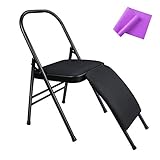
- A sturdy, armless chair that does not roll or swivel — a basic dining chair works well. For a closer look at what to look for, see our guide to choosing a chair for yoga.
- Feet flat on the floor. If your feet dangle, place a book or yoga block under them.
- Comfortable clothing and a few minutes of uninterrupted time. No mat, no app, no equipment required.
As an Amazon Associate, we earn from qualifying purchases.


10 chair yoga exercises to try
- Seated Mountain Pose (Tadasana). Sit tall away from the backrest, feet hip-width apart, hands on thighs. Inhale and lengthen the spine; imagine the crown of your head reaching upward. Hold for 5 slow breaths. This is your home base between exercises.
- Seated Cat-Cow. Hands on knees. Inhale, arch the back and lift the chest (cow); exhale, round the spine and tuck the chin (cat). Repeat 6–8 times, moving with the breath.
- Seated Neck Rolls. Drop the right ear toward the right shoulder, roll the chin gently down and across to the left. Repeat 3 times each direction. Keep it slow and small.
- Seated Side Bend. Inhale, reach the right arm overhead; exhale, lean gently to the left, keeping both sit bones grounded. Hold 3 breaths; switch sides.
- Seated Twist. Inhale to sit tall; exhale and rotate the torso to the right, left hand on the right knee, right hand on the chair. Twist from the mid-back, not the neck. Hold 3–5 breaths; switch sides.
- Seated Forward Fold. Feet wide, hinge forward from the hips and let the hands slide down the legs toward the shins. Let the head and neck relax. Hold 3–5 breaths, then rise slowly.
- Chair Pigeon. Place the right ankle on the left thigh, knee relaxed out to the side. Sit tall; hinge slightly forward for a deeper hip stretch. Hold 5 breaths; switch sides. Skip this one if you have had a hip replacement, unless your medical team has cleared it.
- Seated Knee Lifts. Sitting tall, exhale and lift the right knee toward the chest; inhale and lower. Alternate legs, 8–10 lifts per side. This gently works the hip flexors and core.
- Seated Eagle Arms. Cross the right arm under the left at the elbows, wrap the forearms, and lift the elbows slightly while dropping the shoulders. Hold 4 breaths; switch. Excellent for tight shoulders after screen time.
- Supported Standing Hamstring Stretch. Stand behind the chair, hands on the backrest, and step the right heel forward, toes up. Hinge slightly at the hips until you feel a hamstring stretch. Hold 4 breaths; switch sides.

- Natural Cork: Elevate your yoga practice with our eco-friendly, non-slip Gaiam Cork Yoga Brick, perfect for yoga, Pilates, and more.
- Modify Your Poses: Ideal for all skill levels; shorten or deepen your stretches effortlessly. Dimensions: 9"W x 5.5"H x 3"D, lightweight at 1.5 lbs.
- Rounded Edges & Superior Grip: Designed for your comfort, the rounded edges and textured surface provide excellent grip and control during challenging poses.
- Perfect Dimensions: Measuring at 9"W x 5.5"H x 3"D, this yoga brick provides ample support for optimal alignment and posture.
- Versatile & Portable: Compact and lightweight, this cork yoga brick is your go-to fitness accessory for home or gym workouts.

A 10-minute at-home routine
Do this sequence twice a day — once in the morning, once after a long stretch of sitting — and keep it free of phones: Seated Mountain (1 min) → Cat-Cow (1 min) → Neck Rolls (1 min) → Side Bends (2 min) → Twist (2 min) → Eagle Arms (1 min) → Forward Fold (1 min) → Seated Mountain with slow breathing (1 min). Two short sessions spread across the day usually does more for stiffness than one long session at the end of the week.
If you prefer to follow a video while you do it, search for a free 10-minute chair yoga class on YouTube and play it at half speed the first few times until the sequence is familiar.
A 5-minute desk break routine
For people who sit at a screen, the most useful chair yoga is the kind that interrupts the day rather than waiting for the evening. Try this between meetings: Seated Mountain with slow breathing (1 min) → Neck Rolls (1 min) → Seated Cat-Cow (1 min) → Seated Twist each side (1 min total) → Eagle Arms (1 min). Reset, stand up, get water. For a fuller set of seated moves you can do without leaving the chair, see our seated yoga poses roundup and our desk yoga guide.


What are the benefits of chair yoga?
Chair yoga is gentle by design, so its expected gains line up with what regular, low-intensity movement is known to do for stiffness, posture and stress — not with weight loss or strength building on its own. The realistic, well-documented areas of benefit are:
- Flexibility and joint mobility, especially in the spine, hips and shoulders — the areas prolonged sitting stiffens most.
- Better posture through repeated practice of upright, lengthened sitting.
- Improved circulation and reduced stiffness from long sedentary periods.
- Stress relief via slow, breath-paced movement.
- Strength and balance support when standing exercises with chair support are included — relevant for fall prevention in older adults.
One honest caveat: chair yoga is gentle by design, so its calorie burn is modest. If weight loss is your goal, read our realistic look at whether chair yoga helps you lose weight before building a plan around it.
Chair yoga vs. mat yoga: which is right for you?
| Chair yoga | Mat yoga | |
|---|---|---|
| Getting up/down from floor | Not required | Required |
| Balance demands | Low — chair provides support | Moderate to high |
| Intensity | Gentle | Gentle to vigorous |
| Best for | Desk breaks, seniors, limited mobility, rehab | General fitness, building strength |
| Equipment | A sturdy chair | A mat, optionally props |
The two are not mutually exclusive: many people use chair yoga as a stepping stone toward mat classes, or alternate between them. If you want something gentle but floor-based, gentle yoga on the mat is the natural next step.

- Yoga Bolster Pillow - The Gaiam yoga bolster is a soft and supportive meditation cushion for added support for the body during yoga, meditation, or general relaxation. Our pillow comes in multiple colors to match your style.
- All-Natural Filling - This pillow is filled with natural cotton batting for superior comfort and cushioning. The soft and flexible filling lets you lay against the pillow with cushioned comfort while the pillow keeps its shape.
- Handle Strap - Our yoga pillow features a built-in sturdy handle on the pillow case for hassle-free transport to easily grab the meditation cushion and go or reposition for poses or support your neck.
- Care Instructions - No need to worry about how to maintain freshness for your pillow as the cover is removable and machine washable. Easily remove to toss in the washing machine.
- Not Just for Yoga - This pillow is an ideal yoga accessory but can also be used for general support to stretch out tense muscles in your neck or prop up your legs and feet after a long day.
Safety tips and common mistakes
- Choose the right chair. No wheels, no fold-up camping chairs, and ideally no armrests that block side bends and twists.
- Move within a pain-free range. A gentle stretch sensation is fine; sharp or radiating pain is a stop signal.
- Do not force twists. Rotate from the mid-back and keep the movement small, especially if you have osteoporosis or disc issues — and get professional guidance first in those cases.
- Breathe continuously. Holding your breath while stretching raises tension and blood pressure; let the breath set the pace.
- Progress gradually. Start with 5–10 minutes and build up. Consistency over weeks matters more than intensity on any one day.
- Get medical clearance for chronic conditions. If you are managing arthritis, osteoporosis, or recovering from surgery, chair yoga is generally safe within a comfortable range, but check with your doctor or physical therapist first, especially after a recent flare-up.
- Use a wall or counter for standing poses. For moves like the standing hamstring stretch, practicing near a wall or counter gives you extra support if your balance is not steady yet.
For routines designed specifically for older adults, see our chair yoga for seniors guide with a complete 15-minute sequence, or the printable chair yoga routine you can follow at home without a screen.


Frequently asked questions
Yes. The 10-minute at-home routine above is a free plan you can do on your own, and our printable chair yoga routine turns a 15-minute sequence into a one-page reference you can follow without a screen. YouTube is also full of free 10- to 30-minute chair yoga classes for beginners and seniors.
There are apps that offer free trial periods or free tier classes, and many yoga teachers publish full follow-along routines on YouTube at no cost. This article is built so you do not need an app at all — just a chair and a few minutes.
You can get meaningfully more flexible, more upright, and more comfortable in your body — those are real, noticeable gains. You will not get stronger or leaner from chair yoga alone, though. For weight loss or strength, pair it with walking, resistance work, or a more vigorous practice.
A stable, armless chair that does not roll — a standard dining chair is ideal. Your feet should rest flat on the floor; place a book or yoga block under them if they dangle.
No. It is popular with seniors because it removes balance and floor-access barriers, but desk workers, pregnant women with medical clearance, and people in rehabilitation use the same exercises.
Generally yes, as long as the practice stays within a comfortable range and avoids loaded forward folds or deep twists. Talk to your doctor or physical therapist before starting, especially after surgery or a recent flare-up, and stop anything that causes sharp pain.
Have a correction or a question about this article? Reach us via our contact page.
Last update 2026-09-10. Price and product availability may change.
Recommended: