What Is Kripalu Yoga? The Gentle, Inquiry-Based Style Explained

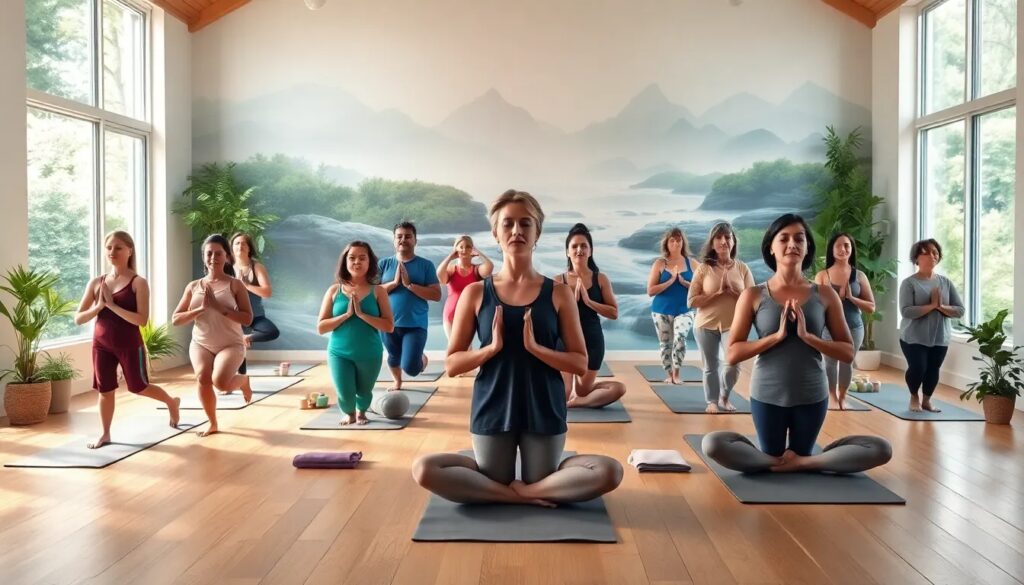
Kripalu yoga is a gentle, meditative style of hatha yoga that prioritizes inner awareness and self-compassion over achieving textbook poses. Instead of pushing toward an ideal shape, practitioners are taught to notice sensation, breath, and emotion as they move, and to let the body's own feedback guide how deep to go. It is taught through three progressive stages — from learning alignment, to extended mindful holds, to free intuitive movement — and is one of the most accessible styles for beginners, older students, and anyone returning to movement after a break. It sits within the wider family of yoga styles and lineages that trace back to hatha.
Where Kripalu Yoga Comes From
The style is named for Swami Kripalu (Swami Kripalvananda, 1913–1981), an Indian yoga master known for intensive meditation practice. His student Amrit Desai brought the approach to the United States in the 1960s and developed it into a teachable method. The Kripalu Center for Yoga & Health in Stockbridge, Massachusetts grew out of that community and is today one of the largest yoga retreat and teacher training centers in North America, operating as an independent nonprofit. (Desai left the organization in 1994; the Center has been independently run since.) The method itself — sometimes called the yoga of compassion — has continued to evolve through the Center's schools of yoga and Ayurveda.
The Three Stages of Kripalu Practice
- Stage one — body and breath awareness. You learn postures with attention to alignment and steady breathing, holding poses briefly. This looks much like a gentle hatha class.
- Stage two — holding with awareness. Poses are held longer while you observe sensation, thought, and emotion without reacting. The pose becomes a container for self-inquiry rather than a fitness goal.
- Stage three — meditation in motion. With the foundations internalized, movement is allowed to arise spontaneously, guided by breath and inner impulse rather than instruction. This stage is unique to Kripalu among mainstream styles.
The stages are a progression of skill, not a ranking of students — most public classes operate mainly in stages one and two.
What a Kripalu Class Looks Like
A typical class includes centering and pranayama (breathwork), gentle warm-ups, a moderate sequence of classic hatha postures held with long attention, and an extended relaxation. Expect frequent invitations to modify, use props, and choose your own intensity. Teachers emphasize phrases like riding the wave of sensation — the skill of staying present with intensity instead of escaping it or forcing through it. Classes are usually slower and quieter than a flow class, and there is no expectation that everyone's pose looks the same.
Kripalu vs. Other Yoga Styles
| Style | Pace | Main emphasis | Best suited to |
|---|---|---|---|
| Kripalu | Slow to moderate | Inner awareness, self-compassion, choosing your own depth | Beginners, emotional/mind-body focus, all ages |
| Hatha | Slow to moderate | Foundational postures and breath, held individually | Beginners wanting structure and alignment |
| Vinyasa | Moderate to fast | Continuous breath-linked flow | Practitioners wanting movement and cardio |
| Restorative | Very slow | Fully supported rest with props | Recovery, stress relief, low energy days |
| Iyengar | Slow | Precise alignment, extensive props | Detail-oriented students, therapeutic needs |
The clearest differentiator: most styles teach you to fit your body to the pose with increasing precision; Kripalu explicitly teaches you to fit the pose to your body and to treat what you notice while doing so as the real practice.
Is Kripalu similar to vinyasa yoga? Not closely — vinyasa links breath to continuous, fast-paced movement, while Kripalu is slower and prioritizes pausing to notice sensation. Both are hatha-family styles that train different skills; see our hatha vs. vinyasa comparison for the full pacing breakdown.
Benefits of Kripalu Yoga
- Accessibility: the modify-everything ethos makes it workable for nearly any body, age, or fitness level.
- Stress regulation: the slow pace, breathwork, and long relaxation lean strongly toward nervous system downshifting.
- Body awareness: the inquiry focus builds interoception — the ability to read your body's signals — which carries over to other exercise and daily life.
- Gentle conditioning: classic hatha postures still build flexibility, balance, and moderate strength, just without competitive intensity.
- Emotional processing: the witness-without-judgment skill practiced in stage two is essentially applied mindfulness.
That accessibility extends to older adults, since nothing in the method requires deep flexibility or full poses — see our guide on whether hatha yoga is right for beginners for more on how gentle, alignment-first practice suits any age.
Worth saying plainly: research on yoga styles rarely compares them head-to-head, so claims that one style is superior for stress or health outcomes are not well established. What is well supported is that gentle yoga in general helps many people with stress, flexibility, and well-being — and Kripalu is a particularly approachable way in.
Is Kripalu Yoga the Hardest — or the Easiest — Style?
Kripalu sits firmly at the gentle end of the spectrum. There's no authoritative ranking of yoga styles by difficulty, but lined up from easiest to hardest, restorative and Kripalu sit near one end, with power yoga, Ashtanga, and vigorous vinyasa flows near the other. Kripalu's stage-one and stage-two work looks closer to gentle hatha than to a cardio workout, so it's rarely anyone's answer to "what is the hardest yoga style." That doesn't make it effortless, though — holding still and staying present with sensation for minutes at a time is its own kind of demanding.
How to Try Kripalu Yoga
- Look for Kripalu-trained teachers — thousands have certified through the Kripalu Schools, and many teach under generic gentle yoga or hatha labels. Asking where a teacher trained is normal and welcome.
- Try the Center or its online classes if you want the source experience — it runs in-person programs, multi-day retreats, and virtual offerings; searching "kripalu yoga classes near me" also turns up local trained teachers.
- Practice the approach at home: take the foundational shapes from our beginner poses guide, hold each one a little longer than usual, and put your attention on what you feel rather than how it looks.
- Use props without hesitation — blocks and bolsters are fully in the spirit of the style. Let a prop support the pose rather than straining to reach it unaided.
Frequently Asked Questions
Yes — it is one of the most beginner-friendly styles. Poses are taught gently with constant permission to modify, the pace is slow, and success is defined by awareness rather than achieving any particular shape.
It is gentler than vinyasa or power yoga. You will build flexibility, balance, and some strength, but if your priority is sweat and cardio, a flow-based class is a better match. Many practitioners pair Kripalu with more vigorous exercise.
Kripalu is a Sanskrit-derived word meaning compassionate or merciful. The style is named after Swami Kripalu, and its teaching culture reflects the meaning: compassion toward your own body and experience is treated as the core skill.
Kripalu is a branded approach within the hatha tradition. The postures overlap heavily, but Kripalu adds its three-stage method, a strong emphasis on self-inquiry and compassion, and — at advanced stages — spontaneous, intuitively guided movement.
Not closely — vinyasa links breath to continuous, often fast-paced movement, while Kripalu is slower and prioritizes pausing to notice sensation over flowing between poses. Both are hatha-family styles, but they train different skills.
Have a correction? Contact us.
Recommended: