Is Hatha Yoga for Beginners? Yes — Here's Why It Works

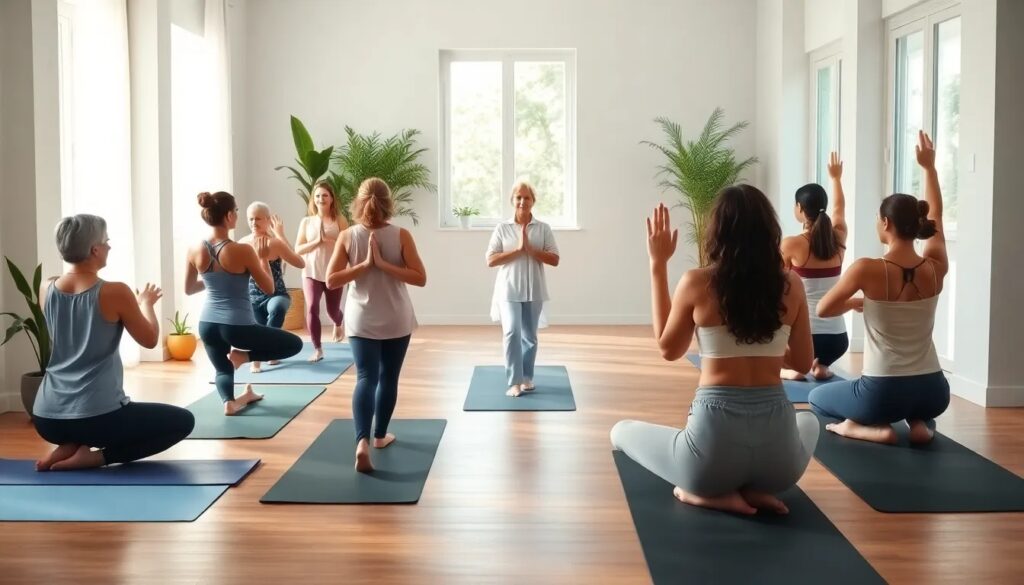
Yes — hatha yoga is widely considered one of the best styles for beginners, and for concrete reasons: classes move slowly, each pose is held for several breaths, and the teacher has time to explain alignment instead of rushing to the next movement. You learn the foundational postures that nearly every other yoga style builds on, at a pace where you can actually feel what your body is doing.
That said, hatha is not the only valid entry point, and it is not the best fit for everyone — someone looking for a sweaty, cardio-style workout may quit a slow hatha class out of boredom before yoga ever gets a fair chance. Below: why hatha suits most newcomers, how it compares with other beginner-friendly styles, and what to expect in your first class.
Why hatha works so well for beginners
- The pace is forgiving. Poses are typically held for 3–5 breaths or longer, so you have time to set up, wobble, adjust, and find the position — something fast flows do not allow.
- You learn the vocabulary. Downward Dog, Warrior poses, Mountain, Child's Pose: hatha drills the foundational shapes that appear in vinyasa, power, and hot classes. Learn them slowly once and every other class gets easier.
- Breath comes first. Hatha makes breath awareness explicit, which is the actual skill that separates yoga from stretching.
- It scales down gracefully. Nearly every hatha pose has an easier variation with props, so a stiff or deconditioned body is not a barrier.
If you want the broader background — hatha is historically the umbrella for all posture-based yoga, not just the slow class on the studio schedule — see our full guide to what hatha yoga is.
Hatha vs. other beginner options
| Style | Pace | Physical demand | Beginner fit |
|---|---|---|---|
| Hatha | Slow; poses held several breaths | Low to moderate | Excellent — the classic starting point |
| Vinyasa | Continuous flow linked to breath | Moderate to high | Good if you already exercise and want movement; alignment instruction is brisker |
| Yin | Very slow; floor poses held 3–5 minutes | Low (but intense stretching) | Good for stress and joint mobility; teaches few standing fundamentals |
| Restorative | Almost static, fully supported by props | Minimal | Great for stress relief; not a fitness practice |
| Hot / Bikram | Varies; heated room | High (heat stress) | Better after building a base in unheated classes |
The most common beginner crossroads is hatha vs. vinyasa. The short version: hatha teaches you the poses, vinyasa teaches you to link them — many people start with hatha for a month or two and then add flow classes. For the other side of that comparison, see our explainer on what vinyasa yoga is and the head-to-head at hatha vs. vinyasa. If you are weighing a slower route, our styles and lineages hub maps the full family.
What to expect in your first hatha class
A typical 60-minute hatha class looks like this: a few minutes of seated centering and breathing, gentle warm-up movements, a sequence of standing and seated postures held for several breaths each, sometimes a simple breathing exercise (pranayama), and a final relaxation lying down (Savasana). There is no expectation that you keep up with anyone — resting in Child's Pose whenever you need to is normal and explicitly welcomed.
Wear anything stretchy and comfortable, bring water, and arrive ten minutes early to tell the teacher you are new — they will offer modifications throughout and may show you an easier version of a pose before the class moves on. If you are unsure what to put on, our guide to what people wear to yoga keeps it simple.
Five hatha poses you will meet in week one
- Mountain Pose (Tadasana) — standing tall with feet rooted and crown lifted; the alignment template every standing pose inherits.
- Child's Pose (Balasana) — your rest position; learn it first so you have somewhere to go when you need a break.
- Downward-Facing Dog (Adho Mukha Svanasana) — stretches the back body and builds shoulder strength; bend your knees generously at first to keep the spine long.
- Warrior II (Virabhadrasana II) — front knee tracks over the ankle, back foot angled; builds leg strength and stamina.
- Tree Pose (Vrksasana) — sole of the foot on the inner calf or thigh (never the knee); a hand on the wall is allowed and encouraged at first.
For setup details, holds, and a full 20-minute sequence, see our guide to essential hatha yoga poses.
Starting at home: a few rules that keep it useful
- Follow guided beginner videos rather than improvising — alignment habits form fast, good or bad.
- Practice short and often: 15–20 minutes three times a week beats one heroic 90-minute session.
- Use props freely — books stand in for blocks, a belt for a strap, a folded blanket under the knees.
- Stop at sensation, never push into pain, especially in knees, lower back, and neck.
- End every session with 2–3 minutes lying still; it is part of the practice, not a skippable extra.
If you want a realistic take on the difficulty curve, see is hatha yoga hard. For a direct comparison with another popular entry style, see is vinyasa yoga for beginners.
As an Amazon Associate, we earn from qualifying purchases.


- Natural Cork: Elevate your yoga practice with our eco-friendly, non-slip Gaiam Cork Yoga Brick, perfect for yoga, Pilates, and more.
- Modify Your Poses: Ideal for all skill levels; shorten or deepen your stretches effortlessly. Dimensions: 9"W x 5.5"H x 3"D, lightweight at 1.5 lbs.
- Rounded Edges & Superior Grip: Designed for your comfort, the rounded edges and textured surface provide excellent grip and control during challenging poses.
- Perfect Dimensions: Measuring at 9"W x 5.5"H x 3"D, this yoga brick provides ample support for optimal alignment and posture.
- Versatile & Portable: Compact and lightweight, this cork yoga brick is your go-to fitness accessory for home or gym workouts.

When hatha might not be your best starting point
Be honest about what keeps you coming back. If you need to move and sweat to feel like you exercised, a beginner vinyasa or slow-flow class may hold your attention better. If your priority is unwinding a stressed nervous system rather than fitness, yin or restorative classes go further in that direction. And if you have an injury or a medical condition, a class labeled gentle or therapeutic — or a few private sessions — is a smarter entry than a general class of any style.
One common question that fits here: is hatha yoga good for weight loss? Not really as a primary tool. A standard 60-minute hatha class burns fewer calories than most cardio workouts, and weight change is driven mostly by overall activity and diet. If fat loss is your main goal, pair hatha with walking, strength training, or a more vigorous yoga style and keep expectations realistic.
This article is general information, not medical advice. If you have injuries, chronic conditions, or are pregnant, check with a healthcare professional before starting any new exercise practice, and tell your yoga teacher before class.
It is accessible rather than easy. The slow pace makes it manageable for beginners, but holding poses with good alignment for several breaths builds real strength and can be surprisingly demanding. Difficulty also varies by teacher and class level.
Hatha is the safer default because you learn each pose slowly before linking them in flows. Vinyasa works as a starting point if you are already active and want a faster, more athletic class. Many beginners do hatha for a month or two and then add vinyasa.
No. Flexibility is a result of practice, not a prerequisite. Hatha poses scale to any starting point with bent knees, blocks, straps, and shorter holds, and a good teacher will offer those modifications without being asked.
Two to three sessions per week is a realistic starting rhythm that produces noticeable changes in flexibility and stress levels within a few weeks. Consistency matters far more than session length; short regular practices beat occasional long ones.
Have a correction? Contact us.
Last update 2026-09-10. Price and product availability may change.
Recommended: