Is Vinyasa Yoga for Beginners? A Practical Guide to Starting Out

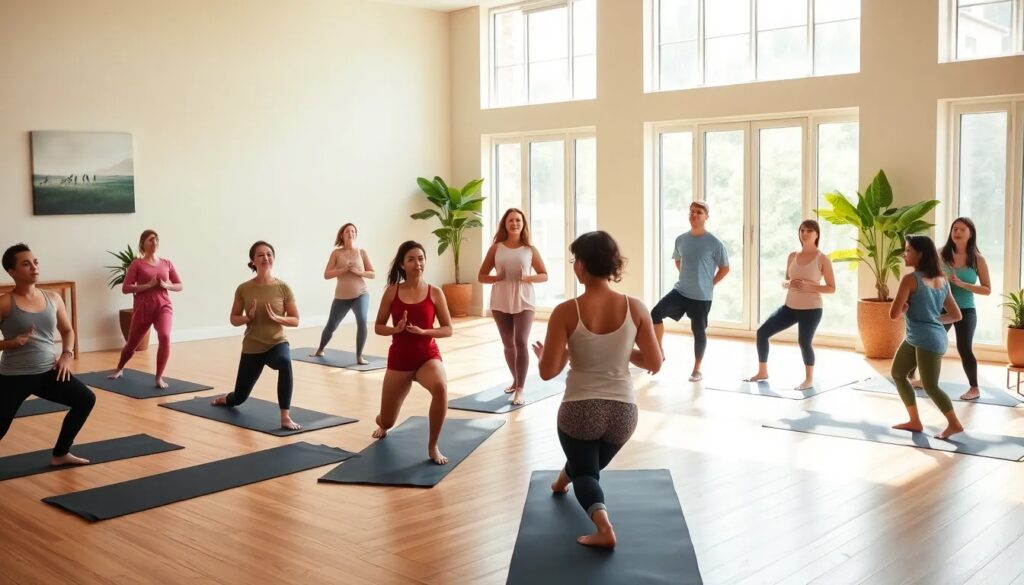
Yes — vinyasa yoga is suitable for beginners, with one honest caveat: because the style links poses into a continuous, breath-paced flow, it asks more of your stamina and coordination than slower formats like Hatha or yin. A complete newcomer can thrive in vinyasa by choosing a beginner-level or slow flow class, using modifications freely, and accepting that the first few sessions will feel like learning choreography. If you prefer to learn each pose thoroughly before stringing them together, starting with a few Hatha classes first is a perfectly good on-ramp.
What Makes Vinyasa Different for a Beginner
In a vinyasa class, you move more or less continuously: one breath, one movement, with poses connected in sequences rather than held in isolation. That is the appeal — it feels like moving meditation and gives a genuine cardiovascular element — but it also means a beginner is managing three things at once: the shape of each pose, the transition to the next one, and the breath rhythm. Our full guide to what vinyasa yoga is explains the method in depth, and if you are wondering about the difficulty specifically, is vinyasa yoga hard gives an honest assessment.
Vinyasa vs. Other Beginner-Friendly Styles
| Style | Pace | Physical demand | Best for beginners who... |
|---|---|---|---|
| Vinyasa | Continuous flow | Moderate | Like movement and variety, have basic fitness |
| Hatha | Slow, poses held separately | Low–moderate | Want to learn alignment thoroughly first |
| Power vinyasa | Fast, athletic | High | Are already fit and want a workout |
| Ashtanga | Set sequence, vigorous | High | Like structure and repetition |
| Yin / restorative | Very slow, long holds | Low | Want flexibility and stress relief over exertion |
For deeper comparisons, see Hatha vs. vinyasa, what power vinyasa is, and Ashtanga vinyasa explained.
How to Choose Your First Vinyasa Class
“Beginner,” “Slow Flow,” or “Level 1” — what those labels mean
Studios use a few near-synonymous labels for their entry-level vinyasa classes. “Beginner Vinyasa,” “Slow Flow,” “Vinyasa Level 1,” and “Foundations” all describe the same general idea: a class that moves at a pace you can follow while you learn the transitions, and that explains alignment in plain language. They are not interchangeable with “all-levels” classes, which can be taught at a more athletic pace with verbal modifications offered for newer students.
- Look for the right label: classes called Beginner Vinyasa, Slow Flow, Vinyasa Level 1, or Foundations move slower and explain more.
- Avoid for now: Power Vinyasa, Vinyasa 2/3, or anything labeled advanced — the pace assumes you already know the transitions.
- Ask the studio: staff will tell you honestly which class suits a first-timer; smaller classes mean more individual correction.
- Online works too: beginner vinyasa videos let you pause and replay transitions, which many newcomers find less stressful than keeping up in a room.
The 5 Poses to Learn First
Most beginner vinyasa sequences are built from a small vocabulary. Get comfortable with these and the choreography problem mostly disappears:
- Mountain Pose (Tadasana) — the neutral standing position sequences start and end from.
- Standing Forward Fold (Uttanasana) — bend your knees as much as needed; straight legs are not the goal.
- Downward-Facing Dog (Adho Mukha Svanasana) — the home base pose of vinyasa; you will return to it constantly.
- Plank Pose — the bridge between standing poses and floor work.
- Warrior I and II (Virabhadrasana I/II) — the standing poses most flows are built around.
Why “home base” matters in vinyasa
Downward-Facing Dog appears so often in vinyasa that beginners who learn it well save themselves a lot of confusion. It is the neutral position sequences return to between standing and floor work, which is why it is sometimes called the “home base” of a flow. If you can settle into it with relaxed heels and a long spine, the rest of the sequence makes more sense.
The transition most beginners struggle with is Chaturanga (lowering from plank). Drop your knees to the mat every single time at first — it is the standard modification, not a failure, and it protects your shoulders while you build strength.
As an Amazon Associate, we earn from qualifying purchases.

- Natural Cork: Elevate your yoga practice with our eco-friendly, non-slip Gaiam Cork Yoga Brick, perfect for yoga, Pilates, and more.
- Modify Your Poses: Ideal for all skill levels; shorten or deepen your stretches effortlessly. Dimensions: 9"W x 5.5"H x 3"D, lightweight at 1.5 lbs.
- Rounded Edges & Superior Grip: Designed for your comfort, the rounded edges and textured surface provide excellent grip and control during challenging poses.
- Perfect Dimensions: Measuring at 9"W x 5.5"H x 3"D, this yoga brick provides ample support for optimal alignment and posture.
- Versatile & Portable: Compact and lightweight, this cork yoga brick is your go-to fitness accessory for home or gym workouts.


Beginner Mistakes That Make Vinyasa Harder Than It Is
- Trying to match the room’s pace. Skipping a vinyasa and resting in Child’s Pose is normal practice etiquette at every level.
- Holding the breath. If your breath becomes ragged, you are pushing too hard — slow down until breathing leads again.
- Skipping modifications. Knees-down Chaturanga, blocks under hands, and bent knees in folds exist precisely for the first months.
- Judging by day one. The flow feels confusing for roughly the first three to five classes for almost everyone; familiarity changes the experience completely.
- Going too often too soon. Two to three classes a week with rest days builds strength faster than daily classes that exhaust you.
Is vinyasa yoga a good workout?
Yes — because the breath-paced flow keeps the body moving for the full class, vinyasa doubles as light cardiovascular exercise on top of strength and flexibility work. That is part of why so many people who try it stick with it. For the specific question of whether vinyasa helps with weight loss, our guide to is vinyasa yoga good for weight loss goes deeper.
What to Expect From Your First Month
Weeks one and two are mostly about learning the vocabulary — expect some muscle soreness in shoulders, arms, and hamstrings. By weeks three and four, the standard sun salutation sequences start to feel automatic and you can pay attention to breath instead of choreography; that is when vinyasa starts to feel like the moving meditation people describe. Strength and stamina gains typically become noticeable within a couple of months of consistent practice.
Is Vinyasa or Hatha Better for Beginners?
Neither is universally “better” — they teach different things. Hatha is the gentler on-ramp: poses are held individually, you have time to learn alignment, and the pace is forgiving. Vinyasa asks more of coordination because you string poses together on the breath, which is what gives it that moving-meditation feel. If you want a slower introduction to the same postures, is Hatha yoga for beginners and our primer on Hatha yoga are the natural next read. For a wider view of all beginner-friendly styles, the yoga for beginners hub pulls the main options together.
This article is general information, not medical advice. If you have injuries, joint problems, or a health condition that affects exercise, check with a healthcare professional and tell your teacher before class.
Yes. Choose a class labeled beginner, slow flow, or level 1, use modifications like knees-down Chaturanga, and rest in Child’s Pose whenever needed. The style is demanding but fully adaptable to a newcomer’s pace.
Hatha is gentler and teaches each pose separately, which suits people who want to learn alignment before adding flow. Vinyasa suits beginners who enjoy continuous movement and have basic fitness. Many people start with a few Hatha classes and then move into vinyasa.
No. Flexibility is a result of practice, not a prerequisite. Bent knees in forward folds, blocks under the hands, and shortened stances make every beginner pose accessible while your range of motion develops.
Two to three sessions per week with rest days in between is the most sustainable starting rhythm. It builds strength and familiarity quickly without the soreness and burnout that daily practice often causes in the first month.
For most people, three to five classes. Once the standard sun salutation sequences become automatic, the brain can shift from memorizing choreography to following the breath, and that is when the practice starts to feel like the moving meditation people describe.
Have a correction? Contact us.
Last update 2026-09-10. Price and product availability may change.
Recommended: