Yoga and Surf Retreat in Costa Rica: Regions, Seasons, and How to Choose

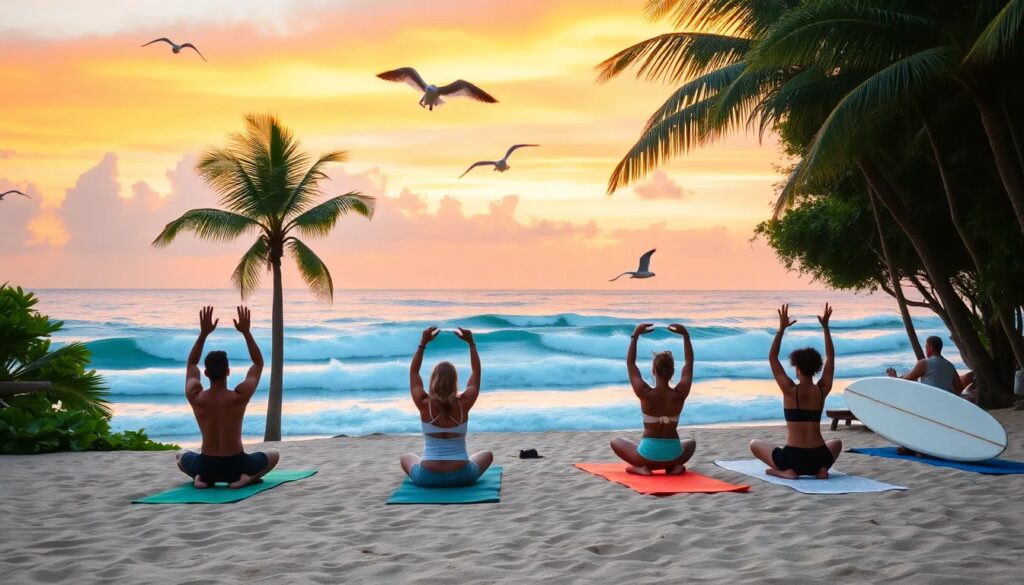
A yoga and surf retreat in Costa Rica pairs two practices that complement each other physically: surfing demands core engagement, hip flexibility, shoulder mobility, and mental focus under pressure, while yoga builds those qualities and adds the recovery work that helps prevent the repetitive-strain issues that sideline surfers. Costa Rica's Pacific coast has the consistent waves, warm water, and established retreat infrastructure to make this combination viable for beginners through advanced practitioners — and it is the most developed surf-and-yoga hub in Central America for that reason.
The main regions and what each offers
| Region | Wave character | Yoga scene | Best for |
|---|---|---|---|
| Nosara (Guanacaste) | Playa Guiones: long, consistent beach break; forgiving for beginners | Deep, established yoga community; multiple resident teachers | Beginners to intermediate; longer stays; serious practice |
| Santa Teresa (Nicoya Peninsula) | Powerful beach break, more variable; better for intermediate surfers and up | Strong wellness scene; retreats and drop-in studios | Intermediate surfers; lively village; mixing surf with fitness |
| Tamarindo (Guanacaste) | Gentle inside break suitable for first-timers; reef breaks nearby for advanced | Good range of yoga studios; more commercial than Nosara | First-timers; travelers who want easy access and services too |
| Dominical and Uvita (South Pacific) | More powerful, uncrowded; best for advanced surfers | Smaller, quieter retreat scene; jungle setting | Advanced surfers wanting seclusion; nature focus |
Nosara
Nosara has one of the most developed surf-and-yoga cultures in Central America. Playa Guiones, the main surf beach, produces reliable, shoulder-high waves that are learnable without being punishing, and the beach is long enough that even during busy season you can find a relatively uncrowded section. The yoga community here is serious — several internationally recognized teachers live and teach year-round, and drop-in classes exist alongside full retreat programs. The access roads are unpaved and the infrastructure is intentionally rustic, which filters for a certain kind of traveler. If you want nightlife and urban convenience alongside surfing, Nosara is not the right choice; if you want immersive practice, it is hard to beat.
Santa Teresa
Santa Teresa sits on the southern tip of the Nicoya Peninsula and offers a more energetic atmosphere than Nosara. The surf is more varied — multiple breaks at different tides and swell directions — which makes it better for intermediate surfers who want to develop beyond a single break. The town has grown significantly over the past decade and now has a dense collection of retreat centers, yoga studios, health-food restaurants, and surf schools. It attracts a younger, more social crowd. A number of established retreat programs run week-long formats here combining morning and evening yoga with daily surf lessons and board rentals.
Tamarindo
Tamarindo is the most accessible of the three main regions — it has a small domestic airport, and the road infrastructure is more developed. The main beach wave is slow and forgiving, making it the standard recommendation for complete beginners. Yoga studios and resort programs are numerous. The trade-off is that Tamarindo is more commercialized, and the surf break can be crowded. For a first trip to Costa Rica combining surf and yoga, it is practical and well-serviced; for a second trip, most people migrate to Nosara or Santa Teresa.
Dominical and Uvita
Dominical and nearby Uvita anchor the South Pacific retreat scene. The waves here are more powerful and the lineups are uncrowded, which is a real draw for intermediate and advanced surfers but punishing for first-timers. The yoga and retreat infrastructure is smaller and quieter than in Nosara or Santa Teresa, and the setting leans into jungle, waterfalls, and national parks. If seclusion and nature are higher priorities than social scene, this is the part of the coast to look at.
A typical day at a surf and yoga retreat
Most retreat programs follow a structure designed around the tides and the heat of the day. Here is what a standard day looks like:
- Morning yoga — typically held early, often on an outdoor deck or beach platform. A vinyasa flow or dynamic Hatha practice is the most common format, chosen to warm the body for paddling and pop-ups.
- Breakfast — usually included at the retreat center, with an emphasis on carbohydrates and fruit before the water session.
- Surf session — morning is the prime window, when offshore winds shape cleaner waves and the afternoon thermal breeze has not yet kicked in. Programs run group lessons and supervised free-surf time in this block.
- Lunch and rest — the midday heat in Costa Rica is significant; most programs build in a quiet period here.
- Free time or optional activities — might include a second, shorter surf session at high tide, a hike, a waterfall trip, or bodywork.
- Evening yoga — typically restorative, yin, or slow flow, to decompress the body after the surf session.
- Dinner — usually communal; often the main social moment of the day.
Best season and weather
Costa Rica has two distinct seasons. The dry season (December through April) is the peak tourism window, brings cleaner surf conditions on the Pacific coast, and is when retreat prices are highest. The green season (May through November) brings afternoon rain, noticeably lower prices, and lush landscapes; the surf is still good, particularly September and October when swells generated by Pacific hurricanes reach the coast. The Nosara and Santa Teresa areas on the Nicoya Peninsula are drier than the South Pacific year-round, which is worth factoring into retreat scheduling.
Water on the Pacific coast stays warm year-round, so a wetsuit is not needed. Rash guards and board shorts are the standard setup — far more practical for the yoga-to-surf transition than anything heavy. For what to consider wearing in tropical yoga conditions, our guide on yoga clothing choices covers the basics.
What to realistically expect from the surf instruction
Most retreat surf programs use certified surf instructors separate from the yoga teachers. White-water practice on foam boards is standard for the first session regardless of stated ability level — instructors need to assess your actual water comfort before putting you on unbroken waves. A week of daily surf lessons will, for most beginners, result in consistent pop-ups on smaller waves; it will not produce barrel-riding. The value of the retreat format is daily practice in warm water with instruction available, not instant competency. Set expectations accordingly.
If you already surf at an intermediate level, ask the retreat specifically whether the surf component accommodates your level or whether instruction is primarily beginner-focused. Some programs offer tiered groupings; others are first-timer oriented and will frustrate experienced surfers.
Where the price varies — and what to compare instead of chasing a number
Surf and yoga retreat pricing in Costa Rica varies widely, and the price tag alone tells you very little about the quality of the experience. Instead of fixating on a number, it is more useful to compare what is actually included and what conditions you are agreeing to. The biggest drivers of price are:
- Season. Dry-season weeks in December through April cost more than green-season weeks in May through November at the same retreat. The difference is large enough that the same program can feel like two different price tiers.
- Accommodation type. Shared rooms, private rooms, and private bungalows each have their own tier. Dorm or shared-bath options bring the entry point down; private bungalows with en-suite baths push it up.
- Group size and instructor ratio. Smaller groups with more direct instructor time cost more, and for surfing specifically a tighter ratio is a meaningful safety and progression factor.
- Meals and inclusions. Some programs include all meals, airport transfers, excursions, and a massage or two; others include only breakfast and let you sort the rest yourself. The "all-inclusive" framing can hide either a real bargain or a thinner package — the only way to know is to read what is actually included.
- Region. Within Costa Rica, the same week of programming can price differently between Tamarindo (more commercialized) and the South Pacific (smaller, more limited infrastructure) at the same level of comfort.
Most operators publish a price range on their own site; current rates and any seasonal promotions are best confirmed directly with the retreat at the time of booking. The same advice applies to any cross-checking on aggregator sites or review platforms: read the most recent guest reviews rather than the headline number.
How to evaluate a program
- Check that both disciplines have credentialed teachers. For yoga, a teacher with a credential from a recognized registry such as Yoga Alliance (the RYT designation is Yoga Alliance's registered mark for Registered Yoga Teacher) is a reasonable baseline. For surf, look for instructors who hold a current certification from a national or regional surf federation — the relevant body in Costa Rica is the Federación de Surf de Costa Rica, and many instructors also carry credentials from international federations.
- Ask about the surf instruction ratio. Tighter instructor-to-student ratios matter in the water. Ask the program what theirs is, and how they group by ability on any given day.
- Verify accommodation specifics independently. Photos of retreat accommodation in Costa Rica do not always reflect current condition. Look for recent guest photos on Google Maps or TripAdvisor rather than relying on the retreat's own media.
- Ask about the daily schedule flexibility. Tide-dependent activities sometimes shift; a good program communicates this clearly rather than presenting a rigid timetable that breaks on day one.
- Read the most recent reviews critically. A program with many recent reviews that all sound generic is less useful than a program with a smaller number of specific, detailed ones.
For a broader view of the surf-and-yoga format beyond Costa Rica, our guide to surf and yoga retreats covers other destinations. To compare a different retreat culture, see our overview of a yoga retreat in India, and for a different kind of adventure pairing, our guide on yoga and hiking retreats.
Frequently asked questions
No. The majority of Costa Rica surf and yoga retreats are designed to accommodate complete beginners and build from there. Most start you on a foam board in white water for the first session so instructors can assess your comfort before moving you to unbroken waves. That said, verify with the specific program that beginner instruction is available, not assumed intermediate level, before you book.
Nosara is the strongest pick for serious practice — consistent learnable waves at Playa Guiones, a year-round yoga community, and an immersive environment. Santa Teresa suits intermediate surfers who want a livelier social scene. Tamarindo is most practical for first-timers who value easy access and services. Dominical and Uvita on the South Pacific are best for advanced surfers who want seclusion and a jungle setting.
The dry season (December through April) offers the most reliable surf conditions and clearest weather, and is when retreat prices are highest. The green season (May through November) has lower prices and equally good surf, particularly September and October. The Nosara and Santa Teresa areas are drier than the South Pacific year-round, which is worth factoring into scheduling.
Look beyond the headline price and compare what is actually included: accommodation type (shared, private, or bungalow), meals, transfers, excursions, and the surf instructor-to-student ratio. For yoga, a teacher with a credential from a recognized registry such as Yoga Alliance (RYT) is a reasonable baseline. For surf, instructors with current certification from a national or regional surf federation are the standard to expect. Recent, specific reviews on Google Maps or TripAdvisor are more useful than polished marketing photos.
Vinyasa flow is the most common morning style because it warms the body and improves the mobility needed for surfing — particularly shoulder mobility for paddling and hip mobility for pop-ups. Evening classes tend toward yin or restorative yoga to address the shoulder, hip, and lower back stress from the day in the water. Some retreats also offer Hatha or slow flow as alternatives.
Have a correction or a question about this article? Reach us via our contact page.
Recommended: