What to Wear to Aerial Yoga: The Fitted-Coverage Guide for the Silk and Hammock

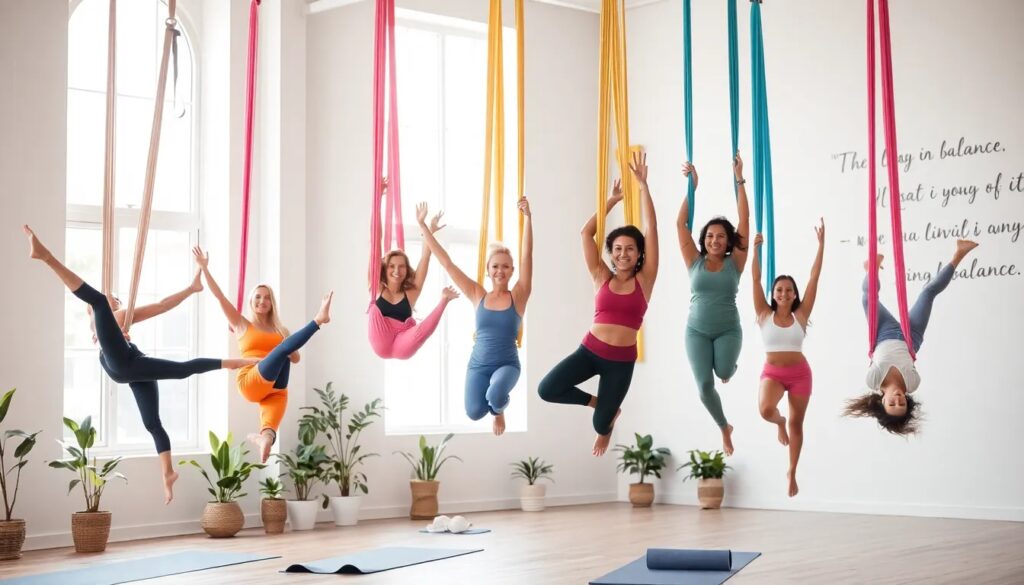
If there is one piece of clothing advice that matters above all others for aerial yoga, it is this: cover your underarms and the backs of your knees. The silk or hammock you will wrap, hang from, and invert in will press directly into those spots under your full body weight. Without fabric there, the friction and pressure create silk burns within the first class. Everything else about what to wear to aerial yoga flows from the same logic — the hammock dictates the rules.
- Why Aerial Yoga Clothing Is Different from Regular Yoga Clothing
- What to Wear: The Essentials for Women
- What to Wear: The Essentials for Men
- Best Fabrics for Aerial Yoga
- What NOT to Wear to Aerial Yoga
- Do You Wear Socks to Aerial Yoga?
- Aerial Yoga Clothing Checklist
- Can You Wear a Unitard or Bodysuit?
- Is Aerial Yoga Safe for Everyone?
- How Aerial Yoga Clothing Compares to Other Styles
- Frequently asked questions
Why Aerial Yoga Clothing Is Different from Regular Yoga Clothing
Ground-based yoga clothing prioritizes stretch and moisture-wicking. Aerial yoga clothing adds two requirements that conflict with the typical ground-yoga playbook:
- Coverage at contact points. The hammock contacts your body at the underarms (for hanging poses), the backs of the knees (for inversions and seated poses), and the hips and lower back (for hammock-seated positions). Exposed skin at these points gets pinched and abraded when the fabric is loaded with body weight.
- Nothing that can snag. Zippers, hooks, button studs, rings, bracelets, and necklaces can catch in the woven silk fabric, creating sudden jerks during movement or, in the case of metal hardware, damaging the hammock itself. Studios typically enforce a strict no-jewelry policy for exactly this reason.
This is why the common ground-yoga look — a cropped tank top and high-waisted leggings — only half-works for aerial. The leggings are correct; the crop top is not, because it exposes the underarms.
What to Wear: The Essentials for Women
- Top: A fitted long-sleeve top, a fitted top with cap sleeves, or a standard-length fitted tank that fully covers the underarm area. The fabric should be snug enough not to bunch into the hammock. Avoid racerback designs if the armhole cuts high into the underarm — that gap is where silk burns happen. A fitted short-sleeve athletic top is the most versatile option.
- Bottom: Full-length or capri leggings are ideal. They protect the backs of the knees during all hanging and knee-drape poses. High-waisted compression leggings stay put through inversions without slipping.
- Midriff: Keep it covered. A bare midriff will contact the hammock during seated and hip-flexor poses. Tuck in any top that rides up, or wear a bodysuit that eliminates the gap entirely.
What to Wear: The Essentials for Men
- Top: A fitted short-sleeve or long-sleeve athletic shirt. Skip the sleeveless look unless the shirt has a very low, full armhole. Standard gym tanks with deep-cut armholes expose the underarm skin.
- Bottom: Compression leggings or fitted athletic shorts with an inseam of at least 7 inches. The shorts must cover the backs of the knees fully when legs are extended. Many men prefer compression leggings specifically because they eliminate any risk of exposure during inversion sequences.
For a broader look at yoga apparel built for men across different class styles, see our men's yoga clothing guide.
Best Fabrics for Aerial Yoga
The fabric needs to offer stretch, grip, and durability against the repeated friction of silk contact:
- Nylon-spandex blends (80/20 or 90/10): the best combination of stretch, durability, and light friction grip against the silk. Most premium yoga leggings use this construction.
- Polyester-spandex blends: slightly less silky than nylon but very durable and excellent for moisture-wicking. A solid choice for warmer studios.
- Avoid slippery fabrics: satin, silk, and ultra-smooth microfiber do not grip the hammock adequately. You will slip out of poses that require a secure wrap.
- Avoid rough textures: heavy-ribbed knits and thick fleece create too much friction and can stress the hammock fabric over time.
As an Amazon Associate, we earn from qualifying purchases.


What NOT to Wear to Aerial Yoga
- Any jewelry whatsoever. Rings, bracelets, necklaces, anklets, and watches. Aerial studios are typically non-negotiable on this. Even small stud earrings can snag. Leave all of it at home or in the locker.
- Zippers, metal hooks, or clasps. Sports bras with metal hook-and-eye backs, jacket zippers, and cargo pants hardware can all damage the hammock silk.
- Loose or flowy clothing. Oversized shirts and wide-leg pants drape into the hammock and make it impossible for your instructor to see your body position. They also bunch under points of contact and cause uneven pressure.
- Cropped tops that expose the underarm. Even if the top covers the midriff, a high-cut armhole leaves the underarm skin exposed to the full contact of the silk under load.
- Shorts that do not cover the backs of the knees. Standard running shorts or gym shorts are too short for most aerial sequences.
- Lotion or body oil. These make the hammock fabric slippery and reduce the grip you need for stability. Apply lotion after class, not before.
Do You Wear Socks to Aerial Yoga?
Bare feet are the default in most aerial studios — direct skin contact gives you the best grip on the fabric during footlocks and standing poses. Some studios allow grippy, non-slip socks instead, especially if you are self-conscious about bare feet or the studio floor is cold. Regular socks are not a safe substitute: smooth soles slide on both the floor and the silk, which is exactly the kind of slip that causes falls during standing sequences. If you are unsure, check your studio's policy before class — it varies more from studio to studio than the clothing rules do.
Aerial Yoga Clothing Checklist
- Fitted short- or long-sleeve top (underarms fully covered)
- Full-length or capri compression leggings (backs of knees covered)
- No jewelry — remove rings, bracelets, necklaces, and watches before leaving home
- No zippers or metal hardware on any garment
- Midriff covered (tuck in or wear a bodysuit/unitard)
- No lotion applied to skin on class day
- Hair secured in a low bun or braid (high ponytails can tangle in the hammock during inversions)
- Grippy socks or bare feet (check studio policy)


Can You Wear a Unitard or Bodysuit?
A unitard or one-piece bodysuit made from a nylon-spandex blend is actually the ideal aerial yoga garment. It eliminates every coverage gap — underarm, midriff, and lower back — in one piece and stays put through any inversion. Aerial acrobatics and circus arts practitioners tend to prefer them for exactly this reason. If you are doing aerial yoga regularly, a well-fitted unitard is worth the investment.
Note that comfort and range of motion still matter: a unitard that restricts shoulder rotation or hip flexion will impede your poses. Make sure you can reach both arms overhead and bring your knees to your chest without fabric pulling before committing to it for class.

- Designed for yoga and daily wear
- Butterluxe collection features extremely soft and ultra stretchy, engineered for luxurious comfort
- 25'' Inseam. Light support
- Built-in removable pads for added support and coverage
- Square neckline and wide scoop U back
- One piece spaghetti strap jumpsuit perfect for yoga, exercise, work, home, leisure, vacation, party, lounge, etc
Is Aerial Yoga Safe for Everyone?
Aerial yoga is generally low-impact, but the inverted and suspended poses put load on the shoulders, wrists, neck, and inner ear in ways ground-based yoga does not. If you are pregnant, have a recent shoulder or wrist injury, uncontrolled high blood pressure, glaucoma, or a history of vertigo or motion sickness, talk to your doctor and your instructor before booking a class — some studios offer modified or restorative aerial sessions that avoid full inversions. Our guide to aerial yoga during pregnancy covers that specific case in more detail.
For healthy beginners, aerial yoga is not inherently harder than a first ground-yoga class — the hammock actually assists some poses by supporting your body weight — but the unfamiliar sensation of hanging upside down can be disorienting at first. Most studios run beginner-specific sessions that spend extra time on hammock basics before attempting inversions, so asking for one is a reasonable way to start.
How Aerial Yoga Clothing Compares to Other Styles
The coverage requirements for aerial yoga are significantly more specific than for ground yoga. If you want a general overview of what works across yoga styles, see our guide to what people wear to yoga. For the specific considerations around heat and sweat management, our hot yoga clothing guide explains what to wear to a hot yoga class. And if you want to see exactly where the hammock loads your body weight and why coverage is non-negotiable, our guide to aerial yoga poses breaks it down pose by pose. For the complete picture — benefits, what to expect, and how to get started — see our full aerial yoga guide.
Frequently asked questions
The hammock or silk contacts the underarm area during hanging and supported poses and applies your full body weight at that point. Without fabric, the friction and pressure cause skin abrasion known as silk burns. A sleeve or fitted top that covers the armhole gap prevents this.
Only if they are long enough to fully cover the backs of your knees when your legs are extended. Most standard running shorts or gym shorts are too short. Fitted shorts with a 7-inch or longer inseam work; compression leggings are the safer choice for beginners.
No. Rings, bracelets, necklaces, and watches can catch in the hammock fabric, create safety risks during movement, and damage the silk. Most aerial studios enforce a strict no-jewelry policy. Remove all jewelry before class.
It depends on the cut. A crop top that fully covers the underarm area and the midriff can work. A cropped top with a racerback or high-cut armhole that exposes the underarm skin is not suitable. When in doubt, choose a standard fitted tank or short-sleeve top.
No. Lotion and body oil make your skin slippery against the hammock fabric, which reduces grip during poses that require secure contact with the silk. Apply lotion after class, not before.
Most studios allow bare feet or grippy, non-slip socks — check with your specific studio, since sock policy varies more than clothing policy.
Have a correction or a question about this article? Reach us via our contact page.
Last update 2026-09-10. Price and product availability may change.
Recommended: