Yin Yoga: What It Is, Benefits, and How to Start Practicing

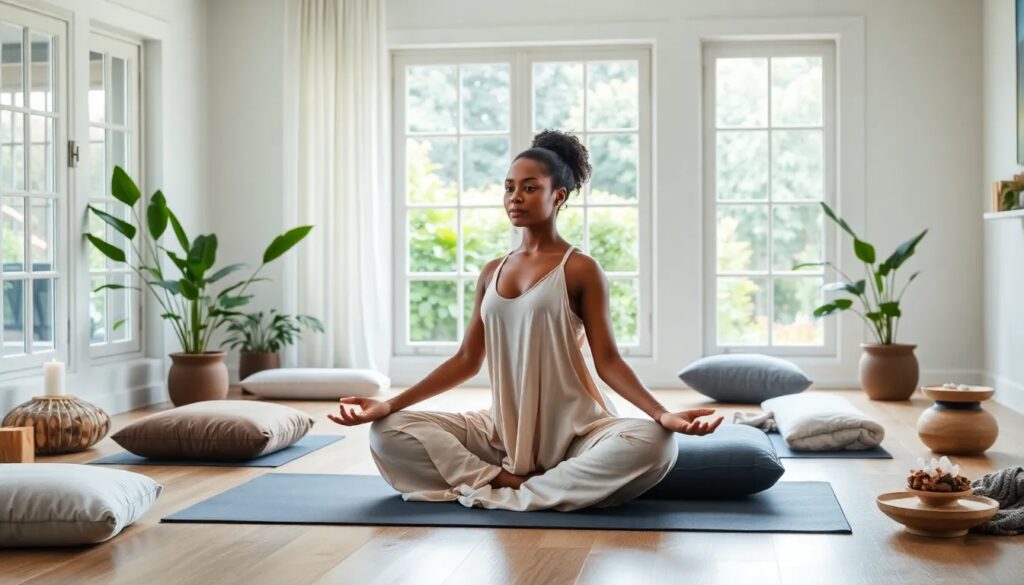
Yin yoga is a slow, floor-based style of yoga in which passive poses are held for roughly two to five minutes — sometimes longer — with muscles relaxed, so that the gentle stress reaches the deeper connective tissues: fascia, ligaments, and joint capsules. It is the structural opposite of dynamic styles like vinyasa, and it doubles as a meditation practice: long holds give you little to do except observe sensation and breath.
This guide covers where yin comes from, what it actually does for the body and mind, how it differs from restorative yoga, the core poses, and how to practice safely at home or in class. It's part of our broader look at yoga styles and lineages, if you want to see how yin compares to other traditions.
Where Does Yin Yoga Come From?
Modern yin yoga emerged in the late 1980s and 1990s. Martial artist and Taoist yoga teacher Paulie Zink developed the early foundations; Paul Grilley combined long-held floor poses with the study of skeletal variation and Chinese meridian theory; and Sarah Powers, who coined the name yin yoga, integrated mindfulness practice. Teacher and author Bernie Clark later helped popularize it worldwide through his books and the YinYoga.com resource.
The yin-yang framing comes from Taoist philosophy: yang practices are active, rhythmic, and muscular; yin practices are still, cooling, and aimed at the less elastic tissues of the body. Neither is better — they complement each other.
What Are the Benefits of Yin Yoga?
- Improved range of motion. Long, gentle holds help maintain and gradually increase mobility around the hips, pelvis, and spine — the areas yin targets most.
- A counterbalance to training and sitting. Athletes, runners, and desk workers use yin to address stiffness that short stretches rarely touch.
- Stress regulation. Slow breathing and stillness shift the nervous system toward its rest-and-digest mode; many practitioners report better sleep and lower tension.
- A bridge to meditation. Holds of several minutes train the same attention skills as seated practice, with the body as the anchor.
Honest caveat: research specifically on yin yoga is still limited, and claims about meridians or releasing stored emotions are traditional or anecdotal framings rather than established science. The mobility and relaxation benefits, however, are consistent with what is known about stretching and slow-breathing practices generally. For a deeper dive, see our article on yin yoga benefits. One question people often ask is whether yin yoga burns calories the way a cardio class does — the short answer is not meaningfully, since poses are held still rather than performed with exertion, but that guide walks through the numbers.
Yin vs Restorative vs Vinyasa: What Is the Difference?
| Aspect | Yin yoga | Restorative yoga | Vinyasa yoga |
|---|---|---|---|
| Goal | Gentle stress on connective tissue | Complete rest, zero effort | Strength, stamina, flow |
| Hold time | 2–5+ minutes | 5–20 minutes | A few breaths |
| Sensation | Mild, tolerable discomfort | None — full comfort | Muscular effort, heat |
| Props | Optional, to modify depth | Essential, to remove all effort | Minimal |
| Pace | Still and slow | Still and slow | Continuous movement |
The most common confusion is between yin and restorative: in yin you seek a mild stretch sensation; in restorative the body is fully supported and you seek none. Our guide to what restorative yoga is explains the supported approach in detail.
Core Yin Yoga Poses
Most yin classes draw from a small vocabulary of floor shapes, each held for several minutes:
- Butterfly — seated, soles of the feet together, folding forward; works the inner thighs and spine.
- Dragon — a long, low lunge that targets the hip flexors and quadriceps.
- Shoelace — stacked knees; releases the outer hips and lower back.
- Caterpillar — a relaxed seated forward fold for the whole back line.
- Sphinx or Seal — gentle passive backbends for the lumbar spine.
- Child's Pose — the standard resting shape between holds.
For the complete repertoire and what each pose targets, see the 26 yin yoga poses, and try our ready-made yin yoga sequence for a structured home session.
How to Practice Yin Yoga Safely
- Find your edge, then back off slightly. You want mild, sustainable sensation — around a 4 or 5 out of 10 — never sharp or electric pain.
- Stay cool and relaxed. Yin is practiced with muscles soft and without warming up vigorously first; that is by design.
- Use props freely. Cushions, blocks, and folded blankets let you hold poses long enough for them to work.
- Come out slowly. Joints feel fragile for a few moments after a long hold; move gently between poses.
- Respect your skeleton. Bone shape varies between people; your butterfly will not look like your neighbor's, and it should not.
- Adapt for hypermobility or injury. If your joints are very flexible, or you have disc problems or recent injuries, ask a teacher or health professional how to modify — long passive holds are not automatically suitable for everyone.
Since props do most of the work of letting you sink into a pose without straining to get there, it's worth having a few basics on hand — a supportive bolster is the single most-used prop in a yin practice.
As an Amazon Associate, we earn from qualifying purchases.


Is Yin Yoga Safe? Who Should Modify or Skip It
For most healthy adults, yin yoga is low-impact and safe. But because poses are held for minutes rather than seconds, a few situations call for extra caution or a modified approach rather than the pose as taught in a general class.
If you're hypermobile — joints that move well past a typical range — long passive holds can push you past a safe end range without much warning, since you may not feel the same protective tension others do; working with a teacher who can spot and cue alignment is worth it. Anyone with a diagnosed disc problem or spinal protrusion should be cautious with deep forward folds and twists, particularly poses like Caterpillar or Shoelace held for the full duration, and should check with a physical therapist or doctor about which shapes to avoid. During pregnancy, skip deep hip-opening or abdominal-compression poses unless a prenatal-trained teacher has cleared them, since ligaments loosen naturally and joints are more vulnerable. And if you have a recent knee or hip injury, poses that load those joints directly — Dragon and Shoelace are the two most common culprits — deserve a modification (more support, less depth, shorter hold) or a skip entirely until you've healed.
The rule that cuts across all of these cases is the same one: sensation should stay mild and tolerable. Sharp, electric, or radiating pain is never part of a "good" yin hold — it's a signal to come out of the pose immediately. If you're managing an existing injury or condition, loop in a healthcare professional before building a regular yin practice around it.
How to Start: Classes, Home Practice, and Resources
Yin appears on most studio schedules, often in the evening. A typical class lasts 60 to 75 minutes and includes only five to eight poses — a good first class to try even as a complete beginner, since there is nothing athletic to keep up with; our guide on whether yin yoga suits beginners covers what to expect. At home, start with 20 minutes: two or three poses, two to three minutes each, finishing with a few quiet breaths lying down. Bernie Clark's books and YinYoga.com remain the most thorough free references for pose variations and theory. If you want to go further than a personal practice, our guide to yin yoga teacher training covers what certification involves.
Frequently Asked Questions
Typically two to five minutes per pose, though experienced practitioners sometimes hold longer. The duration is what allows gentle stress to reach fascia, ligaments, and joint capsules rather than just the muscles.
Yes. There are no athletic sequences to follow, every pose can be modified with props, and the slow pace gives you time to settle in. The main adjustment for newcomers is mental: staying still for several minutes takes practice.
No. In yin you hold poses at a point of mild stretch sensation to work connective tissue. In restorative yoga the body is completely supported by props and the goal is zero effort and deep rest, with no stretch at all.
One to three sessions a week works well for most people, often as a complement to more active training. Even a short 20-minute home practice of two or three poses delivers much of the benefit if done consistently.
For most people it is gentle and safe, but long passive holds can aggravate certain conditions, such as joint hypermobility, disc injuries, or recent sprains. If sensation is ever sharp or radiating, come out of the pose, and check with a teacher or health professional if you have an existing injury.
Yin yoga's main purpose is to work the connective tissue — fascia, ligaments, and joint capsules — through long, passive holds that muscles alone can't reach. It also functions as a moving meditation, since a multi-minute hold gives the mind little to do except track breath and sensation. It complements active styles like vinyasa rather than replacing them.
Active styles such as vinyasa and hatha move the body through poses with muscular effort and build heat; yin does the opposite, holding still poses for minutes at a time with muscles relaxed to reach connective tissue instead. See the comparison table above for how yin, restorative, and vinyasa stack up side by side.
Have a correction? Contact us.
Last update 2026-09-10. Price and product availability may change.
In this section
- A 60-Minute Yin Yoga Sequence for Lower Back Pain
- Does Yin Yoga Burn Calories? Real Numbers Compared
- Is Yin Yoga Good for Beginners? An Honest First-Class Guide
- What Are the 26 Yin Yoga Poses? The Full List, Explained
- What Is Vin Yin Yoga? The Vinyasa-Yin Hybrid Class Explained
- What Is Yin Yoga Good For? Benefits, Limits, and Who It Suits
- Yin Yoga Benefits: What the Practice Actually Does for Body and Mind
- Yin Yoga Certification: Hours, Programs, and What to Look For
- Yin Yoga Poses: A Beginner's Guide to the Practice
- Yin Yoga Retreats: What to Expect and How to Choose One
- Yin Yoga Teacher Training in Bali: Formats, Curriculum, and How to Pick a Program
- Yin Yoga Teacher Training: Hours, Formats, and How to Choose a Program
Recommended: