Is Yin Yoga Good for Beginners? An Honest First-Class Guide

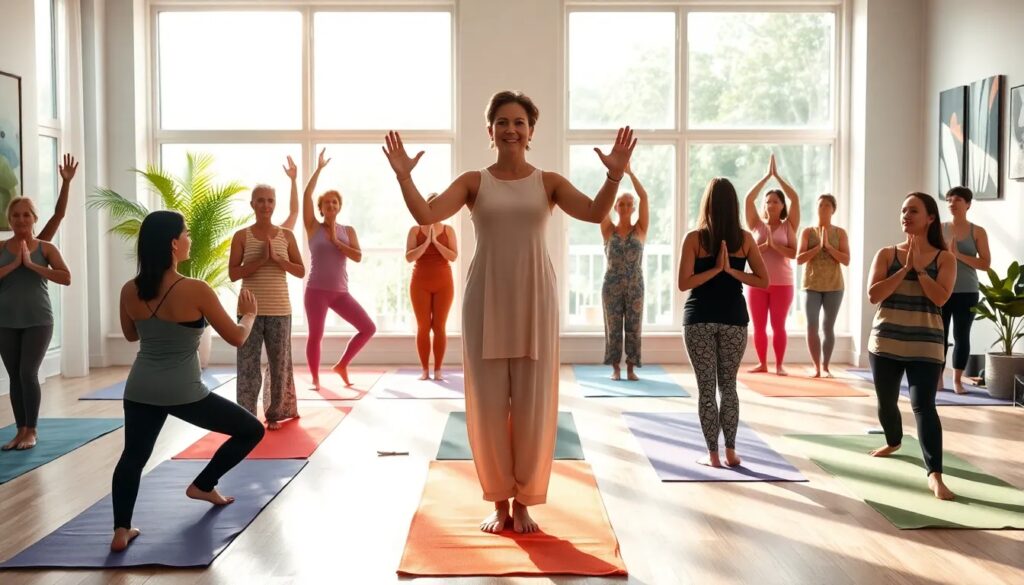
Yes — yin yoga is one of the best styles for beginners. There are no flowing sequences to memorize, no balancing on one leg, and almost everything happens seated or lying on the floor. Poses are held passively for two to five minutes with props supporting the body, so the practice asks for patience rather than strength or flexibility. The honest caveat: the stillness itself is the hard part. Many newcomers find five quiet minutes in one shape more challenging than a fast class — and learning the difference between productive sensation and pain takes a little guidance.
This article is general information, not medical advice. If you have joint problems, hypermobility, osteoporosis, a recent injury, or you are pregnant, check with a healthcare professional before starting yin yoga, and tell your teacher.
What yin yoga actually is
Yin yoga is a slow, floor-based practice in which passive poses are held for several minutes to gently load the connective tissues — fascia, ligaments, and joint capsules — rather than working the muscles the way active styles do. The approach draws on Taoist ideas of yin (still, cool, passive) and yang (active, warm, dynamic), and was popularized in the West by teachers such as Paul Grilley, Sarah Powers, and Bernie Clark. For a full primer on the method and its principles, see our complete guide to yin yoga.
Three principles govern every pose: find an appropriate edge (sensation, not pain), become still, and stay for time. That is the whole technique — which is exactly why beginners can do it on day one.
Why yin suits beginners
- No choreography. A typical class uses only a handful of poses, announced and explained one at a time.
- Props are the norm, not a crutch. Bolsters, blocks, and blankets are used by everyone, so modifying carries no stigma.
- Flexibility is not required. Each pose has a version for tight hips and hamstrings — the long hold does the work, not the depth of the shape.
- It teaches body awareness. Long holds give you time to actually feel what is happening, a skill that transfers to every other style you try later.
- It calms the nervous system. The slow pace and long exhalations shift the body toward its rest-and-digest state, which is why many people leave a yin class noticeably more relaxed than they arrived.
- It is more useful for flexibility and stress recovery than for weight loss. Yin is not designed to burn many calories; if that is your goal, an active style is the better match.
What yin will not do is build strength or cardiovascular fitness — it is deliberately not a workout. If that is what you are after, an active style is the better entry point; our honest breakdown of what yin yoga is and is not good for covers the limits in detail.
Yin vs. an active beginner class, at a glance
| Yin yoga | Vinyasa (active flow) | |
|---|---|---|
| Pace | Very slow; 4–8 poses per hour | Continuous movement with breath |
| Poses held for | 2–5 minutes, passive | A few breaths, active |
| Targets | Fascia, ligaments, joints | Muscles, heart and lungs, coordination |
| Sweat factor | Minimal | Moderate to high |
| Main challenge | Stillness and patience | Keeping up with transitions |
| Best entry point if | You are stiff, stressed, or recovery-focused | You want fitness plus mindfulness |
Many practitioners eventually do both — yin as the counterbalance to active training. If the right column appeals more, start with our guide to what vinyasa yoga is.
Four yin poses to learn first
- Butterfly (seated, soles of feet together): stretches the inner thighs and lower back. Sit on a folded blanket if your knees float high.
- Caterpillar (seated forward fold): a rounded-spine fold over straight-ish legs. Bend the knees generously — yin folds are about the back body, not touching toes.
- Sphinx (lying on the belly, propped on forearms): a gentle backbend for the lower spine. Lower to the floor any time it feels like too much.
- Supported child’s pose: the all-purpose rest shape; with a bolster under the torso you can stay comfortably for minutes.
Hold each for two to three minutes at first, then rest in stillness for a few breaths between shapes. When you want a full session plan with timings and props, follow our complete 60-minute yin yoga sequence, which also includes a 30-minute short version — ideal for a first week. Curious how deep the pose library goes? There is a recognized canon of about two dozen shapes, covered in the 26 yin yoga poses.
How to practice safely as a beginner
- Aim for a 5–6 out of 10 sensation — noticeable, but something you could breathe with for minutes. Sharp, electric, or pinching feelings mean back off immediately.
- Never bounce or push deeper mid-hold. Tissues release gradually; forcing is how overstretching happens.
- Use props generously. The right version of a pose is the one you can be still in.
- Come out slowly. Joints feel fragile for a few moments after a long hold — that is normal. Move gently between poses.
- Hypermobile? Stop well before your maximum range and prioritize support; tell your teacher so they can offer alternatives.
Common mistakes that cause injury
Most yin-related strains beginners report come from a small set of predictable errors. In butterfly, forcing the knees toward the floor with the weight of the legs is the fastest path to a sore inner knee — let the knees hover at whatever height the stretch is sustainable, and rest the outer thighs on blocks or rolled blankets. In caterpillar, rounding the lower back in pursuit of a deeper fold loads the lumbar discs; bend the knees until the stretch sits in the hamstrings and back body, not the spine. In sphinx, sinking into the lower back instead of lifting evenly through the chest turns a gentle backbend into a compression exercise. None of these are exotic — they are simply the shapes beginners push the hardest. The fix is the same in every case: fewer props out, smaller range, longer time.
Is yin yoga hard for beginners?
Physically, no — that is the whole point of the method. Floor-based, fully proppable, and paced for someone who has never set foot on a mat. The difficulty is mental, and it is real: staying still in a single shape for two to five minutes, with nothing to do but breathe, is unfamiliar for most modern adults. Expect a few sessions of restlessness before the body starts to settle into it. The challenge fades with practice; it is not a sign that yin is wrong for you.
Starting this week: a simple plan
Pick two or three evenings, lay out a mat, a cushion or bolster, and a couple of books if you have no blocks. Do the four poses above for 20–30 minutes, breathing slowly through the nose. The same plan works at home with no instructor — that is one of yin's quiet advantages over a vinyasa class you cannot yet follow. Expect restlessness the first few sessions — the urge to fidget or check the time is universal and fades with practice. After two weeks of short sessions, try a full class, in a studio or online, and notice how much more familiar the format feels. And do not be surprised if emotions surface during long holds; teachers consider it a normal part of slow practice.
As an Amazon Associate, we earn from qualifying purchases.

- Yoga Bolster Pillow - The Gaiam yoga bolster is a soft and supportive meditation cushion for added support for the body during yoga, meditation, or general relaxation. Our pillow comes in multiple colors to match your style.
- All-Natural Filling - This pillow is filled with natural cotton batting for superior comfort and cushioning. The soft and flexible filling lets you lay against the pillow with cushioned comfort while the pillow keeps its shape.
- Handle Strap - Our yoga pillow features a built-in sturdy handle on the pillow case for hassle-free transport to easily grab the meditation cushion and go or reposition for poses or support your neck.
- Care Instructions - No need to worry about how to maintain freshness for your pillow as the cover is removable and machine washable. Easily remove to toss in the washing machine.
- Not Just for Yoga - This pillow is an ideal yoga accessory but can also be used for general support to stretch out tense muscles in your neck or prop up your legs and feet after a long day.

Physically it is one of the most accessible styles — floor-based, slow, and fully proppable. The challenge is mental: staying still and patient in a pose for two to five minutes takes practice, and most beginners feel restless during their first few sessions.
Start with two to three minutes per pose and build toward five as your body adapts. The sensation should stay around a manageable 5 or 6 out of 10 — something you can breathe with calmly for the whole hold.
No. Every yin pose has a propped or shortened version, and the long passive hold does the work rather than the depth of the shape. Stiff beginners often benefit from yin more than naturally flexible people do.
Two or three short sessions of 20 to 30 minutes per week is a solid start. Yin recovery is gentle, so daily practice is possible, but consistency matters more than volume in the first months.
No, and it is not meant to be. Yin builds flexibility, joint mobility, and stress recovery, but it does not develop strength or cardiovascular fitness. Most practitioners pair it with active exercise or a dynamic yoga style.
Have a correction? Contact us.
Last update 2026-09-10. Price and product availability may change.
Recommended: