Bikram Yoga Poses: The Complete 26-Posture Sequence Explained

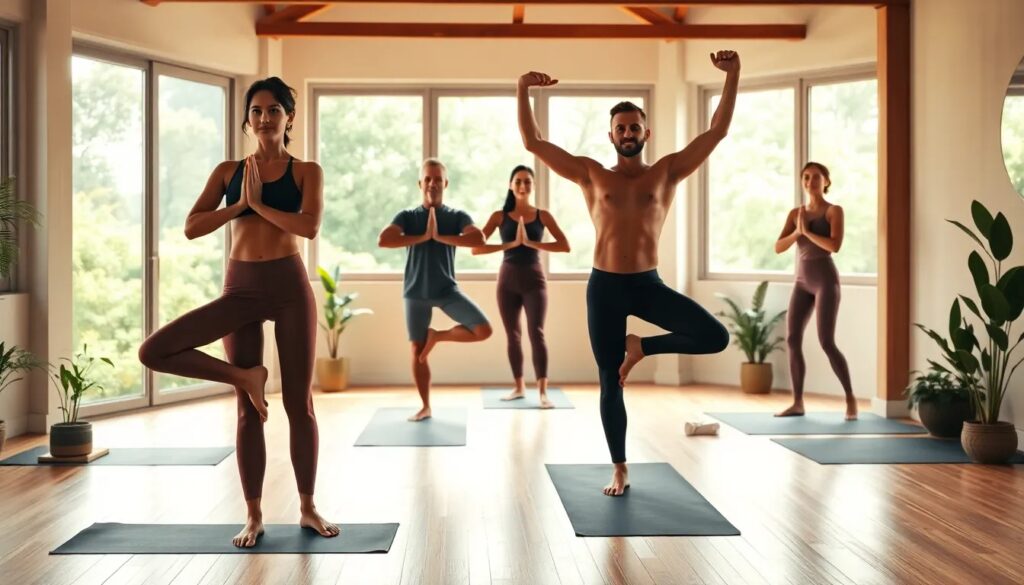
Bikram yoga is a fixed sequence of 26 postures and 2 breathing exercises, always practiced in the same order, in a room heated to about 105°F (40.6°C) with roughly 40 percent humidity, over a 90-minute class. Unlike flowing styles, every Bikram class in the world follows this identical script: a standing series that builds heat and balance, followed by a floor series of backbends, compressions, and stretches. This guide lists all 26 poses in order, explains what each targets, and covers the precautions that matter in a room that hot.
This article is general information, not medical advice. Exercising in extreme heat carries real risks — if you are pregnant, have cardiovascular issues, low blood pressure, or any chronic condition, talk to your doctor before trying a heated class.
The structure of a Bikram class
The sequence has a deliberate architecture: it opens with a standing breathing exercise, moves through 12 standing postures that build strength and balance, transitions through savasana into 12 floor postures that work the spine and internal organs, and closes with a seated breathing exercise. Postures are typically performed twice each, with brief rests between floor poses.
The 26 Bikram yoga poses in order
Standing series
- Standing Deep Breathing (Pranayama) — opening breath work that expands the lungs and warms the body.
- Half Moon Pose with Hands-to-Feet (Ardha Chandrasana with Pada-Hastasana) — deep side bends, backbend, and forward fold; stretches the entire spine.
- Awkward Pose (Utkatasana) — three-part chair position; strengthens thighs, calves, and hips.
- Eagle Pose (Garurasana) — wrapped arms and legs; works balance and the major joints.
- Standing Head-to-Knee (Dandayamana Janushirasana) — a demanding balance that builds concentration and leg strength.
- Standing Bow Pulling (Dandayamana Dhanurasana) — the iconic balancing backbend; opens shoulders and chest.
- Balancing Stick (Tuladandasana) — ten intense seconds per side; elevates heart rate sharply.
- Standing Separate Leg Stretching (Dandayamana Bibhaktapada Paschimotthanasana) — wide-leg forward fold; stretches hamstrings and inner thighs.
- Triangle (Trikanasana) — Bikram's version is a deep lunge-twist hybrid; works hips, legs, and torso simultaneously.
- Standing Separate Leg Head-to-Knee (Dandayamana Bibhaktapada Janushirasana) — compression pose said to stimulate the thyroid; stretches the back of the body.
- Tree Pose (Tadasana) — a calmer balance posture that opens the hips.
- Toe Stand (Padangustasana) — balancing on the ball of one foot in a squat; an advanced option many beginners skip.
Floor series
- Dead Body Pose (Savasana) — two minutes of stillness, then brief savasanas between subsequent poses.
- Wind-Removing Pose (Pavanamuktasana) — knees to chest; compresses and massages the abdomen.
- Sit-Up — the transition movement into each seated posture; engages the core.
- Cobra (Bhujangasana) — first of four spine-strengthening backbends.
- Locust (Salabhasana) — leg lifts from the belly; strengthens the lower back.
- Full Locust (Poorna Salabhasana) — airplane-style lift; works the entire back body.
- Bow (Dhanurasana) — holding the ankles, rocking onto the abdomen; opens the whole front body.
- Fixed Firm (Supta Vajrasana) — reclining hero pose; stretches knees, ankles, and quadriceps.
- Half Tortoise (Ardha Kurmasana) — a resting compression; releases neck and shoulders.
- Camel (Ustrasana) — the deepest backbend of the class; many students find it emotionally intense.
- Rabbit (Sasangasana) — the counter-pose to camel; maximal forward spinal flexion.
- Head-to-Knee with Stretching (Janushirasana with Paschimotthanasana) — seated forward folds; stretch hamstrings and calm the nervous system.
- Spine Twisting (Ardha Matsyendrasana) — the only twisting posture; wrings out the spine.
- Blowing in Firm (Kapalbhati in Vajrasana) — closing rapid-exhale breathing exercise.
Why is the room heated to 105°F?
The heat is the defining feature, and it cuts both ways. Warm muscles stretch more easily, which lets students move deeper into poses sooner — but greater range of motion in the heat is not automatically safer, because it is possible to overstretch without feeling it. The heat also raises heart rate considerably, making the class feel far more cardiovascular than the same poses at room temperature. The common claim that sweating flushes out toxins is not well supported: sweat is overwhelmingly water and electrolytes, and detoxification is handled by the liver and kidneys. If you want the background on heated practice in general, see our guide to what hot yoga is — Bikram is one specific, trademarked form of it. For the full picture on the heat itself, see how hot Bikram yoga gets. And if your interest is weight loss, we look at the evidence in does hot yoga help you lose weight and break down realistic calorie numbers.
Bikram vs other styles at a glance
Bikram is one entry among the many yoga styles and lineages practiced today. Here's how it stacks up against generic hot yoga and vinyasa:
| Bikram | General hot yoga | Vinyasa | |
|---|---|---|---|
| Sequence | Fixed 26 poses, identical every class | Varies by teacher | Varies every class |
| Room temperature | ~105°F / 40.6°C, 40% humidity | Usually 85–105°F | Room temperature (unless heated) |
| Class length | 90 minutes | 60–90 minutes | Typically 60–75 minutes |
| Music / atmosphere | None; scripted dialogue, mirrors, bright light | Varies | Often music, dimmer light |
| Flow between poses | No — static holds with rests | Sometimes | Yes — breath-linked movement (see what is vinyasa yoga) |
Which pose is the hardest?
There's no official ranking, but ask around after any class and the same two poses come up. Students and teachers most often name Standing Bow Pulling (posture 6) and the deep backbend Camel (posture 22) as the hardest holds in the sequence — one for the balance and shoulder-opening it demands while standing on one leg in the heat, the other for the sheer intensity of the backbend and the emotional release many students report afterward. Both improve with repetition rather than flexibility alone, which is part of why the fixed sequence rewards showing up regularly.
Tips for your first Bikram class
- Hydrate all day before class, not just immediately before. You can lose a liter or more of fluid in 90 minutes.
- Eat light, 2–3 hours ahead. A full stomach and deep compressions do not mix.
- Bring a grippy mat and two towels — one for the mat, one for you. A sweat-resistant mat matters more here than in any other style; see our guide to the best yoga mats for hot yoga.
As an Amazon Associate, we earn from qualifying purchases.

- GRIP DOT: Fusing the bottom of the yoga towel with grip dots creates maximum grip for all forms of Yoga,Bikram(hot yoga), Vinyasa, Hatha, Ashtanga, Pilates, Asana and meditation.Stay grounded, focused, and in perfect balance during your practice
- SUPER ABSORBENT: Excellent water absorption effect can keep your yoga posture for a long time and ensure safety without worrying about sweating and slipping issues during exercise. In fact, the more you sweat, the more grippy the towel gets
- PORTABLE & LIGHTWEIGHT: 72" long X 24" wide, suitable for most yoga mats. You can pack your yoga towel for easy carrying and storage. It can also be used as beach towel, camping towel, beach body wrap, rest towel, blanket, table cloth and bath towel
- CATCHING EYES DESIGN: Embrace vibrant color patterns and eye-catching contrast stitching design to infuse excitement into your yoga routine, ensuring motivation remains high. Our water-based print inks guarantee enduring vibrancy, even after multiple washes
- EASY TO CARE: Washable with wash machine and tumble dry on low or simply hang dry
- Make staying in the room your only goal. First-timers are usually told to aim simply to remain in the room and breathe, sitting out poses as needed.
- Know the warning signs. Dizziness, nausea, cramping, or a headache mean stop, rest, and rehydrate — heat exhaustion is a real risk, not a badge of honor.
- Skip it entirely if you are pregnant unless your doctor explicitly approves, and be cautious with any cardiovascular condition.
A note on the name
The sequence is named after Bikram Choudhury, who popularized it in the United States in the 1970s and built a franchise empire around it. Following serious misconduct allegations against Choudhury in the 2010s, many studios that teach this exact sequence rebranded — you will often see it offered as Hot 26, Original Hot Yoga, or 26 and 2. The class content is the same fixed sequence described above.
If you want to go deeper than a single class, some studios and destinations run a full Bikram yoga retreat built entirely around this exact sequence.
Frequently asked questions
The standard is about 105°F (40.6°C) with around 40 percent humidity, maintained for the full 90-minute class. This is hotter than most generic hot yoga classes, which typically run between 85 and 105°F.
Yes. The fixed order is the defining feature of the method: a standing breathing exercise, 12 standing postures, savasana, 12 floor postures, and a closing breathing exercise. Every certified class follows the same sequence and largely the same instructor dialogue.
The poses themselves are accessible and the fixed sequence makes classes predictable, but the heat is a serious challenge. Beginners are advised to hydrate heavily beforehand, rest whenever needed, and treat simply staying in the room as a successful first class. People with cardiovascular conditions or who are pregnant should consult a doctor first.
Bikram is one specific form of hot yoga: a fixed 26-pose, 90-minute sequence at about 105°F, taught from a script with no music. Hot yoga is the umbrella term for any yoga in a heated room — temperatures, sequences, and class styles vary widely.
Not in the way it is often marketed. Sweat is almost entirely water and electrolytes; detoxification is performed by the liver and kidneys. The heavy sweating in Bikram is mainly your body regulating temperature, which is why rehydration after class is essential.
There's no official ranking, but Standing Bow Pulling and Camel Pose are the two most commonly cited as the hardest — one for the balance and shoulder flexibility it demands, the other for the depth of the backbend, both while the room is at 105°F.
People with cardiovascular conditions, uncontrolled blood pressure, or who are pregnant should talk to a doctor before a heated class; anyone prone to heat exhaustion or dehydration should approach it cautiously and prioritize leaving the room over completing every pose.
Have a correction? Contact us.
Last update 2026-09-10. Price and product availability may change.
Recommended: