Yoga Roller: How to Use a Foam Roller for Yoga, Benefits, and Choosing One

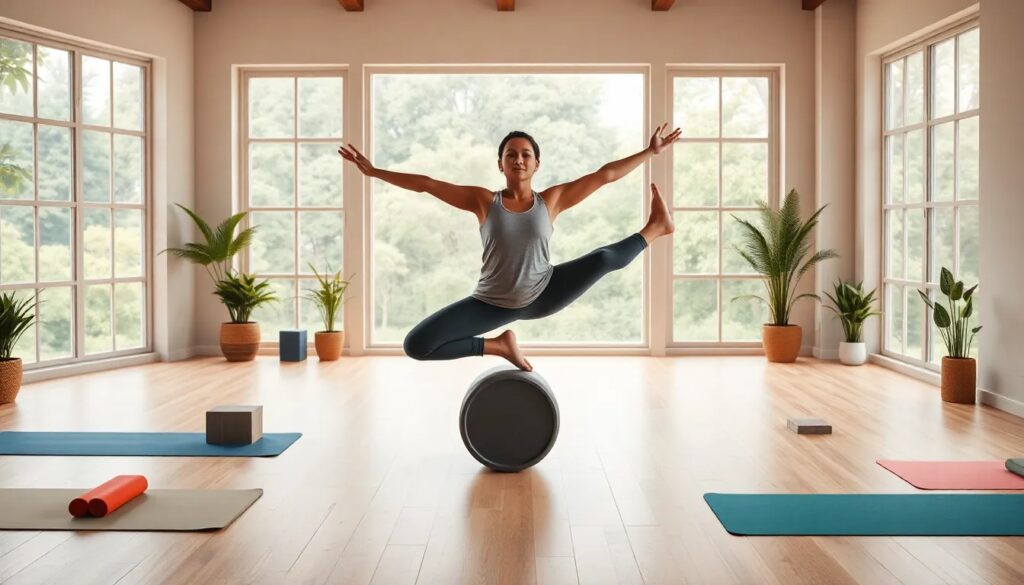
A yoga roller -- also called a foam roller -- is a cylindrical piece of dense foam used to apply sustained pressure to muscles, release tight connective tissue, and improve range of motion. It is one of the most widely used self-care tools in yoga and fitness, and also one of the most misused. Done correctly, foam rolling reduces delayed-onset muscle soreness, improves mobility, and prepares the body for deeper practice. Done wrong, it causes more tension than it relieves. This guide covers what a yoga roller actually does, how to use one without hurting yourself, and how to pick the right one for your needs.
- What a Yoga Roller Actually Does: The Mechanism
- Benefits of Foam Rolling for Yoga Practitioners
- How to Use a Yoga Roller Safely: Step by Step
- Key Muscle Groups and How to Target Them
- Choosing the Right Roller: Density, Size, and Surface
- Alternatives to a Yoga Roller
- When to Roll: Before or After Yoga?
- Common Mistakes to Avoid
- Disadvantages and When Not to Roll
- Frequently asked questions
What a Yoga Roller Actually Does: The Mechanism
Foam rolling works through a process called self-myofascial release (SMR). Fascia is the connective tissue that surrounds muscles, bones, and organs. When muscles are repeatedly stressed -- through yoga, sitting for long hours, or strength training -- the fascia can develop adhesions: dense spots where the tissue loses its normal sliding ability. These show up as knots, stiffness, and reduced range of motion.
Applying sustained pressure via a roller stimulates mechanoreceptors in the tissue, which signal the nervous system to reduce muscle tone in that area. Think of it less like physically breaking up knots and more like convincing the nervous system to let go of unnecessary tension. The pressure also increases local blood flow, which delivers oxygen and clears metabolic waste products from worked tissue.
Pre-activity rolling can increase range of motion without the strength reduction that static stretching sometimes causes, and post-activity rolling reduces the soreness felt 24-72 hours after training. These are consistent, repeatable effects when the technique is done correctly.
Benefits of Foam Rolling for Yoga Practitioners
Yes, foam rollers are actually good for you when used correctly -- they are a low-cost, evidence-aligned tool for managing the muscle tension that builds up around a regular practice. For yoga specifically, a roller is most useful in three situations:
- Pre-practice warm-up: Two to three minutes of rolling on the thoracic spine, hip flexors, and calves before a Vinyasa or Ashtanga session increases range of motion and reduces the time it takes to warm into deep poses. Practitioners who find Pigeon Pose or deep backbends feel tight at the start of practice often benefit from 60-90 seconds of hip flexor rolling beforehand.
- Post-practice recovery: Rolling the quads, IT band, and glutes after a flow session reduces the 24-hour soreness that can discourage regular practice. The connection between recovery and consistency is especially relevant when building a yoga practice focused on core strength.
- Standalone mobility work: Certain areas -- the thoracic spine, hip flexors, and lats -- respond very well to rolling as an independent mobility practice on rest days, helping maintain the range of motion gained in class.
Most chiropractors, physical therapists, and movement coaches consider foam rolling a reasonable complement to a regular practice, especially for the thoracic spine and hip flexors where the lower back tends to compensate. It is not a substitute for professional assessment of an injury, but as a maintenance tool it sits comfortably alongside the equipment listed in our yoga equipment guide.
As an Amazon Associate, we earn from qualifying purchases.


How to Use a Yoga Roller Safely: Step by Step
The most common mistake is rolling too fast. A roller moved quickly over muscle tissue is essentially a massage stick -- stimulating the surface without releasing deeper adhesions. The technique that actually works is slow and deliberate:
- Find the area: Roll slowly until you find a tender or tight spot. Do not rush past it.
- Pause and hold: Stop on the tender spot and hold for 20-30 seconds. Breathe slowly. The initial discomfort should ease within that time as the nervous system reduces tone.
- Move on: Slowly roll to the next area. Work the full length of the muscle, not just the most painful point.
- Control your pressure: For large muscles (glutes, quads), use your arms to bear some weight and progressively load. For sensitive areas (upper back, calves), start with less body weight on the roller.
- Time your sessions: 10-15 minutes total is enough. Longer sessions can cause bruising in sensitive tissue.
What not to roll: The lower back (lumbar spine) should not be rolled directly -- it lacks the bony protection the thoracic spine has, and direct pressure can cause the lumbar muscles to brace, the opposite of the goal. Address lower-back tightness by rolling the hip flexors, glutes, and thoracic spine instead. Also avoid rolling directly over joints, bones, or any area with acute injury or inflammation.
Key Muscle Groups and How to Target Them
| Area | Yoga Benefit | How to Roll |
|---|---|---|
| Thoracic spine (mid-back) | Backbends, shoulder openers | Roller perpendicular to spine, support head, extend over roller segment by segment |
| Hip flexors (front of hip) | Lunges, Pigeon, Warriors | Face down, roller under front of one hip, support weight on forearms |
| Glutes and piriformis | Hip rotation poses, forward folds | Sit on roller, cross one ankle over opposite knee, tilt to that side |
| Quads (front of thigh) | Deep squats, Hero Pose | Face down, roller under thighs, use arms to control pressure |
| IT band (outer thigh) | Hip stability, balance poses | On side, roller under outer thigh -- go slowly, this is often intensely tender |
| Calves and soleus | Standing poses, ankle mobility | Seated, roller under one calf, cross other leg over to add weight |
Choosing the Right Roller: Density, Size, and Surface
Not all foam rollers are equal. The main variables are density, diameter, length, and surface texture.
Density is the most important variable. Soft (white or low-density) foam compresses too much under body weight to create useful sustained pressure -- appropriate only for beginners with very sensitive muscles or recent injuries. Medium density (black EVA foam) is the standard choice for most practitioners. High-density or solid-core rollers provide intense pressure and are best for experienced users.
Diameter: The standard 6-inch diameter works for most body areas. Smaller rollers (3-4 inches) reach narrower areas like calves and forearms but are not stable enough for larger muscle groups.
Length: A 36-inch roller covers the full length of the thoracic spine in one position, which is highly useful. A 12-18 inch travel roller works for most limb muscles but limits back work. If you have storage space at home, 36 inches is more versatile.
Surface texture: Ridged or knobbed surfaces create more intense localized pressure, effective for experienced users. Smooth surfaces are gentler and better for beginners or sensitive tissue.

- High-density foam roller in Blue Speckled
- Ideal for balance, strengthening, and flexibility exercises
- Firm, durable polypropylene maintains shape; molded edges for added comfort
- Lightweight and easy to carry to class and to reposition during workouts
- Wipes clean easily
- Product Dimensions: 12 x 6 x 6 inches (LxWxH)

Alternatives to a Yoga Roller
If you do not have a foam roller at hand, several household items can mimic the same kind of targeted pressure, especially for travel days or right before class. Common substitutes include:
- Tennis ball or lacrosse ball: excellent for trigger points in the glutes, feet, and upper back where a full-size roller is too broad.
- Rolled-up towel: a tightly rolled bath towel gives a narrow, firm surface that works for calves and forearms.
- Rolled yoga mat: if you only have a mat, fold or roll it into a dense cylinder for a soft, low-intensity roll along the spine or quads.
- Water bottle or frozen bottle: a firm plastic bottle can substitute for a small travel roller, and a frozen one doubles as a cold-compress for acute soreness.
These stand-ins work best on smaller areas and for shorter sessions. For a full 10-15 minute routine across the back, hips, and legs, a dedicated foam roller is the most practical tool. If you are building out a starter kit, our guide to yoga blocks covers the other main prop worth owning.

- 3D textured rollers measure 12.5 x 5.5 inches with triple massage zones to replicate the fingers , thumbs , and palms of the human hand .
- Roll before and after your work out at the gym , Pilates , or yoga to condition and stretch muscle tissue , and remove painful trigger points . Dual grid design has finger zone with ridges , and spiked bumps on the opposite side .
- Great for runners , after a long workout , or as part of your stretching routine . Heavy Duty EPP construction tough enough for athletes , and still comfortable enough for a beginner .
- Choose from lightweight and portable 13" model or get full body coverage with our 17" model to get physical therapy grade massages , deep stretches , and acupressure relief all in the privacy of your own home .
- Speed up recovery , treat muscle pain , increase performance , flexibility , and mobility . One of the best fitness tools to help your body recover , rolling before and after exercise is critical for beginners and pros alike .
When to Roll: Before or After Yoga?
Both work, for different reasons. Pre-practice rolling targets specific tight areas to improve range of motion for the session -- it is prep, not a replacement for a warm-up. Post-practice rolling focuses on recovery: addressing the muscles that worked hardest and reducing soreness over the following 24 hours.
For practitioners wondering whether yoga causes soreness, foam rolling after practice is one of the most effective tools for managing it. If you only have time for one, post-practice rolling on the quads, glutes, and upper back produces the most consistent benefits for most yoga practitioners.
If you practice several times a week and want to build real strength alongside flexibility, see our guide on yoga for core strength -- a roller complements that kind of regular practice well.
Common Mistakes to Avoid
- Rolling too fast: Speed defeats the purpose. The nervous system needs sustained pressure, not friction.
- Rolling directly on the lower back: Route lower-back tightness through the hip flexors and thoracic spine instead.
- Using too much pressure too soon: Start with less body weight on the roller and build over several sessions.
- Ignoring pain signals: Mild discomfort that eases within 30 seconds is normal. Sharp, shooting, or worsening pain is not -- stop and reassess.
- Sessions that are too long: More than 20 minutes can cause local bruising and tissue irritation, particularly on the IT band.
A foam roller is a low-cost tool with a meaningful impact on how your body feels going into and recovering from yoga. Understanding the physical demands of yoga as exercise helps frame why recovery tools like this earn their place in a regular practice. For a different back-care tool that pairs well with rolling, see our guide to the yoga wheel.
Disadvantages and When Not to Roll
Foam rolling has a few real downsides to be aware of, especially for beginners:
- Bruising and tissue irritation: too much pressure, or rolling the same spot for too long, can leave visible bruises on lean muscle groups like the IT band and inner thigh.
- Temporary soreness: a heavy session can leave you sorer than you started, particularly if you are new to the practice.
- Not a substitute for diagnosis: rolling over a real injury (muscle tear, acute inflammation, joint sprain) delays proper assessment and can make it worse.
- Uncomfortable for some bodies: people with high pain sensitivity, recent surgery, or osteoporosis should consult a clinician before starting a routine.
None of these are reasons to avoid a roller entirely -- they are reasons to start gently, avoid the lower back and joints, and stop on sharp or radiating pain. Treat the first two weeks as calibration, not intensity.
Frequently asked questions
Yes, the terms are used interchangeably. A yoga roller, foam roller, and massage roller all refer to the same cylindrical tool used for self-myofascial release. Some yoga-specific versions are softer or shorter, but the mechanism and technique are identical.
Both are effective but for different goals. Pre-practice rolling increases range of motion in specific tight areas before your session. Post-practice rolling aids recovery and reduces soreness in the 24-48 hours after practice. If you only have time for one, post-practice rolling on your most-worked muscle groups is typically more impactful.
Foam rolling can cause bruising if you use too much pressure or roll for too long. Avoid rolling directly over the lumbar spine, joints, or any area with acute injury or inflammation. Sharp or radiating pain while rolling is a signal to stop -- mild discomfort that eases within 20-30 seconds is normal and expected.
Medium density (typically black EVA foam) is the best starting point for most adults. Soft white foam compresses too easily to create useful pressure. High-density or ridged rollers are more effective once you have established a rolling habit, but can be uncomfortably intense for first-time users.
The discomfort comes from direct pressure on tight fascia or trigger points. This is expected and usually resolves within 20-30 seconds of holding on a tender spot. If the pain is sharp, radiates down a limb, or does not ease with sustained pressure, reduce weight on the roller or move to a less sensitive area. Foam rolling should not feel pleasant, but it should not feel injurious.
A tennis ball or lacrosse ball works well for trigger points in the glutes, feet, and upper back. A tightly rolled bath towel or a folded yoga mat can substitute for a full-size roller on calves and the spine. For travel, a firm water bottle gives similar pressure on smaller areas.
Have a correction or a question about this article? Reach us via our contact page.
Last update 2026-09-10. Price and product availability may change.
Recommended: