How to Use a Yoga Wheel

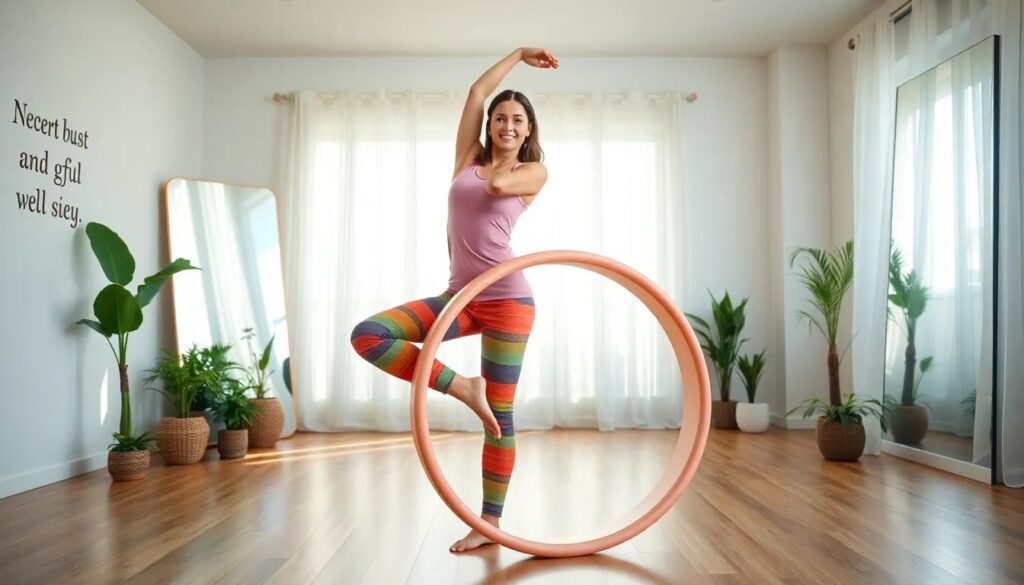
A yoga wheel is a hollow circular prop — usually 12 to 13 inches across and 5 to 6 inches wide — designed to roll along your spine and open the front of your body in a way a flat block or bolster cannot. Used well, it distributes the curve of a backbend across a greater surface area, which makes deep spinal extension accessible to people who lack the shoulder or thoracic mobility to drop straight into Wheel Pose (Urdhva Dhanurasana) or Camel. It also doubles as a balance challenge, a core-strength tool, and a shoulder-mobility device. This guide covers what a yoga wheel actually does, how to get started safely, a seven-step beginner sequence, and what to look for when you buy one.
- What does a yoga wheel actually do for your body?
- Is the yoga wheel safe? Key precautions
- Beginner yoga wheel exercises: a step-by-step sequence
- How the wheel compares to other yoga props
- Choosing a yoga wheel: what actually matters
- Integrating the wheel into your regular practice
- Common mistakes to avoid on a yoga wheel
- Frequently asked questions
What does a yoga wheel actually do for your body?
The wheel's main mechanical benefit is extension. When you lie back onto a yoga wheel positioned under your thoracic spine, the curved surface guides the vertebrae into extension while supporting the back muscles rather than straining them. Most people spend most of their day in mild thoracic flexion (phones, laptops, driving), so this reversal has an immediate decompressive effect that practitioners often describe as feeling like a reset.
Beyond spine extension, the wheel creates instability. The moment you balance on it, your core and stabilizing muscles engage to keep you from rolling off. That is why push-ups with the hands on the wheel, or Plank with the shins on the wheel, are noticeably harder than the floor versions. The instability also shows up in hip openers and hamstring work: because the wheel can slide, you cannot cheat the stretch by shifting your weight the way you can on a fixed surface.
Chest and shoulder opening is the third major benefit. Lying back over the wheel with the arms overhead lengthens the pectorals and anterior deltoids in a way that static stretching often fails to reach. Swimmers, rowers, and anyone who presses a lot overhead tend to notice this quickly.
One underrated use is hip-flexor release. Placing the wheel under the front thigh in a supported Low Lunge gives you a gentle elevation that lets the hip sink toward the floor over time with very little active effort from the practitioner.
Is the yoga wheel safe? Key precautions
The wheel is safe for most healthy adults when used with a few basic rules.
Never let the wheel contact the lumbar spine (lower back) during rolling exercises. The lumbar is relatively fragile in extension, and the leverage of the wheel exaggerates any existing hypermobility there. Keep the wheel on the thoracic (mid-back) and upper-back region. If you feel a sharp pinch anywhere in the lower back during a backbend, stop and reposition — pinching is a signal, not a stretch.
Warm up before using the wheel for backbends. Five to ten minutes of Cat-Cow, thread-the-needle stretches, and gentle chest openers prepare the thoracic spine for greater extension and reduce the risk of straining a cold mid-back.
If you have a diagnosed disc issue, recent spinal surgery, or osteoporosis, consult a physical therapist before using the wheel. The rolling motion amplifies spinal load compared to lying on a flat surface, and a clinician can tell you whether your specific condition makes extension work appropriate.
For anyone asking how to use a yoga wheel for lower back pain: the wheel is generally used on the thoracic spine, not the lumbar. If your discomfort is in the lower back, the wheel is unlikely to help directly, and forcing extension there can aggravate the issue. A physiotherapist can advise whether any wheel work is appropriate for your case.
Start with supported exercises where you control the range of motion. Do not try to drop into a full Wheel Pose over the prop on your first session — work up to it through the sequence below.
Beginner yoga wheel exercises: a step-by-step sequence
Work through this sequence in order. Each exercise prepares you for the next. Hold each for the breath count or time indicated.
- Seated Spine Roll-Out. Sit on the floor with knees bent, feet flat, the wheel behind you at lower-back height. Slowly lie back onto the wheel so it supports the mid-back. Keep your feet grounded and your neck relaxed. Simply breathe here for 5 slow breaths. This is the foundational position for all wheel backbend work.
- Supported Chest Opener. From the Seated Spine Roll-Out, extend both arms overhead toward the floor. Hold for 8 breaths. You will feel an opening across the front of the shoulders and chest. Come back up slowly by engaging your core rather than using momentum.
- Wheel-Supported Child's Pose. Kneel behind the wheel. Place both hands on top of it and slowly roll it forward as you lower your chest toward the floor. Hold where you feel a stretch in the shoulders and lats, not a pinch. 8 breaths. This is gentler than the backbends and great for shoulder mobility.
- Hip Flexor Release. From a Low Lunge with the right foot forward, place the wheel under the left front thigh (just above the knee). Sink the hips gently downward. The wheel adds a slight elevation that amplifies the hip-flexor stretch without forcing it. 8 breaths per side.
- Plank on the Wheel. Place both shins on top of the wheel and hold Plank position with the hands on the floor. Hold for 20 to 30 seconds. The wheel's instability requires the core and lower-back extensors to fire constantly. This is harder than it looks, so start with a short hold.
- Single-Leg Balance Roll. Stand with the wheel in front of you. Place the ball of one foot on top of the wheel and use light fingertip contact on a wall for support. Slowly roll the wheel forward a few inches and back. This develops proprioception in the ankle and foot while stretching the calf and Achilles. 5 rolls per side.
- Supported Fish Pose. Lie on your back and place the wheel lengthwise (parallel to your spine) behind the upper back. As you recline over it, the wheel supports the thoracic curve while the head drops back. Keep the knees bent for lower-back safety. Hold 8 breaths. A good closing posture for the sequence.
How the wheel compares to other yoga props
| Prop | Best for | Limitations |
|---|---|---|
| Yoga wheel | Backbends, chest opening, core challenge, spine massage | Not helpful for seated floor support; needs practice to use safely |
| Yoga block | Height support, alignment in standing poses | Static; no rolling; limited use for backbends |
| Bolster | Restorative poses, Savasana support, gentle chest opening | No instability challenge; larger and less portable |
| Yoga strap | Reaching the feet in forward folds, shoulder stretches | No structural support; purely an extension tool |
The wheel is most complementary to yoga blocks and a yoga blanket, which you will often want nearby to cushion the floor or adjust height. Pair the wheel with a yoga roller for a complete toolkit for back care and mobility work — they are different tools with different jobs.
As an Amazon Associate, we earn from qualifying purchases.

- Natural Cork: Elevate your yoga practice with our eco-friendly, non-slip Gaiam Cork Yoga Brick, perfect for yoga, Pilates, and more.
- Modify Your Poses: Ideal for all skill levels; shorten or deepen your stretches effortlessly. Dimensions: 9"W x 5.5"H x 3"D, lightweight at 1.5 lbs.
- Rounded Edges & Superior Grip: Designed for your comfort, the rounded edges and textured surface provide excellent grip and control during challenging poses.
- Perfect Dimensions: Measuring at 9"W x 5.5"H x 3"D, this yoga brick provides ample support for optimal alignment and posture.
- Versatile & Portable: Compact and lightweight, this cork yoga brick is your go-to fitness accessory for home or gym workouts.

Choosing a yoga wheel: what actually matters
Wheels vary a lot in quality. The specs that actually affect your practice are outer diameter, width, and load capacity.
A 12- to 13-inch diameter is standard and suits most body types. A 10-inch wheel creates a sharper curve and is better suited to more flexible practitioners. A 15-inch wheel is gentler and often recommended for beginners or taller people with longer torsos.
A width of 5 to 6 inches provides enough lateral stability for balancing work. Narrower wheels tip sideways more easily and limit the size of the backbend.
Material matters for grip and durability. The outer layer should be a textured TPE, cork, or rubber surface that stays grippy when your palms sweat. Cheap plastic exteriors become slippery quickly and are uncomfortable against bare skin. The inner core is usually ABS plastic or bamboo; both are sturdy enough for typical use. Quality wheels generally state a load capacity of around 550 pounds or more.
Cork wheels have a firm feel that many practitioners prefer for backbend support, plus natural antibacterial properties in the material. TPE wheels are slightly softer and tend to be lighter. There is no universally correct choice; it comes down to texture preference.
If you also practice outside, our guide to the best outdoor yoga mat pairs well with a wheel for a fully mobile practice setup.


Integrating the wheel into your regular practice
The wheel fits naturally into two parts of a session. At the beginning, use it for the Supported Chest Opener and Hip Flexor Release to warm up the thoracic spine and hip flexors before standing work. At the end, use it for Supported Fish and the Spine Roll-Out as a wind-down. Backbend-focused practitioners can build an entire 20-minute sequence around the wheel; for everyone else, 5 to 10 minutes of wheel work as a complement to vinyasa or yin yoga will deliver most of the benefit.

- NEW ECO FRIENDLY MATERIAL: The upgraded Gruper Yoga mat is made with premium friendly material. It costs more to make, but it is safer and more soft than traditional non-green PVC and EVA yoga mats.The exercise mats are suitable for many forms of Yoga, Pilates and fitness.
- UPGRADED ANTI-SKID DESIGN AND DOUBLE LAYER ANTI TEAR: Special sticky non slip texture on both sides , more Hard-wearing than regular yoga mats and resistant to tearing and deformation. Double layer structure coupled with a non-slip textured surface provides optimal grip without sacrificing comfort.
- TWO DIFFERENT SIZE OTPTIONAL : ①☛ Standard Size:72"(183cm) x 24" (61cm); Thickness: 0.24"(6mm); Weight: 2.6lb. ②☛ Thickened Size:72"(183cm) x 24" (61cm); Thickness: 0.32"(8mm); Weight: 3.1lb.
- CARE INSTRUCTIONS: 1.Clean with damp cloth (cold water) or mild detergent, dry flat. 2.Do not use a washing machine or dryer or exposed to the sun for extended periods of time. 3.Designed for barefoot exercise. Your shoes or your pets' paws may tear the mat.
- FREE CARRY STRAP & STORAGE BAG - No need to go buy a yoga carrying strap and bag. Easy to carry your yoga mat around with.you can carry to the gym or anywhere you want
Common mistakes to avoid on a yoga wheel
A few errors come up over and over in a yoga wheel practice, especially when working toward Wheel Pose. Avoiding them protects the spine and makes the prop far more useful.
- Placing the wheel on the lumbar spine. The lumbar is built for stability, not extension. The wheel belongs on the thoracic spine. If you feel pinching in the low back, you are too low on the wheel.
- Dropping straight into a full backbend. Even experienced practitioners work up to a full Wheel Pose over the prop. The seven-step sequence above is the path there, not a single dramatic lean-back.
- Rolling too fast. The thoracic vertebrae move segment by segment. Slow, breath-paced rolling respects that and gives the spinal muscles time to lengthen.
- Ignoring a sharp pinch. A stretch feels like a lengthening or a mild opening. A pinch is the body asking you to back off. Stop, reposition, or reduce range.
- Skipping the warm-up. A cold thoracic spine on a hard curve is the most common way to strain an intercostal or a mid-back muscle. Five minutes of Cat-Cow and thread-the-needle first.
- Using a slippery wheel. If the surface is slick, the prop becomes a hazard. A textured TPE or cork cover is worth the small premium.
For more yoga wheel exercises beyond the beginner set, the linked guide goes further into intermediate work, including assisted Wheel Pose and deeper chest openers.


Frequently asked questions
Yes. The wheel exercises in this article start with gentle, supported positions that require no prior flexibility. The wheel actually makes some backbends easier for beginners because it guides the spine into the shape rather than leaving you to figure it out on a flat floor.
A standard 12- to 13-inch diameter wheel works well for most adults. If you are taller or less flexible, a 15-inch wheel creates a gentler curve. If you are very flexible and looking for a deeper extension challenge, a 10-inch wheel intensifies the stretch.
The wheel can help relieve tension in the upper and mid-back (thoracic spine) by gently reversing the forward rounding common in daily life. It is not designed for the lower back, however. If you have a diagnosed spinal condition or lower-back injury, consult a physiotherapist before using a wheel.
A foam roller is solid and used primarily for myofascial release (rolling out tight muscle tissue). A yoga wheel is hollow, larger in diameter, and designed for poses, stretches, and balance exercises. They address different needs and complement each other rather than one replacing the other.
Two to three times per week is enough to notice improvements in thoracic mobility and backbend depth. Daily use is fine if you stick to the gentler exercises (Supported Chest Opener, Spine Roll-Out) and avoid forcing range of motion.
Have a correction or a question about this article? Reach us via our contact page.
Last update 2026-09-10. Price and product availability may change.
Recommended: