Outdoor Yoga Mat: How to Choose One for Grass, Sand, and Stone

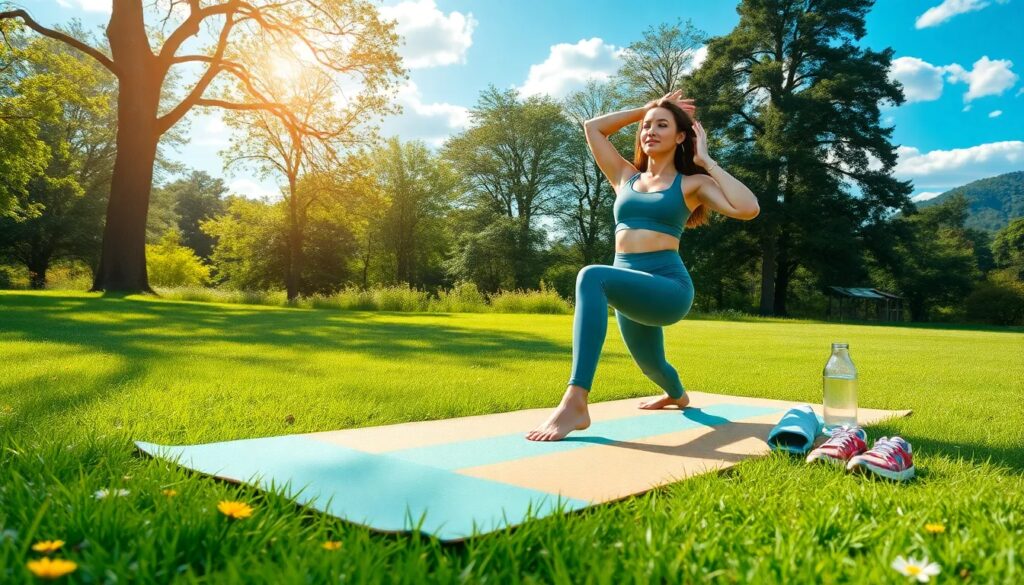
An outdoor yoga mat has to do things an indoor mat rarely faces: grip wet grass, survive direct sun, shed sand or mud after a beach session, and roll up small enough to carry to a park. Most standard studio mats are designed for clean hardwood floors and break down on at least one of those tasks. The right mat is the one whose material, thickness, and base texture match the surface you actually practice on.
This guide breaks down what separates a mat that survives outdoors from one that turns into a slippery, stained mess after a season, and how to match a mat to grass, sand, or stone without overpaying for features you will not use.
- Why Your Indoor Mat Usually Will Not Work Outside
- Match the Mat to the Surface
- Thickness for Outdoor Use
- Best Materials for Outdoor Yoga Mats
- How to Clean an Outdoor Mat
- Portability: Walking, Cycling, or Driving to Your Spot
- Outdoor-Specific Features That Are Worth Paying For
- Where Outdoor Yoga Most Often Happens
Why Your Indoor Mat Usually Will Not Work Outside
The biggest problem with taking a standard studio mat outdoors is the base material. Most PVC and TPE mats have a smooth or lightly textured underside that grips clean, flat hardwood floors. On grass, that same underside shifts with every Warrior pose because the grass blades compress unevenly under the mat. On concrete or stone, a thin mat provides so little cushioning that kneeling postures become uncomfortable almost immediately. And left in direct sun for a season, natural rubber mats — prized indoors for their grip — start to break down and develop a strong smell.
Outdoor use demands a mat designed for it, or at minimum one whose materials hold up to the specific surface you use. The way that mat differs from a studio mat shows up in three places: the base, the thickness, and the surface treatment. Footwear choices also interact with mat stability more than most people expect — see our guide on what shoes to wear for outdoor yoga for the side of that equation.
Match the Mat to the Surface
Outdoor grip is a two-sided problem. The top surface still needs to hold your hands and feet even when damp with morning dew or light sweat. But the bottom surface needs to anchor against grass, sand, packed earth, or rough stone — and each surface behaves differently.
Grass
Look for a mat with a heavily textured or spiked rubber underside. The texture catches individual grass blades and resists lateral slide. Mats marketed for outdoor use often have a waffle or nub pattern on the base specifically for this. A flat-bottom mat on grass behaves like a piece of plywood on a wet floor: the whole mat migrates as you move.
Sand
Sand shifts constantly, so no mat grips it the way a mat grips a hard floor. The practical strategy is a heavier mat — more mass means less movement — combined with corner stakes or weighted edges if the wind picks up. A wider mat also helps because the extra surface spreads your weight and reduces the "sinking" effect on loose sand; see our extra large yoga mat guide for the size trade-offs.
Concrete, Stone, and Packed Dirt
These surfaces are hard and abrasive. A mat with a smoother rubber base works, but the surface will wear the mat down faster. Prioritize thickness for cushioning. On packed dirt or gravel paths that are bumpy and sometimes damp, a closed-cell foam or thick rubber mat handles the surface best. Open-cell foam absorbs moisture and dirt and is nearly impossible to fully clean.
Thickness for Outdoor Use
Indoors on a smooth hardwood floor, 3 mm is enough for most practices. Outdoors, you almost always want more. Hard surfaces like concrete punish thin mats in kneeling postures. Uneven ground creates pressure points that a thin mat transmits straight to your joints.
For outdoor use, 5 mm is a sensible minimum. 6 mm gives you a proper cushion buffer on stone or packed gravel. On soft, even grass, 4 mm is workable, but the extra 1-2 mm makes a noticeable difference for kneeling and seated postures. Our guide to choosing a thick yoga mat covers this trade-off across all practice contexts.
The trade-off is weight and pack size. A 6 mm natural rubber mat can weigh 5-6 lbs. If you are walking to a park or beach, that matters. For a quick session in your backyard, it does not. Pair thickness with the surface in front of you rather than picking a single number as a default.
Best Materials for Outdoor Yoga Mats
| Material | Outdoor Grip | Durability in Sun / Rain | Easy to Clean | Weight |
|---|---|---|---|---|
| Natural rubber | Excellent | Moderate (UV degrades it) | Yes, wipe clean | Heavy (4-6 lbs) |
| Cork + rubber | Very good (improves when wet) | Good | Very easy | Moderate |
| PVC | Good on hard surfaces | Excellent | Very easy | Moderate |
| TPE | Moderate | Good | Easy | Light (2-3 lbs) |
| Cotton / jute | Poor on slick surfaces | Fair (absorbs moisture) | Machine wash only | Light to moderate |
Cork is worth highlighting specifically for outdoor use. Its antimicrobial surface handles mud and organic debris without absorbing odors, and its grip actually improves when slightly damp — the opposite of most foam surfaces. A cork-top mat with a natural rubber base is one of the most practical outdoor combinations available, and it lines up with what most best yoga mat roundups recommend for hybrid use.
PVC is the most weather-resistant option and the easiest to hose off. Its environmental footprint is its main drawback.
Natural rubber grips beautifully but degrades with prolonged UV exposure. If you store your mat outdoors or leave it in a sunny car for months, natural rubber will break down faster than PVC or TPE.
How to Clean an Outdoor Mat
One thing nobody tells you before the first outdoor session: a mat that contacts soil or grass will be dirty. Having a mat that cleans up quickly is not a luxury — it is a maintenance requirement. Closed-cell surfaces (PVC, cork, most rubber) wipe clean with a damp cloth and a drop of dish soap. Open-cell foam mats — common in budget options — soak up soil particles and are practically impossible to fully sanitize. Avoid open-cell materials for outdoor use.
After a session on damp grass, stand the mat upright against a fence to air-dry before rolling. Rolling a damp mat traps moisture inside and accelerates breakdown of the adhesive layers that bond the top surface to the base. Laying a yoga towel over the mat during practice adds a washable layer that keeps the mat itself cleaner session to session.
Portability: Walking, Cycling, or Driving to Your Spot
If you are driving to a beach or park, portability is less critical. But if you are walking, cycling, or hiking to your practice spot, weight and roll size become real considerations. A 3-4 mm TPE or thin rubber mat is the most portable outdoor option. For carrying without a dedicated bag, the techniques in how to carry a yoga mat without a strap work particularly well for outdoor transport, especially when the mat is sandy or muddy and you do not want to put it against your back.
If your practice usually means flying or driving to a destination spot, the travel-focused picks in our best travel yoga mat guide cover the lighter, foldable end of the spectrum — the trade-off there is thickness.
What to look for when buying with portability in mind:
- Weight under 4 lbs for carry-to-class use; under 3 lbs for long walks.
- Compact roll diameter — some thick rubber mats will not fit in standard yoga bags.
- Integrated carrying strap or bag — not essential, but avoids improvised solutions.
- Foldable design for ultra-portable options (though most foldable mats sacrifice thickness) — see foldable yoga mat for the dedicated comparison.
Outdoor-Specific Features That Are Worth Paying For
Some features appear on outdoor-targeted mats that do not show up on studio versions. They are worth paying extra for if they match your situation:
- UV stabilizers in the foam or rubber: Slows sun-induced breakdown significantly.
- Closed-cell top surface: Does not absorb dirt, moisture, or sunscreen.
- Corner reinforcement: Prevents edge curl when the mat heats and cools repeatedly on summer and fall days.
- Carrying handle loops: More practical than a full bag when the mat is dirty.
Cork-top mats with a natural rubber base are a strong fit for the first three of these features at once, and they tend to be the easiest to spot on the shelves when you are shopping in person.
Where Outdoor Yoga Most Often Happens
The most common outdoor settings are public parks (grass, sometimes uneven), beaches (sand, sun, salt air), backyards and decks (concrete or wood), and retreat settings on grass or packed earth. Slower-paced styles are especially popular outside because the natural environment rewards a quieter practice. Slow flow yoga and Yin yoga both translate well to the outdoors, partly because the long holds give you time to feel how the mat is interacting with the surface underneath you — and to shift your base if the grass is damp or the sand is loose.
For an at-a-glance look at what is currently available in the outdoor-mat category, our yoga mat on Amazon guide tracks the options worth shortlisting.
Have a correction or a question about this article? Reach us via our contact page.
You can, but most standard indoor mats are not designed for outdoor surfaces. Thin mats provide insufficient cushioning on concrete or stone, smooth-base mats slide on grass, and open-cell foam absorbs dirt and moisture. A mat built for outdoor use will last longer and perform better.
5mm to 6mm is recommended for most outdoor surfaces. Hard ground like concrete or stone requires the extra cushioning that thinner mats cannot provide. On soft grass you can get away with 4mm, but the extra thickness gives your joints a meaningful buffer.
Cork over a natural rubber base is the strongest outdoor combination because cork grips better when damp and resists odors, while PVC is the most weather-resistant and easiest to hose off. Avoid open-cell foam for outdoor use because it absorbs dirt and moisture and is hard to fully clean.
Only if the base has a textured or nubbed surface. Flat-bottom mats slide on grass blades. Look for mats with a waffle or grip-dot pattern on the underside -- these catch individual grass blades and resist lateral movement.
For closed-cell mats (PVC, cork, rubber), wipe with a damp cloth and mild soap. Stand the mat upright to air-dry before rolling -- rolling a wet mat traps moisture and damages adhesive layers. Avoid soaking or machine-washing rubber mats.
As an Amazon Associate, we earn from qualifying purchases.


- CORK YOGA MAT: Crafted with natural cork top and eco-friendly TPE bottom for a premium, sustainable yoga and exercise experience, ensuring stability and comfort in your workouts.
- SWEAT and ODOR-RESISTANT CORK: Moisture-proof and odor-free, our natural cork material ensures a clean, fresh Yoga Workout surface, blocking dirt and unpleasant odors for a hygienic yoga experience.
- HOT YOGA MAT: A must-have for all types of yoga, but especially heated and hot yoga classes, as temperatures rise and the cork begins to loosen it will become softer and easier to grip when slightly damp
- CORK COMFORT: Experience the plush cushioning of our cork yoga mats, offering gentle support and resilience for joints and pressure points, ensuring a comfortable practice that nurtures your body and enhances your yoga journey.
- VERSATILE PERFORMANCE: From dynamic yoga flows to intense workouts, our cork mat adapts to your fitness routines, providing stability and support for yoga, Pilates, stretching, and more, allowing you to explore new movements with confidence.


- Extra thick, cushy floor mat in Black for yoga, gym, and everyday exercise
- 1/2 inch thickness offers comfortable padded support and shock absorption; textured surface provides extra traction
- Durable foam construction offers stretchability and springs back into shape
- Elastic strap for secure rolled-up mat storage and easy over-the-shoulder carrying
- Wipes clean easily
- Product Dimensions: 74 x 24 x .5 inches (LxWxH)


Last update 2026-09-10. Price and product availability may change.
Recommended: