Thick Yoga Mats: How to Pick the Right Thickness for Your Practice

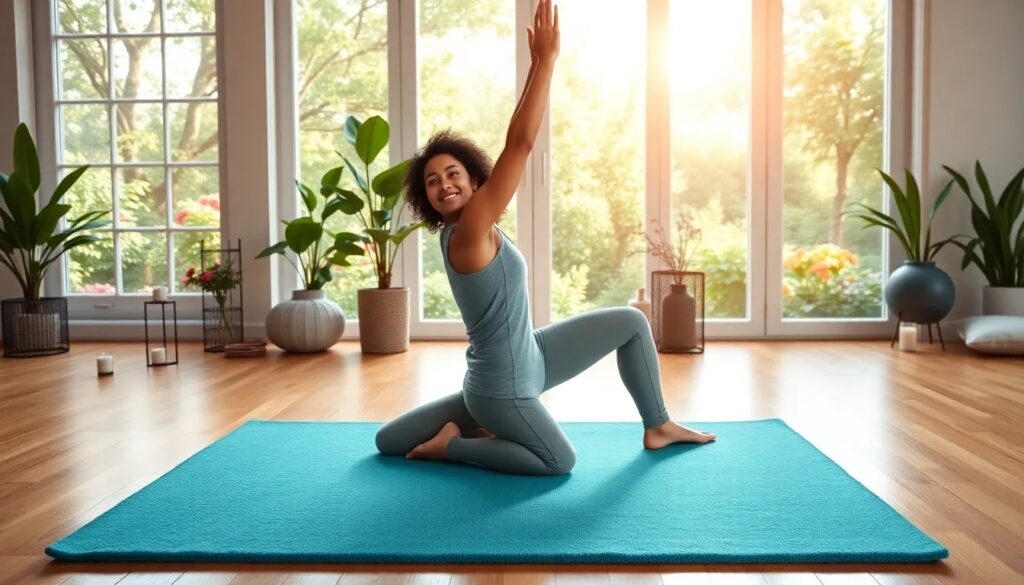
A thick yoga mat is generally anything 6 mm (about 1/4 inch) or more — clearly more cushioned than the 3 to 5 mm standard most studios hand out. The extra foam takes pressure off knees, wrists, hips, and the spine during kneeling and supine work, at the cost of some ground feel and a little wobble in single-leg balance poses. The right choice depends on which trade-off your body and your practice care about more.
This guide walks through what the thickness numbers mean, who genuinely benefits, why foam density matters as much as millimeters, and how to pick the right thickness for your style of yoga. If you are still choosing between specific brands instead, our best yoga mats roundup pairs this advice with named picks. For the broader picture of what is on the mat besides the mat itself, see our yoga equipment hub.
What counts as a thick yoga mat
The industry term "standard" usually means 3 to 5 mm — what most studios and most entry-level mats ship with. "Thick" generally starts at 6 mm, with 8 to 10 mm considered plush and 12 to 13 mm the territory of exercise mats rather than yoga mats. Anything beyond 13 mm is a stretching or pilates mat, not a yoga mat in any meaningful sense.
The extra foam is not free. A thicker mat is heavier, less stable under standing balance, and harder to roll tightly. It can also mask what is actually going on at the floor — your foot and knee alignment become harder to feel. That is why the question is never "is thicker better" but "is thicker better for what you actually do".
Yoga mat thickness compared
| Thickness | Feel | Best for | Trade-offs |
|---|---|---|---|
| 1.5–3 mm | Firm, maximum ground contact | Travel, balance-heavy practice | Hard on knees |
| 4–5 mm (standard) | Balanced | Most practitioners, vinyasa, hatha | May still feel thin on hard floors |
| 6 mm (1/4 in) | Cushioned | Joint sensitivity, restorative, yin | Slightly less stable in standing balance |
| 8–10 mm | Plush | Therapeutic practice, floor work, seniors | Wobbly for standing poses; heavier |
| 12–13 mm (1/2 in) | Exercise-mat territory | Stretching, pilates mat work, knee rehab | Unsuitable for most standing yoga |
For a fuller breakdown of every thickness tier, including travel mats and high-density specialty foams, see our guide to yoga mat thickness.
Why density matters more than millimeters
Two mats labelled 8 mm can feel completely different. Cheap, low-density foam compresses flat under a knee, giving you thickness on the spec sheet and almost no protection in practice — and it tears quickly when the foam gives up. High-density foam or natural rubber compresses partially and rebounds, protecting joints while keeping reasonable stability. The easiest test in a shop: press your thumb hard into the surface. If you can feel the floor through it, the mat will do the same under your kneecap.
Who actually benefits from a thick mat
- Anyone with sensitive knees or wrists — kneeling lunges and tabletop poses are the usual pain points on thinner mats.
- Practitioners on hard floors — concrete, tile, and laminate amplify every pressure point.
- Yin and restorative practitioners — long passive holds reward cushioning. Styles like yin yoga and restorative yoga rarely involve balance poses where thickness hurts.
- Seniors and anyone doing mostly floor-based or seated yoga poses — comfort encourages consistency.
- Larger-bodied practitioners — more body weight compresses thin foam completely; a denser, thicker mat keeps real cushioning under load.
Who should skip it: dedicated vinyasa and ashtanga practitioners who jump, balance on one leg, and need firm ground feedback. For that style, a 4 to 5 mm dense mat is a better fit than anything 6 mm or more.
Material options for thick mats
- PVC: durable and affordable, with good cushioning; the least eco-friendly option.
- TPE: lightweight and cheaper, common in 6 to 8 mm mats; lower durability — expect 1 to 2 years with regular use.
- Natural rubber: dense, grippy, and durable; heavier and more expensive, and most rubber mats top out around 5 to 6 mm.
- NBR foam: the very thick (10 to 13 mm) budget mats; soft but low-density, better for stretching than yoga.
Whatever the material, cleaning correctly preserves both grip and foam — method varies by surface, as explained in how to wash a yoga mat.
Best thickness by practice
Most people choose thickness by the body they bring to the mat, not the brand on the label. A few common profiles, in plain terms:
- Bad knees, recent injury, joint pain: 6 to 8 mm of dense foam. Avoid anything over 10 mm if you still do standing balance.
- Beginners: 5 to 6 mm is the sweet spot — enough cushioning for unconditioned knees and wrists, while keeping stability for standing poses. Choosing thicker only really helps if you practice on a hard floor or have known joint sensitivity.
- Seniors and therapeutic practice: 8 mm is comfortable; pair it with a textured non-slip surface and use blocks and straps so you do not have to fold as deeply into the floor.
- Hot and sweaty vinyasa: stay at 5 mm or below. Thickness and sweat are a bad combination — the mat shifts under your foot in downward dog and tree pose. Grip matters more than cushioning here.
- Yin, restorative, and floor-based practice: 8 to 10 mm of foam or a dedicated extra-thick mat. You are not loading the hands and feet heavily, so the stability cost is small.
If you fall into the plush end of the spectrum, a dedicated extra-thick mat from a current Amazon option gives a useful starting point:
As an Amazon Associate, we earn from qualifying purchases.

- EXTRA THICK FOR COMFORT & BALANCE: Solana firm 1-inch extra thick fitness mat w/ mat strap alleviates stress on pressure points such as joints, hips, hands, and knees. Solana measures 72" X 24" X 1".
- NON-SLIP GRIP: Solana's non-slip material keeps you steady and balanced while staying securely on the floor. The innovative design helps prevent injury and allows you to focus on your practice or workout.
- DURABLE & PORTABLE: Solana's thick, durable material allows for everyday use, regardless of the intensity of your exercise. Solana comes equipped with a nylon carrying strap so you can easily transport it from your home practice to studio salutations.
- BPA FREE: Our products are free of Phthalate, heavy metals and latex. Your mat may initially release a harmless odor. If so, unroll your mat and air it for a day or two before using.
- EASY TO CLEAN: Solana is easy to keep clean and fresh for your next workout. Use a mix of gentle soap and water, wipe clean, and hang it to dry. Do not submerge.

Buying checklist
- Thickness: 6 mm covers most comfort needs without ruining balance. Go 8 mm or more only for floor-dominant practice.
- Density: do the thumb-press test in store, or look for "high-density" in the spec sheet. Density protects joints; thickness alone does not.
- Grip: textured surface top and bottom — a thick mat that slides on the floor is worse than a thin one that stays put.
- Size: standard is about 68 x 24 inches; taller practitioners should look for 72 to 85 inch lengths.
- Weight: thick rubber mats can exceed 3 kg — relevant if you carry your mat to class.
- Allergies and material: if you have a latex allergy, avoid natural rubber. If you want a lighter mat, TPE is the easier option than rubber.
For a broader snapshot of what is selling well in the category right now:


Care and lifespan
A thick mat does not need more care than a thin one, but the consequences of neglect show up faster. Sweat and dust break down foam cell walls over time, and a mat that has permanently flattened under the hand and foot positions is essentially finished. Wiping down after practice, air-drying flat, and storing rolled loosely in a cool place extends the useful life. Material-specific cleaning routines are in our how to wash a yoga mat guide; the general rule is plain water and a mild soap for most foams, and avoiding essential oils or anything acidic on natural rubber.
If a non-slip surface is a recurring issue — especially on a 6 mm or thicker mat — the safest swap is one of the well-reviewed grippy options on Amazon:

- NEW ECO FRIENDLY MATERIAL: The upgraded Gruper Yoga mat is made with premium friendly material. It costs more to make, but it is safer and more soft than traditional non-green PVC and EVA yoga mats.The exercise mats are suitable for many forms of Yoga, Pilates and fitness.
- UPGRADED ANTI-SKID DESIGN AND DOUBLE LAYER ANTI TEAR: Special sticky non slip texture on both sides , more Hard-wearing than regular yoga mats and resistant to tearing and deformation. Double layer structure coupled with a non-slip textured surface provides optimal grip without sacrificing comfort.
- TWO DIFFERENT SIZE OTPTIONAL : ①☛ Standard Size:72"(183cm) x 24" (61cm); Thickness: 0.24"(6mm); Weight: 2.6lb. ②☛ Thickened Size:72"(183cm) x 24" (61cm); Thickness: 0.32"(8mm); Weight: 3.1lb.
- CARE INSTRUCTIONS: 1.Clean with damp cloth (cold water) or mild detergent, dry flat. 2.Do not use a washing machine or dryer or exposed to the sun for extended periods of time. 3.Designed for barefoot exercise. Your shoes or your pets' paws may tear the mat.
- FREE CARRY STRAP & STORAGE BAG - No need to go buy a yoga carrying strap and bag. Easy to carry your yoga mat around with.you can carry to the gym or anywhere you want
Usually yes. A dense 6 to 8 mm mat noticeably reduces pressure on the kneecap in kneeling poses. Density matters as much as thickness — a firm 6 mm mat protects better than a soft 10 mm one that compresses flat. You can also fold a blanket under the knees for extra padding in specific poses.
Thicker foam makes single-leg balance poses harder because the surface shifts under your foot. On a 6 mm mat the difference is small; at 10 mm and beyond it becomes significant. If your practice is balance-heavy, stay at 5 mm or below, or step off the mat for balance work.
A 5 to 6 mm mat is the sweet spot for most beginners: enough cushioning for unconditioned knees and wrists, while keeping stability for standing poses. Choose thicker only if you practice mostly on a hard floor or have existing joint sensitivity.
For stretching, core work, and floor-based practice, yes. For standing yoga it is a poor choice: the soft surface destabilizes balance poses and makes precise foot placement difficult. Those very thick NBR mats are designed for general fitness rather than yoga.
This article is general information, not medical advice. If joint pain persists during or after practice, consult a healthcare professional rather than relying on equipment changes alone.
Have a correction? Contact us.
Last update 2026-09-10. Price and product availability may change.
Recommended: