Goat Yoga in Houston: What to Expect and How to Find a Class

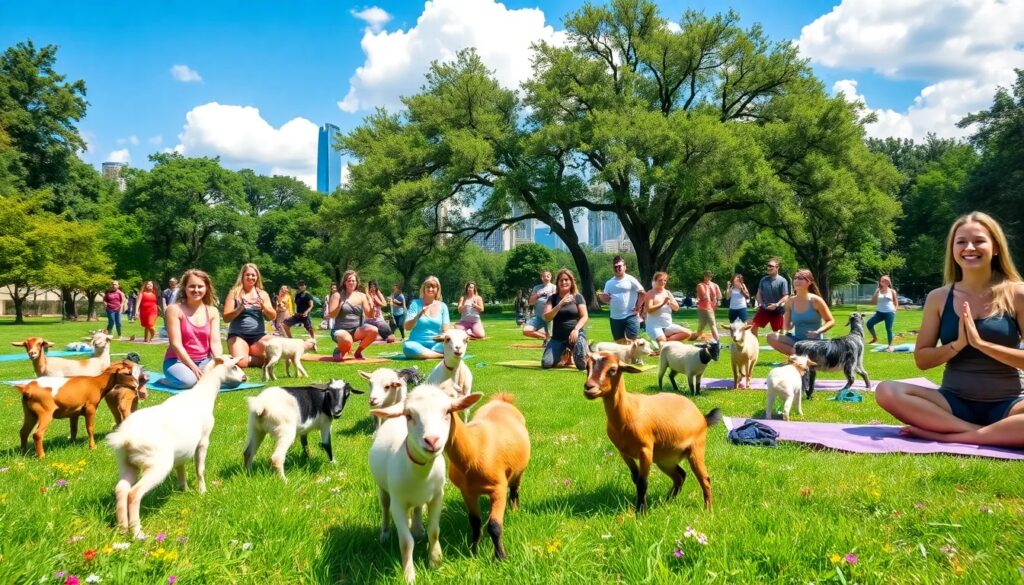
Goat yoga in Houston is a beginner-friendly outdoor yoga class shared with a herd of friendly, free-roaming goats — usually on a farm or ranch property on the edges of the Houston metro rather than in a downtown studio. Sessions are short, gentle, and built more around laughter and animal interaction than around serious asana work. If you are deciding whether to book one, here is what actually happens, where the local venues are, and how to choose a class.
What goat yoga actually is
Goat yoga started in 2016 on an Oregon farm owned by Lainey Morse, who had been running a “goat happy hour” — a nightly farm walk where visitors spent time with her goats. A local yoga instructor suggested combining the two, and the first class turned into the format people now associate with the trend. The setup is simple: an instructor leads a gentle, accessible sequence while young goats wander among the mats, nibble at props, and — the famous part — occasionally hop onto someone’s back during tabletop or plank-style positions. The yoga is real but deliberately easy; the point is the combination of light movement, fresh air, and the mood boost that comes from interacting with animals. For the longer origin story and the case for and against the trend, see our guide to what the point of goat yoga is.
How to find a goat yoga class in the Houston area
Houston-area goat yoga is run by small farms and independent operators, and schedules change with the seasons, so the reliable approach is to search rather than rely on a fixed list:
- Search maps and event platforms. Look for goat yoga on Google Maps, Eventbrite, and Facebook Events for the Houston metro — most operators publish dates there before anywhere else. Instagram is also useful: many Houston-area classes are first announced on the venue’s profile.
- Check the venue’s own pages. Active operators post upcoming sessions, prices, and booking links on their websites or social profiles. A recently updated page is a good sign the schedule is current.
- Expect venues outside the core. Classes typically run on farm properties around the edges of the metro area, so factor in a short drive.
- Read recent reviews. Look for comments about how the animals are treated, group size, and whether sessions start on time — these tell you more than the photos do.
- Book ahead. Sessions are small by nature (the goat-to-human ratio matters) and weekend slots fill up first.
Where goat yoga in Houston actually happens
Most goat yoga around Houston is concentrated in a handful of corridors outside the city core. The names below come up consistently when you search locally; treat them as starting points and confirm details on the operator’s own page before driving out.
- Pearland and League City, south of Houston. Goat Yoga Houston has been running classes and private events in this corridor since 2017 and is the most established name in the area. They operate partly indoors and partly outdoors with trained pygmy goats, and they also do mobile events around the metro.
- Brookshire and Katy, west of Houston. ROSE Therapeutic Farm runs a one-hour class followed by a farm day pass to see the rescue animals, with a mimosa or juice included.
- Alvin, south of Houston. Goats on the Bayou Farm runs outdoor sessions with friendly wandering farm goats and advertises itself as a premier option in that direction.
- Tomball, northwest of Houston. Goat Yoga Texas runs from a property in the Tomball area and books private events, pop-ups, and weekend public classes.
Two patterns are worth knowing as you read listings. First, there is a difference between permanent farms (a fixed property, regular weekend classes, easy to plan a visit around) and pop-ups and mobile bookings (the goats travel to a park, brewery, or private venue — fun, but logistics vary by event). Second, most Houston operators run public weekend classes and private group bookings (birthdays, bachelorette parties, corporate team-builds) on different terms; if you are booking for a group, ask which option you are seeing on the calendar.
What a typical session looks like
- Arrival and intro (10–15 minutes): waiver signing, a short briefing on how to interact with the goats, and mat setup.
- The class (25–45 minutes): a slow, beginner-level sequence — seated stretches, tabletop, gentle standing poses. Instructors keep poses simple because interruptions are guaranteed.
- Goat time (15–30 minutes): most venues reserve time after class for feeding, petting, and photos. For many attendees this is the highlight.
Do not expect a workout. If you want a real physical practice, treat goat yoga as a fun outing and keep your regular classes — something like a hatha class or a Sun Salutation-based flow — for the actual training effect.
What it usually costs
Pricing varies widely by operator, session length, and whether you are booking a public class or a private group event. Most venues list the current price on their booking page, and small operators adjust pricing often, so always confirm there before you go. If the price feels high, it is reasonable to ask whether a weekday or off-peak session is cheaper, and most farms offer a different rate for private group bookings than for their public weekend classes. Ways to spend less without missing out:
- First-timer or introductory offers, where available.
- Group rates for birthdays, bachelorette parties, or team events.
- Off-peak (weekday) sessions, which some operators discount.
Goat yoga vs. a regular yoga class
| Goat yoga | Regular studio class | |
|---|---|---|
| Primary goal | Fun, novelty, animal interaction | Physical practice, technique, relaxation |
| Difficulty | Very easy, constantly interrupted | Scales from gentle to demanding |
| Setting | Outdoor farm or barn | Indoor studio |
| Typical cost | Varies by operator and group size | Varies by studio and membership |
| Best for | Groups, celebrations, first-time fun | Building a consistent practice |
Planning around Houston weather
Because sessions are outdoors, Houston’s climate is a real factor. Summer heat and humidity are intense, so June–September classes tend to run early in the morning or around sunset; bring water, sunscreen, and bug spray. Fall through spring is the most comfortable window. Pop-up showers can force reschedules — check the operator’s weather policy before booking. As for gear: wear clothes you do not mind getting dusty or lightly nibbled, and consider bringing an older mat. We cover this in detail in what to wear to goat yoga.
Is it worth it?
As a yoga class, goat yoga is minimal. As an outing, it delivers: gentle movement, time outdoors, animal contact, and reliably good photos. It is a strong pick for celebrations, visiting friends, or coaxing a yoga-skeptical partner onto a mat for the first time. If the experience sparks genuine interest in the practice itself, our yoga for beginners guide is the natural next step.
Frequently asked questions
Often, yes — especially during tabletop and plank-style positions, which present a flat, tempting surface. Young goats are light and most venues use small breeds, so it is more amusing than uncomfortable. If you prefer not to be climbed on, tell the staff and simply avoid those positions.
No. Sessions are designed for complete beginners, with slow, simple sequences and frequent pauses. The goats interrupt everything anyway, so nobody is tracking your form.
An older mat you do not mind getting dirty, water, sunscreen, bug spray in warm months, and clothes that can handle dust and the occasional nibble. Most venues sign you up for a waiver on arrival and handle the rest.
Reasonably, with normal precautions. Goats may leave droppings near mats — staff usually clean up quickly — and you should wash or sanitize your hands after handling the animals and before eating, as with any petting-farm activity.
Have a correction? Contact us.
Recommended: