What Is the Point of Goat Yoga? Origins, Benefits, and What to Expect

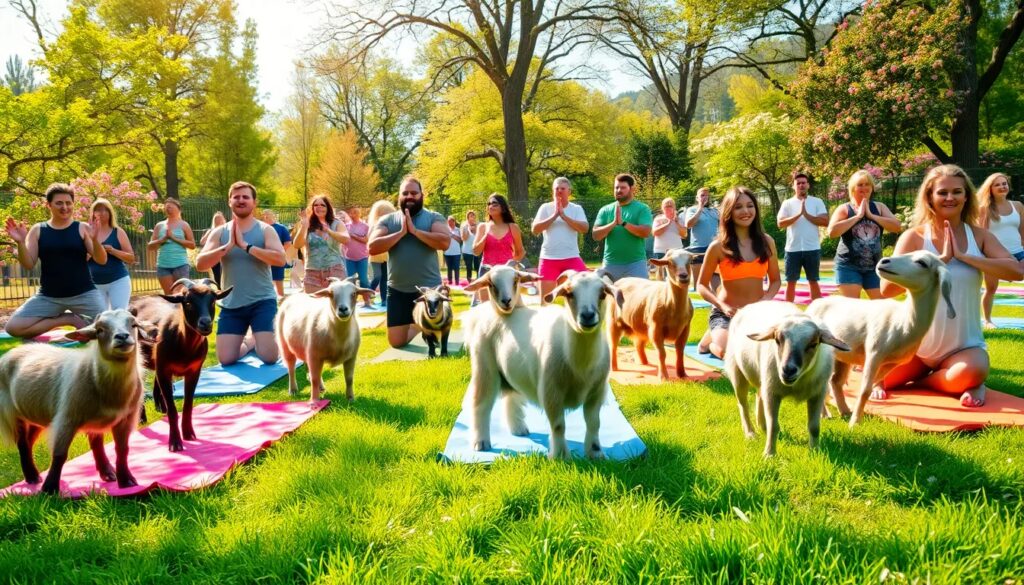
Goat yoga is a yoga class held outdoors or in an open barn setting where friendly goats roam freely among participants — climbing onto backs during tabletop pose, nuzzling faces during Child's Pose, or simply trotting past while you hold Warrior II. It started as a small-farm experiment in 2016 and became one of the most-shared wellness trends of the following decade. Whether you are curious about trying it or just wondering what the appeal is, the short answer is this: it works because it makes people laugh, and laughter tends to put people in a better mood.
How goat yoga started
The origin is specific and well documented. In the summer of 2016, Lainey Morse — owner of No Regrets Farm in Albany, Oregon — was going through a difficult period personally and found that spending time with her Nigerian Dwarf goats helped her mood considerably. A friend who taught yoga suggested holding a class at the farm. The first session was informal, but photos and video circulated on social media and the response was immediate: within days Morse had a waiting list of hundreds of people.
By early 2017 the term "goat yoga" had been trademarked by Morse's operation, and farms across the United States were launching their own versions. The concept spread internationally within two years. The timing was not accidental — it arrived at a cultural moment when people were actively looking for reasons to step away from screens and be present somewhere beautiful and a little absurd.
What happens in a goat yoga class
A typical class runs 45 to 60 minutes and is usually held outdoors or in a spacious barn. Class sizes are deliberately small — most farms cap attendance somewhere between 15 and 25 people — partly for safety and partly because the goat-to-human ratio matters for the experience. Here is the general arc:
- Introduction and safety briefing: The instructor explains which goats are in the pen, their personalities, and basic rules — do not startle them, do not feed them anything you brought, and do not pick them up unless the farm specifically allows it.
- Warm-up: Standard gentle warm-up poses. Goats are already investigating mats and bags at this stage.
- The practice: A gentle to moderate flow — nothing advanced, because the goal is enjoyment, not challenge. Tabletop, Downward Dog, Warrior sequences, and seated poses are the most common because they create convenient platforms and resting spots for goats.
- Goat interaction peaks in the middle: By the time the class reaches floor poses, goats have warmed up to the crowd and the climbing, nudging, and occasional sitting-on-your-back moments happen most frequently here.
- Savasana and wrap-up: Most classes end with an open period where participants can sit with the goats, take photos, and decompress.
Expect your mat to be investigated. Nigerian Dwarf goats — the breed most commonly used — are small enough that a goat standing on your lower back during Child's Pose is noticeable but not painful. Baby goats, when in season, weigh much less and are considerably more chaotic.
Real benefits versus hype
Goat yoga's boosters sometimes overclaim. It will not replace a serious yoga practice, and the physical challenge is genuinely modest. But some benefits are widely reported by participants and instructors, even if the evidence base is thinner than the marketing suggests:
| Claimed benefit | What the picture actually looks like |
|---|---|
| Stress reduction | Widely reported. The combination of light physical activity, fresh air, and frequent laughter tracks with how people describe feeling afterward. The specific hormone-level claims that appear on some farm websites are not backed by named studies in the goat-yoga context. |
| Mood improvement | Widely reported. Brief, friendly contact with animals is associated in survey-based research with improved mood, and most participants describe goat-yoga sessions as uplifting. This is consistent with broader animal-assisted activity findings rather than a goat-yoga-specific result. |
| Mindfulness practice | Partially true. The unpredictability of goats forces present-moment attention — you cannot mentally wander when a goat is about to climb your back. That said, it is a different quality of attention than a traditional meditation-focused class. |
| Physical fitness | Modest. You will stretch and move, but the intensity is deliberately low. Do not expect a workout equivalent to a Power yoga class. |
| Deep spiritual practice | Not a goat-yoga goal. This is a wellness experience, not a contemplative one. |
Is goat yoga ethical? Are the goats OK with it?
This is a fair and important question, and it is the one most often raised by people who have not been to a class. Nigerian Dwarf goats are naturally social, curious, and highly interactive with humans they know. Reputable goat-yoga farms raise their animals with regular human contact from birth, so the goats are not stressed by the crowd — they are drawn to it.
Signs that a farm prioritizes animal welfare:
- Goats are never forced into the space and can access areas away from people.
- Class sizes are kept small so the goats are not overwhelmed.
- Animals are not worked more than a few hours a day.
- The farm operates as a working farm or animal sanctuary the rest of the week, not just an event venue.
- Staff can answer basic questions about daily care, veterinary care, and the goats' living conditions.
Red flags to watch for: classes that run back-to-back all day, goats that seem listless or are being carried by visitors against the farm's stated rules, and operations that cannot explain who looks after the animals when no class is running. If a farm cannot answer basic questions about the goats' daily care routine, that is a reason to book elsewhere.
How much does goat yoga cost?
Pricing varies quite a bit by region, season, and whether baby goats are in session. Farms in high-cost-of-living areas tend to charge more than rural ones. Spring and early-summer sessions — when baby goats are present — are usually priced at a premium and sell out first. Group rates, private bookings, and add-ons (post-class goat meet-and-greet, professional photos) all affect the final ticket price. For current rates in your area, the most reliable move is to book directly with a specific farm or check its Eventbrite page.
Is goat yoga still a thing?
Yes, though the peak of the social-media wave has passed. Goat-yoga sessions have settled into a steady niche: a regular offering on many small farms, popular for birthdays, team-building events, and first-time yoga experiences. The farms that have stayed open tend to be the ones that treat it as part of a broader animal-care operation rather than a one-off gimmick.
How to find a class and what to bring
Search "goat yoga near me" plus your state or region. Many farms list through Eventbrite or their own websites, and availability is often seasonal — spring and early summer when baby goats are present is peak season. Bring: an older yoga mat (it may get muddy or chewed), clothes you do not mind getting dirty, and closed-toe shoes for arrival and departure. Most classes go barefoot on the mat itself. Outdoor sessions in cooler months mean layers are wise.
If you already have a regular yoga practice and are bringing a skeptical friend, goat yoga is an excellent gateway. The low-pressure environment makes it genuinely accessible to people who would never walk into a conventional studio. If you want to complement it with something more structured, gentle flow yoga is a natural next step, and our gentle yoga overview covers a wider range of low-intensity options. For those curious about outdoor practice in general, our guide on outdoor yoga mats covers what to look for in a mat that handles grass and uneven surfaces. And if goat yoga sparks a deeper interest in the practice, see our overview of Hatha yoga — the style most closely related to the gentle, pose-focused approach used in most goat-yoga sessions. For a quieter, longer-held complement, yin yoga is a common pairing on rest days. Finally, our broader look at animal yoga covers the wider family of animal-assisted practices beyond goats.
Frequently asked questions
Lainey Morse, owner of No Regrets Farm in Albany, Oregon, held the first goat yoga class in the summer of 2016. She later trademarked the term. The idea spread rapidly after photos from early sessions went viral on social media.
Nigerian Dwarf goats are by far the most common breed. They are small, naturally friendly, and comfortable with human contact when socialized from birth. Baby Nigerian Dwarfs are especially popular during spring sessions.
Yes — it is one of the most beginner-friendly yoga formats available. Classes are gentle, instructors expect participants of all experience levels, and the goats provide a natural distraction from any self-consciousness about getting poses exactly right.
At reputable farms, yes. Well-socialized Nigerian Dwarf goats are naturally curious and seek human contact. Signs of a responsible operation include small class sizes, unrestricted access for goats to leave the space, and animals raised with daily human interaction. Always research a farm before booking.
Pricing varies by region, season, and whether baby goats are in session. Spring sessions with baby goats tend to cost more than off-season classes. For current rates, book directly with a local farm or check its Eventbrite page.
Have a correction or a question about this article? Reach us via our contact page.
Recommended: