Yoga Retreat in Washington: Regions, Formats & How to Choose

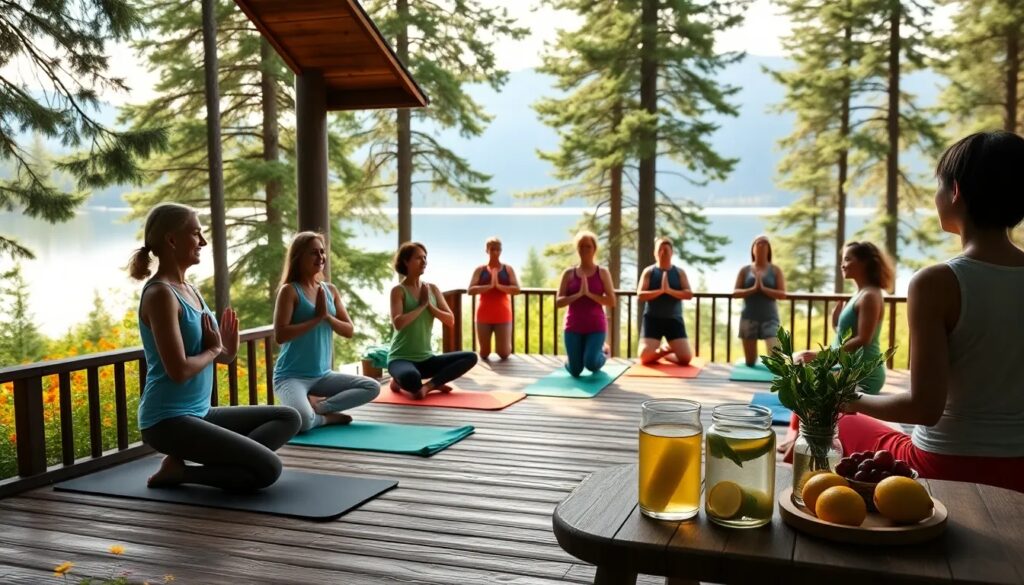
Washington State is one of the better places in the US for a yoga retreat, and the reason is geographic: within roughly two hours of Seattle you can be on a ferry to a quiet island, in old-growth rainforest, on the Olympic coast, or at the foot of the Cascades. That range of landscape shapes the kind of retreat you can have here, from single-day urban resets to week-long residential programs, and it is also why a Washington yoga retreat is rarely a single product. The lineup changes every season, the teacher usually matters more than the venue, and the same retreat center that hosts a silent meditation week in February may run a vinyasa intensive the next month. What follows is a regional map, a look at the formats on offer, and a checklist for vetting any specific retreat before you put a deposit down.
Where Yoga Retreats Happen in Washington
There is no single dominant yoga retreat center in Washington the way some states have one famous destination. Most retreats are organized by individual teachers or studios who rent a venue — a lodge, an island farm, a yurt camp, a residential center — for a weekend or a week. The result is a regional map rather than a leaderboard, and the four areas people tend to look at are below, plus Whidbey Island and the Seattle metro as standalone cases because both show up constantly in the search results.
| Region | Setting | Typical format | Best for |
|---|---|---|---|
| San Juan Islands (Orcas, San Juan, Lopez) | Ferry-access islands, shoreline, farms | 3–7 day residential | Full disconnection, nature immersion |
| Olympic Peninsula | Rainforest, hot springs, coast | Weekend to 5 days | Hiking + yoga combinations |
| Cascade foothills (Leavenworth, Snoqualmie area) | Mountain lodges, river valleys | Weekend retreats | Easy drive from Seattle, winter retreats |
| Whidbey Island & the Sound | Forested campuses, quiet inns, institute grounds | Weekend to week-long | Meditation-led or movement retreats, low-key environment |
| Seattle metro | Studios, urban venues | Day retreats, workshops | No travel, lower logistical lift, first-timers |
San Juan Islands (Orcas, San Juan, Lopez)
The San Juans are the destination most people picture when they search for a yoga retreat in Washington. Orcas Island, San Juan Island, and Lopez Island all host recurring yoga and meditation programs, usually at a residential farm or a small lodge. The trade-off is logistics: you reach the islands by Washington State Ferry from Anacortes, which adds a multi-hour round trip on top of the drive, and the retreat venue is often another 20 to 40 minutes from the ferry terminal. Always confirm whether the organizer arranges transport from the ferry dock or you are on your own.
Olympic Peninsula
The Olympic Peninsula combines rainforest, the Pacific coast, and natural hot springs in one drive, which is why it is the natural home of hiking-plus-yoga retreats. Weekend formats here typically run Friday evening through Sunday afternoon, with one long practice each day and guided hikes or beach time in between. Sol Duc hot springs and the Hoh Rain Forest area are common anchor points.
Cascade Foothills (Leavenworth, Snoqualmie area)
The Cascade-foothill venues are the most accessible from Seattle — most are within roughly 90 minutes — and they run heavily in winter. Cozy lodge formats, fireside restorative sessions, and optional snowshoeing are typical. The catch is mountain-pass driving: Snoqualmie Pass and Stevens Pass both close for avalanche control in winter storms, so a retreat that requires a Sunday-evening return over a pass can be rebooked or delayed without warning.
Whidbey Island and the Puget Sound
Whidbey Island is its own category because it is reachable from the Seattle metro without a long ferry but still feels like a different world. Residential centers and institute campuses here tend to host meditation-led or movement-focused programs rather than asana-heavy intensives. The Whidbey Institute is the kind of venue that appears regularly in listings — it is rented by teacher-organizers, so the specific programming changes week to week, and the format is usually either a structured weekend with a single daily practice or a longer residential with optional movement sessions.
Seattle Metro
A Seattle yoga retreat is a real category and shows up constantly in search queries. It is almost always a single-day format run by a city studio: a morning asana session, a workshop, an afternoon restorative or meditation class, and a closing practice. No ferry, no overnights, no packing list. Day retreats are the most accessible on price and the most practical for first-timers, and several studios run them a few times a year.
Formats: Day, Weekend, Week-Long, and Silent
Region is only half the picture. The format determines the time commitment, the cost, and the kind of practice you will get.
Day retreats in Seattle
Single day, studio-based, no overnight. Two to four practice sessions, usually a meal break, sometimes a workshop on sequencing or philosophy. Useful if you want a taste of retreat structure without travel, and a reasonable first step before committing to a weekend.
Weekend residential retreats
The most common format in the Cascades and on the Olympic Peninsula. Two or three nights, shared or private lodging, two practice sessions per day, meals included, and free time in the afternoon. The checklist below assumes this is the format you are looking at.
Week-long residential retreats
Mostly on the San Juan Islands and at residential centers on Whidbey and in southwest Washington. Six or seven nights, more practice hours per day, optional excursions. This is the format where the venue, the teacher, and the small-group dynamic matter most.
Silent and meditation-led retreats
Some Washington residential centers — including Cloud Mountain Retreat Center, a non-sectarian Buddhist center in southwest Washington — host week-long silent programs that include gentle movement rather than asana-driven classes. If silence and contemplative practice appeal to you, this is a distinct format from a teacher-led yoga intensive, and it is worth choosing deliberately rather than by accident.
What to Expect to Pay
Cost varies widely with lodging type, length, and whether the venue is rented by a single teacher or run as a permanent center. Day retreats at Seattle studios are the most accessible on price; residential weekends and week-longs depend almost entirely on the venue and the room type, and rates change every season. Rather than quote figures that may be out of date by the time you read this, ask the organizer directly for the current rate and what is included. The things that most often surprise people are not the base price but the line items: meals, ferry transfer, optional excursions, and the difference between shared and private lodging. For the difference between residential retreats and shorter formats more broadly, see our guide to what a yoga retreat actually is.
How to Vet a Washington Yoga Retreat Before You Book
Because most Washington retreats are teacher-organized rather than run by permanent centers, due diligence matters more here than in places with one famous venue. Before paying a deposit:
- Research the lead teacher. Look for an active teaching schedule and reviews from past retreats, not just a polished landing page. A teacher with a long local track record is a different bet from a first-time retreat organizer.
- Get the daily schedule in writing. A real retreat publishes how many practice sessions per day, what styles, and how much free time you get. Two practice sessions per day is beginner-friendly; intensives with a 5 a.m. practice are not.
- Confirm what the price includes. Meals, lodging type, transport, and any extra-cost activities (kayaking, massage, excursions) should be itemized in writing before you pay.
- Confirm island and pass logistics. For San Juan Islands retreats, ask whether transfer from the ferry terminal is included. For Cascade-foothill winter retreats, ask what happens if a mountain pass closes.
- Read the cancellation policy. Small-group retreats often have strict no-refund windows because organizers prepay venues. Know what you are agreeing to.
- Match the level honestly. If you are new to yoga, an all-levels retreat with two daily sessions is realistic; an intensive with early-morning practice is not. Our guide to choosing your first yoga retreat covers this in more detail.
Best Time of Year for a Yoga Retreat in Washington
Late June through September is the most reliable weather window, especially for the islands and the Olympic Peninsula: trails are snow-free, ferry schedules are predictable, and the calendar is fullest. The Cascades and Whidbey run year-round; winter retreats in the foothills are a real season built around indoor practice, fireside restorative sessions, and optional snowshoeing, with the trade-off of mountain-pass driving. Shoulder seasons (April–May and October) are often the best value: smaller groups, easier bookings, weather that is cooler but workable for most outdoor programming.
Free and Low-Cost Options
Fully free yoga retreats are rare anywhere, and Washington is no exception. What does exist: work-trade arrangements at some residential centers, where you help with meals or grounds in exchange for reduced fees; sliding-scale pricing from community-oriented organizers; and day retreats that deliver much of the reset at a fraction of residential cost. If budget is the constraint, a day retreat plus a state-park cabin weekend you organize yourself gets surprisingly close to the residential experience.
Washington vs. Going Further Afield
Washington competes well on nature and convenience for anyone already on the West Coast, and it is the most natural option for a Seattle-based first retreat. If you are weighing alternatives: East Coast options are covered in our New York retreat guide and our New Jersey retreat guide; for a neighboring state, see our Oregon retreat overview; for a Seattle-only deep dive, our Seattle yoga retreat guide covers day-retreat and weekend formats in the metro; and for dedicated residential venues, our overview of yoga retreat centers compares what a permanent center offers. For a completely different scale of immersion, a yoga retreat in India typically costs less per week than a Washington weekend — flights aside. For shorter formats, our guide to weekend yoga retreats is a useful complement.
Late June through September offers the most reliable weather and the fullest retreat calendar, especially on the islands. Winter retreats in the Cascade foothills are a real season but factor in mountain-pass driving.
Yes. Seattle studios regularly run single-day urban retreats, and Cascade-foothill venues within about 90 minutes of the city host weekend retreats. These are the most accessible and most practical formats for first-timers.
Most Washington retreats are marketed as all levels, and organizers expect a mix of abilities. Check the daily schedule — two practice sessions per day is beginner-friendly, while intensives with early-morning practice suit experienced students.
Washington State Ferry from Anacortes to your island, then a drive of 20 to 40 minutes to most venues. Confirm with the organizer whether transfer from the ferry terminal is included; on smaller islands it often is not.
Yes. Some residential centers on Whidbey Island and in southwest Washington host week-long silent programs that include gentle movement rather than asana-driven classes. Choose this format deliberately if silence and contemplative practice are what you want.
Have a correction? Contact us.
Recommended: