Yoga Retreats in India: Regions, Programs & What to Expect

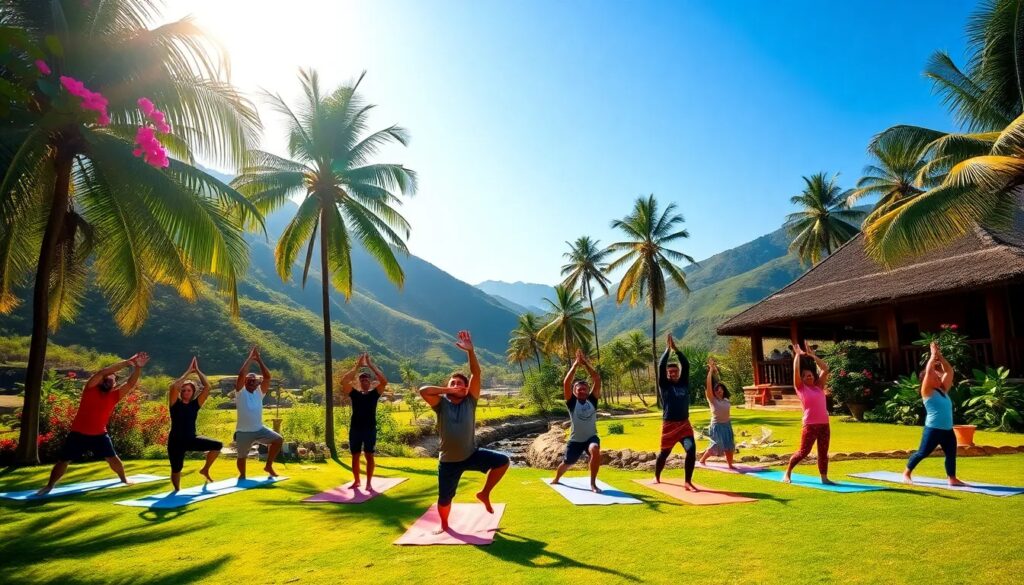
A yoga retreat in India is a structured stay, usually a few days to several weeks, built around daily asana, breathwork, meditation, simple vegetarian food, and rest. The country is the historical home of yoga, and the most common hubs for visitors are Rishikesh in the Himalayan foothills, Kerala in the tropical south, Goa on the west coast, and Dharamsala / the Himalayas in the north. Each region has a distinct culture, climate, and teaching tradition, so the best fit depends on what you want from the trip: a strict ashram routine, a balanced program, or a relaxed beachside break.
Why India for a Yoga Retreat
Three honest reasons. First, depth of tradition. Many Indian centers teach yoga as a complete discipline — philosophy, breathwork, meditation, and ethics — rather than primarily a workout. Second, value. Even with long-haul flights, a multi-week stay in India is generally far less expensive than the equivalent time at a comparable Western center, which is one reason so many visitors combine a retreat with a 200- or 300-hour yoga teacher training. Third, immersion. Stepping fully out of your routine, diet, and language often does more for a stuck practice than a weekend away can.
The honest caveats. Travel days are long, hygiene and infrastructure vary widely between centers, traditional ashrams enforce strict schedules (early wake-ups, silence periods, no alcohol, modest dress), and quality differs enormously. Research matters more here than for almost any other kind of yoga trip.
Choosing a Region: Rishikesh, Kerala, Goa, the Himalayas
| Region | Vibe | Best season | Typical strengths | Keep in mind |
|---|---|---|---|---|
| Rishikesh (Uttarakhand) | Spiritual hub on the Ganges; ashrams and schools everywhere | Feb–Apr and Sep–Nov | Traditional teaching, huge choice, low prices, teacher trainings | Busy and touristy in the center; quality varies wildly |
| Kerala | Tropical backwaters; the historical home of Ayurveda | Oct–Mar | Yoga combined with Ayurvedic treatments and panchakarma-style cleanses | Hot and humid off-season; monsoon roughly Jun–Sep |
| Goa | Beach retreats, relaxed and social | Nov–Mar | Drop-in classes, mixed wellness activities, easy for first-timers; vinyasa-style flow common | Less traditional; party areas can be noisy |
| Himalayas (Dharamsala, Himachal) | Mountain quiet, meditation focus | Mar–Jun and Sep–Nov | Silence, trekking, Buddhist-influenced meditation options | Remote travel; cold outside the season |
A fifth option: Mysore
Mysore in Karnataka is the historic home of Ashtanga yoga and a magnet for students who want a traditional daily Mysore-style practice (self-led with one-to-one adjustments). It is the right region if your goal is Ashtanga specifically rather than a general yoga retreat.
Ashram vs Retreat vs Resort
These three products are different, and the difference shapes everything from your daily schedule to your bill. Pick the format first, then the center.
- Ashram. A traditional spiritual community with a fixed daily discipline, simple shared lodging, and rules such as early wake-ups, silence at meals, vegetarian food, and no alcohol. Sivananda-lineage ashrams and Rishikesh ashrams are well-known examples. Ashrams are the most affordable option and the most demanding: you follow the schedule, not the other way round. They suit travelers who want immersion and structure, not comfort.
- Retreat center. A commercial program aimed at visitors, typically a week or two, with a defined daily program, private or shared rooms, and a clear price per night. Quality and style vary: some lean traditional (philosophy classes, sattvic meals, twice-daily asana), some lean modern (vinyasa, sound baths, optional excursions). This is the middle ground most first-timers want.
- Resort or destination spa. A luxury property in a scenic setting (Himalayan foothills, Kerala backwaters) with spa treatments, individual or small-group yoga, and full board. Comfort, views, and service come first. This is the most expensive tier and the least traditional in feel; you are a guest, not a student.
What a Retreat Day Actually Looks Like
Schedules differ, but a traditional program commonly runs something like this:
- 05:30–06:00 — wake-up, sometimes herbal tea or cleansing practices (kriyas)
- 06:30 — pranayama and meditation
- 08:00 — main asana class (often hatha or ashtanga-influenced; dynamic styles like vinyasa are more common in Goa)
- 10:00 — breakfast, usually simple sattvic vegetarian food
- Midday — lecture or philosophy class, karma yoga (light chores), or free time
- 16:00 — second asana practice, often slower; some centers teach restorative or yin-style long holds
- 19:00 — dinner, then satsang (chanting, talks) or early rest
Luxury retreats keep the same skeleton with more comfort and fewer rules; ashrams expect you to follow the whole schedule.
Budgeting Without a Price Tag
Specific room rates change constantly and differ by season, room type, and whether meals and classes are bundled, so this guide describes what each spending tier gets you rather than naming a number. Use it to decide which tier fits your goals; confirm the final figure directly with the center.
- Budget tier — traditional ashrams. Shared or simple private rooms, sattvic meals included, two group asana classes a day, philosophy lectures, and a full schedule. The trade-off is privacy, flexibility, and amenities. This is the tier that most traveler reviews describe as "incredibly cheap by Western standards".
- Mid tier — retreat centers. Private or shared rooms, three meals, a defined program (often two daily classes plus a workshop), and optional extras like Ayurveda, excursions, or one-to-one sessions. Quality of teaching and food varies the most in this tier, so research matters.
- Top tier — destination resorts. Individual or small-group yoga, full spa menu, all meals, scenic location, and flexible scheduling. Comfort and service come first; the schedule bends to you, not the other way round.
Costs beyond the retreat
Add international flights, the Indian tourist e-visa, travel insurance, and a buffer for transport between cities. Many travelers combine a retreat with a 200- or 300-hour certification, since India is one of the most affordable places in the world to study — see our guide to advanced yoga teacher training for how those programs work.
How to Pick a Specific Retreat
- Decide ashram vs retreat vs resort first. Discipline and tradition, balance, or comfort — the three are different products, and the cheapest option is not always the right one.
- Check teacher credentials and lineage, not just star ratings. A center should say plainly who teaches and what tradition they trained in — the relationship with an experienced teacher is much of the value, as we discuss in guidance from a yoga master.
- Read recent independent reviews on booking platforms and forums, not only the center's own testimonials.
- Match the season. Monsoon-time bargains are cheap for a reason: humidity, road closures, and limited activities.
- Email them questions about class levels, food, room photos, and refund policy before you pay. Slow or evasive answers before you book rarely improve after you arrive.
For a 3-day stay, look at centers near an airport (Goa, Kerala, Delhi) and ask explicitly whether a short program is offered; many ashrams expect a minimum stay of one to two weeks.
Common First-Timer Mistakes
- Skipping the e-visa. Apply for the Indian e-visa online well before flying, carry printed copies, and check that your passport has the required blank pages and validity.
- Underestimating the early schedule. A 5:30 a.m. wake-up after a long-haul flight is brutal. Budget an arrival day to recover from jet lag before the program starts.
- Drinking tap water. Stick to bottled or filtered water, including for brushing teeth if you have a sensitive stomach, and ease into local food.
- Wearing the wrong clothes. Ashrams and temples expect modest dress: shoulders and knees covered for everyone, men and women. A few quick-dry pieces solve most of it.
- Forgetting personal medication. Rural centers can be far from pharmacies; bring any medication you rely on for the full stay plus a small buffer.
Frequently Asked Questions
Costs vary widely by tier, region, and season, so any single number ages quickly. Traditional ashrams sit at the budget end of the scale, mid-range retreat centers are a clear step up in comfort and program structure, and destination resorts are the top tier. The best way to get a current figure is to email two or three centers in your chosen region and ask what is included for a specific week.
October to March suits most regions, including Kerala and Goa. For Rishikesh, February to April and September to November are ideal. Monsoon season, roughly June to September, brings heavy rain to much of the country; some centers close or run reduced programs during these months, which is why prices can drop.
No. Most centers welcome beginners and many run dedicated introductory programs alongside their main schedule. That said, traditional ashrams expect you to participate in the early-morning practices regardless of your level, so be honest with yourself about whether a strict routine suits you. A mid-range retreat center is usually the easier first choice.
An ashram is a traditional spiritual community with a fixed daily discipline, simple shared lodging, and rules such as early wake-ups and no alcohol. A yoga retreat is a commercial program aimed at visitors, with more comfort and flexibility in the schedule. Ashrams are usually far cheaper but also more demanding; retreats cost more and give you more privacy. The two suit different temperaments, not different budgets.
Have a correction? Contact us.
Recommended: