Yoga Retreat for Beginners: How to Choose Your First One

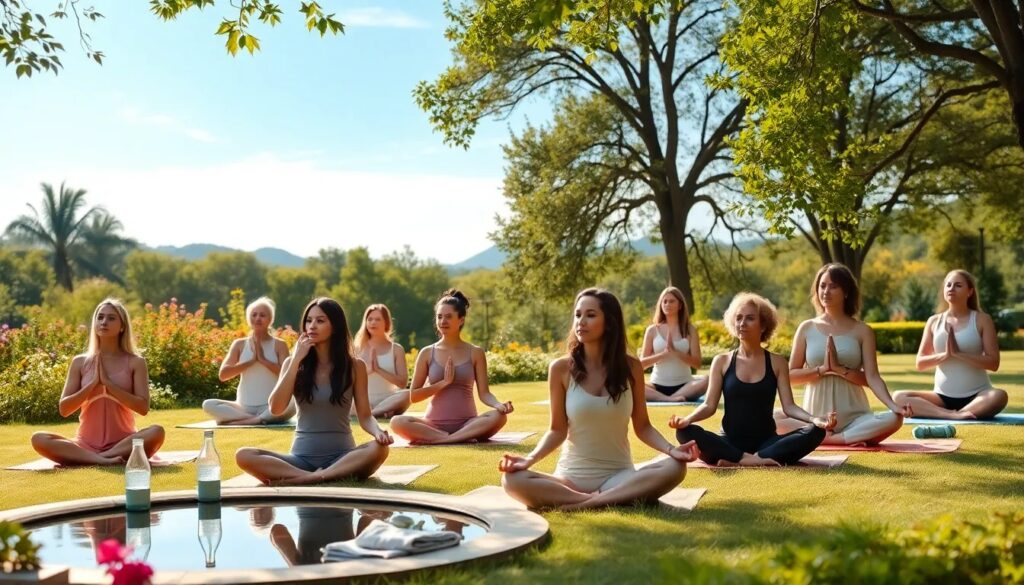
Here is the reassurance most first-timers need up front: you do not need to be good at yoga to go on a yoga retreat. A beginner-friendly yoga retreat is a short stay — usually two to seven nights — with daily mixed-level classes, meals, and plenty of rest, where instructors expect newcomers and teach accordingly. The real task is not getting your poses ready; it is choosing a retreat whose pace, style, and price band actually fit you. This guide walks through what a beginner retreat actually looks like, the signals that separate a genuinely beginner-friendly program from one that just labels itself that way, and the practical questions to ask before you book.
- What makes a retreat beginner-friendly
- A day on retreat: a realistic schedule
- How to choose your first retreat: 6 steps
- Yoga styles at beginner retreats
- How much does a beginner yoga retreat cost?
- Packing list for a first yoga retreat
- Common worries, answered honestly
- Finding beginner retreats in the US and beyond
- After the retreat: keeping it going
- Frequently asked questions
What makes a retreat beginner-friendly
Most retreat websites will tell you their program is open to everyone. That is not the same as being beginner-friendly. When you are reading retreat descriptions, look for these signals:
- All levels welcome stated explicitly — and ideally classes labeled gentle, foundational, or beginner rather than just one umbrella "yoga" block.
- Slower styles on the schedule: Hatha, gentle flow, restorative, or yin. A schedule dominated by power yoga and arm balance workshops is aimed at experienced practitioners.
- Optional sessions. The freedom to skip a class and nap is what separates a retreat from a bootcamp.
- Small-to-medium group size (roughly 8–20), so teachers can actually see and help you.
- Reasonable daily volume: two practice sessions a day plus a workshop is plenty for a newcomer; four mandatory sessions is not a beginner schedule.
It also helps to recognize the style names you will see on schedules — our explainer on what Vinyasa yoga is covers the most common one, and a gentle Vinyasa class is perfectly doable for a fit beginner.
Beginner-friendly red flags
Some retreats advertise beginners and then teach as if everyone is intermediate. A few warning signs:
- The daily schedule lists more than three mandatory sessions a day.
- There is no mention of props, modifications, or "all levels" in the class descriptions.
- The retreat is also marketed as an "advanced" or "deepening" program with the same classes.
- There is no pre-arrival email asking about injuries, experience, or what you want to get out of the week.
A day on retreat: a realistic schedule
A representative beginner retreat day looks roughly like this. Notice how much of the day is unscheduled — that is by design, and the rest is part of the product.
| Time | Activity |
|---|---|
| 7:00–7:30 | Optional meditation or breathing practice |
| 8:00–9:15 | Morning yoga class (gentle to moderate) |
| 9:30 | Breakfast |
| 10:30–16:00 | Free time: walks, swimming, massage, reading, napping — lunch in the middle |
| 16:30–17:30 | Workshop or second class (often restorative) |
| 18:30 | Dinner |
| 20:00 | Optional evening meditation, yoga nidra, or social time |
For a broader look at how retreat formats differ — from silent retreats to luxury wellness resorts — see our full guide to yoga and meditation retreats.
What is included in a yoga retreat
Almost every residential retreat bundles the same three things into the headline price: accommodation, meals, and daily classes. Beyond that, what is included varies widely. Yoga props — mats, blocks, straps, blankets — are usually provided (worth confirming when booking). Some retreats also include airport transfers, one or two excursions, or a welcome massage. Things that are typically not included: flights or long-distance transfers, additional spa treatments, alcohol and specialty drinks, staff gratuities, and any side trips on free days.
How to choose your first retreat: 6 steps
- Pick your goal first: rest, learning the basics properly, or a healthy active holiday. Each points to a different retreat.
- Start close to home. A weekend retreat within driving distance is a low-risk first experiment; save the overseas destination for when you know you love the format.
- Choose dates of 2–4 nights. Long enough to land, short enough that homesickness or boredom never becomes the story.
- Read the schedule and the cancellation policy, not just the photos.
- Check independent reviews and look specifically for comments from other beginners.
- Email the organizers and say you are new. How helpfully they answer tells you a lot about how they will treat you on site.
Questions to email the organizer before booking
- What is the typical group size, and what is the teacher-to-student ratio in each class?
- Are all classes optional, or are some marked as required?
- Are mats and props provided, or should I bring my own?
- Can the kitchen accommodate dietary restrictions (vegan, gluten-free, allergies)?
- What is the cancellation and refund policy if something comes up?
- Are there any optional add-ons (massage, excursions, private sessions) and what do they cost separately?
Yoga styles at beginner retreats
Not all "yoga" at a retreat feels the same. The style on the schedule is the single biggest predictor of how the week will feel in your body.
| Style | Pace | Best for a first-timer who wants… |
|---|---|---|
| Hatha | Slow, alignment-focused | To learn the basic poses properly and understand alignment. |
| Gentle / Restorative | Very slow, props-heavy | Real rest, recovery, and learning to relax in the postures. |
| Yin | Still, long holds | Deep stretching, meditative feel, minimal strength work. |
| Slow Flow / Gentle Vinyasa | Moderate, breath-linked | Movement and a bit of sweat without advanced transitions. |
| Vinyasa / Power | Fast, strong, often heated | An athletic challenge — usually not a beginner program. |
For a deeper read on the most common style label you will see, see our guide to what Vinyasa yoga is. As a rule, if the schedule mixes mostly Hatha and restorative classes with one or two slightly stronger sessions, you are in the right place.
How much does a beginner yoga retreat cost?
Beginner retreats span a wide range, mostly because lodging drives the price. As a rough orientation without specific numbers — and remembering that every provider prices differently — budget weekend retreats with shared rooms tend to sit at the lower end of the market, mid-range retreats with private rooms and a full board meal plan sit in the middle, and week-long destination retreats in resort-style settings sit at the upper end. The main lever is almost always length of stay and room type, not the number of yoga hours.
What's typically included in the price
- Accommodation for the duration of the retreat.
- All meals (often vegetarian or plant-based, with alternatives on request).
- Daily group yoga classes and any scheduled workshops.
- Use of props and basic equipment during classes.
What's usually extra
- Flights, trains, or long-distance transfers to the venue.
- Spa treatments, private sessions, and add-on excursions.
- Alcohol, premium drinks, and snacks outside meal times.
- Staff gratuities at the end of the stay.
- Travel insurance (worth budgeting for separately).
Be cautious with heavily discounted retreats that monetize later through pressure to buy programs or supplements; and if a retreat leans hard on cleanse or detox promises, read our honest guide to detox retreats before booking.
Packing list for a first yoga retreat
- Comfortable practice clothes for two sessions a day — more than you think. Our guide to what to wear to yoga covers fabrics and fit in more detail.
- Layers: mornings and evening meditations get cold, even in warm places.
- Your own mat if you prefer it — most retreats provide mats and props, but it is worth asking.
- Swimsuit, walking shoes, sunscreen, and insect repellent (location depending).
- A journal and a book; you will have more free time than expected.
- Any medications, plus earplugs if you booked a shared room.
- Less phone than usual. Many guests name the disconnection as the best part of the week.
Common worries, answered honestly
Everyone will be better than me. Some will, and within a day you will notice nobody cares. Yoga rooms are unusually non-competitive, and teachers give beginners the most attention. This is the same answer to the most common beginner question, "Can beginners go on retreats?" — yes, and you will spend most of the week noticing how many of the people around you are in the same boat.
I am not flexible enough. Flexibility is an outcome of yoga, not an entry requirement. Props and modifications exist precisely for this, and a good beginner class uses them from minute one.
I will be the only one alone. Solo travelers are often the majority at retreats, and shared meals make meeting people nearly automatic. If you want solitude instead, that is equally accepted.
What if I hate a session? At most beginner-friendly retreats you can simply skip it. You are a guest, not a student under evaluation, and the staff know that not every class will land for every body.
Finding beginner retreats in the US and beyond
The most common way to find a beginner retreat is still to search by location, not by brand. "Yoga retreat for beginners near me" and "yoga retreat for beginners USA" pull up regional directories and small studios that run weekend programs. California, the US Southwest, the Hudson Valley, and the Blue Ridge are perennial favorites for short driving-distance escapes; Costa Rica, Mexico, and Portugal are the standard international pairings for a first destination retreat. A few practical notes:
- Filtering by beginner: most directories let you filter by "level: beginner" or "all levels" — use it, and read at least one recent review from a self-identified beginner.
- Women's retreats are a real sub-category: they tend to be more structured socially, with a higher proportion of first-timers and solo travelers. Useful to know if you are specifically nervous about walking into a mixed group alone.
- Studio-run weekends (your local studio renting a country house for three nights) are usually the cheapest way to test the format before committing to a destination retreat.
For a broader view of the retreat landscape beyond the beginner angle, see our general guide to yoga retreats.
After the retreat: keeping it going
The most valuable thing you can bring home is a tiny, sustainable routine: ten minutes of practice in the morning, one studio class a week, or a short guided relaxation in the evening. Ask your retreat teachers for specific recommendations before you leave — they have watched you practice for days and can suggest what to work on next.
This article is general information, not medical advice. If you have injuries, are pregnant, or manage a health condition, check with your healthcare provider before booking and tell the retreat instructors in advance — they can adapt the practice for you.
Frequently asked questions
Yes. Retreats labeled all levels or beginner-friendly expect complete newcomers and teach foundations from scratch. Taking two or three classes at home beforehand makes the first day more comfortable but is not required.
Two to four nights is ideal. It is long enough to disconnect and experience the rhythm of retreat life, but short enough to stay enjoyable if the format turns out not to be your thing. Save week-long and destination retreats for later.
Not at all. Solo travelers are often the largest group at retreats, and the structure of shared meals and classes makes it easy to meet people. Preferring quiet and keeping to yourself is equally normal and respected.
Skip silent retreats, advanced or power yoga intensives, strict detox programs, and anything with four or more mandatory sessions a day. Those formats have their place, but they are demanding introductions and can sour a first experience.
Most residential retreats provide mats, blocks, straps, and blankets, but it varies, so confirm when booking. If you have a mat you like, bring it — a familiar mat makes the first sessions easier.
Have a correction? Contact us.
This article is part of our yoga styles and lineages hub.
Recommended: