Yoga Teacher Training in Goa: What to Expect and How to Choose a School

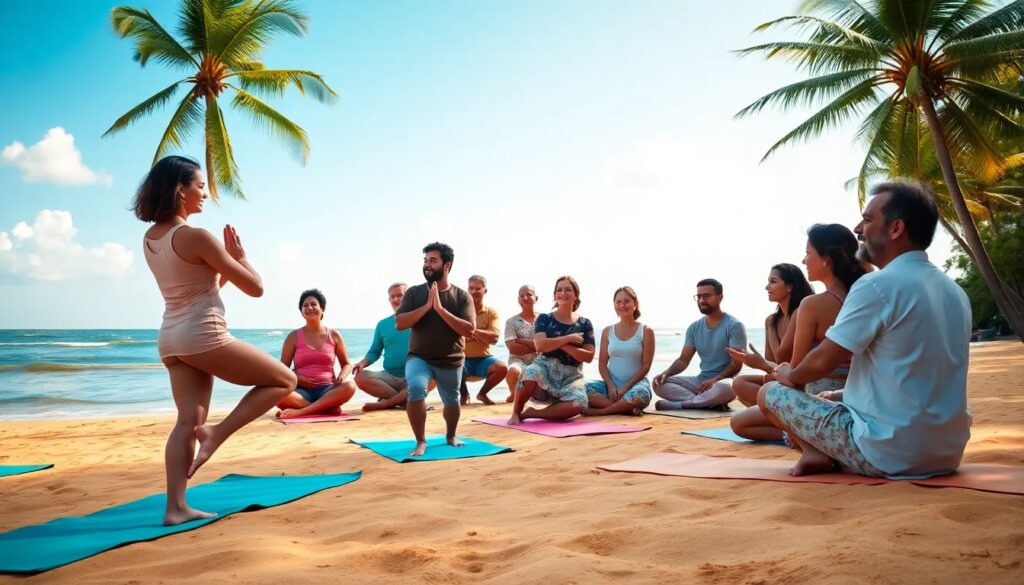
Yoga teacher training in Goa usually means a residential 200-hour course at a beachside school, completed over three to four weeks during the dry season. Most programs follow the Yoga Alliance RYS 200 framework and focus on Hatha, Ashtanga, or Vinyasa styles. Goa competes with Rishikesh as India's best-known training destination, trading the Himalayan ashram atmosphere for a relaxed coastal one.
This guide covers what a Goa training actually includes, when the season runs, how to spot a solid school, and how Goa compares with Rishikesh for prospective students.
What a 200-Hour Yoga Teacher Training in Goa Includes
The 200-hour certification is the standard entry credential for teaching yoga internationally. Whatever the school, a legitimate curriculum covers the same core areas:
- Asana technique and practice — daily morning and afternoon sessions, usually in Hatha, Ashtanga, or Vinyasa style.
- Anatomy and physiology — how joints, muscles, and breath mechanics relate to safe alignment.
- Yoga philosophy — typically Patanjali's Yoga Sutras, the eight limbs, and an introduction to pranayama and meditation.
- Teaching methodology and practicum — cueing, sequencing, hands-on adjustments, and supervised practice teaching, which is where you actually learn to teach.
Days are long: schedules commonly run from around 6:30 a.m. to 6:00 p.m. with breaks, six days a week. Treat the month as a commitment, not a holiday with some yoga attached.
When to Go: Goa's Training Season
Goa's yoga season follows the weather. The monsoon (roughly June to September) shuts down most beach operations, so schools concentrate their courses in the dry months:
- November to February — peak season: dry, warm, and busy. Most course dates and the widest choice of schools, but book early and expect higher accommodation prices around Christmas and New Year.
- October and March–April — shoulder season: hotter in April, fewer crowds, sometimes lower prices.
- May to September — monsoon and pre-monsoon heat: very few courses run, and many schools close or move operations.
Most training activity clusters in North Goa around Arambol, Mandrem, and the Assagao area, with a quieter scene in South Goa around Agonda and Palolem.
How to Choose a School in Goa: A Practical Checklist
- Verify the registration. If the school claims Yoga Alliance affiliation, look it up in the public Yoga Alliance directory rather than trusting a logo on the website.
- Find out who actually teaches. Ask for the names and backgrounds of the lead trainers for your specific dates, and whether they teach the full course or only guest sessions.
- Ask for the daily schedule and syllabus. A serious program can send you an hour-by-hour timetable. Vague answers are a warning sign.
- Check group size. Groups of 15–25 allow individual feedback; some popular schools run groups of 40 or more, which changes the experience significantly.
- Read recent reviews off-site. Look at independent platforms and community threads (Reddit, Facebook groups) and search the school name with words like complaint or refund. Pay attention to reviews that mention teaching quality, not just the beach.
- Clarify the refund and transfer policy in writing before paying a deposit.
Note that Yoga Alliance registration is a private standard, not a government license. India also runs its own certification scheme, which works differently — see our overview of the yoga certification course by the Government of India. For the specific requirements the RYS 200 standard sets, see our guide to Yoga Alliance 200-hour requirements.
Goa vs. Rishikesh: Which Is Right for You?
Both produce the same certificate. The difference is atmosphere and emphasis. Goa offers a coastal, international, relatively relaxed setting where many schools blend traditional content with modern Vinyasa-style teaching. Rishikesh offers a more traditional, ashram-influenced environment in the Himalayan foothills, frequently with a stronger emphasis on classical Hatha, philosophy, and ritual, and Rishikesh is generally the more affordable option for comparable residential courses. Choose Goa if a softer landing and beach environment will help you stay the course; choose Rishikesh if you want maximum immersion in yoga's traditional context. If you are still early in your practice, it is worth reading our guide on how to start yoga first — most schools recommend at least six months to a year of regular practice before enrolling in a teacher training. For a closer look at the Himalayan side, see our guide to Hatha yoga teacher training in Rishikesh.
As an Amazon Associate, we earn from qualifying purchases.
A few basics show up in nearly every training, and a non-slip mat plus a stable block make the long daily sessions easier on the body:


300-Hour, 100-Hour, and Other Formats
Most Goa schools run the 200-hour as their flagship, but several adjacent formats exist and are worth knowing about before you book:
- 100-hour foundations — a shorter residential or intensive introduction for students who want a taste of teacher-level methodology without the full month. It does not, on its own, qualify you to register with Yoga Alliance as a 200-hour teacher.
- 200-hour split formats — some schools let you complete the 200 hours in two trips (for example, two weeks plus a follow-up module) instead of one continuous block, which is useful if you cannot take a full month off.
- 300-hour advanced — designed for graduates of a 200-hour who want the next credential. The 300 is more specialised (often Ashtanga, Yin, or therapeutic) and the daily schedule is usually less rigid than a 200.
Whatever the format, a stable block and a reliable mat are the two pieces of equipment that get used in every session. If you are still building your practice kit, this is a good place to start:

- Natural Cork: Elevate your yoga practice with our eco-friendly, non-slip Gaiam Cork Yoga Brick, perfect for yoga, Pilates, and more.
- Modify Your Poses: Ideal for all skill levels; shorten or deepen your stretches effortlessly. Dimensions: 9"W x 5.5"H x 3"D, lightweight at 1.5 lbs.
- Rounded Edges & Superior Grip: Designed for your comfort, the rounded edges and textured surface provide excellent grip and control during challenging poses.
- Perfect Dimensions: Measuring at 9"W x 5.5"H x 3"D, this yoga brick provides ample support for optimal alignment and posture.
- Versatile & Portable: Compact and lightweight, this cork yoga brick is your go-to fitness accessory for home or gym workouts.

Frequently Asked Questions
No. Most schools accept dedicated beginners, though they usually recommend six months to a year of regular practice first. You need reasonable fitness and the discipline for long training days, not advanced poses.
A 200-hour certificate from a school registered with Yoga Alliance is the most widely used private standard for teaching yoga. Yoga teaching is largely unregulated, so no certificate is a legal license, but RYS 200 is what most studios worldwide recognize.
Most nationalities can use an Indian e-Tourist visa for short recreational courses, but visa rules change and depend on your nationality and course length. Confirm current requirements with the Indian embassy or the official Indian e-visa portal before booking.
Residential intensives typically run 21 to 28 days, training six days a week. Some schools split the course into two parts or offer slower-paced formats, so check the exact dates and daily schedule before enrolling.
Yes. Most Goa schools run the 200-hour as their flagship, with a 100-hour foundations format and a 300-hour advanced option for graduates of a 200-hour. Some schools also let you split the 200-hour across two trips instead of one continuous block.
Have a correction? Contact us.
Last update 2026-09-10. Price and product availability may change.
Recommended: