Yoga for Stress Relief: How It Works, Best Poses, and a 10-Minute Routine

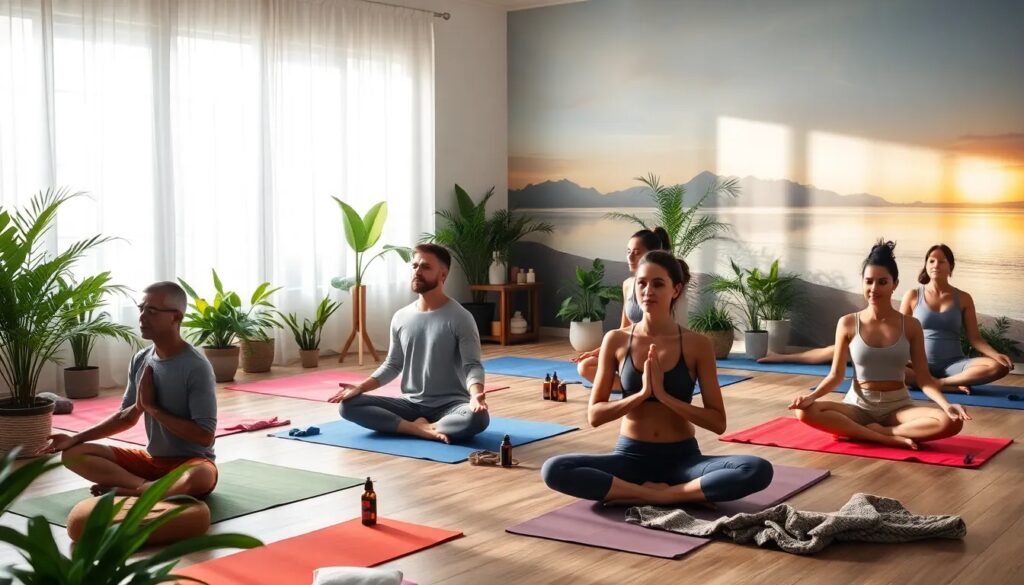
Yoga for stress relief works through one simple lever: slow movement paired with long, deliberate exhalations activates the parasympathetic nervous system, the branch responsible for rest and recovery. Research reviews have linked regular yoga practice with lower cortisol and reduced self-reported stress. You do not need an advanced practice to feel this effect — a few well-chosen poses, a breathing technique you can repeat anywhere, and ten minutes of consistency are enough to notice a real difference.
This guide covers why yoga calms the stress response, which style and which poses work best, breathing techniques that go straight to the vagus nerve, and a short routine you can do tonight. For the broader view of how yoga fits into a stress-management plan, see our complete guide to yoga for stress.
- How Yoga Reduces Stress: The Mechanism
- Which Style of Yoga Is Best for Stress Relief?
- Breathing Techniques That Activate the Parasympathetic Response
- The Best Yoga Poses for Stress Relief
- A 10-Minute Stress Relief Routine
- Yoga for Stress vs. Anxiety and Low Mood
- Common Mistakes That Undermine the Calming Effect
- Props That Make a Home Practice Easier
- When to Seek Professional Help
How Yoga Reduces Stress: The Mechanism
Stress triggers the sympathetic nervous system — faster heart rate, shallow breathing, tense muscles. Yoga counters this on three fronts at once:
- Breath regulation. Slowing the breath, especially lengthening the exhale, stimulates the vagus nerve and signals the body that the threat has passed. This is the single most direct lever yoga offers, and the core techniques are explained in our guide to yoga breathing.
- Muscle release. Chronic stress shows up physically — clenched jaw, raised shoulders, tight hips. Gentle stretching releases that held tension, which in turn reduces the feedback the brain reads as danger.
- Attention anchoring. Focusing on physical sensation and breath interrupts rumination, the repetitive worry loop that keeps stress hormones elevated.
None of this requires flexibility or fitness. The calming effect comes from the pace and the breathing, not from how deep the stretch looks.
Which Style of Yoga Is Best for Stress Relief?
Slower styles produce the strongest relaxation response. Here is how the main options compare for someone whose primary goal is to come down from stress:
| Style | Pace | Best for |
|---|---|---|
| Restorative yoga | Very slow, fully supported poses held 5–15 minutes | Deep exhaustion, burnout, poor sleep |
| Yin yoga | Slow, passive floor poses held 2–5 minutes | Physical tension plus mental restlessness |
| Gentle hatha | Moderate, poses held several breaths | Beginners who want movement plus calm |
| Yoga nidra | No movement — guided relaxation lying down | Anxiety, insomnia, no energy to move at all |
| Power vinyasa / hot yoga | Fast, heat, cardiovascular load | Stress release through effort, not first choice for downregulation |
Vigorous flow and hot yoga have their benefits, but if downregulation is the goal, slower is more effective. Yoga nidra deserves special mention: it is practiced entirely lying down and is one of the most accessible deep-relaxation tools available, even on days when getting off the mat feels like too much.
Breathing Techniques That Activate the Parasympathetic Response
Breath is the fastest entry point into the relaxation response. Three techniques are easy to learn and can be done seated at a desk, in bed, or on the mat before a sequence:
| Technique | Pattern | When to use it |
|---|---|---|
| 4-7-8 breathing | Inhale 4, hold 7, exhale 8 counts | Falling asleep, acute spike of anxiety |
| Coherent breathing | Inhale 5, exhale 5 counts | Daytime baseline, before meetings, mid-afternoon slump |
| Belly / diaphragmatic | Slow inhale through the nose into the belly, long soft exhale through the mouth | Inside any yoga pose, the foundation everything else builds on |
Long exhales matter more than the exact ratio. The exhale is what tells the vagus nerve it is safe to downshift. If only one of these fits into your day, coherent 5-5 breathing is the most sustainable.
The Best Yoga Poses for Stress Relief
These poses consistently appear in stress-focused sequences because they are easy to hold, require no strength, and encourage slow breathing:
- Child's Pose (Balasana) — kneel, fold forward, rest your forehead on the mat or a cushion. The gentle pressure on the forehead has a noticeably calming effect. Hold 1–3 minutes.
- Legs-Up-the-Wall (Viparita Karani) — lie on your back with legs resting vertically against a wall. Excellent at the end of a stressful day. Hold 5–10 minutes.
- Cat-Cow (Marjaryasana-Bitilasana) — slow spinal waves on hands and knees, synchronized with breath. Releases back and neck tension. 8–10 rounds.
- Standing Forward Fold (Uttanasana) — bend knees generously and let the head hang. Releases the neck and shoulders. Hold 30–60 seconds.
- Supine Twist (Supta Matsyendrasana) — lying down, drop both knees to one side. Unwinds the lower back. 1–2 minutes per side.
- Corpse Pose (Savasana) — lie flat, let everything go. The most important pose in any stress-relief practice. 3–5 minutes minimum.
A 10-Minute Stress Relief Routine
Do this in the evening, in comfortable clothes, with no equipment beyond a mat or carpet:
- Minute 1–2: Sit comfortably. Breathe in for 4 counts, out for 6. Ten slow rounds.
- Minute 3–4: Cat-Cow, moving with the breath.
- Minute 5–6: Child's Pose, arms relaxed by your sides.
- Minute 7–8: Supine Twist, one minute per side.
- Minute 9–10: Legs-Up-the-Wall or Savasana, eyes closed, natural breath.
Consistency beats duration. Ten minutes daily does more for baseline stress than one long class per week. If mornings suit you better, this pairs well with a short morning yoga routine for beginners.
Yoga for Stress vs. Anxiety and Low Mood
Everyday stress, clinical anxiety, and depression are different things, and it is worth being honest about what yoga can and cannot do. Evidence supports yoga as a helpful complementary practice for mild to moderate stress and anxiety symptoms — it reliably improves how people feel in the short term and supports better sleep. It is not a replacement for professional treatment. If low mood or anxiety persists for weeks, interferes with daily life, or feels unmanageable, talk to a doctor or mental health professional. Yoga works best alongside proper care, not instead of it.
Common Mistakes That Undermine the Calming Effect
- Treating it as a workout. Pushing into intense stretches keeps the nervous system activated. For stress relief, effort should feel close to zero.
- Holding the breath. Strained breathing cancels the benefit. If you cannot breathe slowly in a pose, ease out of it.
- Skipping Savasana. The final rest is where the nervous system consolidates the downshift. It is the least skippable part.
- Expecting instant results. One session helps in the moment; the deeper change in stress reactivity builds over weeks of regular practice.
Props That Make a Home Practice Easier
You can do a stress-relief practice on any surface, but a mat with a little extra cushion, a bolster, or a folded blanket makes the longer holds much more comfortable — and comfort is what lets you actually stay in the pose long enough for the nervous system to settle. These are the three pieces of gear that show up in nearly every home restorative setup:
As an Amazon Associate, we earn from qualifying purchases.


When to Seek Professional Help
Yoga is a tool inside a larger stress-management picture. Reach out to a healthcare or mental health professional if you notice any of the following alongside your practice: persistent sleep disruption lasting more than a few weeks, panic-like symptoms that interfere with work or relationships, intrusive thoughts or memories you cannot put down, or a flat or numb mood that does not lift with rest. A qualified professional can help you decide whether therapy, medication, or both are appropriate. Yoga can sit comfortably alongside either; it should not be asked to carry the full weight alone.
This article is general information, not medical advice. If you are experiencing severe stress, anxiety, or symptoms of depression, please consult a qualified healthcare professional.
A single session can lower perceived stress and muscle tension within minutes, mainly through slow breathing. Lasting changes in how reactive you are to stress typically build over several weeks of regular practice, even at just 10 to 15 minutes a day.
If you only do one, choose Legs-Up-the-Wall (Viparita Karani) for 5 to 10 minutes. It requires no effort or flexibility, slows the heart rate, and is easy to do at home at the end of the day. Child's Pose is a close second.
They work through overlapping mechanisms and combine well. Yoga is often easier for beginners because the movement gives the mind something concrete to follow, while seated meditation can feel frustrating when you are very stressed. Many people use yoga as a gateway into meditation.
Yoga can be a helpful complementary practice for mild to moderate anxiety and low mood, largely through breath regulation and improved sleep. It is not a substitute for professional treatment — if symptoms persist or interfere with daily life, consult a doctor or mental health professional.
Have a correction? Contact us.
Last update 2026-09-10. Price and product availability may change.
Recommended: