Yoga Nidra Meditation: How Yogic Sleep Works

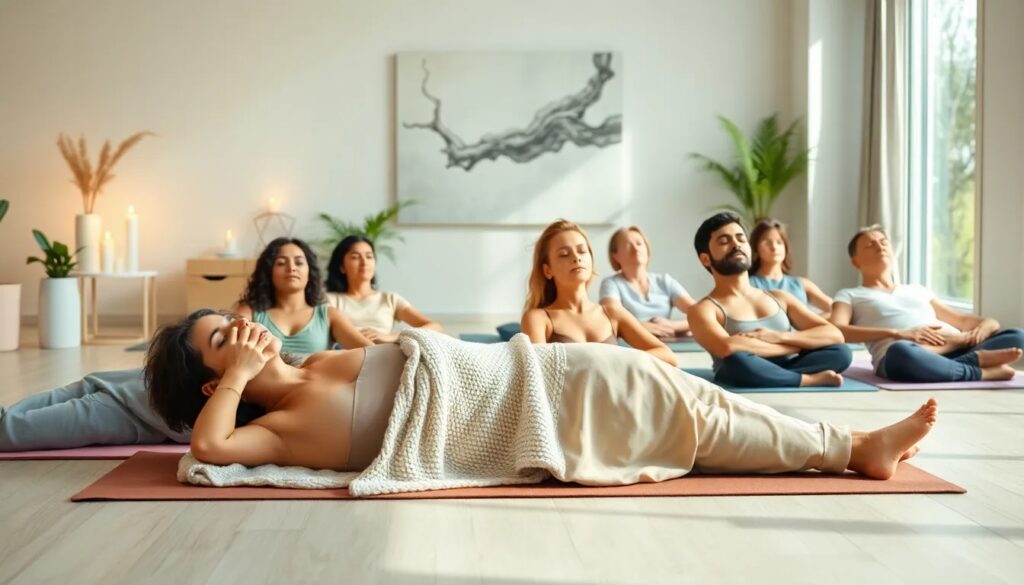
Yoga nidra meditation — often translated as yogic sleep — is a guided practice done lying down, in which a teacher's voice leads you through intention-setting, a body scan, breath awareness, and visualization until you hover at the border between waking and sleep. Unlike a nap, you remain aware throughout; unlike seated meditation, there is nothing to concentrate on by force — you simply follow the voice. That combination makes it one of the most accessible deep-relaxation practices for complete beginners.
This guide covers how a session is structured, what the research realistically supports, how yoga nidra differs from other forms of meditation, and a simple way to practice at home tonight.
What Is Yoga Nidra Meditation?
Yoga nidra is a systematic relaxation method with roots in ancient contemplative traditions. Modern adaptations frame it as a secular, guided practice suitable for clinical, educational, and home settings. The practice is always guided — by a live teacher or a recording — and always done in stillness, usually lying on the back in savasana with whatever support makes you comfortable.
The goal is a state of conscious deep rest: the body falls profoundly still while a thread of awareness stays awake. Practitioners describe it as the feeling just before falling asleep, extended for twenty or forty minutes. For a fuller introduction to the practice and its background, see what is yoga nidra.
The Stages of a Yoga Nidra Session
Most traditions follow a recognizable sequence. A typical 30–40 minute session moves through:
- Settling in: lying down, adjusting props, a few slow breaths.
- Sankalpa (intention): silently repeating a short, positive resolution.
- Rotation of consciousness: a guided body scan moving attention rapidly through body parts in a set order.
- Breath awareness: counting or simply observing the breath without changing it.
- Opposite sensations: alternating pairs such as heaviness and lightness, or warmth and coolness.
- Visualization: following a series of guided images.
- Return of the sankalpa and a slow, gradual re-awakening.
You do not need to memorize any of this — the guide carries you through. If you want to see the full step-by-step method with setup details, see our guide on what is yoga nidra (which now also covers how to do it), and if you are curious what the narration actually sounds like, we have a complete sample yoga nidra script.
Yoga Nidra vs. Seated Meditation vs. Napping
| Yoga nidra | Seated meditation | Napping | |
|---|---|---|---|
| Position | Lying down | Seated, spine upright | Lying down |
| Guidance | Always guided | Guided or silent | None |
| Awareness | Maintained at the edge of sleep | Actively maintained | Lost — you fall asleep |
| Effort required | Very low; follow the voice | Moderate; sustain attention | None |
| Typical length | 20–45 minutes | 10–30 minutes | 20–90 minutes |
| Best for | Deep rest, winding down, beginners | Attention training, mindfulness | Acute sleep debt |
The low-effort, fully guided format is why many people who find seated meditation frustrating stick with yoga nidra instead.
What Are the Benefits — and What Does the Evidence Say?
Research on yoga nidra is promising but still limited — most studies are small. With that caveat, structured deep-relaxation practices like this are commonly used to support:
- Stress and anxiety: guided deep relaxation tends to activate the parasympathetic nervous system, lowering arousal in the short term.
- Sleep: practicing before bed can shorten the wind-down period and ease a racing mind; some people use short sessions after waking at night. Our guide to yoga nidra for sleep reviews this use in detail.
- Mood and emotional regulation: structured programs have shown reductions in self-reported anxiety and depressive symptoms in preliminary studies.
- Perceived rest: practitioners commonly report feeling restored after sessions, though claims that one session equals several hours of sleep are not supported by solid evidence.
How to Practice Yoga Nidra at Home: A Beginner Routine
- Pick a guided recording of 10–20 minutes to start. Length matters less than consistency.
- Set up for stillness: lie on a mat, carpet, or bed; place a pillow under the head and, if your lower back complains, a rolled blanket under the knees.
- Get warm: cover yourself with a blanket — body temperature drops during deep relaxation.
- Remove interruptions: phone on do-not-disturb, lights dim, household informed.
- Follow the voice without trying hard. Drifting is normal; if you notice you wandered, just rejoin wherever the guide is.
- Practice 3–4 times a week for a few weeks before judging the effect — the practice deepens noticeably with familiarity.
As an Amazon Associate, we earn from qualifying purchases.

- Authentic Iyengar Yoga Blanket Handwoven from 100% cotton and approved for Iyengar yoga, this blanket offers dense, structured support for backbends, seated poses, shoulder stands, and restorative practice.
- Premium Cotton Comfort and Breathability Made from soft, breathable cotton, it’s ideal for sensitive skin and natural-living lifestyles. The durable weave softens over time without losing shape or firmness.
- Versatile for Yoga, Meditation, or Daily Use Perfect for yoga, pranayama, or meditation, this blanket also works as a warm throw or beach mat. Trusted by teachers and studios for its multipurpose performance and durability.
- Comes in a Set of Four for Full Coverage Includes two generously sized yoga blankets for layering, partner work, or extra support. A great value for yogis looking for authentic, studio-grade props.
- Machine Washable and Long-Lasting Quality Easy to care for with cold wash and air dry. Fabric softens beautifully with each wash. Slight linting is normal initially and fades quickly after the first use.
- Thick, Supportive, and Travel-Ready Thicker than standard blankets yet still foldable and portable. Excellent grip and texture for stable support indoors or outdoors—customers love the reliable weight and finish.
If you find you love deeply restful, supported practices, restorative yoga pairs naturally with yoga nidra — many teachers end a restorative class with a short nidra.
Common Beginner Questions About Falling Asleep
Falling asleep during yoga nidra is the most common beginner experience, and it is not failure — it usually means your body is under-rested. Practical fixes: practice earlier in the day rather than last thing at night, choose a slightly shorter recording, keep the room cool rather than cozy-warm, or rest the forearm vertically on the elbow so it drops and wakes you if you doze. Over time, most practitioners learn to hover at the edge without tipping over.
This article is general information, not medical advice. Yoga nidra can complement but not replace treatment for insomnia, anxiety, depression, or trauma — if symptoms are persistent, talk to a qualified health professional. Trauma survivors may prefer trauma-sensitive formats where instructions are invitational.
It is a form of meditation, but it differs from seated practice: it is done lying down, it is always guided, and it aims for a state at the border of sleep rather than sustained focused attention. Many people who struggle with seated meditation find yoga nidra much easier.
Anywhere from 10 to 45 minutes. Beginners do well starting with 10 to 20 minute recordings and extending as the practice becomes familiar. Consistency matters more than session length.
No. Falling asleep usually signals that your body needs rest. To stay aware longer, practice earlier in the day, use a shorter recording, or keep the room slightly cool. With regular practice most people learn to stay at the edge of sleep without dropping off.
No. It can leave you feeling noticeably restored and may help you fall asleep more easily, but the claim that one session equals several hours of sleep is not supported by strong evidence. Treat it as a complement to good sleep habits, not a substitute.
A sankalpa is a short, positive intention or resolve — stated in the present tense — that you silently repeat at the start and end of the practice. It gives the session a personal direction and is a traditional element of the method.
Have a correction? Contact us.
Last update 2026-09-10. Price and product availability may change.
Recommended: