Yoga Nidra Script: How to Write One, the Four Stages, and a Full 20-Minute Sample

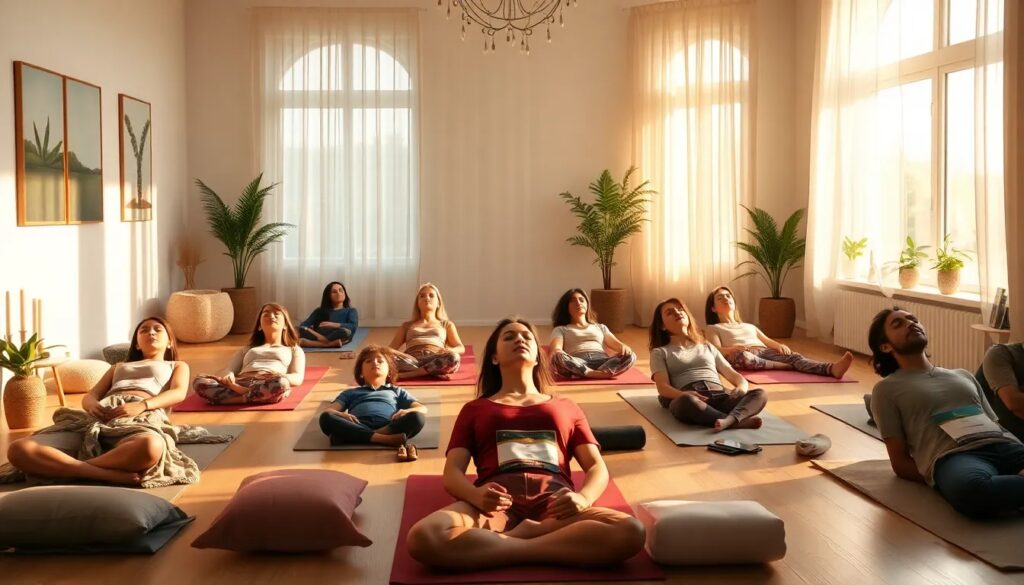
Yoga nidra is a guided meditation done lying down, and a yoga nidra script is the spoken text a teacher or recording follows to walk a practitioner through it. A good script moves the listener through four stages: settling the body, planting a short intention, rotating awareness through 61 points of the body, and a short visualization, before returning to waking. This guide explains how a script is built, what the four stages do, the 61 points the rotation covers, how to set up your space, and gives you a full 20-minute script you can read aloud tonight, plus a compressed 10-minute version for days when time is short. For background on the practice itself, see our guide to what yoga nidra is, and if your goal is sleep rather than practice, our yoga nidra for sleep page adapts the same structure.
What a yoga nidra script is and why it works
The term yoga nidra means yogic sleep in Sanskrit. The practice works by withdrawing attention from external sensory input and rotating awareness through the physical, energetic, emotional, and cognitive layers the tradition calls the koshas. A script is the delivery mechanism: without the slow, systematic voice, the practice collapses into ordinary rest. Its job is to keep the listener conscious at the threshold of sleep, using pacing and a fixed sequence of body points to prevent full unconsciousness. This hypnagogic state is associated with theta-range brain activity, the same band seen in early-stage sleep.
Yoga nidra is associated with the Bihar School of Yoga tradition of Swami Satyananda Saraswati, whose teachings in the mid-20th century shaped the modern sequence. The scripts below are generic, traditional versions and are not attributed to any single author. For history and lineage, see our yoga nidra meditation overview; for how the stages are taught, see our yoga nidra certification guide.
It differs from seated meditation and from movement-based practices like yin yoga: the body is still, the posture is horizontal, and the only effort is to stay aware while the script does the work.
The four stages of a yoga nidra session
| Stage | Sanskrit term | What happens | Typical duration |
|---|---|---|---|
| 1. Intention | Sankalpa | A short, positive resolve is planted in the receptive mind | 1-2 min |
| 2. Body scan | Rotation of consciousness | Rapid sequential awareness of each body part releases muscular and neurological tension | 5-8 min |
| 3. Breath and sensation awareness | Pratyahara | Attention shifts inward; opposite sensations (heavy/light, warm/cool) create relaxation contrast | 3-5 min |
| 4. Visualization | Dharana / Antara Mauna | Rapid imagery sequences activate the subconscious and deepen the theta state | 5-8 min |
Most scripts close by returning to the sankalpa and a slow guided return to waking awareness. A complete session runs 20 to 45 minutes. Shorter 10-minute versions that cover only the sankalpa and a fast body scan are useful for daily practice, and longer 30- to 45-minute versions add a second visualization round for sleep work.
The 61 points of rotation of consciousness
One of the most common questions about any yoga nidra script is what the 61 points actually are. The "61 points" (also called the rotation of consciousness) is a traditional body-scan technique from the Bihar School of Yoga lineage: a fixed sequence of body regions named one after another, moving through the right side, the left side, the back, and the head and front of the body, so awareness travels through the whole body without the practitioner having to decide where to send attention next. A typical version of the sequence, grouped by region:
Right side, hand to foot: right thumb, index, middle, ring, little finger · palm of right hand · back of right hand · right wrist · right forearm · right elbow · right upper arm · right shoulder · right armpit · right side of chest · right waist · right hip · right thigh · right kneecap · right calf · right ankle · right heel · sole of right foot · right toes.
Left side, foot to hand: left toes · sole of left foot · left heel · left ankle · left calf · left kneecap · left thigh · left hip · left waist · left side of chest · left armpit · left shoulder · left upper arm · left elbow · left forearm · left wrist · back of left hand · palm of left hand · left thumb, index, middle, ring, little finger.
Back of the body: right shoulder blade · left shoulder blade · upper back · middle back · lower back · right buttock · left buttock · back of both thighs and knees.
Head, face, and front of the body: top of the head, forehead, eyebrows, eyelids, eyes, ears, cheeks, nostrils, lips, chin, jaw, throat · collarbones, chest, and navel · the whole front body · the whole back body · both calves · both heels · the whole body together, breathed as one.
Exact point counts and groupings vary slightly between teachers and scripts; the sequence and direction of travel matter more than hitting a fixed number. The full 20-minute script below moves through this same right-side, left-side, back, and head-and-face sequence in detail; a 30- or 45-minute version repeats the rotation at a slower pace, and the 10-minute version below skims through the major regions only.
How to set up your practice
- Choose a quiet space where you will not be interrupted for at least 25 minutes.
- Lie in savasana: on your back, legs slightly apart, arms a few inches from the sides with palms facing up. Place a thin pillow under your head if needed.
- Use props freely: a bolster under the knees reduces lower-back tension; a light blanket prevents the body-temperature drop that occurs in deep relaxation.
- Set a soft alarm if you are concerned about falling asleep. Falling asleep occasionally is normal and not a failure; simply return to the practice.
- Read or listen: you can record yourself reading the script below or have a partner read it. Speak slowly, with a two-second pause after each instruction.
For a gentle movement practice to do before yoga nidra, see our gentle yoga guide. New moon evenings are a traditional time for deep reflective practices; our new moon yoga article explores why.
As an Amazon Associate, we earn from qualifying purchases.

- Yoga Bolster Pillow - The Gaiam yoga bolster is a soft and supportive meditation cushion for added support for the body during yoga, meditation, or general relaxation. Our pillow comes in multiple colors to match your style.
- All-Natural Filling - This pillow is filled with natural cotton batting for superior comfort and cushioning. The soft and flexible filling lets you lay against the pillow with cushioned comfort while the pillow keeps its shape.
- Handle Strap - Our yoga pillow features a built-in sturdy handle on the pillow case for hassle-free transport to easily grab the meditation cushion and go or reposition for poses or support your neck.
- Care Instructions - No need to worry about how to maintain freshness for your pillow as the cover is removable and machine washable. Easily remove to toss in the washing machine.
- Not Just for Yoga - This pillow is an ideal yoga accessory but can also be used for general support to stretch out tense muscles in your neck or prop up your legs and feet after a long day.

Full 20-minute yoga nidra script
Read aloud at a slow, even pace. Pause briefly at each ellipsis.
Opening and settling (2 minutes)
Lie down and close your eyes... Let your feet fall open... Allow your arms to rest a little away from your body, palms facing the ceiling... Take a full breath in through the nose... and release it completely through the mouth... Do this twice more... Now let your breathing return to its natural rhythm without controlling it.
You are entering the practice of yoga nidra. Your only task is to stay aware while your body relaxes completely. There is nothing you need to do, nowhere you need to go.
Stage 1: Sankalpa (1-2 minutes)
Bring to mind a short, positive intention. It might be something like: I am calm and present... or I trust my body to heal... Choose words that feel true for you right now. Do not force the words; let them arise naturally... Repeat your sankalpa three times silently, with full feeling behind each word... Let it settle into the receptive field of your mind.
Stage 2: Body scan - rotation of consciousness (8 minutes)
Now we will move awareness rapidly through the body. Simply hear the part named and let your attention rest there for a moment. Do not move the body.
Right thumb... second finger... third finger... fourth finger... fifth finger... palm of the right hand... back of the right hand... right wrist... forearm... elbow... upper arm... right shoulder... right armpit... right side of the chest... right side of the waist... right hip... right thigh... right kneecap... right calf... right ankle... right heel... sole of the right foot... right big toe... second toe... third toe... fourth toe... fifth toe...
Left thumb... second finger... third finger... fourth finger... fifth finger... palm of the left hand... back of the left hand... left wrist... forearm... elbow... upper arm... left shoulder... left armpit... left side of the chest... left side of the waist... left hip... left thigh... left kneecap... left calf... left ankle... left heel... sole of the left foot... left big toe... second toe... third toe... fourth toe... fifth toe...
Right shoulder blade... left shoulder blade... the whole of the upper back... middle back... lower back... the right buttock... the left buttock... the back of the right thigh... the back of the left thigh... the back of the right knee... the back of the left knee... right calf... left calf... right heel... left heel...
Top of the head... forehead... right eyebrow... left eyebrow... the space between the eyebrows... right eyelid... left eyelid... right eye... left eye... right ear... left ear... right cheek... left cheek... right nostril... left nostril... upper lip... lower lip... chin... jaw... throat... right collarbone... left collarbone... right side of the chest... left side of the chest... center of the chest... navel... lower belly... the whole of the front body... the whole of the back body... the whole body together...
Rest in awareness of the whole body for a moment...
Stage 3: Breath and opposite sensations (4 minutes)
Now bring your attention to the natural breath... observe the rise of the belly on the inhalation... and its gentle fall on the exhalation... Do not control it; simply witness it... Notice the brief pause between the in-breath and the out-breath... and the pause after the exhalation before the next breath begins... Rest here for several breath cycles...
Now I will name pairs of opposite sensations. As I name each one, experience it as fully as you can...
Heaviness... allow the body to feel very heavy, sinking into the floor... and now lightness... feel the body becoming light, as though it might float upward...
Warmth... feel a gentle warmth spreading across the skin... and now coolness... a cool fresh breeze moving across the surface of the body...
Pain... recall a small, mild discomfort... and now pleasure... a sense of ease and comfort spreading through every cell...
Let all sensation go... return to simple awareness of the whole body resting...
Stage 4: Visualization (5 minutes)
I will name a series of images. See each one briefly and clearly in your mind, then let it dissolve as the next one arrives. Do not linger; move with the pace of the words...
A candle flame... a vast ocean at dawn... a single white lotus floating on still water... a mountain covered in snow... a thunderstorm moving across a valley... a child laughing... an empty sky... a golden key... a dark cave with a single shaft of light... your own face, relaxed and at ease...
Now let all images dissolve... rest in open, empty awareness... there is no image, no task, no direction... only awareness aware of itself...
Rest here for as long as you wish...
Closing: return the sankalpa and waking (2 minutes)
Gently bring back your sankalpa... repeat it three times with full conviction, planting it in the fertile stillness you have created... Feel the words resonate through the body...
Now become aware of the physical space around you... the floor or surface beneath your body... the temperature of the air... any sounds in the room... Begin to deepen the breath... wiggle the fingers and toes... stretch the arms overhead if that feels comfortable... roll to one side, and rest there for a moment... When you are ready, slowly come to seated position... Open the eyes softly, without rushing.
The practice is complete. Sit quietly for two or three minutes before returning to activity.
10-minute yoga nidra script
For days when you have ten minutes, this compressed version keeps the four-stage structure but runs a fast body scan and a single short visualization. Read at the same slow pace; the brevity is in what you name, not in how fast you speak.
Lie down, close your eyes, let the feet fall open... arms a little away from the body, palms up... Three slow breaths in through the nose, out through the mouth... let the breath return to its natural rhythm...
Bring to mind a short sankalpa, something true for you right now, and repeat it three times silently with feeling... let it settle...
Move quickly through the major regions: right hand and arm, right shoulder and side, right leg and foot, then left hand and arm, left shoulder and side, left leg and foot, the back of the body, the face, the whole front body, and finally the whole body breathed as one... rest in the whole body for a few breaths...
Bring attention to the natural breath and rest there for a minute... then picture one image clearly: a white lotus on still water... let it dissolve into open, empty awareness...
Return to your sankalpa and repeat it three times... Gently deepen the breath, wiggle the fingers and toes, and when ready, open your eyes softly. The practice is complete.
To extend either script to 30 or 40 minutes, run the 61-point body scan twice at a slower pace and add a second visualization round; the 10-minute version is the practical floor for daily use.
Evidence-backed benefits
Yoga nidra has been studied in clinical, athletic, and military settings. The general picture in published research is consistent across small trials and observational work:
- Stress and anxiety reduction: Several controlled trials have reported significant drops in self-reported anxiety and in cortisol after multi-week yoga nidra programs.
- Improved sleep quality: Studies in populations with chronic insomnia, including veterans with PTSD, have found measurable improvement in sleep onset and sleep quality.
- Chronic pain: Reduced pain perception has been reported in several small studies, likely mediated by parasympathetic activation.
- Emotional processing: The combination of deep relaxation and sankalpa repetition creates conditions for releasing habitual emotional patterns held in the body.
Frequently asked questions
Most yoga nidra sessions run 20 to 45 minutes. A 20-minute session covering all four stages is sufficient for noticeable stress relief. Shorter 10-minute versions that focus on the sankalpa and body scan only are useful for daily practice when time is limited.
Falling asleep occasionally is normal and is not considered a failure. The goal is to stay at the edge of sleep while remaining aware, but if you drift off, simply return to the practice when you notice. Over time, the ability to stay conscious in deep relaxation tends to improve.
Sankalpa is a short, positive resolve or intention stated in the present tense, such as I am at peace or I am healthy and whole. It is planted at the start of the session when the mind is receptive and again at the close, using the deep relaxation state to reinforce the intention at a subconscious level.
In most seated meditation practices, you maintain an upright posture and direct attention to a single object such as the breath or a mantra. Yoga nidra is practiced lying down and moves through multiple stages including body scan, breath awareness, and visualization. It targets the hypnagogic threshold between waking and sleep rather than sustained alert concentration.
Yes. Yoga nidra requires no prior yoga experience, no flexibility, and no ability to sit still. Because it is practiced lying down with a guiding voice directing all attention, it is often easier for beginners to access a meditative state than through seated practices.
Have a correction or a question about this article? Reach us via our contact page.
Last update 2026-09-10. Price and product availability may change.
Recommended: