Yoga Blankets: Materials, Sizes, and How to Choose One

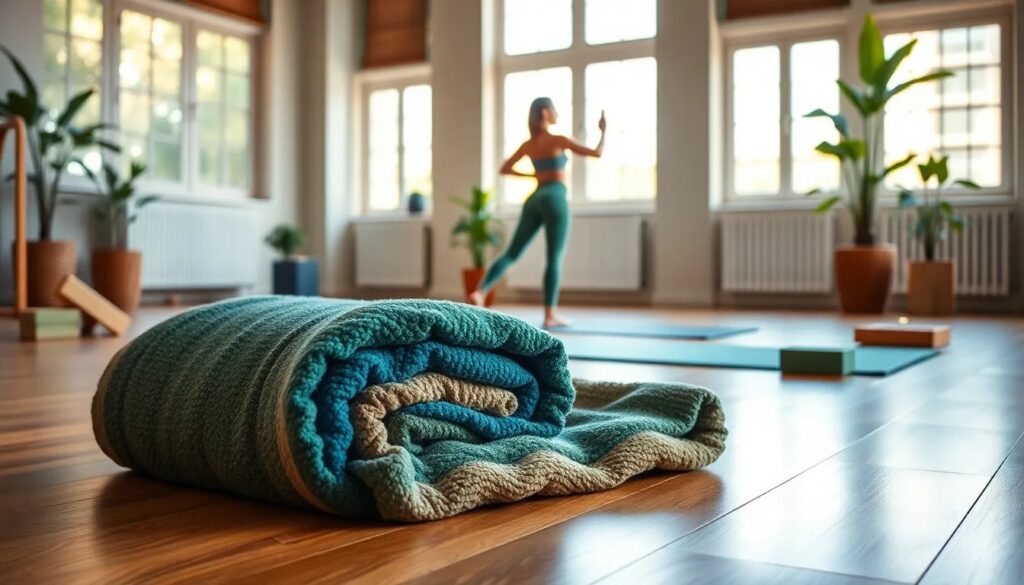
A yoga blanket is a firm, densely woven blanket — usually cotton, wool, or a recycled-fiber blend — used as a prop rather than only as a cover. Folded, rolled, or stacked, it becomes a cushion for knees and hips, a lift for tight seated positions, a bolster substitute in restorative poses, a stack for Shoulderstand, and a warmth layer for savasana. If you only ever buy one yoga prop beyond a mat, a strong case can be made that it should be a blanket: nothing else covers as many jobs for the price you pay.
- What makes a yoga blanket different from a regular blanket
- Materials compared
- Sizes and standard dimensions
- 5 folds every student should know
- 7 practical ways to use a yoga blanket
- Why are so many yoga blankets Mexican-style?
- How to choose: a buying checklist
- Do you need one if you already have a bolster and blocks?
- Frequently asked questions
What makes a yoga blanket different from a regular blanket
Three things: density, weave, and size. Yoga blankets are tightly woven and relatively stiff, so they hold their shape when folded into a support — a fluffy fleece throw collapses under body weight and provides no structure. Standard dimensions run around 60 by 80 inches (150 by 200 cm), large enough to fold into thick, stable rectangles. The classic Mexican-style blanket, with its woven stripes, became the default studio blanket because it is dense, durable, and inexpensive to replace, which is why studios order them by the dozen from yoga wholesalers.
Materials compared
| Cotton | Wool / wool blend | Mexican-style (recycled blend) | Synthetic microfiber | |
|---|---|---|---|---|
| Firmness when folded | Good | Excellent — densest support | Good | Fair — tends to compress with use |
| Warmth | Moderate | High | Moderate | Low to moderate |
| Washability | Easy — machine washable | Careful washing needed; air-dry to prevent shrinkage | Easy, very forgiving | Easy |
| Skin feel | Soft, hypoallergenic | Can be scratchy; some are sensitive to wool | Slightly coarse | Smooth, sometimes slippery |
| Best for | All-purpose, sensitive skin, hot studios | Maximum support, cold spaces, restorative | Budget, studios, heavy use | Travel, light home practice |
A note on the recycled blends used in most Mexican-style blankets: fiber content varies batch to batch (acrylic, polyester, and cotton mixes are common), which is why two seemingly identical blankets can feel different. For home practice it rarely matters; if you want consistent feel and natural fibers, pay the premium for pure cotton or wool from a dedicated yoga-equipment brand.
As an Amazon Associate, we earn from qualifying purchases.


Sizes and standard dimensions
Yoga blankets come in three size families worth knowing, because fold choices depend on which one you have.
- Standard studio (around 60 x 80 in / 150 x 200 cm). The most common size worldwide. Big enough to fold into a thick seat pad, roll into a bolster substitute, or stack two-to-three deep for Shoulderstand without running out of fabric.
- Mexican-style falsa (around 50 x 60 in / 130 x 150 cm). Smaller and tighter. Plenty for seated hip lifts, knee pads, and savasana cover; tight for shoulderstand stacks unless you use two.
- Oversized wool (around 70 x 90 in and up). Premium wool blankets from Iyengar-focused brands often run larger. Worth it if you want a single blanket to cover the full length of your body in savasana without leaving feet out.
Smaller throws cannot fold into the stable rectangles that seated poses and Shoulderstand require. If you are buying for home use and only own one, choose the standard 60 x 80 size — it does everything, even if it is more blanket than you need for savasana alone.
5 folds every student should know
- Flat rectangle (for seat elevation). Fold the blanket in thirds lengthwise, then in half or thirds again to make a firm, flat pad roughly 12 inches square and 2-4 inches thick depending on how many folds. Sit on this for any seated or cross-legged pose — the single most-used fold in seated yoga poses if your hips are tight.
- Knee pad (for kneeling). Fold the blanket into a long flat strip about 6 inches wide and 18-24 inches long. Roll loosely for more cushion; keep flat for stable kneeling support in Cat-Cow, tabletop, and low lunges.
- Neck roll (for supine support). From the flat rectangle, roll one end tightly toward the center to form a firm cylinder. Place it under the back of the skull — not under the neck itself — in supine poses so the cervical curve fills naturally.
- Bolster roll (for restorative support). Roll the entire blanket tightly from one end to the other to form a full-length cylinder. Place it under the knees in supine poses, along the spine in supported reclines, or under the lower back in Supported Fish. This is the workhorse of restorative yoga when a dedicated bolster is not available.
- Shoulderstand stack. Fold two or three blankets flat and stack them. Lie so the shoulders rest on the stack and the back of the head is on the bare mat. This is the classic Iyengar setup that protects the neck's natural curve — see our yoga block stretches guide for the same logic of using a stable, dense surface to support a vulnerable joint.
7 practical ways to use a yoga blanket
- Under the knees in kneeling poses. A single fold under the knees in tabletop, Cat-Cow, or lunges removes most kneecap discomfort — often more effective than doubling your mat.
- Under the hips for seated poses. Sitting on the folded edge of a blanket tilts the pelvis forward and instantly improves posture in cross-legged positions and forward folds. The single most-used blanket trick in classes.
- As a bolster substitute. Rolled tightly, one or two blankets stand in for a bolster under the knees in savasana or along the spine in supported reclining poses.
- Shoulder support in Shoulderstand. The classic Iyengar setup: two to three firmly folded blankets under the shoulders, head on the floor, protecting the neck's natural curve. This use demands a dense blanket — a soft throw is unsafe here.
- Under the heels or head where the floor is far away. Heels in Hero Pose, head in seated forward folds, hands in low lunges — a folded blanket fills gaps the body cannot yet close.
- Warmth in savasana and meditation. Body temperature drops fast in stillness; covering yourself for final relaxation noticeably deepens it. The original, least glamorous, and arguably best use.
- A padded layer for sensitive joints anywhere. Side-lying poses, Pigeon under the hip, forearms in Sphinx — fold and place wherever bone meets floor. For a thicker underfoot surface overall, a thicker mat is the complementary fix.
Why are so many yoga blankets Mexican-style?
The Mexican-style falsa blanket is the de facto studio standard in North American yoga, and it did not become that by accident. A widely told story in Iyengar circles is that B.K.S. Iyengar himself traveled to Mexico and brought back his first set of cotton blankets, which is when the dense striped weave entered the global Iyengar prop canon. Whether or not that particular trip is the precise origin, the practical reasons stuck: the weave is dense enough to fold into stable supports, the fabric is durable enough to survive daily studio use and frequent washing, and the price is low enough that studios can afford to replace them. A few decades later, "yoga blanket" and "falsa blanket" became near-synonyms in studio settings, even though wool and cotton versions from dedicated brands remain better for serious home practice. A quick browse of yoga bolsters and the related prop shelf shows the same pattern: studio equipment tends to be the cheap, durable, replaceable option rather than the premium one.


How to choose: a buying checklist
- Pick density over softness if you will use it as a prop; softness only matters for the savasana-cover use.
- Standard size (around 60 x 80 in / 150 x 200 cm) or larger — small throws cannot fold into stable supports.
- Machine-washable matters more than you think, especially if it touches the floor every session.
- Two cheap ones beat one premium one for restorative setups, which routinely call for multiple blankets.
- Buying for a studio? Mexican-style falsa blankets remain the value pick — durable, stackable, and inexpensive to replace, which is why studios buy them by the dozen from yoga wholesalers.

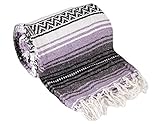
- COTTON BLANKET: With slightly larger dimensions, this Peruvian recycled cotton yoga blanket provides both versatility and coverage. High quality with a rustic, traditional print—A perfect multifunctional home or studio accessory
- YOGA PRACTICE: Fold, roll and stack into any way that supports your pose. Great for indoor and outdoor use, take your yoga or meditation practice on the go. When not in use, our blankets make a beautiful home accessory for the bedroom, or living room
- PREMIUM MATERIALS: Featuring luxe material with a charming, rustic quality which will perfectly accent your home or yoga practice. Highest quality Peruvian cotton blend. Overlocked edge stitching prevents fraying and resists pilling after washing
- SUSTAINABLILITY: Made from 100% recycled fibers, Manduka’s yoga accessories are crafted using simple, enduring, natural, and whenever possible, renewable materials and a fine attention to detail
- PRODUCT DETAILS: 65” x 83”. Machine wash gentle cold with like colors, do not bleach. Hang dry or tumble dry low, warm iron if needed. Made from 52.5% Recycled Cotton, 35% Recycled Acrylic, 12.5% Polyester




Do you need one if you already have a bolster and blocks?
A blanket still earns its place: it is adjustable in a way molded props are not (every fold changes the height by an inch or two), it covers the warmth job nothing else does, and it travels flat in a suitcase. The reverse substitution works less well — blankets can imitate a bolster, but a bolster cannot become a thin knee pad or a savasana cover. Most practitioners who set up home restorative practices end up wanting two or three blankets regardless of what else they own.
Frequently asked questions
A yoga blanket is a firm, densely woven prop rather than a soft throw. Folded, it cushions knees and lifts the hips in seated poses; rolled, it substitutes for a bolster in restorative poses; stacked, it supports the shoulders in Shoulderstand; and laid flat, it keeps you warm in savasana and meditation. The dense weave is what lets it hold shape under body weight where a regular blanket would collapse.
There is no single best yoga blanket; the right pick depends on how you use it. Cotton is the safe all-purpose choice for sensitive skin and hot studios. Wool or wool blends give the firmest support and the most warmth for restorative work. Mexican-style recycled blends are the durable, inexpensive studio workhorse. Recycled and synthetic microfibers suit travel and light home practice. Match the material to the use, not to a single ranked list.
The dense striped Mexican-style blanket, often called a falsa, became the de facto studio standard in North American Iyengar practice because it folds into stable supports, survives daily studio use and frequent washing, and is inexpensive enough for studios to replace in volume. A widely told story credits B.K.S. Iyengar with bringing the first set back from Mexico, after which the weave spread through Iyengar circles and from there into most studio prop closets.
For warmth in savasana or a thin seat lift, a regular household blanket or a folded towel often works. For structural uses — Shoulderstand stack, restorative bolster substitute, firm hip lift — a household blanket usually is not dense enough and will collapse. A tight yoga blanket or a dedicated bolster is the safer answer for any pose where the prop is actually load-bearing.
Have a correction? Contact us.
Last update 2026-09-10. Price and product availability may change.
Recommended: