Does Yin Yoga Burn Calories? Real Numbers Compared

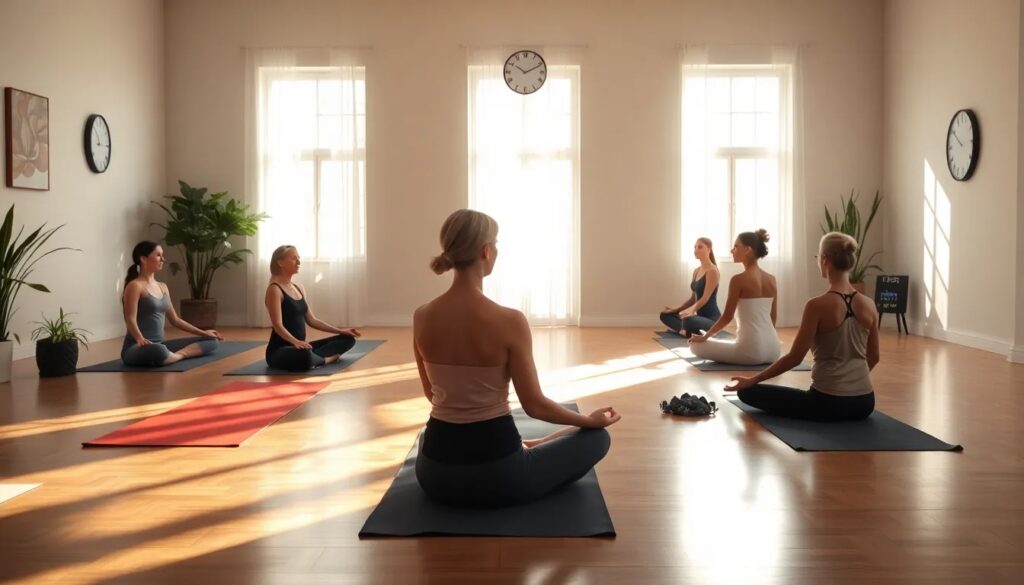
Yes, yin yoga burns calories — but not many. A typical hour-long yin class burns roughly 100 to 180 calories for most adults, about the same as a slow walk and only a fraction of what a vigorous vinyasa class demands. The exact number depends on your body weight, but no version of the math turns yin into a fat-burning workout. Its real value for weight management is indirect: better stress regulation, better sleep, and a recovery practice that helps you stay consistent with the training that does burn calories.
How many calories does yin yoga actually burn?
Calorie estimates for any activity come from MET values (metabolic equivalents), which express how much energy an activity uses compared with sitting still. These figures are based on the 2024 Adult Compendium of Physical Activities — see our broader breakdown of how many calories yoga burns across styles. Yin has no listed code of its own; the closest matches are "Yoga, Nadisodhana" (2.0 METs, breath-centered seated yoga) and "Yoga, General" (2.3 METs), the bracket used here. Applied to common body weights over a 60-minute session, and rounding the low end down slightly for slower-paced classes, that gives:
| Body weight | Approx. calories per 60-minute yin class |
|---|---|
| 125 lb (57 kg) | around 100–140 |
| 155 lb (70 kg) | around 120–170 |
| 185 lb (84 kg) | around 150–200 |
What about a 30-minute class?
A 30-minute yin class burns roughly half of the hourly figure — around 70 to 85 calories for a 155-pound person, and proportionally less or more at other body weights. The pace of a yin class barely changes across a session, so cutting the time in half cuts the calorie estimate in half too.
These are estimates, not measurements — individual metabolism, room temperature, and how actively you settle into poses all nudge the figure. But the order of magnitude is reliable: yin is a low-energy practice by design. In a yin class you hold five to eight passive floor poses for two to five minutes each with muscles deliberately relaxed, which is precisely why so little energy is spent. If you are new to the style, our full explainer on what yin yoga is covers how those long holds work and why.
Yin yoga vs. other yoga styles for calorie burn
These figures use the same MET-based method as any yoga calorie calculator, applied per style using the 2024 Adult Compendium of Physical Activities:
| Style | Intensity | Approx. calories/hour (155 lb person) | Primary goal |
|---|---|---|---|
| Yin | Very low | 120–170 | Joint mobility, stillness, recovery |
| Restorative | Lowest | Similar to yin, or lower (no separate Compendium code) | Nervous-system rest |
| Hatha (gentle) | Low–moderate | around 170 | Alignment, foundations |
| Vinyasa flow | Moderate–high | around 195–295 | Strength, cardio, flow |
| Power/heated classes | High | around 220–295 | Fitness, conditioning |
Vinyasa (2.7 METs) runs around 200 calories/hour at an easy pace, climbing toward the top of the range for a faster or power-style flow; Power (4.0 METs) and Hot yoga (3.0 METs) sit in a similar 220–295 range. A small minority of very vigorous, high-intensity Hatha classes (8.0 METs) can push past 500, but that's an outlier, not a typical class. If maximizing energy expenditure on the mat is your goal, a flowing practice is the better tool — see our guides to vinyasa yoga and hatha yoga for how those styles differ. At the other end of the spectrum, restorative yoga burns even less than yin because it removes the stretch sensation entirely — part of our full styles-and-lineages guides.
Why yin burns so few calories
Three design features keep the energy cost low, and all three are intentional:
- Muscles stay relaxed. Yin targets fascia, ligaments, and joint capsules, which requires switching muscular effort off. No muscle contraction means minimal energy demand.
- There is almost no movement. A full class might contain six poses and a handful of transitions. Calorie burn scales with movement, and yin removes it on purpose.
- Heart rate stays near resting. The slow breathing and long, still holds downregulate the nervous system — the opposite of the elevated heart rate that drives calorie expenditure.
Judging yin by calories is a bit like judging a nap by how far it carries you. It is built to do something else. That said, the long, deep holds mean yin is not risk-free for people with joint hypermobility or existing injuries — check with a teacher or clinician before deep hip or spine work.
Can yin yoga still help with weight loss?
Indirectly, yes — and the indirect routes matter more than the 150 calories on the mat:
- Stress regulation. Slow, breath-focused practice is consistently associated with lower perceived stress. Chronic stress is linked to elevated cortisol and stress eating, so a practice that reliably calms the system supports the behavioral side of weight management.
- Better sleep. Yin is a popular evening practice because the long, quiet holds wind the body down. Poor sleep is one of the better-documented contributors to weight gain.
- Recovery that protects your training. Yin restores hip, spine, and shoulder mobility after running, lifting, or dynamic yoga, making it easier to keep doing the high-burn work consistently. Consistency, not any single session, is what moves weight.
- Body awareness. Many practitioners report that mindful practice spills over into more deliberate eating habits. The evidence here is softer, but the mechanism is plausible and the cost is zero.
What yin cannot do is replace a calorie deficit. If weight loss is the goal, the honest formula remains nutrition plus regular movement — with yin as the recovery and stress-management layer, not the engine. For the full picture on combining yoga with other habits, see our guide to yoga for weight loss.
How to slot yin into a weight-management week
- 2–3 active sessions (vinyasa, strength training, running, brisk walking) for the actual energy expenditure.
- 1–2 yin sessions of 45–60 minutes, ideally in the evening or on rest days.
- Keep yin honest: use props, hold poses three to five minutes, and resist the urge to turn it into a stretch-workout — letting it stay quiet is what delivers the stress and sleep benefits.
As an Amazon Associate, we earn from qualifying purchases.


Roughly 100 to 180 calories for most adults, depending on body weight. A 155-pound person typically burns around 120 to 170 calories — similar to a slow walk.
Not directly — the calorie burn is too low to drive weight loss on its own. It helps indirectly through better stress regulation, better sleep, and recovery that keeps you consistent with higher-intensity exercise.
Vigorous flowing styles — power yoga, fast vinyasa, and heated classes — burn the most, typically 300 to 500 calories per hour for an average adult. Yin and restorative sit at the bottom of the range.
No. Yin deliberately relaxes the muscles to load the connective tissue underneath, so it does not provide the contraction stimulus muscle growth requires. Pair it with strength training or a dynamic yoga style if building muscle is a goal.
The calorie burn is essentially the same at any hour. Evening practice is popular because the calming effect pairs well with winding down for sleep, while morning yin can gently mobilize stiff joints — choose by preference, not by calories.
For most healthy adults, daily yin is safe because it is low-impact and doesn't fatigue muscles the way strength training does. The main caution is for people with joint hypermobility or an existing injury, who should ease off deep holds and check with a teacher or clinician — otherwise, daily practice mainly compounds the mobility and stress-relief benefits, not the calorie burn.
Not physically — yin is far easier on the cardiovascular system than vinyasa or power yoga. What some practitioners find harder is mental: sitting still in a pose for three to five minutes without adjusting can be more uncomfortable than moving through a flow.
This article is general information, not medical advice. Calorie figures are estimates based on standard MET values and vary by individual. If you are managing a health condition or starting a weight-loss program, consult a qualified healthcare professional. Have a correction? Contact us.
Last update 2026-09-10. Price and product availability may change.
Recommended: