Yoga Ball Guide: How to Pick the Right Size and Use It Well

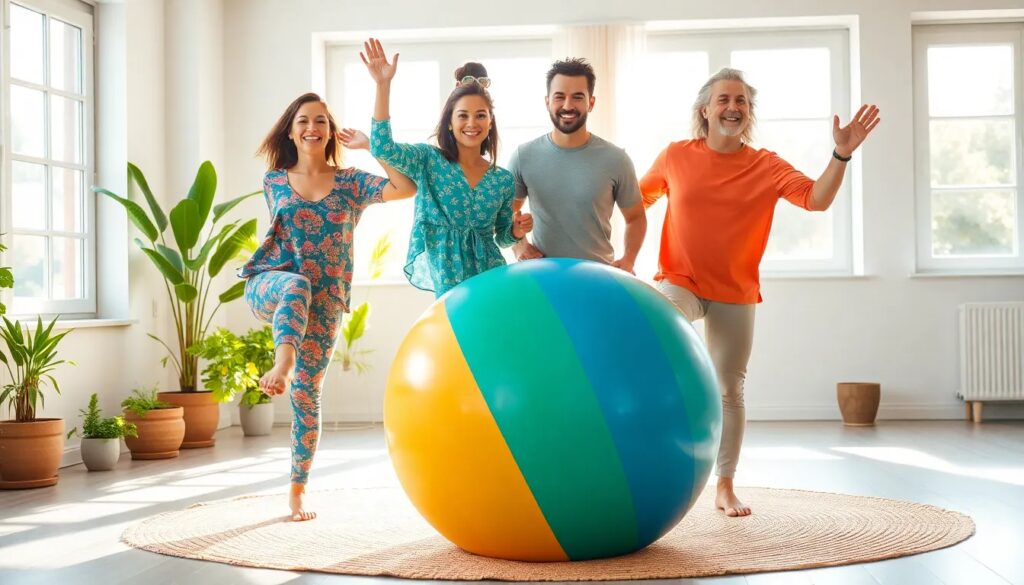
A yoga ball — also sold as an exercise ball, stability ball, or Swiss ball — is a large, air-filled vinyl ball used to train core strength, balance, and posture. Because the surface is unstable, your deep abdominal and back muscles have to work constantly to keep you steady, which is why physical therapists and trainers have used these balls for decades. The right size depends on your height: when you sit on the ball, your hips and knees should both bend at roughly 90 degrees.
This guide covers how to choose the correct size, what to look for when buying, and simple exercises to get started. It's part of our full yoga equipment resources hub.
What size yoga ball do I need?
Size is the single most important buying decision. A ball that is too small forces your hips below your knees and strains the lower back; one that is too large leaves your feet unstable. Use your height as the starting point, then fine-tune with the sit test below.
| Your height | Recommended ball diameter |
|---|---|
| Under 5'0" (152 cm) | 45 cm |
| 5'0"–5'5" (152–165 cm) | 55 cm |
| 5'6"–6'1" (167–185 cm) | 65 cm |
| 6'2" (188 cm) and taller | 75 cm |
The sit test: sit on the inflated ball with both feet flat on the floor. Your knees should be level with or slightly below your hips, both bent at about 90 degrees. If your knees sit higher than your hips, the ball is too small or underinflated. Exact height brackets vary slightly from one manufacturer's chart to the next, which is normal — for the full breakdown by height, inches, and the sit test that settles it, see our detailed yoga ball size guide.
As an Amazon Associate, we earn from qualifying purchases.

- Anti-Burst Safety: Honeycomb PVC holds 660 lbs and deflates slowly if punctured, preventing sudden collapse during a workout; non-toxic stability ball built for daily fitness routines
- Secure Grip: Anti-slip textured surface keeps your exercise ball stable on hard floors, preventing slips mid-movement; supports every body type for safe balance training and core strengthening
- Perfect Fit: 5 sizes from 45 to 85 cm suit different heights, a large exercise ball fits taller users while a compact 55 cm yoga option works for average adults; check your size guide before ordering
- Versatile Training: Doubles as a pilates and stretching aid to build flexibility, or replace your desk chair for active sitting that strengthens core muscles; ideal for home gym, yoga studio, or any workout space; Ships with a pump and 2 air plugs for quick setup
- APEXUP Quality Commitment: APEXUP stands behind the quality of our products; If for any reason you are not satisfied with your purchase, please contact us
What to check before buying
- Anti-burst rating. Quality balls are made of thick, slow-deflate vinyl that loses air gradually if punctured instead of popping. This is the most important safety feature.
- Weight capacity. Check the stated limit for dynamic (exercise) use, not just static sitting — they are different numbers.
- Surface texture. A lightly textured, non-slip finish helps on smooth floors and when your hands get sweaty.
- Included pump. Most balls ship deflated; a hand pump in the box saves a separate purchase.
- Latex-free material if you have a latex allergy — most PVC balls qualify, but check the label.
| # | Preview | Product | Rating | Price | |
|---|---|---|---|---|---|
| 1 | | APEXUP Yoga Ball, 660 lbs Anti-Burst Exercise Ball with Pump, 5 Sizes | $15.29 | Buy on Amazon | |
| 2 |  | ProBody Pilates Yoga Ball - Gym Grade Exercise Ball (Blue, 65cm) | $17.95 | Buy on Amazon | |
| 3 |  | Gruper Exercise Ball, 45cm-75cm Extra Thick Yoga Ball for Working Out | $12.99 | Buy on Amazon |
How to use a yoga ball: 5 beginner exercises
Start on a non-slip surface with plenty of clear space around you. Keep movements slow and controlled.
- Seated balance. Simply sit tall on the ball, feet hip-width apart, and hold for 1–2 minutes. Progress by lifting one foot slightly off the floor.
- Wall squat. Place the ball between your lower back and a wall, then squat slowly as the ball rolls with you. 8–12 reps.
- Ball march. Sitting tall, alternate lifting each knee as if marching. Builds hip stability and core control.
- Plank with forearms on the ball. Rest your forearms on the ball and hold a straight-body plank for 15–30 seconds.
- Supported backbend. Lie back over the ball with feet planted to gently open the chest and stretch the spine — a comfortable counter-pose after long sitting.
If you also practice mat-based yoga, a ball pairs well with flowing styles — see our guide to what vinyasa yoga is for a complementary practice.
Can I use a yoga ball as a desk chair?
Sitting on a ball engages your core more than a standard chair, and many people find short stints helpful for posture awareness. However, research does not show clear long-term benefits from all-day ball sitting, and without a backrest some people develop fatigue or discomfort. A sensible approach is to alternate: 20–30 minutes on the ball, then back to a supportive chair. If you have existing back pain, ask a physical therapist before switching. If you want the core-engagement benefit without the ball rolling underneath you, a yoga ball chair with a stable base is worth considering.

- STABLE BASE STOPS ROLLING (SAFER AT YOUR DESK) The included base keeps the stability ball anchored so it won’t roll away when you stand up or shift positions—ideal for office desk sitting, home offices, classrooms, and shared spaces.
- ACTIVE SITTING FOR POSTURE + CORE SUPPORT Use as a yoga ball chair to promote active sitting and core engagement. Helps support better posture and encourages gentle movement during long work days.
- ANTI-BURST SAFETY + 330 LB CAPACITY Gym-grade anti-burst design supports up to 330 lbs. Built to resist sudden popping and designed to release air more slowly if punctured—adding confidence for sitting and workouts.
- ANTI-SLIP TEXTURE + COMFORTABLE SUPPORT Textured anti-slip finish improves grip and stability. Use as an exercise ball seat for office chair sitting or remove from the base for yoga, Pilates, core balance, stretching, and physical therapy exercises.
- PUMP INCLUDED + EASY SETUP Includes an air pump, plugs, and clear instructions. Inflate to about 80%, let it rest, then top up to full firmness for best shape and support. (See listing images for step-by-step setup tips if you show them there.)

Caring for your ball
Wipe the ball down with mild soapy water and a soft cloth — avoid harsh solvents, which degrade vinyl. Keep it away from direct sunlight, radiators, and sharp objects, and top up the air every few weeks since balls slowly lose pressure. The same hygiene logic applies to the rest of your gear; our guide on how to clean a yoga mat covers mats in detail. When it's time to travel with the ball or store it flat, see our guide on how to deflate a yoga ball the right way.
Who benefits most from a yoga ball?
Stability balls suit a wide range of users: beginners building core strength, office workers breaking up sitting time, and older adults working on balance — though seniors with balance concerns may be better served starting with supported work like chair yoga before progressing to an unstable surface. The ball can also add variety to partner work; some two-person yoga poses adapt well with a ball as a supportive prop.


Frequently Asked Questions
It depends on the model. Many anti-burst balls list a static capacity of 1,000 to 2,000 pounds, but the dynamic (exercise) capacity is usually much lower, often 250 to 400 pounds. Always check the manufacturer rating for exercise use.
Inflate until the ball reaches its stated diameter, not until it feels rock hard. When you sit on it, the ball should compress slightly and your hips and knees should bend at about 90 degrees. A slightly softer ball is more stable for beginners.
Short sessions can improve posture awareness and engage core muscles, but evidence for all-day ball sitting is mixed. Alternate the ball with a supportive chair, and consult a physical therapist if you have existing back pain.
Nothing meaningful. Yoga ball, stability ball, exercise ball, Swiss ball, and balance ball are different names for the same large inflatable ball. The terms are used interchangeably by manufacturers.
It trains core strength, balance, and posture by making you stabilize on an unstable surface — your deep abdominal and back muscles engage constantly just to keep you steady, which is why physical therapists and trainers have used it for decades.
For most healthy adults, yes — used for exercise, short desk-sitting breaks, or guided physical therapy, they build core stability with low impact. They are not a substitute for medical treatment; check with a healthcare provider first if you are pregnant, recovering from injury, or in physical therapy.
Have a correction? Contact us.
Last update 2026-09-10. Price and product availability may change.
In this section
- Bluey Yoga Ball Episode: Plot, the Big Girl Bark Lesson, and Where to Watch
- Half Yoga Ball: What It Is, How to Use One, and How to Choose
- How to Deflate a Yoga Ball: Step-by-Step, With or Without the Plug Tool
- How to Inflate a Yoga Ball (With or Without a Pump)
- How to Use a Yoga Ball: Sizing, First Exercises, and Safety
- What Does Bouncing on a Yoga Ball Do?
- What Size Yoga Ball Do I Need for Pregnancy? A Height-Based Guide
- What Size Yoga Ball Do I Need? Height Chart and Fit Guide
- What Size Yoga Ball for Pregnancy? A Height-Based Sizing Guide
- When to Start Using a Yoga Ball in Pregnancy (Trimester Guide)
- When to Start Yoga Ball During Pregnancy: A Trimester-by-Trimester Guide
- Yoga Ball Chair: Real Benefits, Drawbacks, and How to Choose One
- Yoga Ball During Pregnancy: Sizes, Safety, and Smart Use
- Yoga Ball Exercises: Beginner to Advanced Moves and a 15-Minute Core Routine
- Yoga Ball Movements to Help Induce Labor (Safely)
- Yoga Ball Pregnancy Exercises: Safe Moves for Every Trimester
- Yoga Ball Sizes: Height Chart by Height and the 90-Degree Fit Test
Recommended: