What Does Bouncing on a Yoga Ball Do?

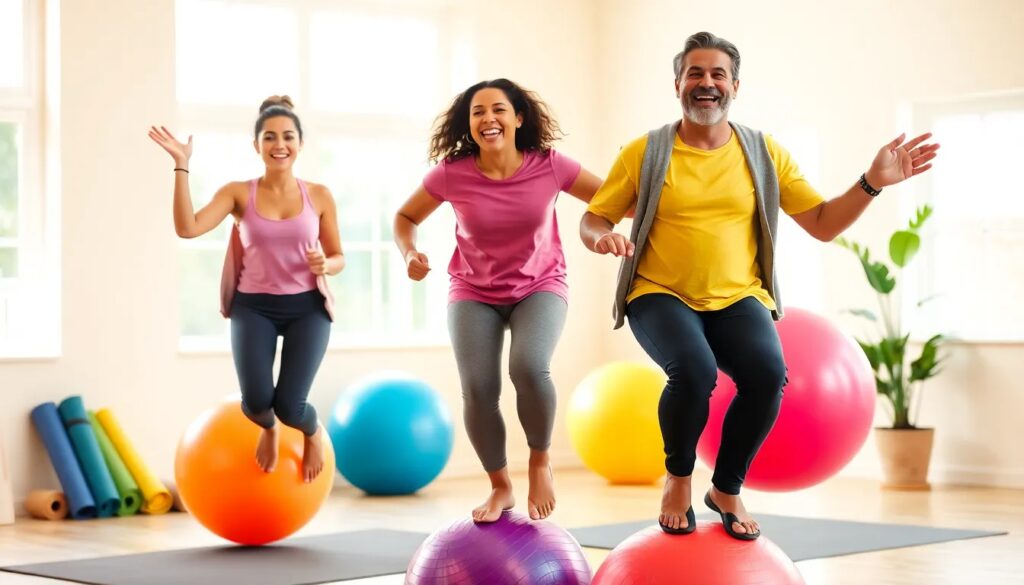
Bouncing on a yoga ball (also called an exercise ball or stability ball) does three measurable things: it forces your deep core and hip stabilizers to make constant small corrections to keep you upright, it mobilizes the pelvis and lower spine through gentle rhythmic movement, and it raises your heart rate a little more than sitting still. Those three effects explain why the same object shows up in a desk, a physio clinic, and a delivery room — and why some of the loudest claims about it outrun the evidence.
What actually happens when you bounce
A yoga ball is an unstable surface. Sit on one and your abdominal wall, lower back and hip muscles fire in quick micro-bursts to keep you balanced; add a gentle bounce and those corrections become rhythmic and continuous instead of one-off. The same movement rocks the pelvis through small ranges of motion that a chair never allows, which is why many people with stiff lower backs find a few minutes of bouncing or pelvic circles relieving. The heart rate bump is small but real: you are moving, not just sitting.
What bouncing is not: a serious workout. The extra energy you burn compared to sitting in a chair is modest, and the evidence on all-day ball-sitting at desks is mixed — some people actually slump more after long periods on a ball than on a supportive chair. Treat it as movement snacking, not a substitute for walking, strength work, or cardio.
The three measurable effects
- Stabilizer activation. The unstable surface keeps the deep core, the small muscles along the spine, and the hip abductors working in short bursts, even when you are not "exercising" in any obvious sense.
- Pelvic and lower-spine mobility. Rhythmic bouncing and pelvic circles take the sacrum and lumbar spine through ranges a chair blocks, which can relieve stiffness from prolonged sitting.
- A small heart-rate lift. Anything that is not still sitting counts as light activity, but the difference versus a chair is small, and it does not replace a walk.
Bouncing on a yoga ball during pregnancy
The same object, often sold as a birthing ball, is popular in pregnancy for good reasons:
- Comfortable upright sitting. The ball encourages an open, slightly forward-tilted pelvis, which many people find far more comfortable than a sofa in the third trimester.
- Pelvic mobility. Gentle bouncing, rocking, and hip circles keep the pelvis moving and can ease pelvic girdle and lower-back ache.
- Upright, forward-leaning posture. This position is traditionally encouraged to help the baby settle head-down and anterior. The evidence here is limited — it plausibly helps and does not harm, but it is not guaranteed.
- Comfort in early labor. A small body of research has reported reduced pain scores and greater comfort for many laboring people when a ball is used for sitting, rocking, and supported squatting during the first stage of labor.
Does bouncing induce labor? No reliable evidence shows it starts labor that was not ready to begin. It can encourage the baby downward and may help things progress once labor has started, but it is a comfort tool, not an induction method. For what to do and avoid on the mat itself during pregnancy, see our guide to yoga poses to avoid when pregnant.
Bouncing on a yoga ball at your desk — does it work?
Short answer: it is a useful piece of yoga equipment for breaking up sitting, but it is not a workout, does not meaningfully burn fat, and is not a substitute for walking. Wearable step counters often count each bounce as a step, which inflates the number without adding real cardiovascular load; the actual steps that count come from actually moving. If you want a ball at your desk, alternate — 20 to 30 minutes on the ball, then back to a supportive chair — rather than replacing the chair entirely.
As an Amazon Associate, we earn from qualifying purchases.


Avoid using the ball as your only seat if you have balance issues, low-back pain that flares with movement, or are far along in pregnancy — the instability that makes it useful for training is the same thing that makes it less safe to lean on casually.
What size yoga ball do you need?
Sizing is the same whether you call it a yoga ball, exercise ball, or birthing ball: seated on it, your hips should be level with or slightly higher than your knees, with feet flat on the floor. The standard sizing convention is:
| Your height | Ball size |
|---|---|
| Under 5'0" (152 cm) | 45 cm |
| 5'0"–5'7" (152–170 cm) | 55 cm |
| 5'8"–6'1" (171–186 cm) | 65 cm |
| Over 6'1" (186 cm) | 75 cm |
For pregnancy, many practitioners suggest sizing up one step (and inflating slightly less) so the hips stay clearly above the knees. Always choose a ball labeled anti-burst with a weight rating comfortably above your body weight.
Five simple ball exercises to start with
- Gentle bouncing — 2–3 minutes. Feet planted wide, spine tall, small rhythmic bounces.
- Pelvic circles — 10 each direction. Loosens the lower back and hips.
- Pelvic tilts — 10 slow reps. Tuck and untuck the pelvis to wake up the deep core.
- Seated marching — 20 alternating lifts. Challenges balance and hip stability.
- Wall squat with the ball — 8–10 reps. Ball between your lower back and the wall; builds leg strength with spinal support. (Skip in late pregnancy if it strains you.)
These pair well with a regular gentle practice — a slow hatha flow or yin session covers the stretching the ball does not. If you are brand new to all of it, start with our beginner's guide to yoga.
Safety basics
- Place the ball on a non-slip surface, away from sharp edges and radiators.
- Keep both feet on the floor while bouncing; the goal is rhythm, not air time.
- Check inflation regularly — an underinflated ball is unstable in a different, less predictable way.
- If you feel pain, dizziness, or (in pregnancy) contractions or fluid loss, stop and contact your healthcare provider.
Frequently asked questions
There is no reliable evidence that bouncing starts labor. It can help the baby move down into the pelvis and is well supported as a comfort measure once labor begins, but it is not an induction method. Discuss any induction concerns with your midwife or doctor.
It is light activity rather than a workout. It activates core and hip stabilizers and burns slightly more energy than sitting in a chair, which makes it useful movement during desk time, but it does not replace strength or cardiovascular training.
Short, frequent sessions work best: 5 to 15 minutes a few times a day. In pregnancy, let comfort guide you — many people sit and gently move on the ball for longer stretches in the evening without problems.
They are essentially the same product. Balls marketed for birth are usually anti-burst rated and sometimes sized larger. Any anti-burst exercise ball of the correct size for your height works for pregnancy use.
Research does not support all-day ball sitting: posture benefits are small and many people slump or get back discomfort after long periods. A better approach is alternating — use the ball for 20 to 30 minute blocks and a supportive chair the rest of the time.
This article is general information, not medical advice. If you are pregnant or have back, hip, or balance issues, consult a qualified healthcare professional before starting ball exercises.
Have a correction? Contact us.
Last update 2026-09-10. Price and product availability may change.
Recommended: