Sanskrit Yoga Terms: A Practical Glossary for Class

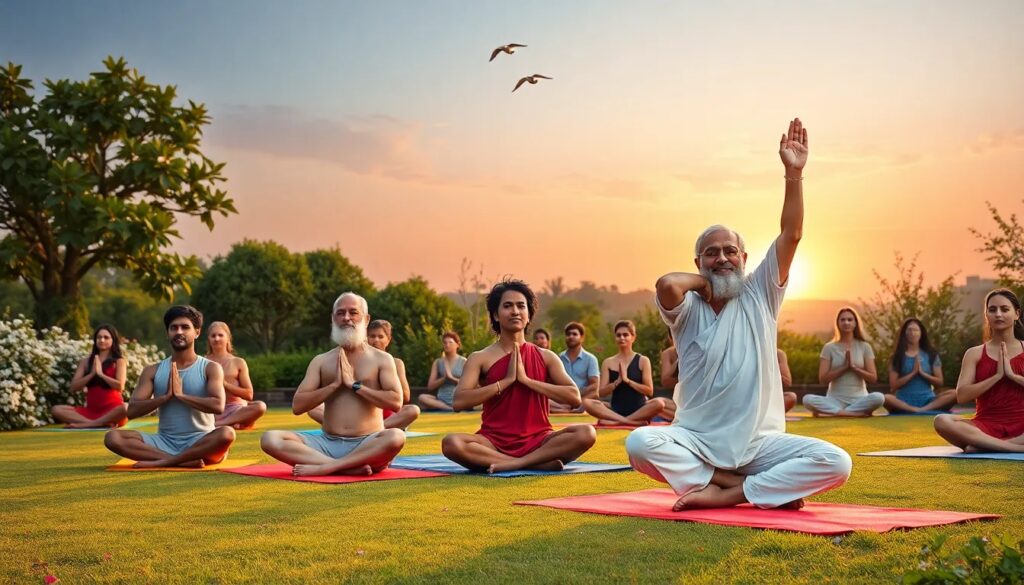
Sanskrit is the classical Indian language in which yoga's foundational texts were composed, and it is still the shared vocabulary of yoga classes worldwide: asana means posture, pranayama means breath regulation, vinyasa means placing in a special way (hence flowing sequences), and the word yoga itself comes from the root yuj, to yoke or join. You do not need to study Sanskrit to practice — but knowing a few dozen terms turns confusing class instructions into clear ones and connects your practice to its actual history.
This glossary covers the terms you will genuinely hear in class, how pose names are constructed (the part that makes everything click), a basic pronunciation cheat-sheet, the philosophy behind some of the vocabulary, and a realistic way to learn it all.
Core Sanskrit terms you will hear in class
These are the Sanskrit yoga names and meanings you will actually use — not an exhaustive dictionary, just the words that come up every week:
| Term | Approximate meaning | Where you will hear it |
|---|---|---|
| Asana | Posture, seat | Every pose name ends in it |
| Pranayama | Breath regulation | Breathing exercises at the start or end of class |
| Vinyasa | To place in a special way; linked movement | Flow classes; the chaturanga-updog-downdog transition |
| Hatha | Forceful; the physical branch of yoga | Class names for slower, posture-focused sessions |
| Drishti | Gaze point | Balance poses: fix your drishti to stop wobbling |
| Ujjayi | Victorious breath | The audible ocean breath in vinyasa and ashtanga |
| Bandha | Energy lock, engagement | Cues like lift mula bandha (pelvic floor) |
| Mantra | Sacred sound or phrase | Chanting, including Om |
| Mudra | Gesture, usually of the hands | Hands in prayer (anjali mudra), meditation seals |
| Savasana | Corpse pose | Final relaxation at the end of class |
| Namaste | A respectful greeting (I bow to you) | Closing of many Western classes |
| Om / Aum | Sacred syllable in Indian traditions | Opening and closing chants |
| Prana | Vital energy, life force | Philosophy and breathwork discussions |
| Chakra | Wheel; energy center in yogic anatomy | Kundalini and meditation contexts |
| Yogi / Yogini | Practitioner (traditionally masculine / feminine) | Casual studio speech |
For the deeper story of the word yoga itself — the root yuj and the classical definitions in Patanjali and the Bhagavad Gita — see our dedicated article on what yoga means in Sanskrit.
How Sanskrit pose names are built
Sanskrit yoga pose names look intimidating until you realize they are compound words assembled from a small set of parts. Almost every name ends in -asana (pose), and the front half describes a body part, animal, object, number, or direction:
| Sanskrit element | Meaning | Example pose |
|---|---|---|
| Adho mukha | Downward-facing | Adho Mukha Svanasana — Downward-Facing Dog |
| Urdhva | Upward | Urdhva Mukha Svanasana — Upward-Facing Dog |
| Svana | Dog | Both of the above |
| Tada | Mountain | Tadasana — Mountain Pose |
| Vrksa | Tree | Vrksasana — Tree Pose |
| Baka | Crane | Bakasana — Crane (Crow) Pose |
| Ardha | Half | Ardha Chandrasana — Half Moon Pose |
| Chandra | Moon | Ardha Chandrasana |
| Eka pada | One foot / leg | Eka Pada Rajakapotasana — One-Legged King Pigeon |
| Supta | Reclining | Supta Baddha Konasana — Reclining Bound Angle |
| Utthita | Extended | Utthita Trikonasana — Extended Triangle |
| Parivrtta | Revolved, twisted | Parivrtta Trikonasana — Revolved Triangle |
Once you know perhaps twenty of these building blocks, unfamiliar names start decoding themselves: Supta Padangusthasana is just reclining (supta) + foot (pada) + big toe (angustha) + pose. Our reference of 30 essential poses with English and Sanskrit names applies this system pose by pose, and the broader yoga pose library organizes them by category.
A quick pronunciation cheat-sheet
You don't need academic Sanskrit to sound reasonable in class — a few patterns cover most of it. Written transliterations sometimes carry diacritical marks that show vowel length; you won't see them on a studio schedule, but they explain the sounds:
- a is short, like "up"; ā is long, like "father" — so "asana" leans toward "AH-suh-nuh".
- i / ī and u / ū follow the same short-versus-long pattern.
- c sounds like the English "ch" — "chakra" and "chaturanga" both start that way, even written with a plain c.
- ṛ, in academic transliteration, is close to a rolled "ri" (as in "Krishna").
There is more than one accepted way to render these sounds in English letters, and a teacher's regional or lineage background shifts pronunciation further still — aim for recognizable, not perfect.
The philosophy behind the vocabulary: yamas and niyamas
Beyond pose names, Sanskrit yoga carries its own ethical discipline. Patanjali's eight limbs (ashtanga) open with two sets of five practices: the yamas, restraints toward others, and the niyamas, observances toward oneself. The five yamas are ahimsa (non-harming), satya (truthfulness), asteya (non-stealing), brahmacharya (right use of energy), and aparigraha (non-grasping); the niyamas are saucha (cleanliness), santosha (contentment), tapas (disciplined effort), svadhyaya (self-study), and ishvara pranidhana (surrender to something greater than oneself). See our guide to the eight limbs of yoga, our closer look at ahimsa in practice, and the Yoga Sutras, where Patanjali laid all of this out — or browse the yoga philosophy and history hub for more.
Why teachers still use Sanskrit
- Precision and continuity. English names vary (Crane or Crow? Half Moon means different things in different lineages); Sanskrit names are more stable across schools and countries.
- Connection to the source texts. Terms like the eight limbs (ashtanga) of Patanjali's Yoga Sutras — yama, niyama, asana, pranayama, pratyahara, dharana, dhyana, samadhi — simply do not translate into single English words.
- Respect for origins. Using the original vocabulary acknowledges that modern classes inherit a long Indian tradition — a topic with real nuance, which we explore in whether yoga is a religious practice.
That said, plenty of excellent teachers cue mostly in English. Sanskrit knowledge enriches practice; it is not a gatekeeping requirement.
How to actually learn it (without flashcard burnout)
If you are new to Sanskrit yoga terms, start with the poses your body already knows instead of memorizing lists cold — the steps below build outward from there.
- Learn the names of poses you already do. Attach each Sanskrit name to a shape your body knows — it sticks far better than abstract lists.
- Learn the building blocks, not whole names. The twelve elements in the table above unlock hundreds of pose names.
- Listen actively in class. When a teacher says both names (Warrior Two, Virabhadrasana Two), repeat the Sanskrit silently as you hold the pose.
- Pick up one philosophy term a week. Ahimsa (non-harming), satya (truthfulness), santosha (contentment) — the ethical vocabulary of the yamas and niyamas is small and memorable.
- Do not stress pronunciation. Reasonable approximations are universally accepted in studios; precision can come later if the language itself starts to interest you.
- Try flashcards if quizzing yourself works for you. Sanskrit yoga flashcards, on paper or in an app, can speed memorizing the building blocks above — they are optional, and if drilling isolated words adds pressure instead of progress, skip them and let class repetition do the job instead.
Frequently asked questions
Sanskrit yoga is not a separate style of yoga. It refers to the classical Sanskrit vocabulary - pose names, breathing terms, and philosophy - used within modern yoga practice, whatever the style or lineage.
No. Most Western classes cue poses in English, and teachers who use Sanskrit almost always give the English name too. Learning key terms simply makes classes easier to follow and connects you to the source texts of the tradition.
Yoga derives from the root yuj, meaning to yoke or join. Classical texts define it variously: Patanjali describes it as the stilling of the fluctuations of the mind, while the Bhagavad Gita speaks of skill in action and equanimity.
Asana means seat or posture in Sanskrit. Pose names are compounds: a descriptive front half — an animal, object, number, or direction — plus asana. Tadasana is mountain plus pose; Bakasana is crane plus pose; Adho Mukha Svanasana is downward-facing dog plus pose.
Sanskrit is primarily a classical and liturgical language today, comparable to Latin in Europe. It remains central to Hindu, Buddhist, and Jain scholarship, is one of India's officially recognized languages, and small communities and academic programs actively speak and study it.
Have a correction? Contact us.
Recommended: