What Clothes to Wear While Doing Yoga (By Class Type)

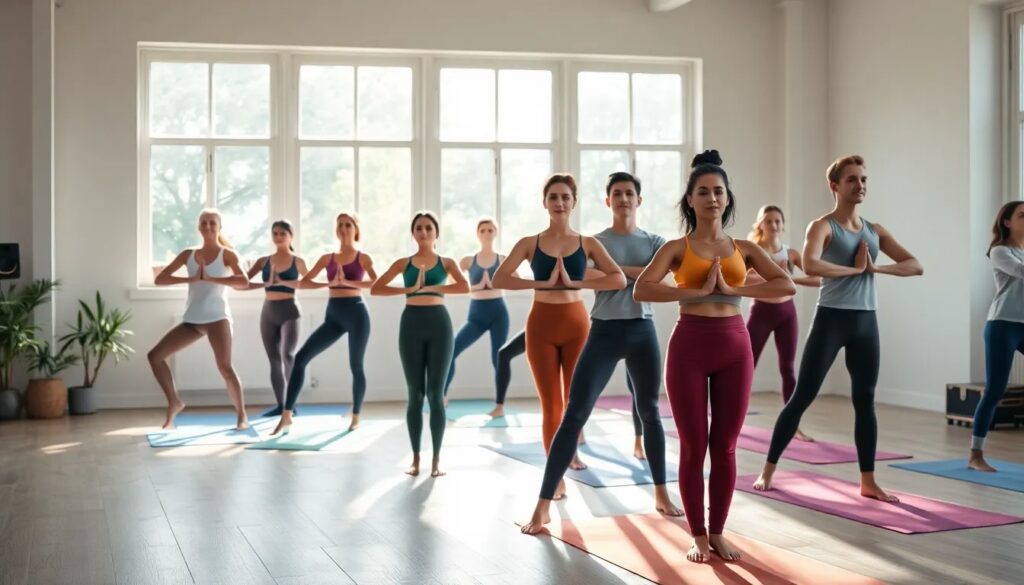
The short answer to what clothes to wear while doing yoga: stretchy bottoms that move with you (leggings, fitted shorts, or joggers), a fitted top that will not slide over your head in Downward Dog, and bare feet. Beyond that, the right outfit depends mostly on the type of class — a heated vinyasa session and a slow yin class have almost opposite clothing needs. This guide breaks it down by class type, with specifics for women, men, and beginners who do not want to buy anything new yet. For a broader look at the gear involved, see our yoga equipment resources.
- The Three Rules That Cover Every Yoga Outfit
- What to Wear by Class Type
- What Should Women Wear to Yoga?
- What Should Men Wear to Yoga?
- Do You Need Special Shoes or Socks for Yoga?
- Hot Yoga vs Cool Studio: Why the Outfit Changes
- What to Wear to Yoga Instead of Leggings?
- Can You Do Yoga in Regular Clothes as a Beginner?
- Caring for Yoga Clothes So They Last
The Three Rules That Cover Every Yoga Outfit
- It must stretch. Yoga uses extreme ranges of motion — deep squats, wide lunges, overhead reaches. Rigid fabrics (jeans, stiff cotton shorts) restrict or tear.
- It must stay in place. You will spend time folded forward and upside down. Loose tops slide, low-rise waistbands gap; fitted cuts and high waists solve both.
- It should manage sweat for the class you take. Moisture-wicking synthetics for sweaty classes; soft, warm comfort layers for slow ones.
What to Wear by Class Type
| Class type | Bottoms | Top | Extras |
|---|---|---|---|
| Hot yoga / heated flow | Lightweight shorts or capri leggings | Fitted moisture-wicking tank or sports bra | Small towel, lots of water |
| Vinyasa / power | Mid- or high-waist leggings, fitted shorts | Fitted technical tee or tank | Light layer for Savasana |
| Hatha / gentle | Leggings or comfortable joggers | Tee or tank, fitted or semi-fitted | Optional light sweater |
| Yin / restorative | Soft leggings or warm joggers | Comfortable layered top | Socks and sweater — you will cool down |
| Outdoor yoga | Leggings or shorts by weather | Tee with sun coverage | Layers, sunscreen, hair tie |
The pattern: the more active and heated the class, the lighter and more technical the clothing; the slower the class, the more warmth and comfort matter. Slow practices like yin yoga generate almost no body heat, so dressing as if for a workout leaves you cold by the second pose.
As an Amazon Associate, we earn from qualifying purchases.


What Should Women Wear to Yoga?
The standard combination — high-waisted leggings plus a fitted tank or sports bra — is popular because it solves the real problems: high waistbands stay put in inversions, opaque stretch fabric survives deep bends, and a supportive sports bra (light to medium support is enough for most yoga) removes distraction. Practical checks before class:
- The squat test: deep squat in front of a mirror — if the leggings turn sheer, they will do it in class.
- The fold test: fold forward — does the top stay put or slide toward your chin? Longer or tuckable tops win.
- For more on necklines, built-in bras, and coverage options, see our full guide to yoga shirts.

- Designed for yoga. Light support
- Butterluxe collection features extremely soft and ultra stretchy, engineered for luxurious comfort
- A-D Cups. 26-33 underbust best. Built-in removable pads
- Scoop neckline. Elastic band for added support
- Spaghetti straps racerback design for full range of movement
Sports Bra Support Level
For most yoga classes, a low-impact sports bra is enough — gentle vinyasa, hatha, yin and restorative do not involve the jumping or running that high-support bras are built for. Heated power classes and Ashtanga, with their chaturanga flows and jump-throughs, push the limit further; if you are between sizes or want extra hold, choose a medium-impact design without underwires or hard clasps that dig in when you lie on your back for Savasana. The goal is support you forget you are wearing.
What Should Men Wear to Yoga?
Men's biggest pitfall is loose basketball-style shorts: in inversions and wide-legged poses they expose more than intended. Better options:
- Fitted athletic shorts with a liner, or regular shorts over compression shorts.
- Tapered joggers or yoga pants with stretch for cooler studios.
- A slim-fit tee or tank in wicking fabric — baggy tees fall forward in Downward Dog just like loose women's tops.


Do You Need Special Shoes or Socks for Yoga?
No — yoga is practiced barefoot. Bare feet grip the mat and let the foot muscles work, which matters for balance poses in particular. If you dislike bare feet or need them covered for hygiene or warmth, grip socks with rubberized soles are the accepted alternative; regular socks are genuinely unsafe on a mat. Shoes stay at the studio door — although what you wear to and from class is its own topic (see what shoes to wear with yoga pants). For a full breakdown of the sock options, see our guide to yoga socks.

- 【𝐍𝐨𝐧 𝐒𝐥𝐢𝐩 𝐆𝐫𝐢𝐩 𝐟𝐨𝐫 𝐓𝐨𝐭𝐚𝐥 𝐒𝐭𝐚𝐛𝐢𝐥𝐢𝐭𝐲】Our grip socks feature sticky silicone dots on the sole for non slip traction on hardwood, tile, or gym floors. Whether you're doing Pilates, barre, or barefoot workouts at home, these grippy socks help you stay balanced and safe—ideal for yoga, studio training, or hospital use.
- 【𝐋𝐨𝐰 𝐂𝐮𝐭 & 𝐁𝐫𝐞𝐚𝐭𝐡𝐚𝐛𝐥𝐞 𝐟𝐨𝐫 𝐀𝐥𝐥-𝐃𝐚𝐲 𝐂𝐨𝐦𝐟𝐨𝐫𝐭】Made from a breathable cotton-spandex blend, these low cut athletic socks fit like footies and wick away moisture to keep feet dry. The ankle-height profile ensures maximum movement freedom and blends easily with sneakers or ballet routines.
- 【𝐁𝐮𝐢𝐥𝐭 𝐟𝐨𝐫 𝐁𝐚𝐫𝐫𝐞, 𝐃𝐚𝐧𝐜𝐞 & 𝐌𝐨𝐫𝐞】Designed for versatility, these Pilates socks are great for barre, ballet, yoga, dance, and gym workouts. They’re also as hospital socks, pregnancy socks, or everyday home essentials—combining hygiene and control wherever you move.
- 【𝟓 𝐒𝐭𝐲𝐥𝐢𝐬𝐡 𝐂𝐨𝐥𝐨𝐫𝐬 & 𝐎𝐧𝐞 𝐒𝐢𝐳𝐞 𝐅𝐢𝐭𝐬 𝐌𝐨𝐬𝐭】Each set includes 5 trendy colors: Purple, White, Pink, Grey, and Black, perfect for matching your workout outfits or loungewear. With stretchy elasticity, these grippers comfortably fit most US women’s shoe sizes 5–10—no need to choose between sizes.
- 【𝐏𝐞𝐫𝐟𝐞𝐜𝐭 𝐆𝐢𝐟𝐭 𝐟𝐨𝐫 𝐀𝐜𝐭𝐢𝐯𝐞 & 𝐂𝐚𝐫𝐢𝐧𝐠 𝐖𝐨𝐦𝐞𝐧】Soft, functional, and stylish, these anti-skid grippy socks make a thoughtful gift for fitness lovers, seniors, pregnant moms, or anyone needing support. Great for hospital stays, cold mornings, or home workouts—comfort and stability packed in every step.
Hot Yoga vs Cool Studio: Why the Outfit Changes
The same person can wear a long-sleeve top in a Sunday yin class and overheat in a Tuesday hot vinyasa. The deciding factor is heat, not yoga style. Heated rooms (typically Bikram-style 40°C/105°F or warm vinyasa around 32°C/90°F) call for the least fabric you can wear with full coverage: lightweight shorts or capri-length leggings, a sports bra or fitted tank, and a small towel for the mat. Cool or unheated studios let you add layers — long pants, a tee, a light sweater for the final resting pose, where your body temperature drops quickly. A simple rule: dress for the room temperature plus one layer to remove once you warm up.
What to Wear to Yoga Instead of Leggings?
Leggings are popular but far from the only option. Plenty of alternatives work just as well:
- Fitted athletic shorts with a built-in liner — best for hot classes and for anyone who runs warm.
- Soft joggers or yoga pants — warmer for slow practices, restorative, and outdoor classes in cool weather.
- Comfortable cotton or synthetic-blend sweatpants — fine for your first classes and for home practice; skip them for heated rooms where cotton stays wet.
The two checks stay the same: the waistband must not gap or roll when you fold forward, and the fabric must not go sheer in a deep squat. If a pair passes both, it works.
Can You Do Yoga in Regular Clothes as a Beginner?
Yes. For your first classes, anything stretchy and comfortable works: sweatpants, a tee that is not too loose, leggings you already own. Do not buy a wardrobe to try a hobby. The genuine upgrades, in order of impact, once you know you will keep practicing:
- One pair of good leggings or fitted shorts that pass the squat test.
- One or two fitted, sweat-wicking tops.
- A supportive sports bra (if applicable).
- A warm layer dedicated to Savasana.
Caring for Yoga Clothes So They Last
Technical fabrics fail early when mistreated: wash cold inside out, skip fabric softener (it clogs the wicking finish), and air dry instead of machine drying — heat is what kills spandex. Hang sweaty clothes to dry before they hit the hamper and you will avoid the permanent-odor problem entirely.
Yes, as long as they stretch in all directions, stay opaque in a deep squat, and have a waistband that does not roll down when you bend. Fashion leggings often fail the opacity test, so check in a mirror before relying on them in class.
Both work; it is mostly about temperature and preference. Leggings offer coverage in wide-legged poses and light compression, while fitted shorts run cooler for hot classes. Avoid loose shorts without a liner, which expose too much in inversions.
Normally no. Bare feet grip the mat and improve balance and foot strength. If you prefer covered feet, use grip socks with rubberized soles; ordinary socks are slippery on a mat and make standing poses unsafe. Warm socks are fine for the final relaxation.
Whatever stretchy, comfortable clothes you already own: leggings or sweatpants plus a tee that is not too loose. Bring water and arrive a few minutes early. Studios usually lend mats to newcomers, so the only real requirement is clothing you can move and bend in freely.
Most yoga leggings are designed to be worn with seamless underwear or with nothing underneath, since the fabric and waistband already provide coverage. Avoid cotton underwear with visible seams, which can show through and create lines; seamless or thong styles disappear under stretch fabric.
Have a correction? Contact us.
Last update 2026-09-10. Price and product availability may change.
Recommended: