How Long to Hold a Yoga Pose: Times by Style, Goal, and Experience Level

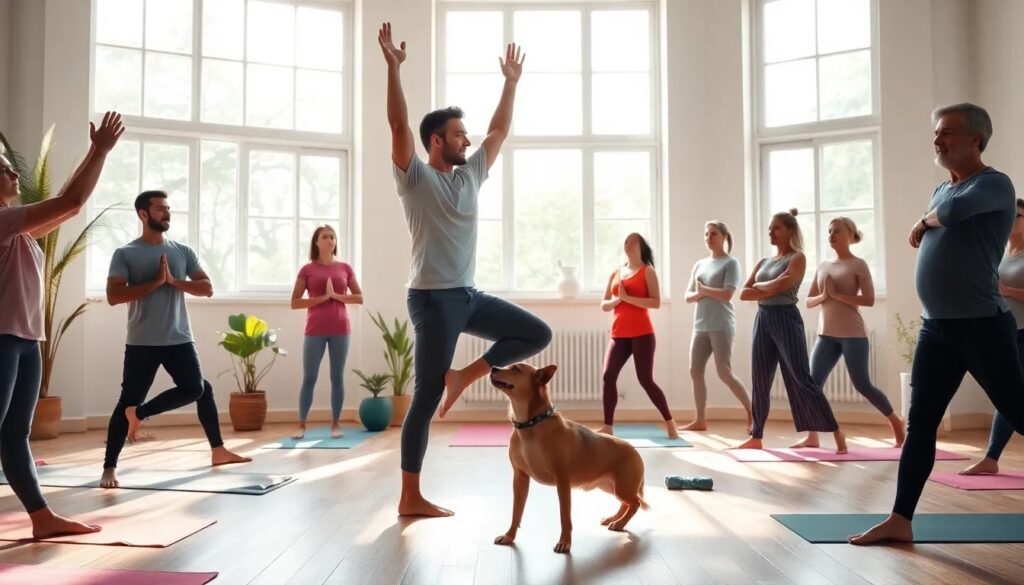
How long you should hold a yoga pose depends mostly on the style you are practicing: in vinyasa you move after 1 to 5 breaths, in hatha you typically stay 30 seconds to a minute, and in yin or restorative yoga holds run from 2 minutes up to 20. Within those conventions, your goal matters — flexibility rewards longer passive holds, strength rewards shorter active ones — and so does honest body feedback. This guide gives the standard numbers and, more importantly, how to adjust them.
General information, not medical advice. If you have an injury or a condition affecting joints, blood pressure, or balance, get guidance from a healthcare professional or qualified teacher before testing longer holds.
Hold Times by Yoga Style
| Style | Typical hold | Why |
|---|---|---|
| Vinyasa / Flow | 1–5 breaths (~5–30 seconds) | Poses link to breath in continuous movement; the transition is part of the work |
| Ashtanga | 5 breaths in most poses | The traditional count of the fixed series |
| Hatha | 30 seconds–1 minute (roughly 5–10 slow breaths) | Long enough to find alignment and steadiness, short enough to keep muscles engaged |
| Iyengar | 30 seconds–5 minutes, pose-dependent | Precision work; props allow longer, supported stays |
| Yin | 2–5 minutes (sometimes longer) | Targets connective tissue, which only responds to long, passive, gentle load |
| Restorative | 5–20 minutes | Fully supported by props; the goal is nervous-system downshift, not stretch |
Curious how the long-hold styles work in depth? See our guides to yin yoga benefits and restorative yoga poses and their setups. For the fast end of the spectrum, our comparison of hatha versus vinyasa yoga explains why hold time is the core difference between the two most common class types.
Hold Times by Goal
For flexibility
Most static-stretching guidance suggests holds of about 30 to 60 seconds per position, repeated regularly, improve range of motion — and that simply adding more time past that point is not dramatically better for muscles. For deep connective-tissue work, yin-style passive holds of 2 to 5 minutes at a mild (not painful) intensity are the standard approach. Consistency over weeks beats heroic single sessions.
For strength
Strength comes from effortful engagement, not duration alone. Holding demanding poses — plank, chair, warrior poses, boat — for 20 seconds to a minute at good form, then repeating after rest, builds isometric strength effectively. When form collapses, the useful part of the hold is over. For a focused look at how poses build strength, our guide on yoga for strength walks through the progression.
For balance
Balance poses such as tree or half moon improve through repeated attempts rather than long stays. Aim for 15 to 30 seconds per side and repeat two or three times, switching sides evenly.
For relaxation and stress
Longer, fully supported holds win. Gentle supported poses held for 5 to 10 minutes with slow breathing engage the relaxation response in a way short holds cannot. This is the entire design principle of restorative yoga.
How Long Should Beginners Hold Poses?
Shorter than the style standard, with form as the priority:
- Start with 2 to 3 slow breaths per pose and learn the alignment first.
- Build toward 5 breaths (roughly 30 seconds) over your first weeks of practice.
- Use props — blocks, straps, a wall — to hold positions without strain rather than shortening the hold.
- Come out of any pose slowly; injuries happen at sloppy exits more often than during the hold itself.
How frequently you practice matters more than how long you hold: our guide on how often you should do yoga covers building a sustainable weekly schedule.
How Many Times Should You Repeat a Yoga Pose?
Repetition matters as much as the hold itself. A practical default for most styles:
- Strength and balance poses: 2 to 3 rounds per side, 30 to 60 seconds of rest between rounds.
- Flexibility and stretching poses: 1 to 2 rounds is usually enough; the cumulative time across the week is what moves range of motion.
- Yin and restorative: a single long hold per pose is the design — repeating is unnecessary and can overwork the tissue.
If you are not sure, mirror what your teacher cues: most vinyasa classes build 2 to 3 vinyasas (flow-throughs) of the same sequence, most hatha classes hold once and move on, and most yin classes hold each side once for 3 to 5 minutes.
Time Holds by Breath, Not the Clock
Watches make you rush; breathing makes the hold honest. A slow, steady inhale plus exhale is roughly 4 to 6 seconds for most adults, so:
- 1 breath ≈ 5 seconds — the minimum in a fast flow.
- 5 breaths ≈ 20 to 30 seconds — the Ashtanga default.
- 10 breaths ≈ 40 to 60 seconds — the top of a hatha hold.
Counting breaths also keeps the nervous system calm: if you lose count, you are likely holding your breath, which is itself a sign to back off.
Does Holding Longer Build More Flexibility or Strength?
Not linearly. Muscles respond well to moderate, repeated load; pushing a single hold past the point where form collapses is not extra credit, it is wasted effort and injury risk. Strength in yoga is built by effortful engagement during shorter holds plus rest, not by clocking long minutes in one shape. Flexibility in the muscle belly follows a similar pattern. What does respond to long, passive holds is fascia, ligaments, and joint capsules — which is exactly the tissue yin yoga targets. Match the hold length to the tissue you are trying to change.
Signs You Should Come Out of a Pose Early
- Sharp, stabbing, or electric pain — exit immediately; this is different from the dull ache of a stretch
- Numbness or tingling — usually a nerve asking you to change position
- Held breath or strained, shaky breathing — if you cannot breathe slowly, the hold is too intense
- Shaking that worsens with form collapse — mild muscle tremor in strength holds is normal; losing the shape is the stop signal
- Dizziness or lightheadedness — particularly in inversions or when coming up quickly
The traditional benchmark is worth keeping in mind: a pose should be steady and comfortable. If you are white-knuckling the seconds, shorten the hold and build up gradually.
Start with 2 to 3 slow breaths per pose, focusing on alignment, and build toward about 5 breaths or 30 seconds over your first weeks. Use props to support positions rather than straining to match longer holds.
Only for certain goals. Longer passive holds help flexibility and relaxation, but strength and balance improve more through shorter holds with good form and repetition. Past the point where form or steady breathing collapses, extra time adds risk rather than benefit.
Yin targets connective tissue such as fascia and ligaments rather than muscle. That tissue responds only to gentle, sustained load, which is why yin holds run 2 to 5 minutes at mild intensity in mostly floor-based positions.
Typically 1 to 5 breaths. Vinyasa links movement to breath, so poses act as moments within a continuous flow rather than fixed stations, and the related Ashtanga tradition uses a standard count of 5 breaths per pose.
Have a correction? Contact us
Recommended: