Chaturanga Yoga: Form, Common Mistakes, and a Progression That Works

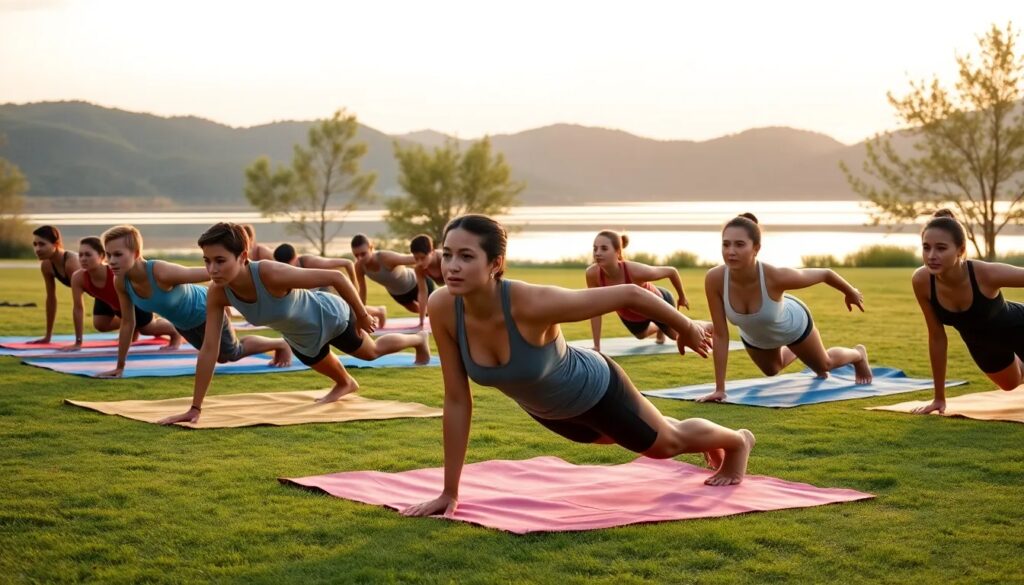
Chaturanga yoga is the low push-up position that links nearly every vinyasa flow: from a high plank you shift forward, bend the elbows straight back, and hover halfway down with the body in one line. The shape is the same as the bottom of a push-up, but the intent is different — it is a transition, not a rep, and you almost never press back up. Because a typical vinyasa class asks you to repeat it again and again, clean form matters more than effort: a few small alignment choices are what separate a shoulder-friendly chaturanga from the one most likely to nag at the joint after a few months of regular practice.
What Is Chaturanga Yoga?
The name breaks down in Sanskrit: chatur means four, anga means limb, danda means staff, and asana means pose. Put together, Chaturanga Dandasana translates as "four-limbed staff pose," a name that describes the body shape — four weight-bearing points (two hands, two feet) with the trunk held straight like a staff. The pose is also called low plank in modern classes, and the shortened "chaturanga" is what teachers usually say in flow.
Chaturanga is one of the standard postures in the vinyasa yoga lineage, where it sits between plank and upward-facing dog in the typical sun-salutation linking sequence. The pose is not part of a slow hatha class in the same way — it appears, but it is not the connective tissue it becomes in flow styles.
Chaturanga Benefits
Chaturanga is mostly a strength and control pose, not a stretch. The main benefits for a regular practitioner are:
- Upper-body strength. The triceps, chest, and front shoulders do most of the work holding the hover. Repeated often, it is one of the main reasons regular vinyasa builds visible arm and chest tone.
- Core and serratus engagement. Keeping the body in one rigid line from heels to shoulders is real core work, with the serratus anterior (the muscle that wraps around the ribs) doing much of the shoulder-blade stabilization.
- Shoulder control under load. Done with clean form, the pose trains the shoulder blades to track on the ribcage rather than wing out, which is a useful skill for any weight-bearing yoga posture.
- Transition fluency. In a flow class, chaturanga is the moment that links the standing and prone parts of the sequence. Doing it well makes the whole sun salutation feel smoother and less jarring on the wrists and shoulders.
Chaturanga is one of the main reasons vinyasa builds noticeable arm and core strength without ever using a weight.
How to Do Chaturanga, Step by Step
- Start in a strong plank. Shoulders stacked over wrists, body one line from crown to heels, core and legs switched on, heels pressing back.
- Shift forward first. Roll onto the tips of your toes so your shoulders travel an inch or two past your wrists. Skipping this shift is the single most common error — without it, the elbows end up behind the wrists and the shoulders take the strain.
- Bend the elbows straight back, grazing the ribs. Lower with control.
- Stop at 90 degrees. Shoulders level with the elbows — never dipping below them. Going lower transfers load onto the front of the shoulder capsule.
- Stay one straight line. Hips neither sag nor pike; gaze slightly forward to keep the neck long.
- Exit with intention — usually flowing into upward-facing dog by rolling over the toes and pulling the chest through, or lowering all the way down to cobra if that transition is still strong work.
The Four Mistakes Behind Most Shoulder Pain
- Elbows winging out. Flared elbows turn the pose into a strain on the rotator cuff. Cue: drag the inner elbows toward your waistline.
- Dropping too low. Shoulders dipping below elbow height hammers the biceps tendon and front shoulder. Halfway down is the pose; lower is not deeper, it is riskier.
- No forward shift. Lowering straight down from plank stacks elbows behind wrists and dumps weight into the shoulders. Tip forward onto the toes first.
- Collapsing through fatigue. The fifteenth chaturanga of a class with sagging hips and shrugged shoulders does damage the first five did not. When form goes, drop the knees — immediately and without apology.
Chaturanga vs. Push-Up: Same Shape, Different Job
| Chaturanga | Standard push-up | |
|---|---|---|
| Elbow path | Pinned to the ribs, pointing straight back | Usually 45–60 degrees from torso |
| Bottom position | Hold at 90 degrees (or flow through) | Chest approaches the floor |
| Direction | Usually lower only, then transition to another pose | Lower and press back up |
| Tempo | One breath, synchronized with exhale | Self-paced repetitions |
| Goal | Controlled transition within a sequence | Strength and muscle endurance |
Push-ups are excellent preparation for chaturanga — but being strong at push-ups does not automatically produce good chaturanga, because the rib-hugging elbow path and the one-breath tempo are skills of their own.
A 4-Week Progression for Beginners
- Week 1 — Knees-down chaturanga. From a knees-down plank, shift forward and lower halfway with elbows hugging in. 3 sets of 5 slow reps, every other day.
- Week 2 — Eccentric lowers. From full plank, lower as slowly as you can (count to five) all the way to the floor, knees down to reset. 3 sets of 3–5.
- Week 3 — Halfway holds. Lower to the 90-degree position and hold for 2–3 breaths, knees down if needed. A pair of yoga blocks under the shoulders gives you an exact depth target — one of several drills in our guide to using yoga blocks.
- Week 4 — Flow integration. Use full chaturanga for the first few sun salutations of a practice, then switch to knees-down the moment quality drops.
Strength standards differ between bodies; what matters is that the version you practice today is one you can do with clean lines. Knees-down chaturanga done well builds exactly the same pattern — it is the path, not a detour.
As an Amazon Associate, we earn from qualifying purchases.

- NEW ECO FRIENDLY MATERIAL: The upgraded Gruper Yoga mat is made with premium friendly material. It costs more to make, but it is safer and more soft than traditional non-green PVC and EVA yoga mats.The exercise mats are suitable for many forms of Yoga, Pilates and fitness.
- UPGRADED ANTI-SKID DESIGN AND DOUBLE LAYER ANTI TEAR: Special sticky non slip texture on both sides , more Hard-wearing than regular yoga mats and resistant to tearing and deformation. Double layer structure coupled with a non-slip textured surface provides optimal grip without sacrificing comfort.
- TWO DIFFERENT SIZE OTPTIONAL : ①☛ Standard Size:72"(183cm) x 24" (61cm); Thickness: 0.24"(6mm); Weight: 2.6lb. ②☛ Thickened Size:72"(183cm) x 24" (61cm); Thickness: 0.32"(8mm); Weight: 3.1lb.
- CARE INSTRUCTIONS: 1.Clean with damp cloth (cold water) or mild detergent, dry flat. 2.Do not use a washing machine or dryer or exposed to the sun for extended periods of time. 3.Designed for barefoot exercise. Your shoes or your pets' paws may tear the mat.
- FREE CARRY STRAP & STORAGE BAG - No need to go buy a yoga carrying strap and bag. Easy to carry your yoga mat around with.you can carry to the gym or anywhere you want

Where Chaturanga Fits in a Vinyasa Flow
Chaturanga is the connective tissue of vinyasa yoga: the standard transition runs plank, chaturanga, upward-facing dog, downward dog, repeated between sequences. Because it recurs so often, it quietly becomes the biggest strength stimulus in a flow class — and the reason regular vinyasa practitioners develop noticeable arm and core strength. If you are still building toward it, the rest of the practice does not have to wait: every flow works with knees-down transitions, and the foundational shapes are covered in our essential yoga poses library and our beginner poses guide.
Frequently Asked Questions
Chaturanga is Sanskrit for 'four-limbed staff pose' — chatur means four, anga means limb, danda means staff, and asana means pose. The name describes the body shape: four weight-bearing points (two hands and two feet) with the trunk held straight like a staff. It is also called low plank in modern classes.
Almost always one of four form errors: elbows flaring away from the ribs, lowering below 90 degrees, failing to shift forward before bending the arms, or continuing with collapsed form when fatigued. Fix the forward shift and the elbow path first, and drop to your knees whenever quality slips.
No — it is the standard progression. Lowering with knees down trains the identical elbow path, core engagement, and tempo with less load, which is precisely how the strength for the full pose gets built. Experienced practitioners also use it late in class when fatigue sets in.
Until your upper arms are roughly parallel to the floor — elbows at about 90 degrees, shoulders level with the elbows. Lowering further is not a more advanced version; it shifts load into the front of the shoulder joint and is the depth error most associated with pain.
Primarily the triceps, chest, and front shoulders, with heavy supporting work from the serratus anterior, the deep abdominal muscles, and the legs, which keep the body in one rigid line. Done frequently in flow classes, it is one of the main reasons vinyasa builds upper-body strength.
This article is general information, not medical advice. If you have an existing shoulder, wrist, or elbow injury, have it assessed by a healthcare professional before practicing chaturanga repeatedly.
Have a correction? Contact us.
Last update 2026-09-10. Price and product availability may change.
Recommended: