Sacral Chakra Yoga Poses: 8 Hip-Opening Asanas and a 15-Minute Sequence

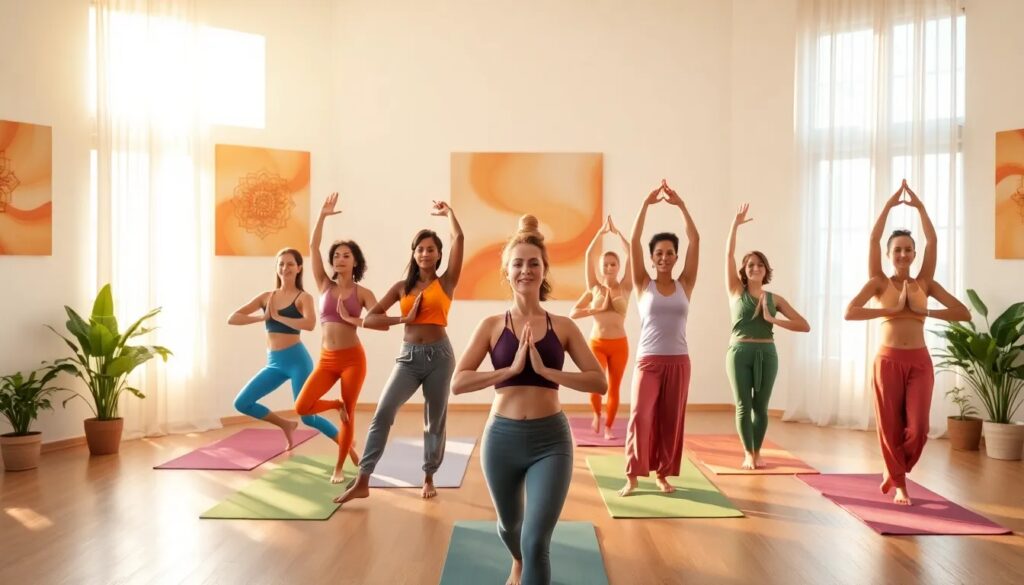
Sacral chakra yoga poses are hip-opening and pelvis-focused postures — like Bound Angle, Pigeon, and Goddess Pose — used to work with Svadhisthana, the second chakra in the traditional yogic energy map, located in the lower abdomen below the navel. In yogic tradition this center is associated with emotions, creativity, and pleasure. Whatever your view of the chakra model, these poses deliver something concrete: deep, well-sequenced work for the hips, groin, and lower back, an area where most people carry real tension. Below you will find the eight key poses, a 15-minute sequence, fluid movements to weave between them, and prop modifications.
- What is the sacral chakra (Svadhisthana)?
- Benefits of sacral chakra yoga poses (the physical side)
- 8 key sacral chakra yoga poses
- A 15-minute sacral chakra sequence
- Fluid movements to weave between poses
- Props and modifications
- Mudra and breath to pair with the practice
- Signs of imbalance, in the traditional view
- Common mistakes to avoid
- Tips for getting more from the practice
- Helpful props for hip-opening practice
What is the sacral chakra (Svadhisthana)?
The chakras are part of a traditional energetic model from medieval Indian yoga and tantra — a map of subtle energy centers along the spine, not anatomical structures you can find in a textbook. Svadhisthana (often translated as her own abode or dwelling place of the self) is the second of the seven main chakras, traditionally linked to the water element, the color orange, fluidity, sensuality, and creative energy.
You do not have to take the model literally to benefit from the practice. Sacral chakra sequences cluster around the hips and pelvis, and slow hip-opening work is valuable on plainly physical terms: it improves hip mobility, eases lower-back tightness, and — because long holds in hip openers are genuinely relaxing — tends to downshift the nervous system. Many practitioners also find that the symbolic frame (fluidity, letting go, creativity) gives the practice a useful focus. If you want the full map, start with our guides to the root chakra poses below it and the heart chakra poses above it.
Benefits of sacral chakra yoga poses (the physical side)
Strip away the chakra language and the practice is a well-designed hip mobility routine. Four things tend to happen with regular, short sessions:
- Hip mobility improves. Sitting accumulates tension in the hip flexors, adductors, and deep external rotators; the eight poses below take each of those groups through a useful range.
- Lower-back tightness eases. Many cases of low-back stiffness are downstream of restricted hips; opening the front of the pelvis reduces the load on the lumbar spine.
- The nervous system downshifts. Long, supported holds in hip openers tend to feel calming — a useful counterweight to a stressful day.
- Pelvic floor awareness grows. Slow work in this area helps you notice and release habitual clenching, which is a common but rarely discussed source of pelvic and lower-back discomfort.
For a hip-focused routine without the chakra framing, see our guide to hip-opening yoga poses.
8 key sacral chakra yoga poses
| Pose | Sanskrit name | Why it is used | Level |
|---|---|---|---|
| Bound Angle Pose | Baddha Konasana | Opens the inner groin and hips in a seated, stable shape | Beginner |
| Goddess Pose | Utkata Konasana | Strengthens the legs while opening the hips wide | Beginner |
| Low Lunge | Anjaneyasana | Stretches the hip flexors at the front of the pelvis | Beginner |
| Wide-Legged Seated Fold | Upavistha Konasana | Releases inner thighs and hamstrings | Beginner-intermediate |
| Pigeon Pose | Eka Pada Rajakapotasana | Deep outer-hip stretch; the classic long-hold hip opener | Intermediate |
| Frog Pose | Mandukasana | Intense inner-groin opener for experienced practitioners | Intermediate-advanced |
| Bridge Pose | Setu Bandhasana | Opens the front of the pelvis while strengthening the back body | Beginner |
| Reclined Bound Angle | Supta Baddha Konasana | Passive, restful groin opener; ideal closing pose | Beginner |
A 15-minute sacral chakra sequence
Move slowly, breathe through the nose, and stay 5–8 breaths in each shape unless noted. Fluid, circular movement suits this practice — feel free to add gentle hip circles between poses.
- Seated hip circles — 1 minute in easy cross-legged position, circling the torso each way.
- Cat-Cow with hip circles — 1–2 minutes, letting the pelvis lead the movement.
- Low Lunge, each side — 5–8 breaths; hands on the front thigh or the floor.
- Goddess Pose — 5–8 breaths; add slow side-to-side sways if it feels good.
- Wide-Legged Seated Fold — 5–8 breaths; sit on a folded blanket if the pelvis tips backward.
- Bound Angle Pose — 8 breaths, hinging gently forward.
- Pigeon Pose, each side — 1–2 minutes per side, propped under the hip if needed.
- Bridge Pose — two rounds of 5 breaths.
- Reclined Bound Angle — rest 2–3 minutes with cushions under the knees.
Fluid movements to weave between poses
The water symbolism of the sacral chakra is a useful cue: instead of marching from one static shape to the next, the practice works best when the hips keep moving through full range. Three fluid movements pair naturally with the sequence above.
Hip circles in easy seat
Sit cross-legged, hands on the knees, and draw slow circles with the torso. The knees and the pelvis follow; you are not forcing a wide circle, you are letting the hips trace a generous path. One minute each direction is plenty.
Cat-Cow with breath
On hands and knees, inhale to arch and lift the chest and tailbone (Cow); exhale to round the spine and tuck the tailbone (Cat). Link the breath to the pelvis — Cow is the tailbone reaching back, Cat is the tailbone curling under. Two slow minutes here is a better warm-up than a long static hold.
Seated torso circles
Cross-legged, place one hand on the knee and the other on the opposite ankle. Inhale as you lengthen the spine; exhale as you circle the ribs forward, to the side, and back. Reverse the direction halfway. This wakes up the lower back and the obliques without straining them.
Props and modifications
- Blanket under the sit bones in seated folds keeps the pelvis from rolling backward — the single most useful modification for tight hips.
- Bolster or cushion under the front hip in Pigeon prevents the pelvis from tilting and protects the knee.
- Blocks under the knees in Bound Angle and Reclined Bound Angle let the groin release without strain.
- Reduce range, not time. In hip openers, a smaller shape held calmly does more than a deep shape held with clenched muscles.
Knee safety in Pigeon Pose
Pigeon is the pose most likely to bother the front knee, especially if the front shin crosses the mat at speed and the back leg does not stay neutral. Two habits help: lift onto the hands for a moment to position the front shin before folding, and place a folded blanket or block under the front hip so the pelvis is level. If the knee complains, swap Pigeon for Thread the Needle (a similar outer-hip stretch with the back leg extended) and come back to Pigeon in a few weeks.
Long-hold, propped hip work is the home territory of yin yoga and restorative yoga — both styles pair naturally with a sacral-focused practice.
Mudra and breath to pair with the practice
You do not need a formal mudra to make the practice work, but a simple hand-and-breath pattern gives the sequence a clear anchor.
- Hands on the lower belly. One hand on top of the other, resting just below the navel. The touch itself is a cue to keep the attention in the pelvic bowl rather than the shoulders.
- Exhale-soften. On every exhale, consciously release the inner thighs, the jaw, and the muscles at the base of the pelvis. The inhale is a normal, quiet breath; the exhale is where the practice happens.
- Long exhale. If your breath wants to speed up in a long hold, extend the exhale so it is longer than the inhale. This is a small, accessible shift that supports the calming effect of the practice.
Signs of imbalance, in the traditional view
In the traditional framework, a blocked or underactive sacral chakra is associated with emotional numbness, creative flatness, and rigidity, while an overactive one is linked to emotional volatility and overindulgence. A balanced Svadhisthana is described as comfort with emotion, healthy enjoyment of pleasure, and easy creative flow. Modern practice borrows this as a self-reflection prompt rather than a diagnosis: if you feel stuck or emotionally flat, a slow hip-opening practice with attention on the breath is a low-cost, frequently helpful experiment — regardless of the mechanism you attribute it to.
Common mistakes to avoid
- Forcing Pigeon. Depth comes from time, not from pulling the front heel closer to the front wrist. If the front hip is high, prop it.
- Knees chasing the floor in Bound Angle. The knees should feel heavy, not pushed. Use blocks under the knees so the groin can release without the legs straining.
- Holding the breath. Hip openers are a breath practice. If the breath has become shallow or stopped, the shape is too aggressive — back off a little and the breath returns.
- Skipping the warm-up. The first two minutes of the sequence (hip circles, Cat-Cow) are not optional; cold hips and Pigeon is a recipe for a sore knee.
If a knee or hip issue makes floor work hard, a seated chair yoga practice can keep the hip-opening theme going with less load.
Tips for getting more from the practice
- Favor fluid movement — circles, sways, and slow transitions match the water theme and keep the hips moving through full range.
- Exhale into the release — in long holds, consciously soften the inner thighs and jaw on each exhale.
- Expect emotion sometimes — long hip openers occasionally bring up strong feelings; it is common and fine. Let them pass with the breath.
- Be consistent — hips respond to frequency. Ten minutes most days beats one long session a week.
Helpful props for hip-opening practice
Two props carry most of a hip-opening practice: a firm block (or a pair) to keep the pelvis level, and a strap to bring the floor closer to you in seated folds. If you are building a small kit, start with one of each and add from there.
As an Amazon Associate, we earn from qualifying purchases.

- Natural Cork: Elevate your yoga practice with our eco-friendly, non-slip Gaiam Cork Yoga Block, perfect for yoga, Pilates, and more
- Modify Your Poses: Ideal for all skill levels; shorten or deepen your stretches effortlessly. Dimensions: 4"W x 6"H x 9"D, lightweight at 1.5 lbs.
- Rounded Edges & Superior Grip: Designed for your comfort, the rounded edges and textured surface provide excellent grip and control during challenging poses.
- Perfect Dimensions: Measuring at 4"W x 6"H x 9"D, this yoga block provides ample support for optimal alignment and posture.
- Versatile & Portable: Compact and lightweight, this cork yoga block is your go-to fitness accessory for home or gym workouts.


- Home PT Strap for Independence (3 Recovery Stages) – A physical therapy stretching strap designed for gentle knee/hip/leg mobility at home. Use it across recovery: Stage 1 bedside assist (when movement is limited), Stage 2 PT stretching/ROM, Stage 3 daily warm-up to maintain mobility—so you can stay independent
- Non-Elastic, Steady Holds (No Rebound / No Surprise Stretch) – The strap does not stretch, so there’s no bounce and no sudden “give.” You can pull to the angle you need and it stays there, helping you move slowly and safely—especially after knee replacement or hip replacement recovery.
- Loops = Easier Grip + Adjust Depth + Track Progress – Multiple loops provide clear hand/foot holds with less grip strength than towels or ropes. Switch loops anytime to adjust stretch depth, repeat the same position each session, and track ROM progress for hamstrings, calves, hips/hip flexors, and lower back—without forcing.
- Leg Lifter Strap / Mobility Aid for Bed & Car – Can also be used as a leg lifter to help lift your leg into bed or car, supporting daily movement tasks when flexibility is limited (use gently within comfort). gently within comfort).
- PT-Style Daily Stretching for Legs, Back & Feet (Comfort Tip) – Built for slow, controlled home stretching and mobility work for legs, hips, lower back, ankles, and feet (calf/Achilles tightness included)—not an elastic resistance band. For comfort during longer holds, socks or light gloves may help. during longer holds, socks or light gloves can help if you have sensitive hands/skin. gloves can help if you have sensitive hands/skin.
In the traditional yogic map, Svadhisthana sits in the lower abdomen, roughly two inches below the navel and centered in the pelvis. It is an energetic concept from yogic tradition rather than an anatomical structure.
Bound Angle Pose (Baddha Konasana) is the most commonly recommended starting point: it is accessible, stable, and directly opens the inner groin and hips. Pigeon Pose is the classic deeper option once your hips are ready for longer holds.
In the traditional framework, an underactive sacral chakra is associated with emotional numbness, creative flatness, and rigidity, while an overactive one is described as emotionally volatile or prone to overindulgence. Modern practice treats these as a self-reflection prompt rather than a diagnosis.
Short, frequent practice works best for the hips: 10 to 15 minutes most days. If you prefer longer sessions, two or three 30-minute hip-focused practices per week is a solid rhythm.
Have a correction? Contact us.
Last update 2026-09-10. Price and product availability may change.
Recommended: