Root Chakra Yoga Poses: 7 Grounding Asanas and a 20-Minute Sequence

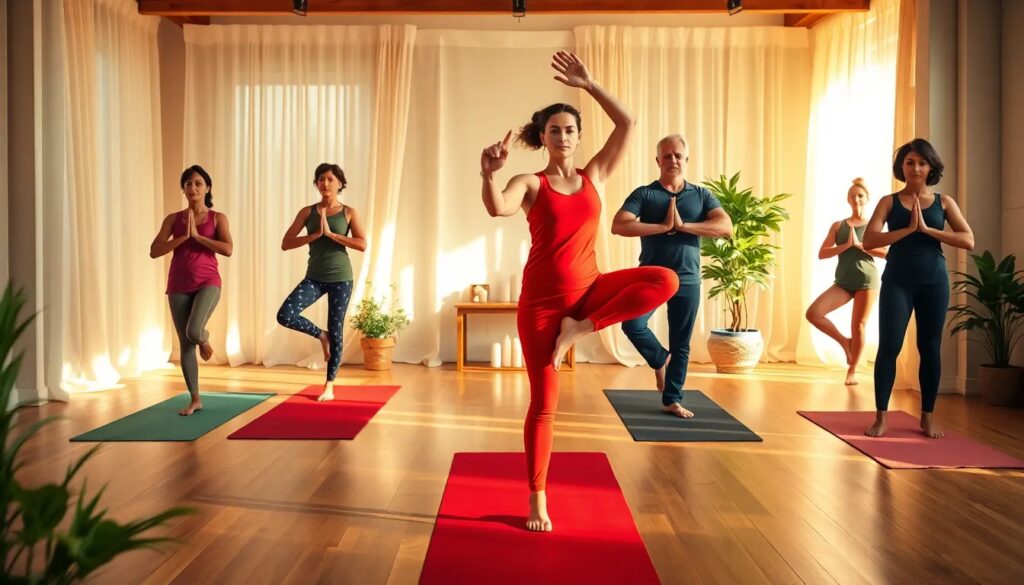
Root chakra yoga poses are the grounding, stability-focused postures associated in yogic tradition with Muladhara — the first of the seven chakras, described at the base of the spine: Mountain Pose, Warrior II, Chair Pose, Tree Pose, Garland Pose, Bridge Pose, Child's Pose, and Easy Pose with long exhales. Whether you treat the chakra model as a working map or a metaphor, the practice that comes with it is concrete: stronger legs and hips, steadier balance, and a breath pattern that settles the body.
Below are the eight key poses with practical cues, a 20-minute sequence, a short note on mudra and mantra in the traditional framework, and an honest read on what the chakra language does and does not describe.
What is the root chakra (Muladhara)?
Muladhara — from the Sanskrit mula (root) and adhara (support or base) — is the first of the seven chakras described in tantric and hatha yoga traditions. It is placed at the base of the spine and associated in that framework with the earth element, the color red, and themes of survival, security, and groundedness. In the same framework, a balanced Muladhara is described as steadiness and trust; an out-of-balance one as anxiety, restlessness, or sluggishness.
A note on evidence: chakras are a map from yogic tradition, not anatomical structures that can be located or measured, and "balancing" them is not a process science can verify directly. What is well established is that slow, grounding movement and long-exhale breathing tend to settle the body — so a root-chakra practice can genuinely help you feel calmer and steadier even if you treat the chakra language as metaphor. For the full seven-center map, see our overview of chakra yoga.
The 8 best root chakra yoga poses
The eight poses below cover standing strength, balance, deep hip opening, gentle backbending, and seated breath work. Together they map onto the felt sense the root-chakra tradition describes: feet on the ground, legs working, breath slow.
1. Mountain Pose (Tadasana)
Stand with feet hip-width apart, weight even across both feet. Spread the toes, press down through the four corners of each foot, lift the kneecaps gently, and lengthen the crown upward. Breathe slowly for 5–10 breaths. It looks like standing still; done attentively, it is the root practice in miniature — total attention on contact with the ground.
2. Warrior II (Virabhadrasana II)
Step wide, turn the front foot out, bend the front knee over the ankle, and stretch the arms apart at shoulder height. Press the outer edge of the back foot down. Hold 5–8 breaths per side. Strong legs working against the floor make this the classic strength-grounding pose of the set.
3. Chair Pose (Utkatasana)
Stand with feet together or hip-width, sit the hips back as if into a chair, and reach the arms up by the ears. Keep the weight in the heels and the chest lifted. Hold 5–8 breaths. Chair Pose adds heat and leg endurance to the grounding set and is the most common "active standing" companion to Mountain Pose in root-chakra sequences.
4. Tree Pose (Vrksasana)
Root down through one foot, place the other sole against the inner calf or thigh (not the knee), and grow tall. Wobbling is part of the work — each correction trains the foot, ankle, and attention. 5 breaths per side; use a wall if needed.
5. Garland Pose (Malasana)
Squat with feet a little wider than hips, heels down if possible (or on a folded blanket), hands at the heart, elbows nudging the knees apart. A deep, earthy hip opener that puts the pelvis as close to the ground as a standing-origin pose can. 5–10 breaths.
6. Bridge Pose (Setu Bandhasana)
Lie on your back, feet hip-width and close to the buttocks, and press through the feet to lift the hips. The legs and feet do strong, grounded work while the spine and chest open. Hold 5 breaths, repeat 2–3 times. A bolster under the sacrum turns the same shape into a supported restorative hold.
7. Child's Pose (Balasana)
Knees wide or together, hips toward heels, forehead resting on the floor. Maximal body-to-ground contact with zero effort — the resting counterpart to the standing work. Stay 1–2 minutes, breathing into the back of the ribs.
8. Easy Pose with grounding breath (Sukhasana)
Sit cross-legged on a cushion so the knees can release down. Rest hands on knees and breathe slowly — a 4-count inhale and 6-count exhale works well. Longer exhales are commonly taught as a way to settle the breath, which is the felt sense most people are after when they search for root-chakra work. 2–5 minutes.
Pose quick-reference table
| Pose | Type | Hold | Main benefit |
|---|---|---|---|
| Mountain | Standing | 5–10 breaths | Postural awareness, grounding |
| Warrior II | Standing strength | 5–8 breaths/side | Leg and hip strength |
| Chair | Standing strength | 5–8 breaths | Heat, leg endurance |
| Tree | Balance | 5 breaths/side | Balance, foot stability |
| Garland | Deep squat | 5–10 breaths | Hip and ankle mobility |
| Bridge | Supine backbend | 5 breaths x 2–3 | Glute strength, chest opening |
| Child's Pose | Restoring | 1–2 min | Release, calm |
| Easy Pose + breath | Seated | 2–5 min | Breath settling, downshift |
A 20-minute root chakra sequence
- Easy Pose with grounding breath — 3 minutes
- Cat-cow on hands and knees — 1 minute to warm the spine
- Mountain Pose — 1 minute
- Chair Pose — 1 minute, then rest
- Slow sun salutation or half salutation — 2 rounds
- Warrior II — 1 minute per side
- Tree Pose — 1 minute per side
- Garland Pose — 1 minute
- Bridge Pose — 3 rounds of 5 breaths
- Child's Pose — 2 minutes
- Final rest on the back, palms down at your sides — 3 minutes
Practical grounding cues that work in any of these poses: practice barefoot, keep your gaze low or at the horizon rather than up, move slower than feels natural, and return attention to the soles of the feet whenever the mind wanders. For more grounding shapes beyond this set, see our grounding yoga poses roundup.
Signs the root chakra feels out of balance (and what that means)
In the traditional framework, an out-of-balance Muladhara is described through a cluster of felt-sense experiences: a vague sense of being unsupported, restlessness, anxious circling thoughts, fatigue that does not respond to rest, or a feeling of being ungrounded in a literal sense. None of these are medical diagnoses — they are the language the tradition uses to describe a felt state.
When the description is worth a professional conversation
Persistent anxiety, low mood, sleep problems, or chronic pain deserve a conversation with a healthcare professional, whatever yoga you also do. A short grounding practice is a useful companion, not a substitute for care when symptoms are ongoing.
Root chakra mudra and mantra
Two small cultural pieces usually travel with a Muladhara practice in the traditional framework.
- Muladhara mudra. Sit cross-legged and touch the tip of the thumb to the tip of the index finger on each knee, palms up. In the tradition, the gesture is associated with steadiness and a settled mind; practitioners often hold it during the long-exhale breath work in Easy Pose.
- Mantra "LAM." In the tantric and hatha traditions, each chakra is associated with a seed syllable (bija mantra). The syllable associated with Muladhara is "LAM," usually repeated softly or silently during seated practice.
Both are described in the tradition as focal points for attention rather than as techniques that act on the body in a measurable way. If you use them, treat them as anchors for the breath and the sit.
As an Amazon Associate, we earn from qualifying purchases.

- NEW ECO FRIENDLY MATERIAL: The upgraded Gruper Yoga mat is made with premium friendly material. It costs more to make, but it is safer and more soft than traditional non-green PVC and EVA yoga mats.The exercise mats are suitable for many forms of Yoga, Pilates and fitness.
- UPGRADED ANTI-SKID DESIGN AND DOUBLE LAYER ANTI TEAR: Special sticky non slip texture on both sides , more Hard-wearing than regular yoga mats and resistant to tearing and deformation. Double layer structure coupled with a non-slip textured surface provides optimal grip without sacrificing comfort.
- TWO DIFFERENT SIZE OTPTIONAL : ①☛ Standard Size:72"(183cm) x 24" (61cm); Thickness: 0.24"(6mm); Weight: 2.6lb. ②☛ Thickened Size:72"(183cm) x 24" (61cm); Thickness: 0.32"(8mm); Weight: 3.1lb.
- CARE INSTRUCTIONS: 1.Clean with damp cloth (cold water) or mild detergent, dry flat. 2.Do not use a washing machine or dryer or exposed to the sun for extended periods of time. 3.Designed for barefoot exercise. Your shoes or your pets' paws may tear the mat.
- FREE CARRY STRAP & STORAGE BAG - No need to go buy a yoga carrying strap and bag. Easy to carry your yoga mat around with.you can carry to the gym or anywhere you want

A non-slip mat makes the grounding cues easier to land — feet press, heels grip, and balance work feels steadier. If the standing poses (Warrior II, Tree, Chair) are your main practice, the mat is the first piece of kit worth choosing carefully. For deeper hip shapes like Garland Pose, a pair of yoga blocks under the heels or seat lets you keep the pelvis low without strain.

- Natural Cork: Elevate your yoga practice with our eco-friendly, non-slip Gaiam Cork Yoga Brick, perfect for yoga, Pilates, and more.
- Modify Your Poses: Ideal for all skill levels; shorten or deepen your stretches effortlessly. Dimensions: 9"W x 5.5"H x 3"D, lightweight at 1.5 lbs.
- Rounded Edges & Superior Grip: Designed for your comfort, the rounded edges and textured surface provide excellent grip and control during challenging poses.
- Perfect Dimensions: Measuring at 9"W x 5.5"H x 3"D, this yoga brick provides ample support for optimal alignment and posture.
- Versatile & Portable: Compact and lightweight, this cork yoga brick is your go-to fitness accessory for home or gym workouts.
Working through the whole chakra system
Root chakra work is usually treated as the foundation before moving up the map. If you want to continue the series, the traditional next steps are the hip-opening poses of the sacral chakra, the chest-opening backbends of the heart chakra, and the neck and shoulder work associated with the throat chakra. A short restorative Bridge with a bolster under the sacrum is also a good way to close the set, and you can find more shapes like that in our restorative yoga poses guide.
This article is general information, not medical advice. If you have knee, hip, or back problems, adapt the poses (cushions, wall support, smaller ranges) and consult a healthcare professional if pain persists.
Mountain Pose is the most fundamental: full attention on the feet pressing into the ground. For something more active, Warrior II, Chair Pose, and Tree Pose are the classic grounding choices, and Garland Pose brings the pelvis closest to the earth.
In the traditional framework, imbalance is described as anxiety, restlessness, insecurity, or feeling ungrounded. These are descriptions from yogic tradition rather than medical diagnoses — persistent anxiety or fatigue deserves a conversation with a healthcare professional, whatever practice you also choose to do.
A short grounding practice of 15 to 20 minutes, three or four times a week, is plenty to feel the effects — steadier balance, stronger legs, and a calmer baseline. Daily practice is fine since the poses are gentle.
Chakras are a map from yogic and tantric tradition, not anatomical structures that science can locate or measure. The practices attached to them — slow movement, balance work, long exhales — do have measurable calming effects on the body, so the practice can be valuable even if you treat the chakra language as metaphor.
Yes — this set is among the most beginner-friendly in yoga. Use a cushion under the hips in seated poses, a folded blanket under the heels in Garland Pose, and a wall for Tree Pose until your balance develops.
Have a correction? Contact us.
Last update 2026-09-10. Price and product availability may change.
Recommended: