Chakra Yoga: A Practical Guide to the 7 Chakras

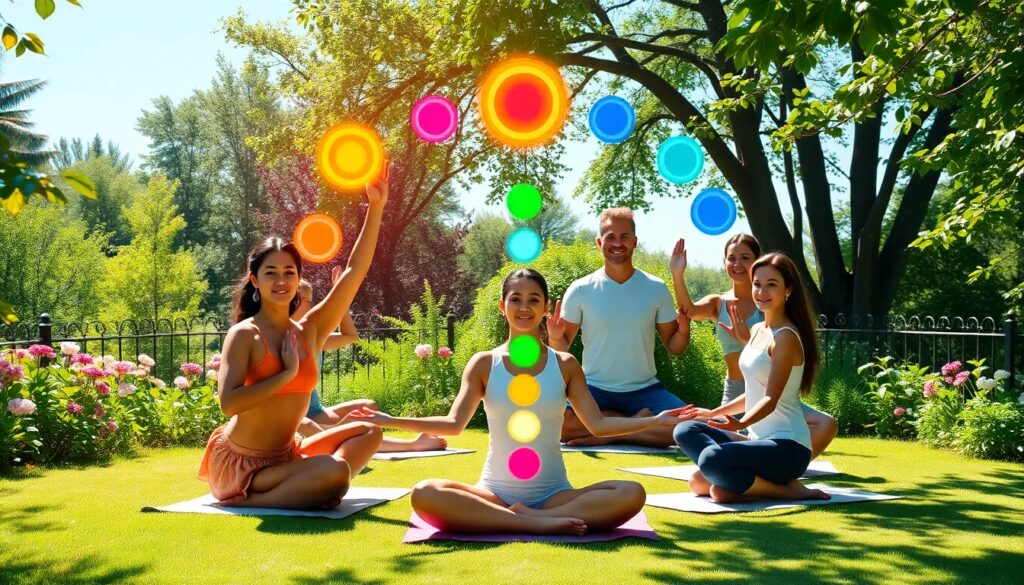
Chakra yoga is a way of structuring a yoga practice around the seven chakras — the energy centers that yogic tradition describes as running along the spine, from the base of the tailbone to the crown of the head. Each chakra is associated with a life theme (grounding, creativity, confidence, love, expression, intuition, connection), and chakra yoga pairs poses, breathwork, and affirmations with the center you want to work on. A full chakra sequence simply moves up the spine: grounding poses first, heart and throat openers in the middle, quiet inward-facing poses at the end.
One honest note before we start: chakras belong to the spiritual framework of yoga, described in medieval tantric texts. In this tradition they are part of the "subtle body" — a non-physical map used for meditation and self-reflection — and they are not anatomical structures. You do not need to take the metaphysics literally for the practice to be useful: the chakra map doubles as a well-designed template for a balanced sequence that touches every region of the body and a surprisingly practical vocabulary for noticing what is going on emotionally.
What Is the Chakra System?
The word chakra means "wheel" in Sanskrit, and the system describes seven main wheels of energy stacked along the spine. In this tradition, the chakras are said to channel life force (prana) through the body and to color how a person experiences basic themes of being alive — safety at the root, pleasure at the sacral, will at the solar plexus, love at the heart, voice at the throat, insight at the third eye, and connection at the crown.
Yogic texts link each chakra to a sound (bija mantra), an element, a color, and a region of the body. Yoga teachers who work with the system tend to focus on the practical layer: pair a physical theme (a hip opener, a backbend, a quiet forward fold) with a reflective theme (creativity, expression, gratitude) and let the body and the mind meet in the same place. Nothing about this requires believing in invisible energy — it requires being willing to use the map.
The 7 Chakras at a Glance
| Chakra | Location | Theme | Key pose | Affirmation |
|---|---|---|---|---|
| Root (Muladhara) | Base of spine | Safety, stability | Mountain Pose (Tadasana) | I am grounded and safe |
| Sacral (Svadhisthana) | Below the navel | Creativity, pleasure | Goddess Pose (Utkata Konasana) | I welcome creativity and joy |
| Solar Plexus (Manipura) | Above the navel | Confidence, will | Boat Pose (Navasana) | I am capable and strong |
| Heart (Anahata) | Center of chest | Love, compassion | Camel Pose (Ustrasana) | I give and receive love freely |
| Throat (Vishuddha) | Throat | Expression, truth | Fish Pose (Matsyasana) | I speak my truth with ease |
| Third Eye (Ajna) | Between the brows | Intuition, insight | Child's Pose (Balasana) | I trust my inner wisdom |
| Crown (Sahasrara) | Top of head | Connection, awareness | Corpse Pose (Savasana) | I am open and at peace |
What a Chakra Yoga Class Looks Like
Chakra classes come in two formats. A single-chakra class spends the whole session on one center — a root chakra class, for example, is essentially a grounding class full of standing poses, low lunges, and slow holds. A full-spectrum class works through all seven in order, which in practice produces a remarkably complete session: legs and standing work (root), hips (sacral), core (solar plexus), backbends (heart), neck and shoulders (throat), balance and inward focus (third eye), and final relaxation (crown).
Teachers usually layer in matching breathwork and affirmations — spoken silently at the peak of each pose — and sometimes chanting or visualization of each chakra's traditional color (red at the root through violet at the crown). None of this is required. You can drop the visualization, skip the chanting, and the physical sequence still works.
A 7-Pose Chakra Sequence You Can Do at Home
- Mountain Pose, 1 minute (root). Stand tall, feet rooted, weight even. Notice the contact with the floor.
- Goddess Pose, 5 breaths (sacral). Wide stance, toes out, knees bent over ankles, arms in cactus shape. Strong hips and inner thighs.
- Boat Pose, 3 rounds of 5 breaths (solar plexus). Balance on the sit bones, legs lifted, chest proud. Bend the knees as needed — effort matters more than shape.
- Camel Pose, 5 breaths (heart). Kneeling backbend, hands on lower back or heels. Our full camel pose guide covers safe alignment in detail.
- Fish Pose, 5 breaths (throat). Lying back over propped forearms (or a block between the shoulder blades), throat open.
- Child's Pose, 2 minutes (third eye). Forehead resting on the mat — the physical contact point is the point of focus.
- Savasana, 5 minutes (crown). Full rest. If you like, scan from tailbone to crown, releasing each region in turn.
The whole sequence takes about 20 minutes. A folded blanket or bolster makes the heart and crown stages much more comfortable, especially if your shoulders or low back are tight.
As an Amazon Associate, we earn from qualifying purchases.

- Yoga Bolster Pillow - The Gaiam yoga bolster is a soft and supportive meditation cushion for added support for the body during yoga, meditation, or general relaxation. Our pillow comes in multiple colors to match your style.
- All-Natural Filling - This pillow is filled with natural cotton batting for superior comfort and cushioning. The soft and flexible filling lets you lay against the pillow with cushioned comfort while the pillow keeps its shape.
- Handle Strap - Our yoga pillow features a built-in sturdy handle on the pillow case for hassle-free transport to easily grab the meditation cushion and go or reposition for poses or support your neck.
- Care Instructions - No need to worry about how to maintain freshness for your pillow as the cover is removable and machine washable. Easily remove to toss in the washing machine.
- Not Just for Yoga - This pillow is an ideal yoga accessory but can also be used for general support to stretch out tense muscles in your neck or prop up your legs and feet after a long day.

Going Deeper on Individual Chakras
If one theme resonates more than the rest, we have dedicated pose guides for several centers: root chakra yoga poses for grounding and stability, sacral chakra yoga for hips and creativity, the Manipura (solar plexus) chakra for core strength and confidence, heart chakra yoga poses for chest-opening backbends, and the throat chakra for expression and communication.
Common Questions About Chakra Yoga
What does chakra yoga do?
In practical terms, a chakra sequence is a balanced, full-body class that visits every major region of the body in a set order. In the traditional framework, it is meant to bring attention to the life theme each chakra represents, so that a session can feel reflective as well as physical.
What yoga poses open the chakras?
Each chakra is associated with a family of poses: grounding standing poses for the root, hip openers for the sacral, core work for the solar plexus, backbends for the heart, neck and shoulder openers for the throat, slow forward folds for the third eye, and long savasana for the crown. The table above lists one key pose for each.
What are the 7 chakras of yoga?
Root, sacral, solar plexus, heart, throat, third eye, and crown — running from the base of the spine to the top of the head. The table in this guide covers location, theme, a key pose, and a sample affirmation for each.
Does the Bible talk about chakras?
The word and concept of chakras do not appear in Christian scripture. The system comes from yogic and tantric traditions of the Indian subcontinent, and it stays within that frame. Nothing in chakra yoga requires a particular religious belief.
How the Tradition Describes Imbalances
Within the chakra framework, each center is said to show characteristic signs when blocked or overactive — insecurity and restlessness at the root, creative flatness at the sacral, low confidence at the solar plexus, guardedness at the heart, difficulty speaking up at the throat, overthinking at the third eye, and disconnection at the crown. Read these as reflective prompts rather than diagnoses: if difficulty speaking up rings true, a practice featuring throat and heart openers will not hurt, and the time spent on the theme often clarifies what is actually going on. Persistent low mood, anxiety, or fatigue deserve a conversation with a healthcare professional, not just a yoga sequence.
Tips for Starting a Chakra Yoga Practice
- Learn the map first. Ten minutes with the table above is enough to follow any chakra class.
- Start with the full 7-pose sequence two or three times a week before specializing in one center.
- Pair each pose with its affirmation — silently, on the exhale. This is the simplest way to add the meditative layer.
- Slow styles suit chakra work well. Long-hold formats like yin give time for the reflective component; see our guide to yin yoga benefits.
- Keep what works. Some practitioners embrace the full energetic framework; others use it purely as a sequencing and journaling tool. Both are legitimate ways to practice.
Chakra yoga is a practice structured around the seven energy centers described in yogic tradition, running from the base of the spine to the crown of the head. Poses, breathwork, and affirmations are paired with each center, either focusing a whole session on one chakra or moving through all seven in order.
No — chakras are part of yoga's spiritual framework, described in medieval tantric texts, and do not correspond to anatomical structures. Many practitioners still find the system valuable as a template for balanced, full-body sequencing and as a vocabulary for emotional self-reflection.
The root chakra is the traditional starting point — its grounding poses (Mountain, low lunges, standing holds) are beginner-friendly and build the stability the rest of the system is said to rest on. Alternatively, simply practice a full seven-pose sequence and notice which theme resonates.
Two or three sessions per week is a realistic rhythm for the full seven-pose sequence, which takes about 20 minutes. Single-chakra work can be added daily in five-minute doses — one pose plus its affirmation — without overloading your schedule.
Have a correction? Contact us.
Last update 2026-09-10. Price and product availability may change.
Recommended: