Sacral Chakra Yoga

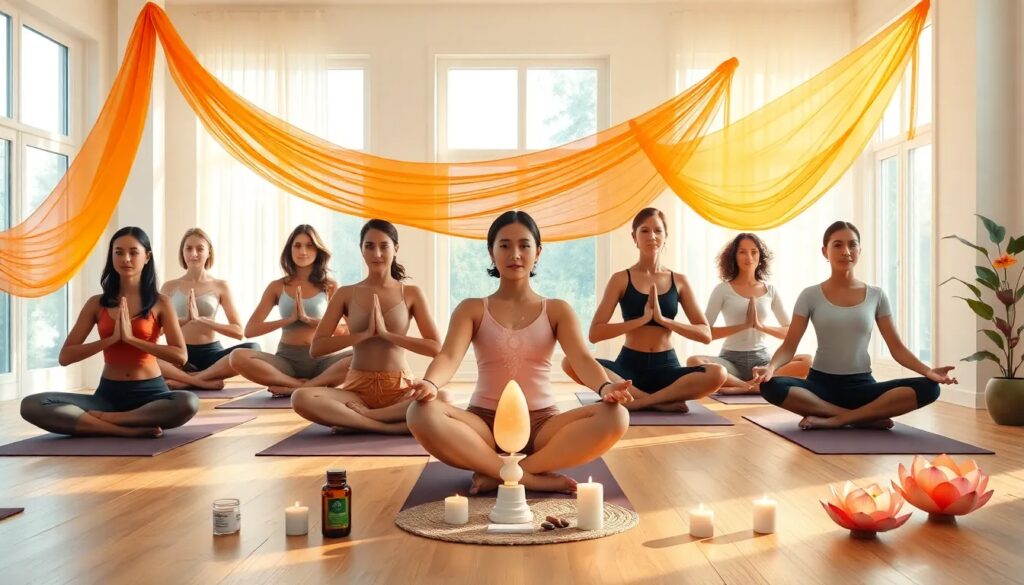
Sacral chakra yoga is a style of practice organized around Svadhisthana, the second chakra in yogic tradition, said to sit in the lower abdomen below the navel. In that framework, the sacral chakra is associated with emotion, pleasure, creativity, and fluidity, and the yoga built around it emphasizes hip openers, gentle pelvic movement, and slow, breath-led holds. In practical terms: it is a hip- and lower-back-focused practice with an emotional and creative intention layered on top.
One honest note before the poses: chakras are a concept from tantric and yogic tradition, not anatomical structures, and there is no scientific evidence that energy centers exist in the body. What the practice reliably delivers is physical — hip mobility, release of tension in an area most of us keep chronically tight — plus the calming effects of slow breathing and sustained attention. Many practitioners find the symbolic framework meaningful; you can use it or leave it and still benefit from the poses.
- What the tradition says about the sacral chakra
- Where sacral chakra yoga fits among the 7 chakras
- Best poses for sacral chakra yoga
- A simple 20-minute sacral chakra practice
- Why hip openers can feel emotional
- Affirmations and intention
- Signs of a blocked sacral chakra — and what to do
- How often should you practice?
- A note on safety
What the tradition says about the sacral chakra
In the classical model of seven chakras, Svadhisthana (often translated as her own abode or one's own dwelling place) is the second center, located in the pelvis. It is linked to the water element, the color orange, and the themes of emotion, sensuality, pleasure, and creative flow. A blocked sacral chakra is traditionally described in terms of emotional rigidity, guilt around pleasure, low creativity, or numbness; an overactive one as emotional volatility or overindulgence. For the full seven-center map and how this chakra fits into it, see our guide to chakra yoga and the 7 chakras.
Where sacral chakra yoga fits among the 7 chakras
The seven chakras are usually listed, from base of the spine to crown, as: Muladhara (root), Svadhisthana (sacral), Manipura (solar plexus), Anahata (heart), Vishuddha (throat), Ajna (third eye), and Sahasrara (crown). Sacral chakra yoga is the second of these — the bridge between the grounding work of root chakra grounding poses below and the expressive, heart-opening work of heart chakra chest openers above. If you are new to chakra work, the safest place to start is usually the root and the sacral together, because the hip and pelvic floor carry most of the load in both.
Best poses for sacral chakra yoga
The poses traditionally paired with Svadhisthana share one feature: they open the hips and mobilize the pelvis. These are the staples, with a short safety cue for each one so you can hold the shape without fighting your body:
| Pose | What it does physically | Hold | Safety cue |
|---|---|---|---|
| Bound Angle (Baddha Konasana) | Opens inner thighs and groin | 1–3 min | Sit on a folded blanket; if knees float well above the hips, support each knee with a block or pillow. Never press down on the knees. |
| Reclined Butterfly (supported) | Passive groin opening, deeply relaxing | 3–5 min | Place a bolster lengthwise under the spine and a pillow under each knee. Slide feet farther from the seat if the inner groin pulls. |
| Goddess Pose (Utkata Konasana) | Strengthens legs while opening hips | 30–60 sec | Track the knees over the ankles (not collapsing inward); tuck the tailbone slightly so the lower back does not arch. |
| Low Lunge (Anjaneyasana) | Stretches hip flexors, front of pelvis | 30–60 sec/side | Back knee down with a folded mat or blanket underneath; sink the hips forward only as far as the front hip allows without the lower back pinching. |
| Pigeon Pose (Eka Pada Rajakapotasana) | Deep outer-hip stretch | 1–2 min/side | Keep the front foot flexed (to protect the knee), and support the seat on a folded blanket if the front hip does not reach the floor. If the front knee complains, switch to Reclined Figure Four instead. |
| Happy Baby (Ananda Balasana) | Releases inner hips and lower back | 1–2 min | Press the lower back into the floor; grip the outsides of the feet (not the toes) so the knees track over the ribs rather than the shoulders. |
| Pelvic tilts / hip circles | Gentle mobility for the lumbar-pelvic area | 1–2 min | Move within a pain-free range; if the lower back twinges, shrink the circle and breathe out as the pelvis tilts back. |
For step-by-step cues on eight of these plus a 15-minute sequence, see our dedicated guide to sacral chakra yoga poses. If your main interest is the wider category, our guide to hip openers in yoga covers the same anatomy from a non-chakra angle.
A simple 20-minute sacral chakra practice
- Arrive (2 min): sit comfortably, lengthen the exhale, and bring attention to the lower belly.
- Mobilize (3 min): seated or standing hip circles and gentle pelvic tilts, moving with the breath.
- Strengthen (4 min): Goddess Pose, two rounds of 45 seconds, with slow pulses if you want more work.
- Open (8 min): Low Lunge on each side, then Pigeon or Reclined Butterfly with support under the knees.
- Integrate (3 min): Happy Baby, then rest on your back, one hand on the lower belly, breathing slowly.
If you enjoy long, passive holds, this whole practice adapts naturally to a yin format — our overview of what yin yoga is good for explains how those long holds work and who should modify them.
Why hip openers can feel emotional
People often report unexpected emotion — sadness, relief, even tears — during long-held hip openers. The traditional explanation is that the sacral chakra stores unprocessed emotion. A more conservative explanation is that the hips are an area of chronic, often unnoticed muscular guarding, and slow stretching combined with quiet attention and deep breathing lowers arousal in a way that can let feelings surface. Both descriptions point to the same practical advice: move slowly, do not force range, and give yourself a few quiet minutes at the end of practice rather than rushing off the mat. If you are working through significant trauma or emotional difficulty, yoga can be a helpful complement, but it is not a substitute for support from a qualified mental health professional.
Safety cues for deep hip openers
Deep hip openers stress the knees and lower back more than they stress the hips themselves. Three habits prevent most of the injuries we see beginners run into: (1) keep the front foot flexed in Pigeon so the front knee does not rotate past the ankle; (2) support the knees with blocks, bolsters, or pillows in Butterfly and Reclined Butterfly so the groin can release without the knees bearing load; (3) back off any sharp or pinching sensation — a sustained dull stretch in the muscle is fine; a sharp or electric sensation in a joint is a stop sign, not a goal.
Affirmations and intention
Many teachers pair sacral chakra work with affirmations — short phrases repeated silently during holds, such as I allow myself to feel or I make room for creativity. There is nothing mystical required here: an affirmation works as an attentional anchor, the same role a mantra or breath count plays. If affirmations feel artificial to you, simply counting slow exhales during each hold serves the same focusing purpose. Some teachers also bring in a sacral chakra mudra — a hand gesture typically described as the thumbs touching the pinky and ring fingers of each hand, palms up on the lower belly — but it is optional; the breath and the hips are doing the real work.
Signs of a blocked sacral chakra — and what to do
The phrase "blocked sacral chakra" comes from the tradition, not from anatomy, so the signs below are framed the same way the tradition frames them: as tendencies, not diagnoses. Common descriptions include emotional rigidity, persistent guilt around pleasure, low creative output, feeling numb in the hips or pelvis, and difficulty adapting to change. If any of that resonates, the practical response is the same one the practice already teaches: slow, well-supported hip openers; long exhales; and a few minutes of stillness at the end of each session rather than rushing to the next thing. None of that requires believing in the chakra model — it is the same advice you would get for chronically tight hips and a busy mind. If the symptoms feel severe or persistent, the right next step is a qualified mental-health or pelvic-health professional, not a longer yoga session.
How often should you practice?
For noticeable changes in hip mobility, two to three sessions a week is a realistic baseline, and even one weekly longer session helps if you sprinkle short daily mobility work (hip circles, a one-minute Low Lunge each side) in between. Consistency matters far more than intensity — hips adapt slowly, over weeks and months. If you want to explore the neighboring centers, the same logic applies to root chakra grounding poses below and heart chakra chest openers above.
A note on safety
Deep hip openers stress the knees and lower back if forced. Keep the feet flexed in Pigeon, support the knees with blocks in Butterfly, and back off any sharp or pinching sensation. This article is general information, not medical advice; if you have a hip, knee, or lower-back condition, or are pregnant, consult a qualified health professional before practicing.
In yogic tradition, the sacral chakra (Svadhisthana) is described as sitting in the lower abdomen, a few finger-widths below the navel, in the region of the pelvis and sacrum. It is a concept from the tradition rather than an anatomical structure, but the practices linked to it target the hips, groin, and lower back.
There is no single official pose, but Bound Angle (Baddha Konasana) and its reclined, supported version are the most commonly taught, because they open the inner hips directly and can be held comfortably for several minutes. Goddess Pose, Low Lunge, Pigeon, and Happy Baby round out the standard set.
No. Chakras are part of tantric and yogic tradition, not verified anatomical or physiological structures. That said, the practices associated with sacral chakra yoga — hip stretching, slow breathing, focused attention — have ordinary, well-understood benefits for mobility and stress reduction, so the practice can be valuable regardless of how you relate to the chakra model.
It is a common experience. Long, passive hip stretches combine the release of chronically guarded muscles with slow breathing and quiet attention, a state in which suppressed feelings can surface. Tradition attributes this to stored emotion in the sacral chakra; a more conservative reading is that the lower arousal of slow, breath-led practice simply allows feelings to surface. Either way, the practical advice is the same: move slowly, do not force range, and rest quietly for a few minutes at the end. If you are working through significant trauma or emotional difficulty, yoga can be a helpful complement, but it is not a substitute for support from a qualified mental health professional.
Have a correction? Contact us.
Recommended: