Best Yoga Teacher Training Retreats: How to Choose One That's Worth It

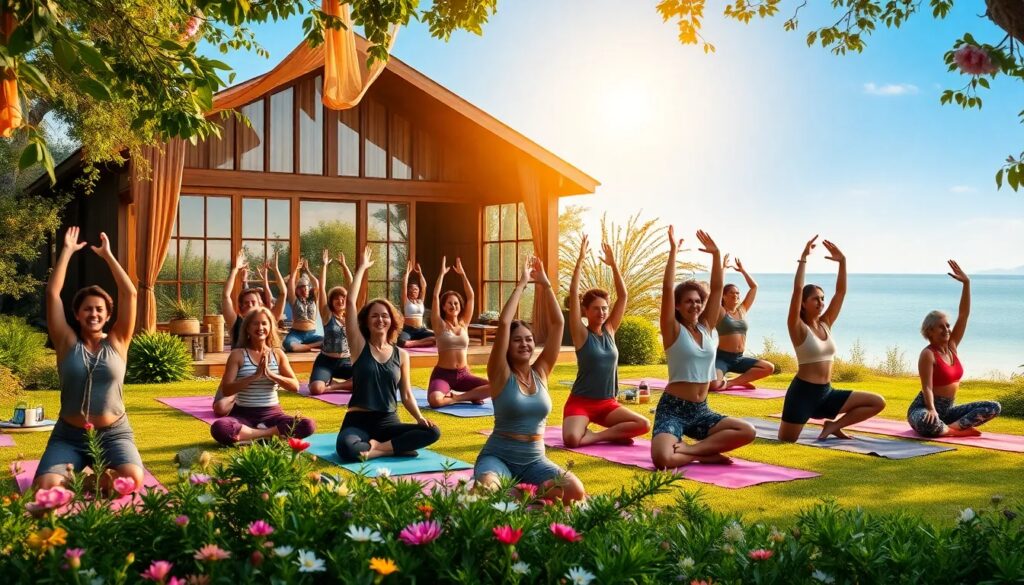
A yoga teacher training retreat is a residential certification program, typically three to four weeks long, where you live on site while completing a 200-hour curriculum with lodging and meals bundled into the price. The best one for you depends on three variables: the destination (which drives the overall feel and travel), the school (which drives quality), and the format (which drives how hard the days are). Get the school right and the destination becomes a bonus; get it wrong and the prettiest beach will not save the experience.
This guide compares the major destinations honestly, explains what genuinely separates strong programs from weak ones, and gives you a vetting checklist that works anywhere in the world.
Retreat training vs. local part-time training
Before comparing beaches, decide whether the retreat format suits you at all. A residential training is immersive: no commute, no work, total focus, strong cohort bonds, and a certificate in about a month. The trade-offs are real, though: you compress learning into weeks rather than digesting it over months, you pay for travel, and you step away from your life entirely. Part-time local programs spread the same 200 hours over three to nine months and let you practice teaching real people between sessions. Neither is objectively better; retreats suit decisive immersion learners, local formats suit integrators.
The major destinations, compared
| Destination | Character | Typical setting | Watch out for |
|---|---|---|---|
| India (Rishikesh, Goa, Kerala) | Traditional lineages, ashram discipline, the source culture | Riverbank, foothills, simple ashram campuses | Austere lodging at budget schools; quality varies enormously |
| Thailand (Koh Phangan, Chiang Mai) | Comfortable infrastructure, beach or mountain settings | Beach shalas and northern mountain retreat centers | Wellness-tourism gloss at some schools |
| Bali (Ubud, Nusa Lembongan, Canggu) | Large yoga scene, jungle and rice-field venues | Jungle shalas, rice-paddy campuses, beachfront resorts | The most saturated market; vet extra carefully |
| Costa Rica | Nature-forward, eco-lodges, no long-haul flight from the US east coast | Jungle and Pacific coast eco-retreats | Premium positioning for otherwise comparable programs |
| USA (residential retreat centers) | Established institutions, no visa or language hurdles | Lakeside, woodland, or campus-style residential centers | The most expensive route by a wide margin |
We cover the individual destinations in more depth in our guides to training in India, 200-hour trainings in Thailand, teacher training in Costa Rica, and training in Bali. In the US, long-established residential centers such as Kripalu in Massachusetts run training programs with institutional depth that small destination schools rarely match, at correspondingly higher prices.
What actually makes a training retreat good
Across every destination, the strong programs share the same traits, and none of them is the infinity pool:
- Stable, senior lead teachers who teach most of the course themselves rather than delegating to rotating juniors
- A real practicum: multiple assessed practice-teaching sessions, because teaching is the skill you are buying
- Reasonable cohort size: roughly 12 to 20 students; beyond 30, individual feedback evaporates
- A published day-by-day syllabus covering asana, methodology, anatomy, philosophy, and ethics
- Honest marketing: programs that promise transformation in paradise but cannot name their anatomy teacher are selling the location, not the education
What the investment actually looks like
Headline prices usually bundle tuition, a shared room, and most meals. Budget separately for flights, visa, travel insurance, and any certification or registration fees. Private rooms usually add a meaningful premium; expect to negotiate the upgrade in writing before you book. Early-bird discounts are standard practice and genuine, but compare the total cost including travel, not just tuition; a cheap course with expensive flights can end up costing the same as a US program. Full cost math by format is in our guide to yoga teacher training costs.
A question that comes up a lot: how much do yoga teachers actually make on retreats? For most new graduates, the realistic answer is that retreat-style teaching is not a primary income source. Trainees usually start by teaching weekly drop-in or studio classes in their home city, and that local teaching is what builds toward the RYT 500 and a livable wage. Residential retreats often pay staff in lodging, meals, and a small stipend rather than a salary, and the prestige of having taught at a recognized school matters more for your teaching resume than for the retreat paycheck itself. Treat any training, abroad or domestic, as the entry ticket to a long local practice of teaching, not as a destination income stream.
As an Amazon Associate, we earn from qualifying purchases.


Yoga Alliance RYS and RYT 200, in plain English
Most advertised "yoga certification" programs lead to the 200-hour credential, internationally known as the RYT 200, awarded after graduating from a Yoga Alliance Registered Yoga School (RYS). The RYS designation is a school-level registration; the RYT 200 is a teacher-level credential you earn after graduation. A few points worth knowing:
- Registration is a curriculum and operations review; it is a baseline for safety and minimum hours, not a quality grade.
- RYT 200 is portable: the same credential applies whether you trained in Rishikesh, Koh Phangan, Bali, or Massachusetts, as long as the school holds RYS status for the dates you attended.
- RYT 200 is the entry point. Most working teachers continue to a 300-hour program and accumulate the 500-hour RYT later.
The official Yoga Alliance directory lets you confirm a school's current RYS status before paying any deposit.
The U.S. residential option: institutional depth at higher prices
If a long international flight is not realistic, US residential centers let you complete the same 200 hours without leaving the country. Schools such as Kripalu in Massachusetts combine the residential immersion format with institutional programming, larger staff, and easier access for North American students. The trade-off is price, which runs higher than most international options before you even count flights. For students who want immersion without a visa, a passport stamp, or a long flight, this is a legitimate path, not a compromise. The same five quality traits above apply; the destination label just changes.
Choosing: a five-step shortlist process
- Fix your constraints first: budget ceiling, the longest time you can be away, and the style you want to teach
- Shortlist three to five schools that fit, regardless of destination glamour
- Verify each school in the Yoga Alliance directory and read independent reviews, weighting detailed critical ones most
- Contact the schools with specific questions (lead trainers for your dates, practicum hours, cohort size, refund policy) and judge the quality of the answers
- If possible, take an online class with the lead teacher before committing; many schools offer recorded or live classes
If a month away is impossible, compressed formats exist; our guide to 2-week intensive trainings explains what the compression trades away. For the general entry-level credential, our primer on the 200-hour yoga teacher training covers the curriculum, hours, and what to expect week by week.


Red flags worth taking seriously
- No named lead trainers, or trainers whose bios cannot be verified independently
- Guaranteed certification regardless of assessment
- Heavy discount pressure with countdown timers and one-day-only pricing
- Reviews that mention the venue and food but never the teaching
- No refund policy in writing, or evasive answers about it
This article is general information, not medical advice. Residential trainings involve several hours of daily physical practice; if you have an injury or health condition, consult a qualified professional before enrolling.
Costs vary widely by destination, school, and what's bundled into tuition. Lower-cost international options exist in India and parts of Southeast Asia, mid-range programs in Bali and Costa Rica bundle accommodation and most meals, and US residential centers sit at the top of the range. Flights, visa, insurance, and any registration fees are extra everywhere.
Yes, if the school is a Yoga Alliance Registered Yoga School. The RYT 200 credential is the same whether you trained in Rishikesh, Koh Phangan, Bali, or Massachusetts. Verify the school's current RYS registration in the official Yoga Alliance directory before booking.
Most 200-hour residential programs run 21 to 28 days of six-day weeks. Compressed 14 to 18 day intensives exist but require longer daily hours or online pre-work to fit the curriculum in.
No, and a meaningful share of participants enroll purely to deepen their own practice. Schools welcome this. Just be aware the curriculum still includes teaching methodology and assessed practicum, which is time well spent even if you never lead a class.
There is no universal answer. India offers tradition and depth at the lowest typical cost, Bali and Thailand blend solid training with comfortable infrastructure, Costa Rica adds nature without a long-haul flight from the US east coast, and US residential centers are the easiest path for students who cannot travel. Match the destination to your budget, travel tolerance, and the style you want to teach.
Have a correction? Contact us.
Last update 2026-09-10. Price and product availability may change.
Recommended: