Hip Opening Yoga Poses: 8 Essential Stretches, a Short Routine, and How to Practice Safely

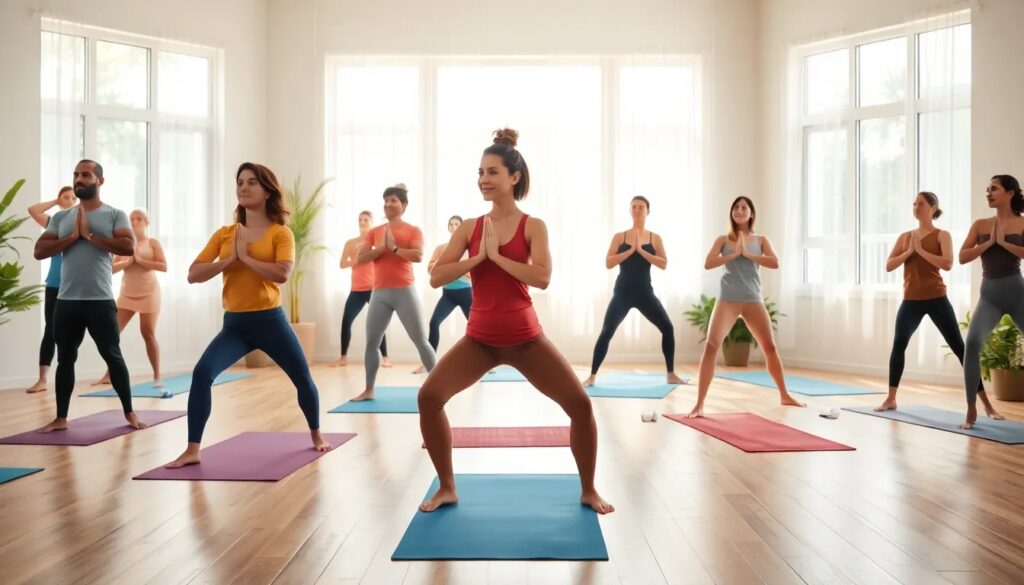
Hip opening yoga poses are stretches that target the muscles surrounding the hip joint — the hip flexors at the front, the glutes and deep rotators (like the piriformis) at the back, and the adductors along the inner thigh. Practiced consistently, they improve hip range of motion, ease the stiffness that builds up from prolonged sitting, and can reduce strain on the lower back, which often compensates for immobile hips. Below you will find the eight most useful poses with hold times, a short evening routine, and the safety rules that matter.
Health disclaimer: this article is general information, not medical advice. If you have hip, knee, or lower-back injuries, a hip replacement, or are pregnant, check with a doctor or physical therapist before practicing these stretches, and stop anything that causes joint pain.
Why hips get tight — and what opening them realistically does
Hours of daily sitting keep the hip flexors shortened and the glutes underused, while the deep rotators stiffen from inactivity. Over time this shows up as restricted squatting depth, a tugging at the front of the hip in standing poses, and frequently lower-back grumbling. Regular hip stretching demonstrably improves range of motion and comfort; it will not fix every back problem, and the popular claim that hips store trapped emotions is anecdotal — some people do experience strong feelings during long-held hip stretches, which is a recognized phenomenon in practice, but it is not established science. What is well supported: better hip mobility makes sitting, walking, squatting, and most other yoga poses easier.
The 8 essential hip opening poses
| Pose | Main target | Hold | Difficulty |
|---|---|---|---|
| Butterfly (Baddha Konasana) | Inner thighs, groin | 1–2 min | Beginner |
| Low lunge (Anjaneyasana) | Hip flexors | 30–60 s per side | Beginner |
| Reclined figure-4 | Glutes, piriformis | 1 min per side | Beginner |
| Happy Baby (Ananda Balasana) | Inner hips, groin, low back | 1 min | Beginner |
| Garland pose / Yogi squat (Malasana) | Hips, ankles, inner thighs | 30–60 s | Beginner–intermediate |
| Reclined Bound Angle (Supta Baddha Konasana) | Inner thighs, relaxation | 2–5 min | Beginner |
| Pigeon (Eka Pada Rajakapotasana) | Outer hips, glutes, hip flexor of back leg | 1–2 min per side | Intermediate |
| Frog pose (Mandukasana) | Adductors, deep groin | 1–2 min | Intermediate–advanced |
Setup notes for the three most popular:
- Butterfly: sit tall with the soles of the feet together, knees falling outward. Sit on a folded blanket if your back rounds; let gravity do the work rather than pressing the knees down.
- Pigeon: the front shin does not need to be parallel to the mat — angling the foot closer to the hip is safer for most knees. Support the hip of the bent leg with a block or cushion so the pelvis stays level. Full instructions and knee-safe alternatives are in our pigeon pose guide.
- Malasana: heels down if possible; if they lift, stand on a folded blanket or rolled mat edge. Press elbows lightly into inner knees and lengthen the spine.
Setup for lizard pose (Utthan Pristhasana)
Lizard is a deeper cousin of the low lunge that opens the inner groin of the front leg and the hip flexor of the back leg at the same time. From a low lunge, bring both hands inside the front foot (on the floor or on blocks), lower the back knee if it feels better, and let the front knee track out over the ankle. If the front foot has to splay way out, your hips are too low — come up an inch or two. Hold 45–60 seconds per side, then step back to downward dog before repeating on the other side.
Standing hip openers (for when there's no mat)
Most hip openers need a mat, but a few work just as well in bare feet on a hard floor. A standing figure-4 stretch (cross one ankle over the opposite knee and sit back as if into a chair) opens the outer hip; a wide-legged standing forward fold with hands on hips lets the inner thighs release under gravity; and a simple tree pose variation with the lifted foot pressing into the inner thigh gives a gentle groin stretch while standing. These are useful between meetings, in a hotel room, or any time there is no space to unroll a mat.
A 15-minute evening hip routine
This sequence works well after a desk day, ordered from gentle to deeper:
- Cat-Cow with hip circles — 2 minutes to warm up.
- Low lunge — 45 seconds per side.
- Reclined figure-4 — 1 minute per side.
- Butterfly — 90 seconds.
- Happy Baby — 1 minute.
- Reclined Bound Angle with cushions under the knees — 3–5 minutes of pure rest.
Long, relaxed holds in the evening pair naturally with slow styles of practice — if you enjoy this pace, yin yoga builds entire classes around exactly these positions, and restorative yoga poses take the supported, prop-heavy version even further.
How to practice hip openers safely
- Warm up first. A few minutes of gentle movement before deep stretches reduces strain.
- Protect the knees. The knee is the joint that pays when hip stretches are forced — especially in pigeon and lotus-type positions. Sensation belongs in the hip or thigh, never the knee.
- Use props without apology. Blocks, blankets, and cushions let you hold positions long enough to matter.
- Go for mild-to-moderate stretch, not pain. Intensity does not speed up connective-tissue change; consistency over weeks does.
- Work both sides evenly and breathe slowly — breath-holding usually means you have gone too deep.
- Special cases: hypermobile practitioners should prioritize strengthening over deeper stretching, and anyone with sciatic-type pain should read our guide to yoga for sciatica before loading the hips deeply.
Hip openers for beginners
Total beginners do best starting with the reclined and supported versions, not the deep active ones. Reclined figure-4, reclined bound angle, and happy baby are the safest entry points because the floor does most of the supporting. Butterfly and low lunge with a folded blanket under the back knee are good second steps. Save pigeon, frog, and full malasana for a few weeks in, when the hip flexors and groin have already started to lengthen.
Hip openers during pregnancy
Many hip openers are useful through pregnancy — butterfly, reclined bound angle (with a bolster under the right side so the vena cava is not compressed in later trimesters), and supported pigeon with cushions are usually fine. Avoid deep twists, strong abdominal compression, and any pose that causes pelvic-girdle pain. Because every pregnancy is different, run the sequence past your doctor or midwife before adding it to your routine.
As an Amazon Associate, we earn from qualifying purchases.

- NEW ECO FRIENDLY MATERIAL: The upgraded Gruper Yoga mat is made with premium friendly material. It costs more to make, but it is safer and more soft than traditional non-green PVC and EVA yoga mats.The exercise mats are suitable for many forms of Yoga, Pilates and fitness.
- UPGRADED ANTI-SKID DESIGN AND DOUBLE LAYER ANTI TEAR: Special sticky non slip texture on both sides , more Hard-wearing than regular yoga mats and resistant to tearing and deformation. Double layer structure coupled with a non-slip textured surface provides optimal grip without sacrificing comfort.
- TWO DIFFERENT SIZE OTPTIONAL : ①☛ Standard Size:72"(183cm) x 24" (61cm); Thickness: 0.24"(6mm); Weight: 2.6lb. ②☛ Thickened Size:72"(183cm) x 24" (61cm); Thickness: 0.32"(8mm); Weight: 3.1lb.
- CARE INSTRUCTIONS: 1.Clean with damp cloth (cold water) or mild detergent, dry flat. 2.Do not use a washing machine or dryer or exposed to the sun for extended periods of time. 3.Designed for barefoot exercise. Your shoes or your pets' paws may tear the mat.
- FREE CARRY STRAP & STORAGE BAG - No need to go buy a yoga carrying strap and bag. Easy to carry your yoga mat around with.you can carry to the gym or anywhere you want

How often should you practice?
For noticeable change, aim for 3–5 short sessions a week rather than one long weekly stretch-fest. Hip mobility responds slowly — think in terms of weeks and months, not days. Ten focused minutes most evenings beats an occasional hour. If your hips are tight from desk work specifically, pairing this routine with regular standing breaks and a few yoga poses for lower back pain addresses the cause as well as the symptom.
There is no single best pose because the hip moves in many directions. The most efficient trio covers all of them: low lunge for the hip flexors, reclined figure-4 for the glutes and deep rotators, and butterfly for the inner thighs. Together they take under five minutes per side.
With a few short sessions per week, most people notice easier movement within a few weeks. Meaningful range-of-motion changes take longer because connective tissue adapts slowly — consistency matters far more than intensity.
Strong emotional responses during long-held hip stretches are commonly reported in yoga practice, possibly related to deep relaxation, slow breathing, and releasing chronically guarded muscles. The popular idea that hips physically store emotions is anecdotal rather than established science — but the experience itself is normal and harmless.
Yes — the knee often absorbs the force when hip stretches are pushed too far, especially in pigeon and lotus-type positions. Keep all stretch sensation in the hip or thigh, angle the front foot closer to the body in pigeon, and use props to support your weight. Any knee pain means back off immediately.
Many are — butterfly, reclined bound angle with a side bolster, and supported pigeon are usually fine. Avoid deep twists, strong abdominal compression, and any pose that causes pelvic-girdle pain. Because every pregnancy is different, check with your doctor or midwife before adding a new sequence.
Have a correction? Contact us.
Last update 2026-09-10. Price and product availability may change.
Recommended: