Intermediate Yoga Poses: 14 Asanas to Learn Next (and How to Know You Are Ready)

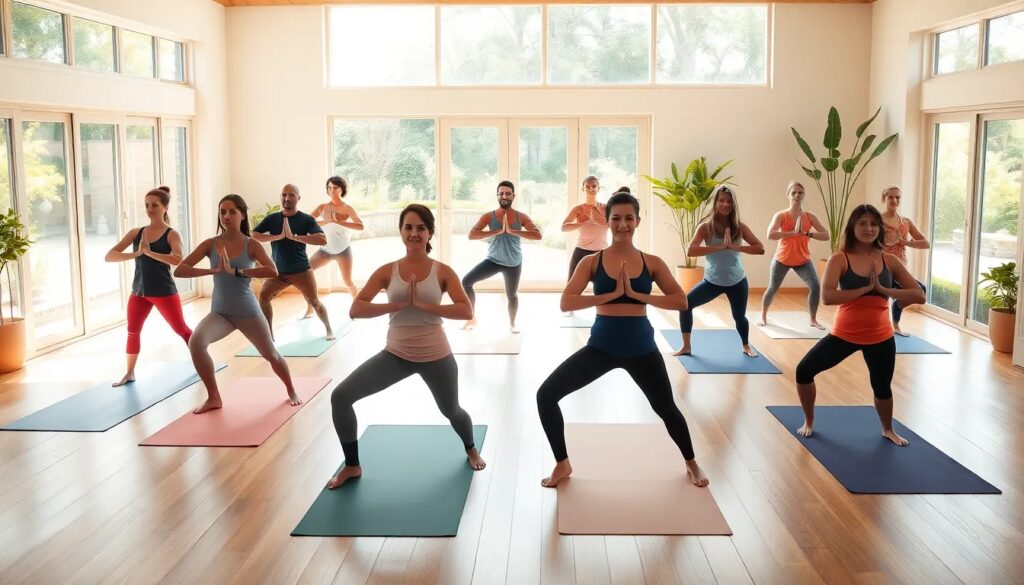
Intermediate yoga poses are the asanas that ask for more than basic mobility: they combine strength, balance, and flexibility at the same time, or they place real load on the arms and core. The good news is that almost every intermediate pose is a direct progression from a beginner pose you may already know — Crow grows out of a deep squat, Camel grows out of Bridge, Half Moon grows out of Triangle. This guide lists fourteen worthwhile intermediate poses, what each one trains, the foundation pose it builds on, and how to tell whether you are actually ready.
What counts as an intermediate pose (and what doesn't)
An intermediate pose is one that asks the body to combine two challenges at once — balance plus strength, or backbend plus flexibility — rather than working on a single quality in isolation. That rules out two groups. On one side sit the foundational shapes: standing poses, seated forward folds, basic twists, and gentle backbends like Bridge, all covered in our yoga poses for beginners guide and in the wider library of yoga poses. On the other side sit true advanced work — deep arm balances, inversions held without a wall, and the handful of shapes covered in our guide to hard yoga poses. The fourteen poses below sit in the middle: achievable within months of consistent practice, not years.
How to know you are ready for intermediate poses
There is no official exam, but these practical markers are a fair test:
- You can hold Downward-Facing Dog comfortably for 8–10 breaths.
- You can lower from Plank with control (knees down is fine) rather than collapsing.
- You can balance in Tree Pose for 30 seconds per side without a wall.
- You know how to modify with blocks and straps instead of forcing range.
- You can keep a steady breath through a full Sun Salutation.
If several of those are still shaky, spend more time with the fundamentals — our 10 yoga poses for beginners covers them with setup cues — and come back. There is no prize for rushing, and most yoga injuries come from chasing shapes the body has not earned yet.
14 intermediate poses by category
| Pose | Category | Mainly trains | Builds on |
|---|---|---|---|
| Crow (Bakasana) | Arm balance | Wrist/arm strength, core, courage | Garland Pose (deep squat), Plank |
| Side Plank (Vasisthasana) | Arm balance | Shoulder stability, obliques | Plank |
| Half Moon (Ardha Chandrasana) | Balance | Standing balance, outer hips | Triangle |
| Warrior III (Virabhadrasana III) | Balance | Single-leg strength, back body | Warrior I |
| Eagle (Garudasana) | Balance | Balance, shoulder/hip mobility | Chair Pose |
| Camel (Ustrasana) | Backbend | Spinal extension, chest opening | Bridge, Cobra |
| Locust (Salabhasana) | Backbend prep | Lower back and glute strength | Cobra Pose (prone backbend basics) |
| Bow (Dhanurasana) | Backbend | Back strength, quad stretch | Locust |
| Dancer (Natarajasana) | Backbend + balance | Balance, hip flexor opening | Tree, Bridge |
| Boat (Navasana) | Core | Hip flexors, deep core | Seated Staff Pose |
| Chaturanga Dandasana | Strength | Triceps, shoulders, core control | Plank, knees-down lowering |
| Half Lord of the Fishes (Ardha Matsyendrasana) | Twist | Spinal rotation | Simple seated twist |
| Revolved Side Angle (Parivrtta Parsvakonasana) | Twist + Balance | Spinal rotation over a standing base, hamstring flexibility | Warrior II, Extended Side Angle, Triangle |
| Pigeon (Eka Pada Rajakapotasana, prep) | Hip opener | Outer hip and glute release | Figure-4 stretch |
Working on the big four safely
Crow Pose
Start from a deep squat with hands planted shoulder-width, knees high on the upper arms. Look slightly forward, shift weight into the hands, and lift one foot at a time. A block under the feet lowers the entry, and a cushion in front removes the fear of face-planting — which is usually the real obstacle. This is the entry-level version — knees high, feet together. For its harder cousins (Side Crow, Eight-Angle Pose, Firefly), see our guide to hard yoga poses.
Camel Pose
Kneel with hips over knees and hands on the lower back, elbows drawing together. Lift the chest up before bending back — the goal is an even arc through the upper back, not a hinge at the lower back. Reaching for the heels comes later; tucking the toes raises the heels and shortens the distance.
Half Moon
From Triangle, soften the front knee, place fingertips (or a block) about a foot in front of the standing foot, and float the back leg to hip height. The block is not a crutch — it is the difference between practicing balance and practicing falling.
Chaturanga
The most repeated and most commonly butchered pose in flow classes. Lower from Plank only halfway, elbows hugging the ribs, shoulders no lower than the elbows. Knees-down repetitions build the strength honestly; shoulders dipping toward the floor is how rotator cuffs get cranky. It appears constantly in vinyasa sequences — see our guide to what vinyasa yoga is for how these transitions fit together.
As an Amazon Associate, we earn from qualifying purchases.


A sample intermediate sequence (20–25 minutes)
- 3 rounds of Sun Salutation A to warm up
- Warrior I → Warrior III (right side), 5 breaths each
- Triangle → Half Moon (right side), 5 breaths each
- Repeat 2–3 on the left side
- Eagle Pose, 5 breaths per side
- Garland Pose → Crow attempts, 2–3 tries with rest between
- Locust → Bow, 2 rounds of 5 breaths
- Bridge or Camel, 5 breaths
- Half Lord of the Fishes twist, 5 breaths per side
- Pigeon prep, 10 slow breaths per side
- Savasana, 3–5 minutes
Practice this two or three times a week and most of the poses will feel noticeably different within a month or two. Blocks make nearly every pose above more honest — and if you do not own any, these household substitutes for yoga blocks work fine.
Common mistakes at the intermediate stage
- Skipping the warm-up. Backbends and arm balances on cold tissue are how strains happen.
- Treating props as a downgrade. Advanced practitioners use blocks more, not less.

- Home PT Strap for Independence (3 Recovery Stages) – A physical therapy stretching strap designed for gentle knee/hip/leg mobility at home. Use it across recovery: Stage 1 bedside assist (when movement is limited), Stage 2 PT stretching/ROM, Stage 3 daily warm-up to maintain mobility—so you can stay independent
- Non-Elastic, Steady Holds (No Rebound / No Surprise Stretch) – The strap does not stretch, so there’s no bounce and no sudden “give.” You can pull to the angle you need and it stays there, helping you move slowly and safely—especially after knee replacement or hip replacement recovery.
- Loops = Easier Grip + Adjust Depth + Track Progress – Multiple loops provide clear hand/foot holds with less grip strength than towels or ropes. Switch loops anytime to adjust stretch depth, repeat the same position each session, and track ROM progress for hamstrings, calves, hips/hip flexors, and lower back—without forcing.
- Leg Lifter Strap / Mobility Aid for Bed & Car – Can also be used as a leg lifter to help lift your leg into bed or car, supporting daily movement tasks when flexibility is limited (use gently within comfort). gently within comfort).
- PT-Style Daily Stretching for Legs, Back & Feet (Comfort Tip) – Built for slow, controlled home stretching and mobility work for legs, hips, lower back, ankles, and feet (calf/Achilles tightness included)—not an elastic resistance band. For comfort during longer holds, socks or light gloves may help. during longer holds, socks or light gloves can help if you have sensitive hands/skin. gloves can help if you have sensitive hands/skin.
- Holding the breath. If you cannot breathe steadily in a pose, you are past your current edge — back off one notch.
- Comparing timelines. Hip and shoulder structure vary enormously; some poses come in weeks, others take years, and a few may never suit your anatomy. That is normal, not failure. For perspective on the far end of the spectrum, see our look at the hardest yoga poses.
- Abandoning the basics. The fundamentals covered in our yoga for beginners guide remain the bulk of a good practice at every level.
If you have an existing injury or medical condition — especially involving the spine, shoulders, or wrists — check with a healthcare professional or experienced teacher before adding deep backbends and arm balances.
Frequently asked questions
With two or three practices a week, most people develop the strength and balance for intermediate work in roughly six months to a year. The range is wide because starting fitness, body proportions, and consistency all matter more than calendar time.
Side Plank and Eagle are good entry points — both build directly on familiar shapes, carry low fall risk, and can be modified easily. Half Moon with a block is another accessible first step into intermediate balance work.
Usually it is one of three things: weight staying back in the feet instead of shifting into the hands, knees placed too low on the arms, or fear of falling forward. A cushion in front of the face and a block under the feet address all three. Wrist or core strength is the limiter less often than people assume.
Yes, regularly. Slower classes give time to refine alignment details that fast flows gloss over, and the fundamentals — Downward Dog, Warrior poses, twists — remain the core of practice at every level. Many experienced teachers deliberately attend basics classes for exactly this reason.
Crow is usually the first arm balance students learn, so most teachers treat it as intermediate. Its harder relatives — Side Crow, Eight-Angle Pose, Firefly — belong to the advanced tier; see our guide to hard yoga poses for those.
Have a correction? Contact us.
Last update 2026-09-10. Price and product availability may change.
Recommended: