What to Use Instead of Yoga Blocks: 9 Household Substitutes That Actually Work

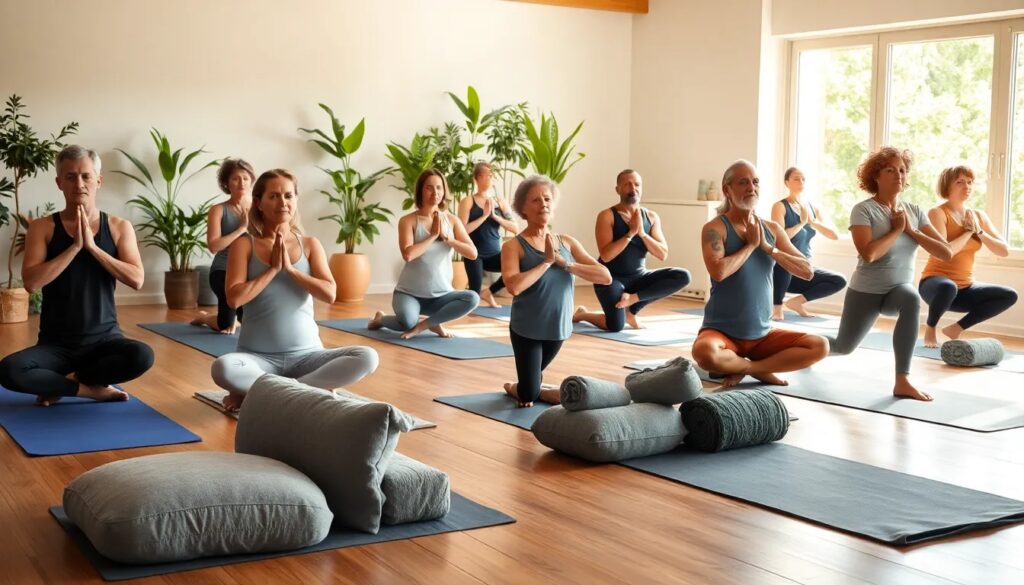
The best substitutes for yoga blocks are thick hardcover books, firmly folded blankets or towels, a sturdy shoebox or storage box, a low stool, and the seat of a chair. Each replaces a different block function: books and boxes give you height under the hands, folded blankets lift the hips in seated poses, and a chair stands in for the tallest block setting in standing poses.
A standard yoga block measures roughly 9 x 6 x 4 inches and does three jobs: it raises the floor toward your hands, lifts your hips in seated positions, and supports your body in restorative poses — our full guide to yoga blocks covers how each of those jobs works in more detail. Any substitute just needs to do one of those jobs without slipping or collapsing. If you are new to props, start with the stack-of-books option below — it is the easiest to adjust. Here is how to choose well — and what to skip.
The Best Yoga Block Substitutes, Compared
| Substitute | Replaces | Best for | Watch out for |
|---|---|---|---|
| Stack of hardcover books | Block under the hands | Standing poses (Triangle, Half Moon), lunges | Glossy covers slide on hard floors — wrap the stack in a towel or rubber band |
| Firmly folded blanket or towels | Block under the hips | Seated poses, kneeling, gentle support | Too soft for weight-bearing under the hands |
| Sturdy shoebox or storage box | Standard block | Light support, reaching the floor | Cardboard crushes under real body weight — fill it with books first |
| Low step stool | Tallest block setting | Forward folds, supported standing poses | Check it cannot tip; avoid stools with wheels |
| Chair seat | High support | Forward folds, balance support, modified poses | Place it against a wall so it cannot slide |
| Firm cushion or bolster | Soft block uses | Restorative poses, sitting height | Unstable for balance work |
| Rolled, tightly bound towel | Low block setting | Under knees, heels, or the head | Unrolls unless secured with bands |
| Thick dictionary or phone book | Low-to-mid block | Hips in seated meditation | Single books give only one height |
| Stair step (bottom stair) | Fixed-height support | Calf and hamstring stretches | Position only; you cannot move it |
Matching the Substitute to the Pose
Under the hands in standing poses
This is the most demanding job because the object bears weight at an angle. Use something rigid and flat: a stack of two or three large hardcover books works well. In poses like Triangle or Half Moon, the block mainly stops you from collapsing your torso to reach the floor — our guide to how to use yoga blocks shows exactly where the support should sit, and the same placement applies to any substitute.
Under the hips in seated poses
Here comfort matters more than rigidity. A blanket folded into a firm rectangle about 3 to 4 inches high lifts the pelvis so the knees can drop below the hips — the single most useful modification for tight hips in cross-legged sitting. A firm cushion does the same job.
In restorative poses
For supported Bridge, place a stack of books wrapped in a folded towel under the sacrum — the towel adds comfort and stops sliding. For supported reclining poses, cushions and folded blankets are actually closer to the bolsters studios use than blocks are.
What Makes a Good Substitute
- It does not compress. Press on it with your full arm weight; if it sinks more than a little, it is a hip support, not a hand support.
- It does not slide. Test it on your actual floor. Add a towel wrap or place it on your mat if in doubt.
- It is wide enough for a flat palm — roughly the 9 x 6 inch footprint of a real block.
- It will not be damaged. Sweat and pressure are hard on book covers; use books you do not treasure.
- Or make one. If you would rather build a substitute than improvise on the spot, a taped, unopened ream of printer paper works as a makeshift DIY block — dense, flat, and close to a real block's height.
What Not to Use
Skip anything that rolls or crushes: water bottles and soup cans roll exactly when you least want them to, glass and ceramic items can break under angled load, and empty cardboard boxes collapse without warning. Stacked mail or magazines slide internally even when the pile looks stable. A failed support in a balance pose is how wrists get hurt.
When It Is Worth Buying Real Blocks
If you practice a few times a week, a pair of foam blocks costs little and outperforms every substitute: three usable heights, a non-slip surface, and no setup. Our guides to what yoga blocks are used for and how many blocks you need cover sizing and materials, and if you sweat a lot, cork blocks grip better than foam. The same improvisation logic applies to straps, by the way — a bathrobe belt or scarf substitutes well, as covered in our yoga strap guide.
As an Amazon Associate, we earn from qualifying purchases.
A stack of two or three large hardcover books comes closest: it is rigid, roughly block-sized, and adjustable in height by adding or removing a book. Wrap the stack in a towel or secure it with rubber bands so the covers do not slide against each other.
Yes. Blocks are aids, not requirements. You can shorten your stance, bend your knees, rest hands on your shin instead of the floor, or choose pose variations that match your current flexibility. Blocks simply let you keep better alignment while your range of motion develops.
For low, soft support — under the knees, heels, or head — yes. For bearing weight under the hands, no: a rolled towel compresses and shifts. Bind it tightly with rubber bands or hair ties so it does not unroll mid-pose.
A blanket folded into a firm rectangle about 3 to 4 inches high, or a firm cushion. Lifting the pelvis lets the knees drop below the hips in cross-legged sitting, which protects the lower back and makes longer sits far more comfortable.
Yes, for the same job as a book stack: an unopened ream is dense, flat, and about the right height for supporting the hands in standing poses. Keep the shrink-wrap on so it does not crush or shift.
Have a correction? Contact us.
Last update 2026-09-10. Price and product availability may change.
Recommended: