What Are Yoga Blocks Used For? 7 Practical Uses

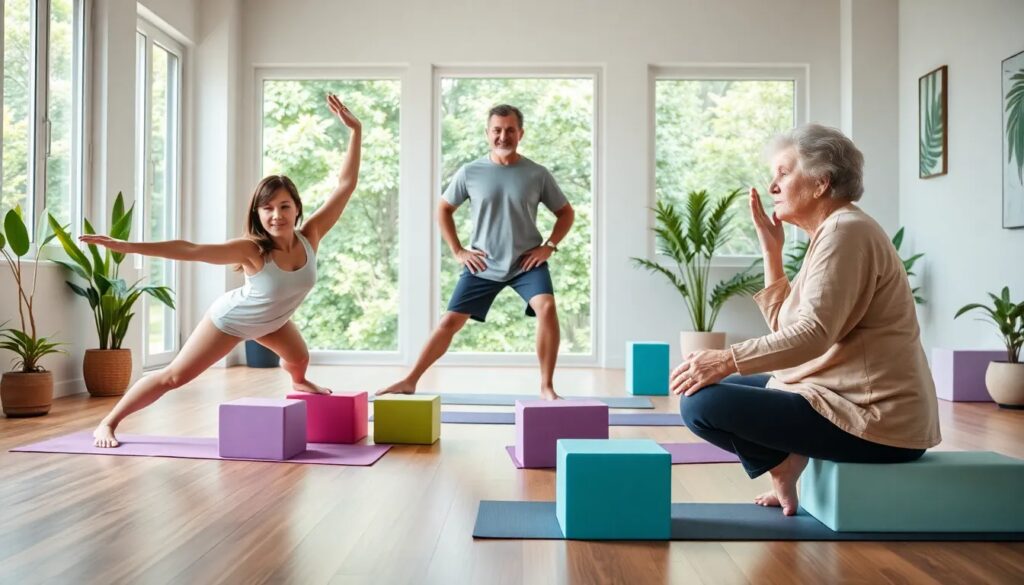
Yoga blocks are used to bring the floor closer to you. Placed under the hands, hips, head, or back, a block shortens the distance your body has to cover, so you can hold a pose with correct alignment instead of straining to reach the ground. They also serve the opposite purpose: squeezed between the thighs or placed under the feet, blocks add muscular engagement and difficulty. That dual role — support for some poses, challenge for others — is why teachers at every level keep them within reach.
A standard block measures about 9 x 6 x 4 inches (23 x 15 x 10 cm) and can be used at three heights: lying flat (lowest), on its long edge (medium), or standing on end (tallest). Most practitioners eventually want two.
The 7 main uses of yoga blocks
- Extending your reach in standing poses. In Triangle (Trikonasana) or Half Moon (Ardha Chandrasana), a block under the lower hand lets you keep the chest open and the spine long instead of collapsing toward the floor. This is the single most common use.
- Raising the hips in seated poses. Sitting on a flat block in cross-legged positions tilts the pelvis forward and lets the knees drop below the hips — the difference between a rounded, uncomfortable spine and a tall, sustainable one. Essential for tight hips.
- Supporting restorative poses. A block under the sacrum turns Bridge into Supported Bridge, a passive backbend you can hold for minutes. Under the forehead in Child's Pose, or under each knee in Reclined Butterfly, blocks let the body release without effort.
- Protecting hamstrings in forward folds. Hands on blocks in Standing Forward Fold or Pyramid Pose take the strain off the backs of the legs while flexibility develops gradually — a far safer path than bouncing toward your toes.
- Activating muscles. A block squeezed between the thighs in Chair Pose (Utkatasana) or Bridge forces the inner thighs and core to fire, correcting the leg position automatically.
- Building strength for advanced poses. Blocks under the hands raise the floor for arm-balance drills like Crow Pose preparations and seated lift-offs (Tolasana), giving you clearance to develop the strength before the full pose is available.
- Refining alignment. A block held between the hands in poses like upward salute or between the forearms in Forearm Stand drills keeps the arms from splaying — instant, self-correcting feedback.
That covers the main use cases you'll find in nearly every standing, seated, or restorative class. The same logic shows up in related practices: vinyasa teachers use blocks to drill transitions cleanly, and mat-based Pilates routines borrow the same blocks for similar support work in poses where the floor sits just out of reach.
Are yoga blocks only for beginners?
No — and the idea that using props means failing at yoga is the most persistent myth in the practice. In the Iyengar tradition, blocks are treated as precision tools, not training wheels: a block lets you do the actual pose with correct alignment, rather than a distorted approximation of it. Beginners use blocks to make poses reachable; experienced practitioners use the same blocks to deepen poses, add load, and drill arm balances. If you watch an advanced vinyasa practitioner working on transitions, there is a fair chance blocks are involved.
Cork vs. foam vs. wood: which blocks to buy
| Foam | Cork | Wood / bamboo | |
|---|---|---|---|
| Weight | Very light (3–5 oz) | Medium (1–2 lb) | Heavy (1.5–2.5 lb) |
| Firmness | Soft — compresses under full weight | Firm and stable | Hardest, zero give |
| Best for | Restorative use, under the body, travel | Weight-bearing support in standing poses | Studio aesthetics, maximum stability |
| Grip when sweaty | Can get slippery | Improves — cork grips better damp | Slippery |
| Drawbacks | Wobbles under hands; dents over time | Heavier in the bag; can chip at edges | Hard against the body; loud; costlier |
| Price tier | Entry | Mid | Higher |
A practical rule: if the block goes under your body (sacrum, head, hips) for soft restorative work, foam feels better. If the block goes under your hands to bear weight, cork's stability wins. Many practitioners keep one of each. If you can only buy one pair, cork is the more versatile choice for general practice. For a side-by-side look at specific models, see our best yoga blocks guide.
How to use yoga blocks for stretching
Three quick applications: in a standing forward fold, hands on blocks at the tallest height let the spine lengthen before the hamstrings are asked to give; in a low lunge, a block under each hand keeps the torso upright so the stretch lands in the hip flexor instead of the lower back; sitting on a flat block during a cross-legged forward bend tilts the pelvis forward and lets the fold travel further without rounding. The block essentially substitutes hand contact with the floor so the stretch can happen at the joint you actually want to open.
How to use yoga blocks for seniors
For older practitioners the priority is usually safety and stability, not depth. A block placed on the outside of the back foot in Warrior II prevents the knee from drifting inward; in Tree Pose, a block in front of the standing foot gives a "spot" for the lifted foot to hover against if balance wobbles; in kneeling poses, a block under each hand reduces the wrist load so the pose stays accessible. The pattern is the same: bring the floor up, keep the joints neutral, and let the body stay longer in the shape.
As an Amazon Associate, we earn from qualifying purchases.

- Natural Cork: Elevate your yoga practice with our eco-friendly, non-slip Gaiam Cork Yoga Brick, perfect for yoga, Pilates, and more.
- Modify Your Poses: Ideal for all skill levels; shorten or deepen your stretches effortlessly. Dimensions: 9"W x 5.5"H x 3"D, lightweight at 1.5 lbs.
- Rounded Edges & Superior Grip: Designed for your comfort, the rounded edges and textured surface provide excellent grip and control during challenging poses.
- Perfect Dimensions: Measuring at 9"W x 5.5"H x 3"D, this yoga brick provides ample support for optimal alignment and posture.
- Versatile & Portable: Compact and lightweight, this cork yoga brick is your go-to fitness accessory for home or gym workouts.

One block or two?
Two. Many of the most useful applications — supporting both hands in forward folds, a block under each knee in reclined poses, framing the feet in seated lift-offs — require a pair. Blocks are also frequently combined with other inexpensive props: a yoga strap covers the reach problems blocks cannot (binding poses, leg stretches), and together they make a small, inexpensive kit that covers most prop work. For specific strap techniques, see our guide on how to use a yoga strap.

- Yoga Blocks are essential tools for yoga practitioners of all levels to improve the difficulty and stretching strength of various parts of the body. They help adjust posture, assisting the body in achieving certain movements with more precision and ease
- Made from EVA rubber products, these yoga blocks are water-resistant, featuring a closed cell structure that makes non-water absorption and excellent moisture resistance
- This yoga bricks is designed for convenience, being lightweight and compact, making it suitable for carrying to various occasions such as lounges, outdoor activities, home yoga, and stretching exercises
- The surface of these yoga blocks is smooth and non-porous, repelling dirt and dust. Should any dirt accumulate, it can be easily removed with a damp towel, saving you the hassle of thorough cleaning
- They possess good shock resistance and cushioning performance, providing a stable and comfortable foundation for your yoga practice
Five poses to try with blocks this week
- Triangle Pose — block at tall or medium height inside the front shin; rest the lower hand on it and rotate the chest open.
- Supported Bridge — block at low or medium height under the sacrum (the flat bone at the base of the spine, not the lower back); arms relaxed, hold 1–3 minutes.
- Seated meditation — sit on a flat block with ankles crossed in front; notice how much easier a tall spine becomes.
- Half Moon — block at tall height about a foot in front of the standing foot's pinky-toe side; it converts a wobbly balance into a learnable one.
- Chair Pose with a block — squeeze a flat block between the upper thighs and keep it from slipping as you sit lower.
If you are new to the practice, blocks pair naturally with a beginner-friendly routine — our morning yoga for beginners guide includes several poses where a block makes the difference between strain and ease.

- YOGA BLOCK and YOGA STRAP COMBO: Makes for a great yoga prop and accessories starter kit, providing the support you need to get started
- STABILITY and BALANCE: Yoga blocks and yoga straps provide the stability and balance needed in your practice to help with optimal alignment, deeper poses and increased strength
- EXTEND with DEEPEN STRETCHES: Blocks and straps enable you to extend, support and deepen your stretches while also working to increase range of motion; Easy release D ring metal buckle holds 6 feet strap securely in place allowing your shoulders to relax
- MODIFY and ALIGN: Use under your hands, feet or seat (meditation) to ensure the proper alignment needed in order to safely support and modify poses to suit your level of flexibility; If you feel tight, don't risk injury and grab a block and a strap
- CARE INFO: Spot clean with mild detergent; towel or air dry (Block Dimensions: 9 inches W x 6 inches H x 4 inches D / Weight: 4.6 ounces; Strap Dimensions: 6 feet)
Frequently asked questions
Need is strong — you can practice without them — but they are the cheapest meaningful upgrade in yoga. If you cannot comfortably reach the floor in standing poses, sit tall in cross-legged positions, or want support in restorative poses, blocks solve all three without buying anything else for a home practice. Hardcover books or a firm cushion can substitute in a pinch.
Cork is better for weight-bearing support under the hands because it is firm and stable, and it actually grips better when damp. Foam is better under the body in restorative poses because it is softer, and it is far lighter to carry. If you are buying only one pair for general practice, cork is the more versatile choice.
The standard 9 x 6 x 4 inch block suits most people. A slimmer 3-inch-thick block fits smaller hands better and feels less bulky in seated poses, while larger or less flexible practitioners often prefer the standard 4-inch depth for the extra height it provides.
No. A block lets you perform a pose with correct alignment instead of a strained approximation, which is the entire point of the pose. Advanced practitioners and teachers use blocks deliberately — for deeper openings, strength drills, and arm-balance training — so props signal a thoughtful practice, not a deficient one.
This article is general information, not medical advice. If you are working around an injury, get pose modifications from a qualified teacher or physical therapist rather than improvising with props.
Have a correction? Contact us.
Last update 2026-09-10. Price and product availability may change.
Recommended: