Yoga Strap: Types, Length Guide & 5 Stretches to Start

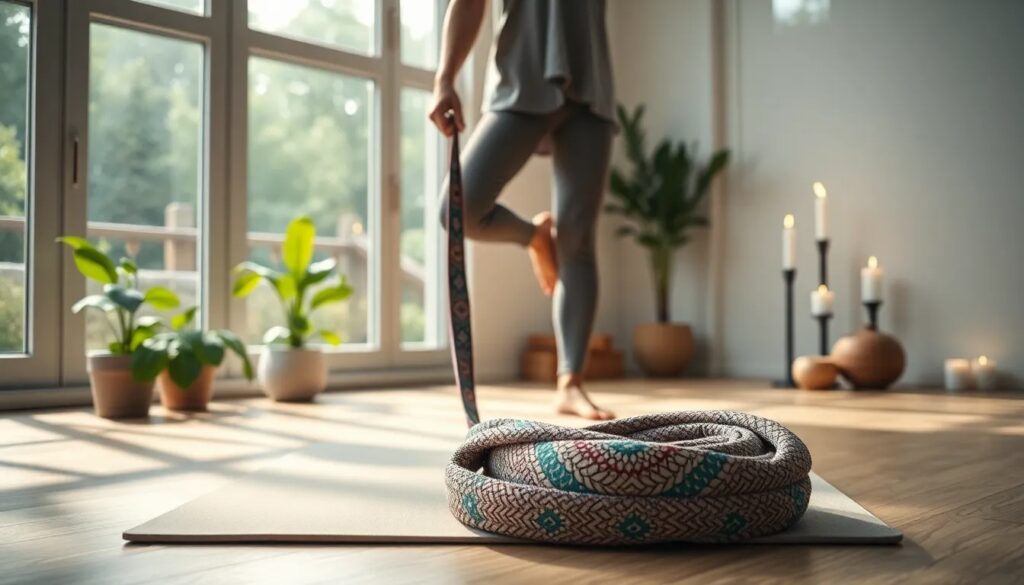
A yoga strap is a simple woven belt — usually cotton or nylon, 6 to 10 feet long — that extends your reach so you can hold poses with correct alignment before your flexibility catches up. Instead of rounding your spine to grab your foot in a forward fold, you loop the strap around the foot and keep your back long. It is the cheapest, most universally useful yoga prop there is, and despite the beginner reputation, advanced practitioners use straps constantly for binds, shoulder work, and deep backbends.
Here is how to pick the right type and length, five foundational strap stretches you can learn today, and — if you're outfitting the rest of your mat — links to our other yoga equipment guides.
What a Yoga Strap Actually Does
A strap solves one recurring problem: the distance between your hand and the body part it is trying to reach. That has three practical payoffs:
- Alignment first. You keep the spine long and shoulders relaxed instead of contorting to close the gap — which is where most of the benefit of a stretch lives.
- Controlled intensity. Walking your hands along the strap lets you adjust a stretch inch by inch, instead of the all-or-nothing of grabbing a foot.
- Stability in holds. Looped around a thigh or foot, the strap lets you stay in a pose long enough to actually relax into it — the mechanism behind most flexibility gains.
Is a yoga strap actually worth buying? For the price of a couple of coffees, yes — it is the cheapest prop that changes what poses you can safely access, and normal use does not wear it out. If you are curious how strap-assisted holds compare with plain stretching, our piece on whether yoga is stretching breaks down the overlap, and our step-by-step technique guide covers exactly how to hold and adjust one in a pose.
Types of Yoga Straps Compared
| Type | How it works | Best for | Trade-off |
|---|---|---|---|
| D-ring strap | Two metal D-rings; thread the tail to make a secure loop of any size | All-purpose use; restorative holds where the loop must not slip | Slower to adjust mid-pose |
| Cinch / quick-release buckle | Flat plastic or metal buckle, faster threading | Flow practices where you re-size the loop often | Plastic buckles can creep under heavy load |
| Loop strap (sewn loops) | 8–10 sewn loops along the length | Beginners and rehab work — grab a numbered loop, no buckles at all | Less infinitely adjustable; bulkier |
| Elastic stretch strap | Stretches under tension | Dynamic stretching, physical-therapy style work | Wrong tool for static yoga holds — the give defeats the purpose |
For classic yoga use, a cotton D-ring strap is the default recommendation: secure, durable, soft on skin, and inexpensive. Choose nylon if you want a smoother glide for shoulder flossing.
As an Amazon Associate, we earn from qualifying purchases.
| # | Preview | Product | Rating | Price | |
|---|---|---|---|---|---|
| 1 |  | Slim Panda Yoga Strap for Stretching,Cotton Yoga Strap with Adjustable D-Ring Buckle,Non-Elastic... | $5.89 | Buy on Amazon |
| # | Preview | Product | Rating | Price | |
|---|---|---|---|---|---|
| 1 | | Slim Panda Yoga Strap for Stretching,Cotton Yoga Strap with Adjustable D-Ring Buckle,Non-Elastic... | $5.89 | Buy on Amazon |
| # | Preview | Product | Rating | Price | |
|---|---|---|---|---|---|
| 1 |  | Trideer Stretching Strap Yoga Strap Physical Therapy for Home Workout, Exercise, Pilates and... | $5.99 | Buy on Amazon |
Already own a strap with sewn loops instead of a buckle? It handles the same core moves — grab a numbered loop rather than threading a D-ring, a design many beginners and rehab clients prefer.
What Length and Width to Buy
- 6 ft: enough for most people under about 5'8" doing basic leg and shoulder stretches.
- 8 ft: the safe all-around choice — covers taller users, full-body loops, and seated poses with room to spare.
- 10 ft: for tall practitioners, larger bodies, and uses that wrap the whole torso (like supported reclining poses or Iyengar-style chest openers).
- Width: 1.5 inches is standard and comfortable; 1 inch suits smaller hands but can dig in under load.
If in doubt, buy 8 ft. Extra length is never a problem; missing length always is. Some straps also double as a mat carrier, with a loop built in for slinging a rolled mat over one shoulder on the way to class.
5 Strap Stretches to Learn First
- Reclined hamstring stretch (Supta Padangusthasana). Lie on your back, loop the strap around the ball of one foot, extend that leg toward the ceiling with both shoulders heavy on the floor. Hold 1–2 minutes per side, knee soft if needed. This single stretch justifies the strap purchase.
- Seated forward fold (Paschimottanasana) with strap. Sit tall, strap around both feet, hinge from the hips while keeping the spine long. Walk the hands down the strap only as far as the back stays straight.
- Shoulder flossing. Hold the strap wide overhead and, keeping arms straight, take it slowly behind you and back. Narrow the grip over weeks as shoulders open. Excellent desk-worker medicine.
- Cow Face arms (Gomukhasana). One arm reaches down the spine from above, the other up from below; the strap bridges the gap between hands until they meet.
- Dancer pose (Natarajasana) prep. Loop the strap around the back foot and hold it overhead with both hands, letting you work the backbend without wrenching the shoulder.
These five are just the start — our full library of all 8 strap stretches adds shoulder- and hip-focused holds. They also pair well with a morning routine — see our morning yoga stretches sequence — and most can be done from a chair using the variations in our seated yoga poses guide.
The 8 ft cotton strap below is the length these five stretches assume — long enough for the reclined hamstring hold with room to spare.

- YOGA STRAP: An essential yoga accessory and prop to help you deepen stretches and improve flexibility while allowing your shoulders to relax for proper alignment - if you feel tight, grab a strap and don’t risk injury by over-extending
- STRETCH STRAP: Use the strap to reach limbs more easily on challenging positions and to hold poses and stretches for longer - take your practice to the next level by using a yoga strap to deepen and extend stretches to gain more flexibility
- ADJUSTABLE METAL D-RING BUCKLE: Features an easy-release double ring metal cinch buckle that allows you to shorten the strap and to make a secure loop band that is secure and will not budge so that you can concentrate on your stretching without slipping
- DURABLE FABRIC BLEND: Straps are constructed of a durable high-quality fabric blend of polyester that will not fray or break and is made to last you for years to come - easily rolls up and fits in your yoga mat bag or tote
- DIMENSIONS & CARE INFO: Stretching straps are 1.5"W and available in 6ft, 8ft or 10ft lengths and in a variety of colors / Hand wash; Dry flat

Yoga Strap or Resistance Band — What's the Difference?
They look similar in a gym bag, but a yoga strap and a resistance band do opposite jobs. A strap is rigid and does not stretch: it simply extends your reach so you can hold a pose in proper alignment, and its length stays fixed however hard you pull. A resistance band gives under tension and pushes back, adding muscular load — which makes it a strength or rehab tool for building or restoring strength, not a static-hold prop. If you are weighing a yoga strap vs a resistance band for home practice, keep both: reach for the strap in seated and reclined holds, and the band for warm-ups or physical-therapy style exercises.
Strap Mistakes to Avoid
- Yanking instead of breathing. The strap is for holding position at a sustainable intensity, not cranking deeper. If you are shaking or holding your breath, back off.
- Wrapping it around bare joints. Loop around the ball of the foot or the thigh, not directly across the knee.
- Using an elastic strap for static holds. The stretch in the strap masks your actual range and invites bouncing.
- Letting the buckle sit against your skin in reclined poses — rotate it away before you settle in.
- Holding onto a worn-out strap. Frayed stitching, a cracked buckle, or a loop that has stretched loose are signs it is time for a yoga strap replacement — do not trust your alignment to hardware that might give out mid-pose.
A strap covers reach; for support and height, blocks and other props do different jobs — a yoga wheel, for example, targets spinal extension in a way a strap cannot. And if your strap habit starts in hot classes, add a yoga towel so sweaty hands can still grip it.
Frequently Asked Questions
A bathrobe belt, a necktie, a long towel, or a dog leash all work for occasional use. They lack the adjustable loop of a D-ring strap and may stretch or slip, but for a reclined hamstring stretch at home they are perfectly serviceable. If you use a strap more than once a week, the real thing is inexpensive and noticeably better.
An 8 ft strap is the safer all-around buy. Six feet covers basic stretches for people under about 5 ft 8 in, but runs short for full-body loops, reclined poses with the strap around the torso, and taller users. Extra length never hurts; insufficient length limits what you can do.
No. Beginners use straps to bridge flexibility gaps, but experienced practitioners use them for bound poses, shoulder opening, Iyengar-style alignment work, and deep backbend preparation like strap-assisted Dancer or King Pigeon. In many traditions the strap is considered a precision tool rather than a crutch.
Cotton is the default: soft, grippy, and it stays where you put it, which suits static holds. Nylon is stronger, slightly slick, and glides better for shoulder flossing, but the smoothness can let loops slip under load. For most people a cotton D-ring strap is the better first buy.
No. A yoga strap is rigid and does not stretch — it extends your reach so you can hold a pose in alignment. A resistance band stretches under tension and adds muscular load, which makes it a strength or rehab tool rather than a static-hold prop.
This article is general information, not medical advice. If you are recovering from an injury or managing a joint condition, ask a physical therapist or doctor before adding strap-assisted stretching.
Have a correction? Contact us.
Last update 2026-09-10. Price and product availability may change.
Recommended: