Yoga Clipart

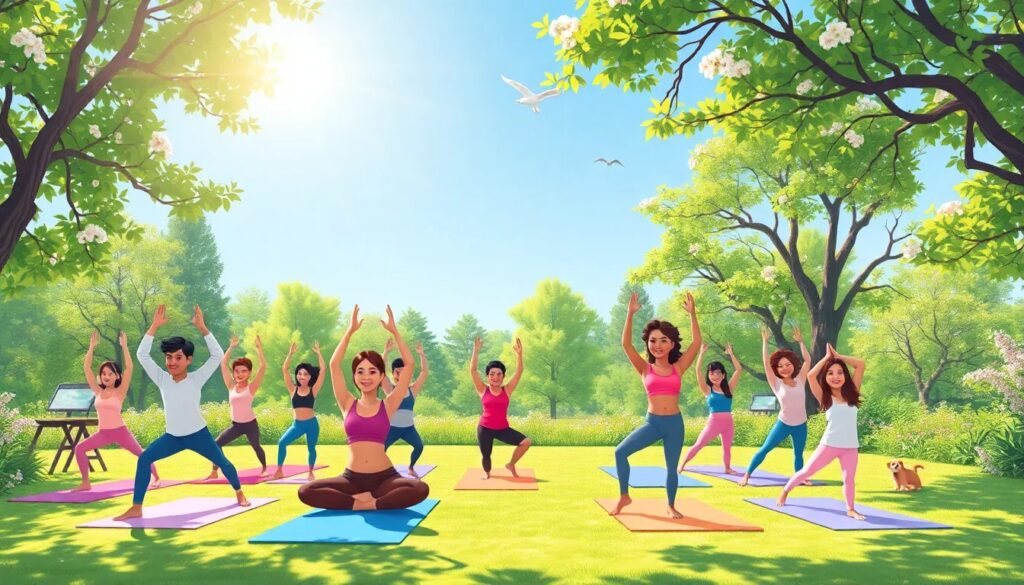
Yoga clipart is ready-made illustration — vector pose figures, silhouettes, mandalas, lotus motifs, and icons — that you can drop into class schedules, flyers, websites, and social posts without commissioning an artist. The well-known free stock libraries (Openclipart, Pixabay, SVG Repo, Freepik, Flaticon, and Vecteezy) all carry yoga collections of varying style and license, and Canva lets you reuse its built-in elements inside designs you make on the platform. The detail that matters more than where you download is the license: it determines whether you can legally use an image to promote a paid class or a piece of merchandise.
Where to Find Free Yoga Clipart
These are the most widely used sources for free yoga graphics, along with what each one is good for and what the free tier actually requires of you. Names below are mentioned for context; the practical point is to know what kind of license the file you save is actually under.
| Source | What you will find | Free license | Attribution required? |
|---|---|---|---|
| Openclipart | Simple vector poses and silhouettes | Public domain (CC0) | No |
| Pixabay | Illustrations, vectors, and some photo-style art | Pixabay Content License | No (appreciated, not required) |
| SVG Repo | Icon-style yoga and meditation graphics | Mixed (mostly CC0 or MIT) | Varies — check each file |
| Freepik | Polished, cohesive vector sets | Free with credit | Yes, on the free tier |
| Flaticon | Small icons: poses, mats, chakras | Free with credit | Yes, on the free tier |
| Vecteezy | Large vector pose collections | Free with credit | Yes, on the free tier |
| Canva (free plan) | Elements you use inside Canva designs | Canva Free Content License | No, but you cannot resell elements on their own |
If you need a large, visually consistent set — for example, fifty pose icons in the same line style for a teacher-training manual — a paid bundle from a marketplace such as Creative Market or a stock subscription is usually cheaper than the time spent stitching together mismatched freebies.
Understand the License Before You Hit Download
Most clipart problems are licensing problems. Here is what the common terms actually mean:
- Public domain / CC0: no rights reserved. You can use, edit, and sell designs that include the image, with no credit needed. This is the safest option for commercial projects.
- CC-BY (attribution): free for any use, including commercial, as long as you credit the creator the way the license specifies.
- Free with attribution (Freepik-style): similar to CC-BY but governed by the platform terms, which can change. Keep a record of when and where you downloaded the file.
- Royalty-free (paid): you pay once and can use the image repeatedly without further fees. It does not mean free of cost.
- Editorial use only: not for promoting anything. Avoid these for studio marketing.
One thing to avoid entirely: pulling images from a Google Images search. Search results are not a source — they index images that are mostly copyrighted, and using them to promote a business is a common way small studios end up with takedown notices or invoice-style settlement demands from rights-enforcement firms.
Which File Format Should You Choose?
- SVG (vector): scales to any size without blurring and can be recolored in free tools like Inkscape. Best for logos, signage, and print.
- PNG: supports transparent backgrounds, so figures sit cleanly on colored flyers and slides. Best for web and presentations, and the format most people mean when they search for "yoga clipart png" or "yoga clipart transparent background."
- JPG: smallest files, but no transparency and visible artifacts when enlarged. Fine for simple web embeds only.
When a site offers both, take the SVG. You can always export a PNG from it at exactly the size you need.
Practical Ways to Use Yoga Clipart
- Pose cue cards: printable cards with a clipart figure and the pose name help new students learn alignment basics at home. Pair them with a primer like our guide to yoga for beginners and the printable layout in our yoga poses chart.
- Class schedules and flyers: a consistent icon per class type — a reclined figure for restorative yoga, a flowing figure for vinyasa — makes a timetable readable at a glance.
- Kids and school materials: playful, cartoon-style figures keep young students engaged with movement breaks and posture games.
- Prop diagrams: simple illustrations of setups with a yoga bolster or yoga blocks are clearer than photos for handouts, because they strip out visual clutter.
- Newsletters and social templates: reusable illustrated headers give a small studio a consistent visual identity without a design budget.
Yoga Clipart for Specific Projects
Most of the search refinements people add to "yoga clipart" come down to format and audience. A quick map of how to satisfy the common ones without buying anything:
Black-and-white and outline (yoga clipart black and white / outline)
For printable handouts, teacher-training manuals, and worksheets that will be photocopied, line art is the most useful. Outline figures also print well on colored paper because they leave room for a contrasting fill. The "easy" yoga drawings that show up in those searches tend to be stick figures refined into smooth shapes — a good starting point if you plan to redraw a few to match your own style.
PNG with a transparent background (yoga clipart png / transparent background)
For slide decks, social posts, and PDF flyers with a colored background, transparent PNGs are what you want. The format is exactly what the table in the "Where to Find Free Yoga Clipart" section lists under PNG. If you can only find an SVG, export a PNG from it at the exact pixel size of your slide to keep the file lightweight.
Kids (yoga clipart kids)
For school programs, libraries, and family yoga materials, choose cartoon or chibi-style figures with big heads, soft edges, and friendly faces. The same outline-style approach works for coloring pages — print a black-and-white version, and you have a movement break activity that doubles as a craft.
Chair yoga (chair yoga clipart)
For seated practices aimed at seniors, office wellness, or adaptive classes, look for figures drawn with an actual chair in the pose. Most generic standing-pose clipart will mislead students if you label a class chair yoga and decorate it with a Warrior II figure. A reclined or seated silhouette is the honest visual choice.
Making Your Own Yoga Clipart
If nothing off the shelf fits your brand, drawing your own is more achievable than it sounds. Sketch a stick-figure version of the pose, refine it into smooth shapes in Inkscape (free) or Adobe Illustrator, and keep three rules in mind: use as few anchor points as possible, keep line weights consistent across the whole set, and check poses against a reliable reference so the anatomy is plausible — a Warrior II with both feet pointing forward will bother every teacher who sees it. Owning your artwork also removes licensing questions permanently, which matters if you plan to print merchandise. For broader guidance on building a small studio's prop library around your own materials, see our overview of yoga equipment.
Frequently Asked Questions
Often yes, but it depends on the license. CC0 and public domain images are safe for commercial use with no credit. Freepik-style free tiers allow commercial use only if you include the required attribution. Always check the license page of the specific file, not just the website in general.
SVG is the most flexible because it scales to any size without losing quality and can be recolored easily. Choose PNG when you need a transparent background for web or slides, and avoid JPG for anything that will be printed large.
No, not safely. Google indexes images from across the web, and most of them are copyrighted. Use the dedicated free-stock sites listed above, or filter a search explicitly by Creative Commons license and then verify the license on the source page itself.
Only when the license requires it. CC0 and Pixabay-licensed images need no credit. CC-BY and the free tiers of Freepik, Flaticon, and Vecteezy do require a visible credit line, usually with a link. Keeping a simple record of each download protects you if terms change later.
Yes. Stick figures refined in Inkscape (free) or Adobe Illustrator work well for handouts, internal manuals, and small-batch merchandise. Keep anchor points low, keep line weight consistent across the whole set, and check poses against a reliable reference so the anatomy is plausible.
Have a correction? Contact us.
Recommended: