Yoga on the Beach: Benefits, Poses, and What to Bring

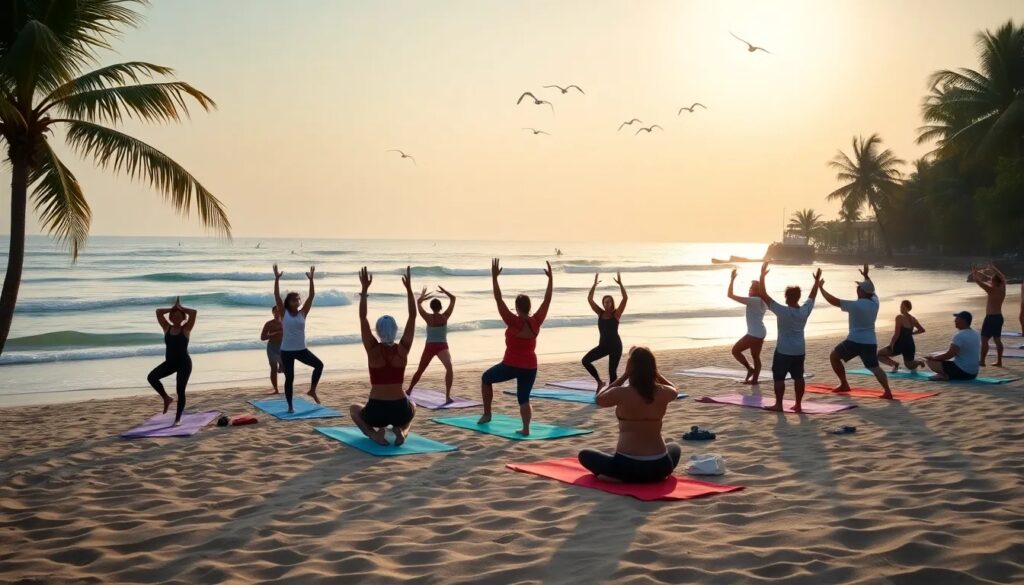
Yoga on the beach is simply yoga practiced on sand — and that one change transforms the workout. Sand is soft on the joints but unstable underfoot, so every standing pose quietly recruits the stabilizing muscles of your feet, ankles, and core far more than a studio floor does. Add fresh air, natural light, and the sound of waves doing the job of a meditation soundtrack, and you get a practice that is both physically harder and mentally easier than the indoor version.
It also requires a few adjustments that nobody mentions until you have sandy hands in downward dog. Here is what beach practice genuinely offers, which poses work (and which to skip), when and where to set up, and what to bring.
- What yoga on the beach actually does differently
- Beach yoga benefits at a glance
- Beach vs. studio at a glance
- Poses that work beautifully on sand
- Best time, tide, and weather
- What to bring: the short checklist
- What to wear for yoga on the beach
- Safety: sun, heat, and skin
- Finding yoga on the beach classes
- Frequently asked questions
What yoga on the beach actually does differently
- Harder balance and stabilizer work. An unstable surface forces constant micro-corrections. Tree pose on sand is a different exercise than tree pose on hardwood.
- Gentler on impact, tougher on wrists. Sand cushions knees and seated poses, but hands sink unevenly in weight-bearing poses, which some wrists find tiring.
- Mental reset. Practicing outdoors, with natural light and moving air, shifts attention away from the mirror and the room. Most people find an outdoor session easier to be fully present in.
- Sunlight. Morning beach sessions add modest sun exposure — pleasant and mood-lifting, though sunscreen matters as soon as the session runs past a few minutes.
- A different drishti. Wind, glare, and waves make a fixed gaze point harder to hold. That is a feature, not a bug: it trains the eyes and the attention to keep returning.
- No mirror, fewer comparisons. Many practitioners find outdoor classes less self-conscious than studio rooms.
Beach yoga benefits at a glance
- Stronger ankles, feet, and core. Sand never lets you lock the joints; stabilizers work the whole time.
- Lower-impact seated work. Kneeling, pigeon, and seated folds are more comfortable on sand than on a thin mat over a hard floor.
- Better mood and lower perceived stress. Movement outdoors, especially near water, is a reliable combination for an easier mental state.
- A genuine Savasana. Lying on a warm towel with waves doing the timing is a different experience from a studio floor.
- Free or low-cost. No studio rental, no membership — only your time and the tide.
Beach vs. studio at a glance
| Factor | Beach | Studio |
|---|---|---|
| Surface | Soft, uneven — builds stabilizers, challenges balance | Flat, predictable — better for precise alignment work |
| Joint comfort | Kind to knees; tiring for wrists in plank-type poses | Depends on mat cushioning |
| Temperature | Sun, wind, and humidity vary by the minute | Controlled |
| Focus | Natural sounds aid relaxation but add distraction | Quiet and contained |
| Equipment | Thick towel or no mat; props stay home | Full prop setup available |
| Cost | Free (or low-cost group classes) | Studio pricing |
Poses that work beautifully on sand
- Standing balance poses — tree, warrior III, dancer — because the instability is the workout. Expect to wobble more than usual; that is the point.
- Standing strength poses — warrior I and II, triangle, wide-legged folds. Dig your feet in slightly for a stable base.
- Seated and kneeling poses — seated folds, pigeon, hero pose — where sand is more comfortable than any mat.
- Savasana. Final relaxation with waves as the soundtrack is the single best argument for beach yoga.
Poses to modify or skip: fast vinyasa transitions (hands slip and sink), arm balances and headstands (unstable base, sandy wrists), and anything requiring precise foot alignment on your first visits. If you are new to these shapes in general, learn them on stable ground first — our guide to 10 beginner yoga poses covers the foundations with setup cues.
Best time, tide, and weather
Early morning wins on almost every count: cooler air, gentler sun, emptier sand, and calmer wind. Sunset sessions trade a busier beach for the view. Check the tide if you can — low tide exposes firm, wet-packed sand near the waterline, which is dramatically more stable than dry powder and the best surface for standing poses. Set up above the wet line with your back or side to the sun.
Two weather factors people underrate: wind (a steady onshore breeze makes balance work harder and flips lighter towels) and humidity (damp sand grips hands and feet less, so transitions slip more). Both are reasons to choose morning over midday, and a flat stretch of sand over an exposed dune.
What to bring: the short checklist
- A large thick towel or beach blanket instead of your good mat. Sand abrades sticky mat surfaces, and most mats turn into sandpaper holders anyway. On firm, wet-packed sand you can practice directly on the ground.
- Water — sun and wind dehydrate you faster than an air-conditioned room.
- Sunscreen, applied before you leave (sweaty mid-practice application never works), plus sunglasses and a hat for before and after.
- A layer for wind — beaches are breezier than forecasts suggest, especially early morning and at sunset.
- A small bag for your phone and keys that closes against sand.
Notice what is missing: blocks, straps, and special gear. Yoga on the beach is one of the lowest-equipment versions of an already low-equipment activity — a theme we cover in what you actually need for yoga.
What to wear for yoga on the beach
Quick-dry fabrics beat cotton: they stop clinging when you sweat and stop holding sand against the skin. Light colors reflect sun; dark colors absorb it. Skip zippers, metal buckles, and heavy logos on the chest — they dig in during prone poses and warm up fast. Most people practice barefoot; if you have a foot issue, our is yoga barefoot guide covers when minimal shoes make sense.
As an Amazon Associate, we earn from qualifying purchases.


Safety: sun, heat, and skin
Beach practice moves you out of the studio and into the strongest exposure of your week. Three habits cover most of it: sunscreen applied at home (reapply if the session runs long), water within reach during the practice rather than after, and a clear head — turn the session shorter or skip balance-heavy poses if you feel overheated, lightheaded, or chilled from wind. Watch the surface: shells, driftwood, and dried seaweed at the tide line are easier to step on than they look. None of this replaces medical advice; if you have a skin, heart, or balance condition affected by heat or sun, check with a healthcare professional before practicing outdoors on unstable ground.
The same caution applies to your mat and towel: a damp towel left bunched up grows mildew quickly, so shake it out and hang it dry before it goes back in the bag. A simple mat care routine keeps the surface from turning into a sand trap next session.
Finding yoga on the beach classes
Coastal towns from California to Florida run regular beach classes — search your beach name plus yoga, check community boards and parks department schedules, or ask local studios, many of which move classes outdoors in summer. Group classes solve the two beginner problems (motivation and form feedback) while keeping the setting. If you are brand new to yoga entirely, skim our yoga for beginners guide first so the class format feels familiar, and remember that outdoor classes count just as much toward your activity goals — here is the evidence on yoga as exercise. For multi-day options, beach yoga retreats combine the practice with travel logistics handled.
If you plan to teach or run a regular group on a public beach, check the local rules: many municipalities require instructors to hold a commercial use permit. Practicing alone or with a friend is free everywhere; organized classes are different.
General information, not medical advice: if you have balance issues, joint problems, or a heart or skin condition affected by heat and sun, check with a healthcare professional before practicing on unstable surfaces or in strong sun.
Frequently asked questions
For standing and balance poses, yes — soft sand shifts under your feet, so your ankles, feet, and core work constantly to stabilize you. Seated and lying poses are often more comfortable than on a studio floor. Most people find the same sequence noticeably more tiring on sand.
Usually not your good one. Sand sticks to and abrades sticky mat surfaces. A large thick towel or beach blanket works better on dry sand, and firm wet-packed sand near the waterline at low tide is stable enough to practice on directly.
Early morning: cooler temperatures, gentler sun, lighter wind, and an emptier beach. Sunset is the scenic alternative. If possible, time your session near low tide, when firm wet sand offers the most stable practice surface.
Practicing alone or with a friend is free on public beaches. Organized group classes are different: many municipalities require instructors to hold a commercial use permit. If you plan to teach or join a class, the organizer should have local permissions sorted.
Have a correction? Contact us.
Last update 2026-09-10. Price and product availability may change.
Recommended: