Yoga Poses for Kids: A Safe, Fun Starter Set

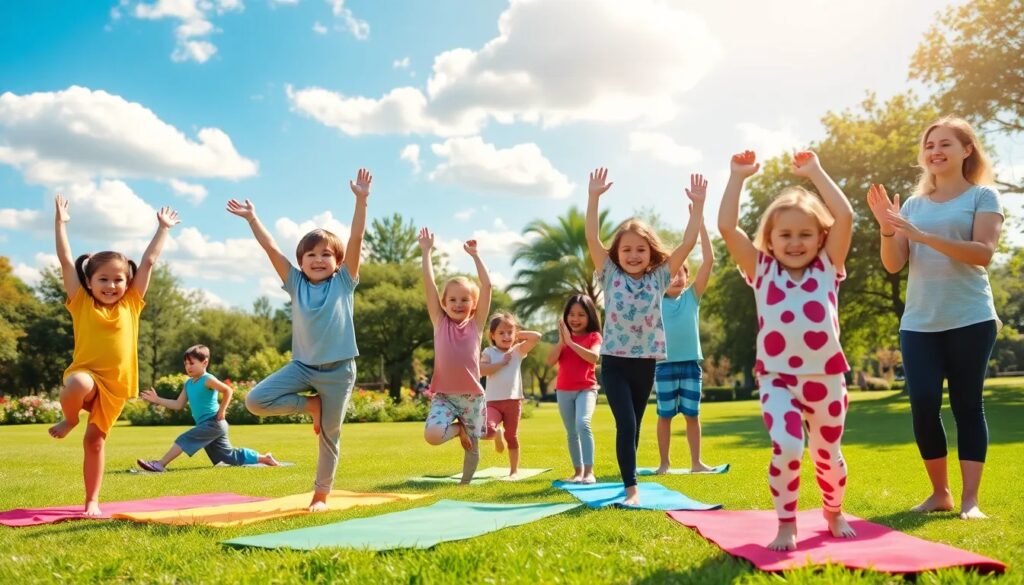
The best yoga poses for kids are simple shapes with memorable names — Tree, Cat-Cow, Downward Dog, Butterfly, Child’s Pose — that children can copy in seconds. A short, playful session is worth more than a long, perfect one: five to fifteen minutes of wobbling, roaring, and giggling builds the habit. This guide gives parents, caregivers, and teachers a starter set of twelve kid-friendly yoga poses with plain-language cues, a quick reference table, and the safety basics every adult should know before starting. For the wider picture, including session lengths by age and where to find classes, see our overview of yoga for kids; for the youngest children, see our guide on yoga for preschoolers.
12 Easy Yoga Poses for Kids
- Mountain Pose (Tadasana): stand tall, feet together, arms by the sides. Cue it as standing strong and still like a mountain. Great as a “reset” between wilder poses.
- Tree Pose (Vrksasana): balance on one foot, the other foot resting on the ankle or calf (never against the knee), hands together overhead like branches. A small wobble is part of the fun.
- Downward Facing Dog (Adho Mukha Svanasana): hands and feet on the floor, hips high, body making an upside-down V. Invite a dog stretch and an optional bark.
- Cat-Cow (Marjaryasana-Bitilasana): on hands and knees, round the back like an angry cat, then dip the belly and look up like a cow. Sound effects are encouraged.
- Cobra (Bhujangasana): lie on the belly, hands under the shoulders, lift the chest gently and hiss like a snake. Keep the elbows slightly bent.
- Butterfly (Baddha Konasana): sit with the soles of the feet together, knees out, and flap the legs gently like wings. A calm, hip-opening seat.
- Child’s Pose (Balasana): kneel, fold forward, arms relaxed by the sides or stretched ahead. The go-to rest stop whenever a child needs a pause.
- Happy Baby (Ananda Balasana): lie on the back, hold the feet, rock gently side to side. Best for younger children who can already reach their feet comfortably.
- Warrior 2 (Virabhadrasana II): one foot forward, one back, arms stretched wide, gaze over the front hand — a superhero stance. Keep the front knee soft.
- Airplane (kid-friendly Warrior 3): tip forward on one leg with arms out like wings. Wobbling and laughter are expected.
- Lion’s Breath (Simhasana): kneel, take a big breath in, then exhale with the tongue out and a quiet roar. Excellent for letting off steam.
- Cloud Rest (Savasana): lie still on the back, eyes closed, imagining floating on a cloud. Even sixty seconds counts as a proper cool-down.
Quick Reference: Which Pose for Which Moment
| Pose | Helps with | Best moment |
|---|---|---|
| Tree, Airplane | Balance and focus | Before homework or quiet tasks |
| Downward Dog, Cat-Cow, Cobra | Wiggles and energy release | After school or screen time |
| Lion’s Breath | Big feelings and frustration | During a tense moment |
| Butterfly, Child’s Pose, Happy Baby | Winding down | Before bed or after a busy day |
| Cloud Rest | Calm and stillness | End of every session |
How to Teach Yoga Poses to Kids
- Keep it short. Five to fifteen minutes is plenty for a starter session and for under-fives; school-age children often manage longer once the routine sticks. Stop while it is still fun.
- Make it a story. String poses into a jungle walk or an ocean adventure rather than calling out pose names.
- Play games. Yoga freeze dance, pose-matching with picture cards, or Simon Says with poses all work — printable decks like the ones in our yoga cards for kids guide make this easy at home or in a classroom.
- Demonstrate, do not adjust. Show the shape and let children approximate it. Never push or pull a child deeper into a stretch.
- Let them lead. Kids love inventing poses and teaching them back; it doubles engagement and gives them ownership.
- End with rest. A minute of Cloud Rest teaches that calm is part of the practice, not a punishment.
Teachers and group leaders will find a fuller method, including managing mixed ages, in our guide on how to teach yoga to kids. Themed approaches also work brilliantly at home — see character-themed family yoga for one playful angle. If you want a printable reference card to keep on the fridge, our printable yoga poses for kids roundup covers a similar set of shapes in a layout built for kids.
Safety Basics
- Always practice with adult supervision, especially with younger children.
- Use a non-slip surface with space to wobble and fall safely; a carpet works, and a grippy kids yoga mat helps.
- Bare feet beat socks for balance poses — socks can slide on hard floors.
- Skip poses that put weight on the neck or head (no headstands or shoulder stands for young children).
- In Tree Pose, place the lifted foot on the ankle or calf, never against the knee.
- Treat it as play, not performance — wobbling and giggling are part of the practice.
What Kids Get Out of It
Short, regular yoga play supports balance, coordination, and body awareness, and gives children a concrete tool — slow breathing — they can use when feelings run hot. Research on yoga and mindfulness programs for children is encouraging on attention and emotional regulation, though studies are still mixed in quality, so treat yoga as a helpful habit rather than a guaranteed fix. The honest, observable wins are simpler: a fun way to move, a shared calm-down ritual, and a vocabulary for taking a breath before reacting.
This article is general information, not medical advice. If your child has a health condition, injury, or mobility limitation, check with your pediatrician before starting a new physical activity.
Toddlers can copy simple animal poses from around age 2 or 3 as pure play, and children from about 5 can follow short guided sessions. The format matters more than the age: keep it brief, playful, and pressure-free.
Five to fifteen minutes is right for a starter session and for under-fives. School-age children often manage longer once the habit is established, and quality always beats duration. End while energy is still high so the next session is something they look forward to.
Mountain, Tree, Downward Dog, Cat-Cow, Butterfly, and Child’s Pose are the classic starters. They are simple shapes with animal or nature names that children can copy instantly without instruction.
It can help. Slow breathing exercises like Lion’s Breath and resting poses like Child’s Pose give children a concrete tool for big feelings, and research on mindfulness programs for kids points in a positive direction, though it is not a guaranteed fix for every child.
Avoid poses that load the neck or head, such as headstands and shoulder stands, and never push a child deeper into a stretch. In balance poses like Tree, the lifted foot should rest on the ankle or calf, never against the knee.
Have a correction? Contact us
Recommended: