Trio Yoga Poses: A Practical Guide to Yoga for Three People

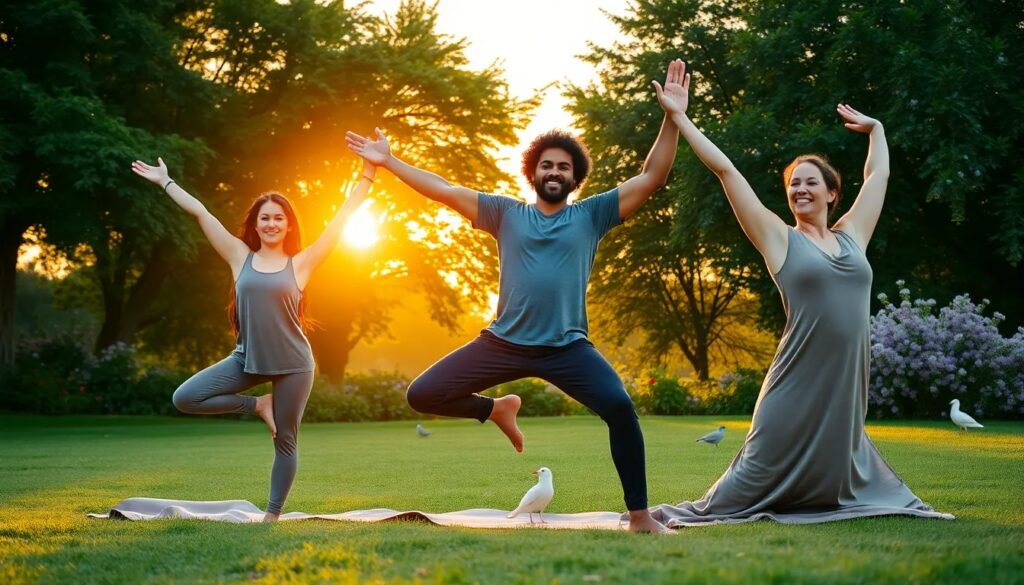
Trio yoga poses are yoga and acro-inspired shapes designed for three people working together, usually with one person as the base (supporting from the ground), one as the flyer (lifted or balanced on top), and one as the spotter (guarding against falls). Simpler trio poses skip the lifting entirely and just link three standing or seated shapes, which makes them accessible to families, friends, and kids with zero acrobatic experience.
The three roles: base, flyer, and spotter
Borrowed from acroyoga, the role system is what makes group poses safe and repeatable:
- Base: the person in contact with the ground. In lifted poses the base lies on their back and supports the flyer with straight, stacked legs and arms — bone alignment, not muscle strength, does most of the work.
- Flyer: the person being supported. The flyer's job is body tension: a firm core and clear communication make them far easier (and safer) to hold.
- Spotter: the safety net. The spotter stands beside the pose, hands ready near the flyer's hips, and never looks away. In a trio, this role rotates so everyone practices all three positions.
In non-acrobatic trio poses (three-person Tree Pose, seated circles, linked folds), the roles flatten out — everyone supports everyone — which is exactly why those poses are the right starting point.
Easy trio yoga poses for beginners
Start with poses where no one leaves the ground:
- Trio Tree Pose: stand in a tight circle or a line, shoulder to shoulder. Each person takes Tree Pose on the outside leg and presses palms with their neighbors. The shared contact makes balancing easier than solo Tree, not harder.
- Triangle Tower (standing fold chain): one person folds into a wide-legged forward fold; the second does the same facing them a leg-length away; the third gently rests their hands on both sacrums to deepen and stabilize the folds. Rotate after five breaths.
- Circle Boat Pose: sit in a triangle facing each other, hold wrists, and press the soles of your feet against your neighbors' feet as everyone lifts into Boat Pose. The connected feet turn a wobbly core pose into a stable star shape.
- Triple Seated Twist: sit back-to-back-to-back in a tight triangle, legs crossed. Everyone twists to the right and rests a hand on the next person's knee. The mutual back support keeps spines tall.
- Three-Person Camel Circle: kneel in a small circle, hold hands, and lean back together into a gentle supported backbend. Come up slowly and one cue at a time.
Trio poses by skill level
| Level | Poses | What you need first |
|---|---|---|
| Beginner (no lifting) | Trio Tree, Circle Boat, Triple Seated Twist, fold chains | Basic solo balance; no experience needed |
| Intermediate (partial weight-bearing) | Double Plank stack with spotter, Flying Whale prep, L-base Throne with two supports | Solid plank, confident spotting, a soft surface |
| Advanced (full acro) | Two-high Bird with active spotter, Pyramid (two bases, one standing flyer) | Acroyoga classes or coached practice — do not self-teach |
Core control is the limiting factor in almost every lifted pose, for base and flyer alike. If your plank collapses after twenty seconds, spend a few weeks on yoga for core strength before attempting flights.
Safety rules that are not optional
- Always assign a spotter for any pose where someone's hips rise above knee height. The spotter spots — they do not film.
- Warm up first. Ten minutes of Cat-Cow, lunges, and a few rounds of sun salutations (see what vinyasa yoga is for the classic flow) prepares wrists, hamstrings, and shoulders.
- Clear the space. Grass or two mats side by side, no furniture corners within falling distance.
- Agree on a down signal. One word — most groups use the word down — means everyone exits the pose immediately, no questions.
- Communicate constantly. Most partner-yoga injuries come from silent guessing, not from difficult poses.
- Never force or surprise anyone. Consent applies to every grip and every lift, every time.
Trio yoga with kids
Three-person poses work well for two adults and a child or for groups of children, as long as everything stays at ground level. Animal-themed shapes (a three-person snake chain, a triple Cat-Cow train) hold their attention better than alignment cues, and sessions should stay short — ten to fifteen minutes. Kids should not base or fly: their joints and judgment are not ready for weight-bearing acro. Ground-level group poses also make a great movement reset between tasks; the same logic powers a classroom yoga brain break.
Common mistakes to avoid
- Jumping to lifted poses on day one because they photograph well.
- Basing with bent arms or bent legs instead of stacked bones — it exhausts the base and destabilizes the flyer.
- Skipping the spotter once a pose has worked a couple of times. That is precisely when falls happen.
- Mismatched expectations: agree before you start whether the session is playful or a skills practice.
- Holding poses too long. Trio shapes load joints in unusual ways; five to eight breaths is plenty.
This article is general information, not medical advice. Acrobatic and partner yoga carry a real risk of falls. If you are pregnant, have joint injuries, or have any condition affecting balance or bone strength, consult a qualified professional before practicing lifted poses.
Frequently asked questions
Not for ground-level poses like Trio Tree, Circle Boat, or seated twists — those need no experience at all. Lifted poses where one person leaves the ground are a different matter: build up through coached acroyoga or partner-yoga classes before attempting them.
Trio Tree Pose, Circle Boat Pose, and the Triple Seated Twist are the most accessible. All three keep everyone on the ground, use mutual support to make balancing easier than solo practice, and work for mixed ages and fitness levels.
Yes, as long as everything stays at ground level. Group Tree Pose, animal-themed chains, and seated circles are great for children. Kids should not act as base or flyer in weight-bearing poses — their joints and risk judgment are not ready for it.
The spotter stands next to any lifted pose with hands ready near the flyer's hips, watching continuously and guiding the flyer safely to the ground if balance is lost. A dedicated spotter is the single most effective injury-prevention measure in partner and group yoga.
For ground-level poses, no. For lifted poses, a heavier or taller base generally makes things easier, but technique matters more than size — bases support flyers through stacked bones, not muscle. Large mismatches are best handled by keeping the lighter person as the flyer.
Have a correction or a question about this article? Reach us via our contact page.
Recommended: