What to Look for in a Yoga Mat: 7 Factors That Actually Matter

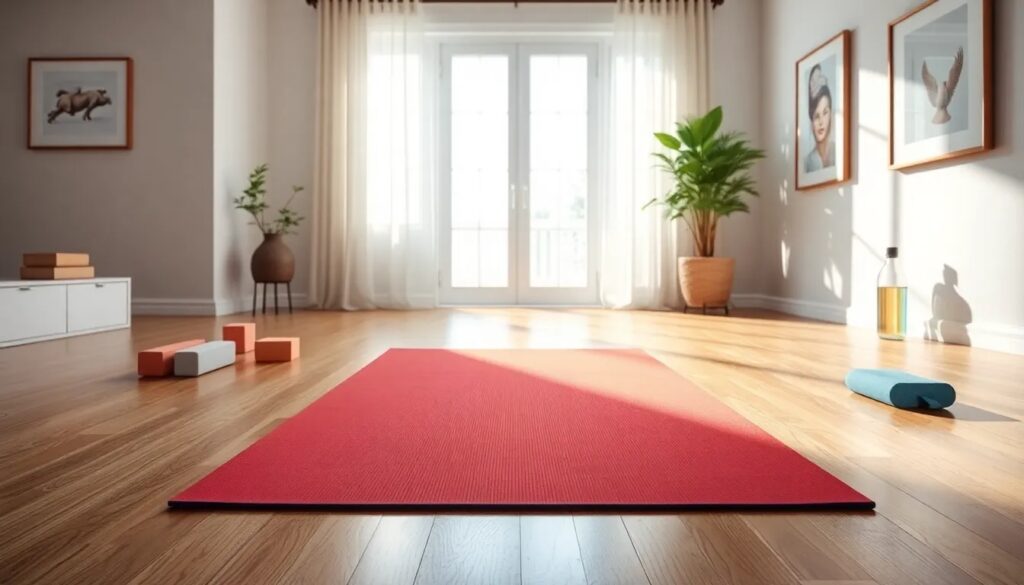
When choosing a yoga mat, the seven factors that actually matter are grip, thickness, material, size, weight, durability, and build quality — roughly in that order. Grip keeps your hands and feet from sliding in Downward Dog; thickness balances joint comfort against stability; and material drives almost everything else, from how the mat feels to how long it lasts. There is no single best yoga mat — only the best mat for your practice style, body, and routine.
This guide walks through each factor, compares the four main mat materials side by side, and ends with a practical checklist you can take shopping. If you are also looking at studio gear more broadly, start at our yoga equipment resources hub.
- Quick answer: the 7 factors that matter
- 1. Grip: the factor that makes or breaks a mat
- 2. Thickness: comfort vs. stability
- 3. Material: the decision behind the decision
- 4. Size: longer and wider than you think
- 5. Weight and portability
- 6. Durability: cost per practice, not sticker price
- 7. Extras worth it (and ones that are not)
- Quick checklist before you buy
- Frequently asked questions
Quick answer: the 7 factors that matter
- Grip — especially when your hands start to sweat.
- Thickness — cushioning versus balance.
- Material — drives grip, weight, durability, and feel.
- Size — length and width for your body.
- Weight — matters if you commute with the mat.
- Durability — how the mat holds up over years, not weeks.
- Build quality — bonded surfaces, dense foam, and a real warranty.
1. Grip: the factor that makes or breaks a mat
A slippery mat is the fastest way to ruin a practice. Two kinds of grip matter:
- Dry grip — how well your hands stick when you are not sweating. Most decent mats handle this fine.
- Wet grip — how the surface behaves once your palms sweat. This is where cheap PVC mats fail and where natural rubber, polyurethane-topped, and cork mats excel (cork actually grips better when damp).
If you practice vigorous flow or hot styles, prioritize wet grip above everything else. For slower hatha, yin, or restorative practice, almost any mat with reasonable dry grip will do.
2. Thickness: comfort vs. stability
Most mats fall between 1.5 mm (travel) and 6+ mm (cushioned). Thicker is not automatically better: extra foam cushions knees and wrists, but it also makes balance poses wobblier because your foot sinks into the surface.
- 3–4 mm: the standard sweet spot — enough cushioning for most people with solid ground feel.
- 5–6 mm: good for sensitive knees, restorative practice, or hard floors; slightly less stable for standing balances.
- 1.5–2.5 mm: travel and stability-focused mats; expect to feel the floor.
For a deeper dive into which thickness suits which body and practice, see our complete guide to yoga mat thickness.
Which thickness for which practice
Beginners do well at 4 mm — enough cushioning to learn without losing balance feedback. Restorative and yin practitioners often prefer 6 mm or more for joint support. Vinyasa and power yoga usually stay at 3–4 mm so the foot does not sink in lunges and balances. Hot yoga and any very sweaty practice also tend toward thinner mats, but pair that with a high-grip material (see below).
As an Amazon Associate, we earn from qualifying purchases.

- Extra thick, cushy floor mat in Black for yoga, gym, and everyday exercise
- 1/2 inch thickness offers comfortable padded support and shock absorption; textured surface provides extra traction
- Durable foam construction offers stretchability and springs back into shape
- Elastic strap for secure rolled-up mat storage and easy over-the-shoulder carrying
- Wipes clean easily
- Product Dimensions: 74 x 24 x .5 inches (LxWxH)

3. Material: the decision behind the decision
| Material | Grip | Durability | Weight | Eco profile |
|---|---|---|---|---|
| PVC | Good dry, poor when sweaty | Excellent (years of daily use) | Medium | Worst — not biodegradable, hard to recycle |
| TPE | Decent overall | Fair — wears faster than PVC | Light | Better — recyclable, lower-impact production |
| Natural rubber | Excellent, especially with PU top layer | Good | Heavy | Good — renewable, biodegradable |
| Cork (over rubber base) | Excellent when damp | Good surface, can chip at edges | Medium–heavy | Good — renewable harvest |
PVC, TPE, natural rubber, and cork at a glance
Material drives almost every other factor on this list. PVC is the workhorse: dense, durable, and inexpensive, but slippery when wet and the least eco-friendly of the four. TPE is the light middle ground — recyclable, easier to carry, but it tends to wear faster than PVC. Natural rubber is the high-grip choice for serious practice, with the trade-off of weight and a noticeable smell for the first weeks. Cork is the niche winner: naturally antimicrobial, grippier when damp, and a good fit for hot yoga.
Latex allergy and rubber smell
Two practical points worth flagging before you commit. Natural rubber mats carry a distinct smell for the first few weeks of regular use — most people stop noticing it after a month, but if you are sensitive to odors, factor that in. More importantly, natural rubber is not suitable if you have a latex allergy: look for PU-topped mats with a non-rubber base, or stick with TPE and cork.


Cork and PU-topped rubber for sweaty practice
Cork becomes grippier the more you sweat, and PU-topped natural rubber holds a reliable tacky surface through long flows. Both are noticeably better than standard PVC in a hot room. If hot yoga is a regular part of your practice, the material choice matters more than the thickness choice.

- CORK YOGA MAT: Crafted with natural cork top and eco-friendly TPE bottom for a premium, sustainable yoga and exercise experience, ensuring stability and comfort in your workouts.
- SWEAT and ODOR-RESISTANT CORK: Moisture-proof and odor-free, our natural cork material ensures a clean, fresh Yoga Workout surface, blocking dirt and unpleasant odors for a hygienic yoga experience.
- HOT YOGA MAT: A must-have for all types of yoga, but especially heated and hot yoga classes, as temperatures rise and the cork begins to loosen it will become softer and easier to grip when slightly damp
- CORK COMFORT: Experience the plush cushioning of our cork yoga mats, offering gentle support and resilience for joints and pressure points, ensuring a comfortable practice that nurtures your body and enhances your yoga journey.
- VERSATILE PERFORMANCE: From dynamic yoga flows to intense workouts, our cork mat adapts to your fitness routines, providing stability and support for yoga, Pilates, stretching, and more, allowing you to explore new movements with confidence.
4. Size: longer and wider than you think
The standard mat is about 68 × 24 inches (173 × 61 cm). If you are on the taller side, look for mats in the 71–85 inch range so head and heels both stay on the mat in Savasana and Downward Dog. Broad-shouldered practitioners and anyone who feels cramped should consider 26–30 inch widths — the few extra inches change the experience more than any other spec.
Tall and broad-shouldered practitioners
For a deeper look at how length, width, and thickness interact for different bodies, our guide to yoga mat size walks through the main dimensions in detail.
5. Weight and portability
A premium rubber mat can weigh 5–7 lb (2.5–3 kg); a TPE mat closer to 2 lb (1 kg). If you walk or cycle to class, that difference matters daily. Commuters can also solve the problem sideways — our guide to carrying a yoga mat without a strap covers practical options, and a dedicated yoga mat bag helps — but the lightest solution is simply buying a lighter mat, or keeping a cheap second mat at the studio.
When the lightest mat wins
If portability is the deciding factor — travel, cycling, walking to a studio — travel mats at 1.5–2.5 mm are purpose-built for the job. They feel the floor more, but they pack flat and disappear into luggage.

- EKO SUPERLITE TRAVEL MAT: The eKO SuperLite is perfect for yogis on the go. Its foldable, travel-ready design offers portability without sacrificing support or stability, making it ideal for your practice anywhere
- ON-THE-GO FITNESS: Ideal for eco-conscious travel yogis, the 1.5mm thickness, textured grip, and foldable design make it easy to pack and carry—while still offering reliable traction wherever you practice
- PREMIUM MATERIALS: Made from sustainably harvested, all- natural tree rubber, this mat features a closed-cell surface that locks out moisture. It’s 99% latex-free and has a textured orange peel surface for optimal grip
- PRODUCT DETAILS: The eKO SuperLite mat is thin, lightweight, and travel-ready, measuring 71 x 24 inches, 1.5mm and weighing just 2 lbs. Its foldable design makes it easy to pack and travel with you anywhere
- CARE INSTRUCTIONS: Spray Manduka’s Natural Rubber Yoga Mat Restore, let sit 5 minutes, then wipe dry. Avoid soaking, sun exposure, and soap, which can damage the mat. Do not use a garden hose, vacuum, or washing machine for cleaning
6. Durability: cost per practice, not sticker price
A cheap mat that flakes within a year is more expensive per practice than a mid-range mat that lasts several. The math is simple: a daily practitioner who keeps a mat for five years spends far less per session than someone replacing a bargain mat every season.
Signs a mat will outlast a cheap one
Dense (not airy) foam, a bonded rather than laminated surface, and a manufacturer warranty are the three tells. Read long-term reviews, not unboxing reviews — what separates a good mat from a cheap one shows up at the six-month and one-year marks, not on day one.
When to replace a mat
Mats do wear out. Watch for thinning under your hands and feet, crumbling edges, and lost grip even when dry. Our guide on how often to replace a yoga mat covers the signals to watch for.
7. Extras worth it (and ones that are not)
- Worth it: alignment markings if you practice alone at home — they quietly correct hand and foot placement. The system on the Liforme mat is the best-known example.
- Worth it: a machine-washable or wipe-clean surface if you sweat heavily.
- Usually not worth it: printed designs (they wear off exactly where your hands go), bundled straps and bags of low quality, and antimicrobial marketing claims — regular cleaning does the real work.
Alignment markings
Printed grids and dots genuinely help beginners build muscle memory for hand and foot placement, especially when practicing solo at home. They are not a gimmick for advanced students, but they earn their keep fastest when there is no teacher in the room.
Antimicrobial and "eco" claims
Any mat will develop bacteria if you never clean it. Look for wipe-clean surfaces and a simple soap-and-water routine rather than paying extra for antimicrobial additives. The same applies to "eco" labels: the material itself (cork, natural rubber, TPE) is the honest indicator, not the marketing sticker.

- Premium Performance Mat for Every Practice: Built for yoga, Pilates, stretching, and fitness routines, this Gaiam Dry Grip Yoga Mat delivers lightweight stability and comfort for daily use. Suitable for yoga, meditation, floor workouts, mobility exercises, and sessions at home or the gym
- Moisture-Wicking Grip for Sweaty Sessions: Designed with a unique moisture-wicking topcoat, this non-slip Pilates mat helps wick away sweat to maintain traction and grip through every pose. Great for hot yoga, Vinyasa, Bikram, and high-intensity workouts where stability and control matter most
- Cushioned Support for Joints and Stability: The rubber exercise mat provides cushioning and support for hands, feet, knees, wrists, elbows, and spine during floor exercises and post-workout stretching. Helps improve comfort, alignment, confidence, and balance through every movement
- Lightweight and Easy to Carry: Designed for portability, this lightweight workout mat is easy to roll up and carry to yoga studios, gyms, fitness classes, home workouts, or travel workouts. The Dry-Grip surface helps reduce the need for a separate towel during hot yoga and high-sweat sessions
- Built for All Yoga Styles & Fitness Goals: Suitable for Hatha, Vinyasa, meditation, rehabilitation exercises, bodyweight training, and year-round use. Pairs well with yoga blocks, straps, towels, foam rollers, and other accessories to support flexibility, body control, and alignment
Quick checklist before you buy
- Identify your main style: flow/hot (prioritize wet grip), gentle/restorative (prioritize cushioning), mixed (3–4 mm rubber or quality TPE).
- Check the length against your height — add at least 6 inches.
- Confirm the material works for you: latex allergy rules out rubber; carrying distance rules out heavy mats.
- Read durability reviews from people one year in, not unboxing reviews.
- Set a realistic budget: a mid-range mat almost always outlasts three cheap ones.
- Check the return policy — grip can only truly be tested in practice.
- If you practice outside, choose a mat built for sun and dirt — see our outdoor yoga mat guide.
Frequently asked questions
A 4 mm mat is the safest starting point: enough cushioning for knees and wrists while keeping the stability needed to learn balance poses. Go to 5–6 mm only if you have sensitive joints or practice on very hard floors.
Polyurethane-topped natural rubber mats and cork mats perform best once you start sweating — cork actually becomes grippier when damp. Standard PVC mats are the weakest choice for sweaty practice unless paired with a yoga towel.
Yes — natural rubber and cork are among the best-performing mat materials for grip, not a compromise. The trade-offs are weight and break-in smell rather than performance. TPE sits in the middle: lighter and cheaper, but it wears out sooner.
Three reliable signals: thinning under your hands and feet, crumbling or peeling edges, and a surface that stays slick even when dry. A mat that looks fine but no longer grips is already past its useful life for daily practice.
Have a correction or a question about this article? Reach us via our contact page.
Last update 2026-09-10. Price and product availability may change.
Recommended: